
Bacterial leaf streak identification & organic treatment
Xanthomonas translucens
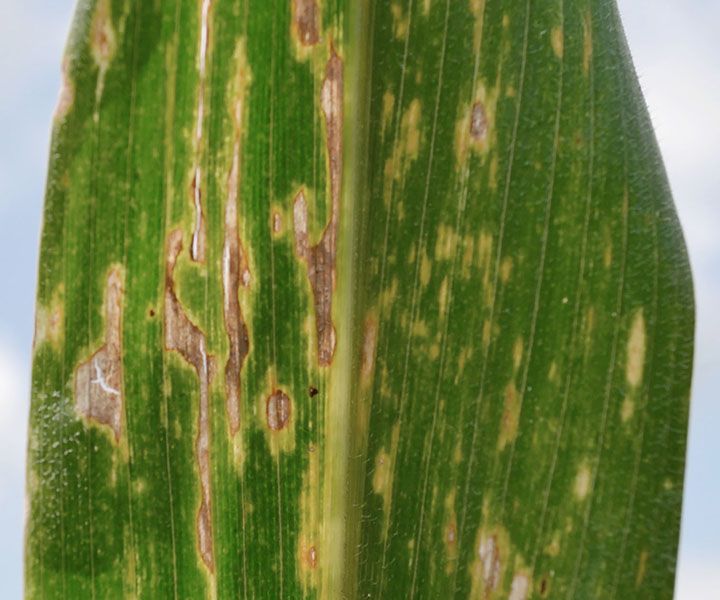
How to identify bacterial leaf streak
A bacterium of cereal grains and some leafy crops that produces long, water-soaked streaks running parallel to the leaf veins, which dry into a dark, brittle stripe.
Symptoms
- Narrow, water-soaked streaks running parallel to leaf veins
- Streaks dry to tan or dark brown, often with a yellow margin
- Streaks can merge into large dead patches on heavily infected leaves
- Sticky bacterial exudate visible on the leaf surface in humid weather, drying to small yellow-white crusts
Host crops
Corn, Wheat.
How it spreads
Seedborne and residue-borne, spreads via wind-driven rain and irrigation splash.
Favorable conditions
Warm, humid weather with frequent rain or heavy dew.
Progression
- Streak onset (Warm humid weeks) — Narrow water-soaked streaks appear along veins.
- Streak expansion (Ongoing wet weather) — Streaks lengthen, merge, and dry to brittle brown patches.
Organic treatment for bacterial leaf streak
- 1. Copper bactericide · medium effort
Apply an OMRI-listed copper spray at first sign; effectiveness is limited once streaks are established, so treat early.
When: At onset
- 2. Remove and destroy heavily infected residue · low effort
Clear infected debris after harvest instead of leaving it in the field.
When: Post-harvest
Prevention
- Use certified disease-free seed.
- Rotate away from susceptible grains for at least a year.
- Avoid overhead irrigation during humid stretches.
Easy to confuse with
Fungal leaf blights (rounder lesions, not narrow parallel streaks), Nitrogen-deficiency striping (uniform, not water-soaked).