
Garden pest & animal profiles
Showing 116 of 116 profiles: real photos, life cycles, the crops each one hits, and organic fixes that actually hold.
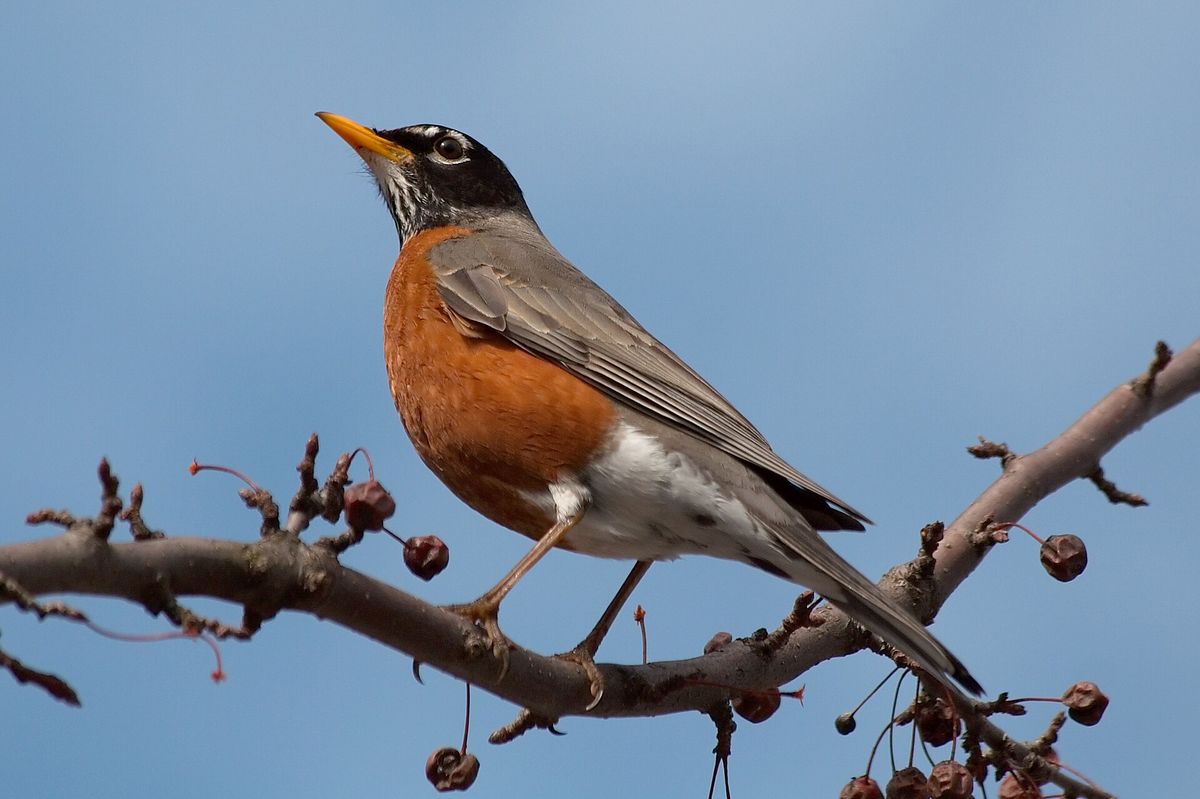
American robin
animalTurdus migratorius
A familiar, native thrush best known for hunting earthworms and grubs on open lawn. Robins are federally protected and are overwhelmingly a garden ally: their diet is dominated by insects, grubs, and worms, with fruit becoming a bigger share only in late summer and fall.
- Hits
- Blueberry, Cherry, Strawberry, Grape
- First fix
- Let them work the lawn and beds most of the season
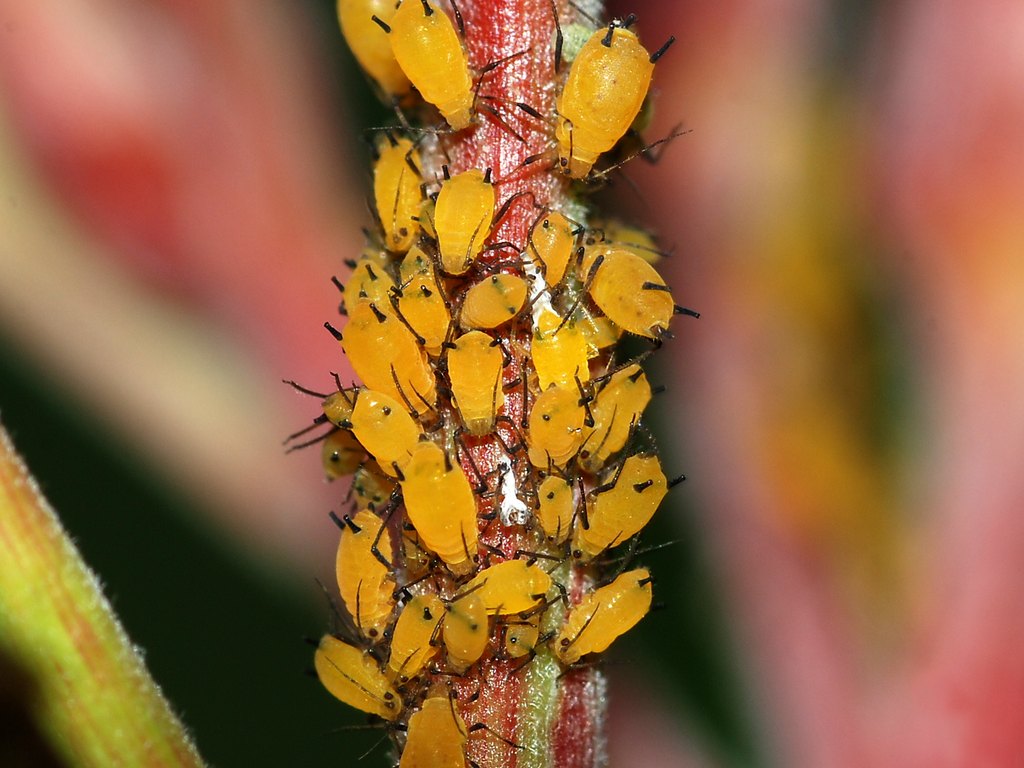
Aphid
insectAphidoidea spp.
Aphids are soft-bodied, pear-shaped insects (green, black, gray, or pink) that cluster on new growth and leaf undersides. They pierce plant tissue and suck sap, then excrete sticky 'honeydew' that grows sooty mold and draws ants.
- Hits
- Kale, Broccoli, Pepper, Lettuce
- First fix
- Strong water blast
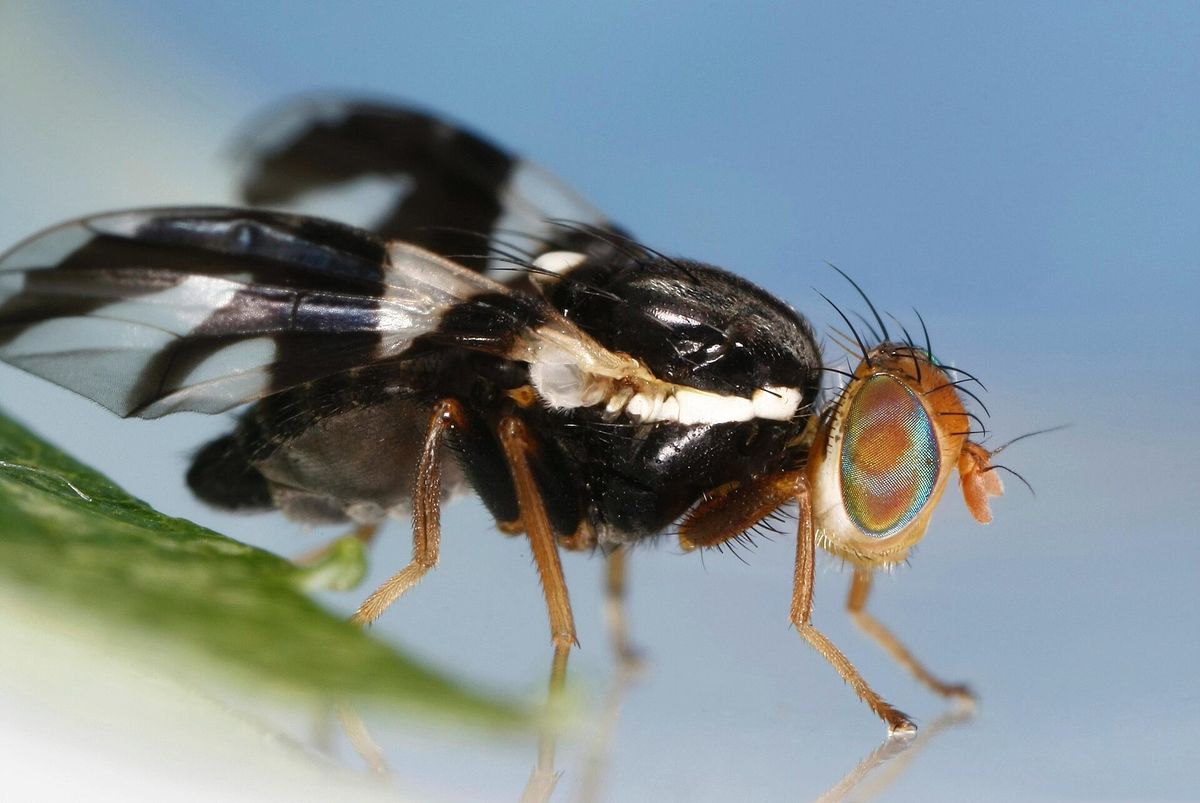
Apple maggot
insectRhagoletis pomonella
A small fly with dark banded wings that lays eggs just under the skin of ripening apples. Larvae tunnel in winding trails through the flesh, giving infested fruit a 'railroad track' pattern and premature drop.
- Hits
- Apple
- First fix
- Red sticky sphere traps
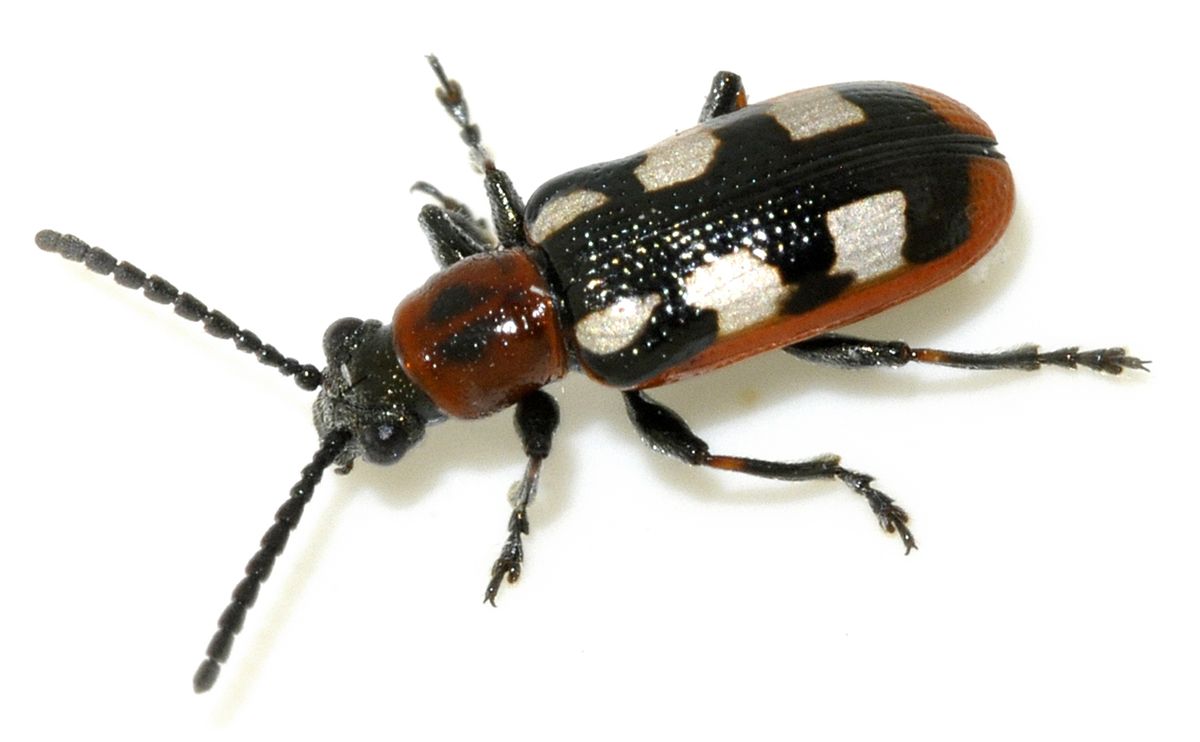
Asparagus beetle
insectCrioceris asparagi
A small blue-black beetle with cream-colored spots that feeds on asparagus spears and ferns in spring and summer, leaving scarring and blackened tips. Larvae are plump, gray-green, and feed alongside the adults.
- Hits
- Asparagus
- First fix
- Handpick at harvest
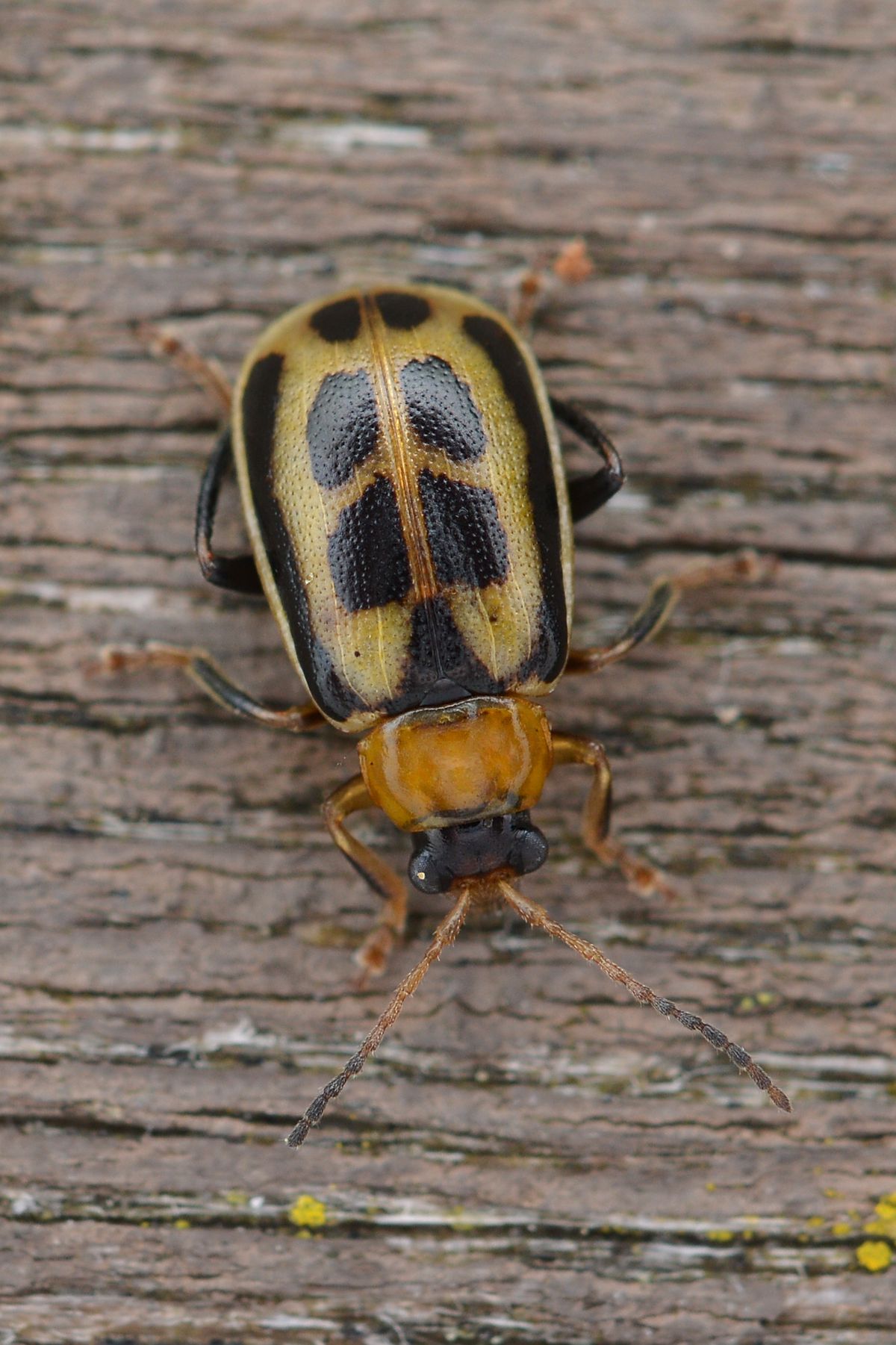
Bean leaf beetle
insectCerotoma trifurcata
A small, variably colored beetle (red, yellow, or tan, usually with black spots and a black triangle behind the head) that chews round holes in bean leaves and can scar pods.
- Hits
- Bush bean, Pea
- First fix
- Row cover young seedlings
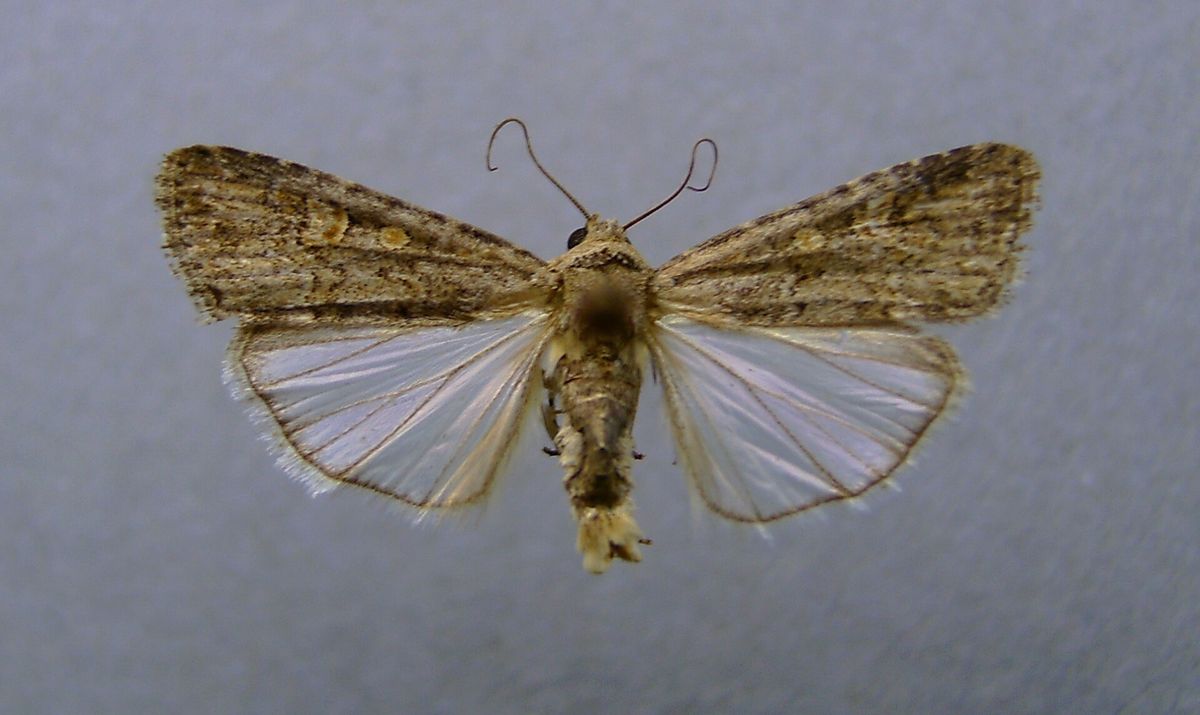
Beet armyworm
insectSpodoptera exigua
A smaller cousin of fall armyworm, pale green to dark with a faint side stripe, that feeds in clusters when young and scatters as it matures. Common in home gardens across the South and West.
- Hits
- Beet, Swiss Chard, Spinach, Bush bean
- First fix
- Remove egg-mass leaves early
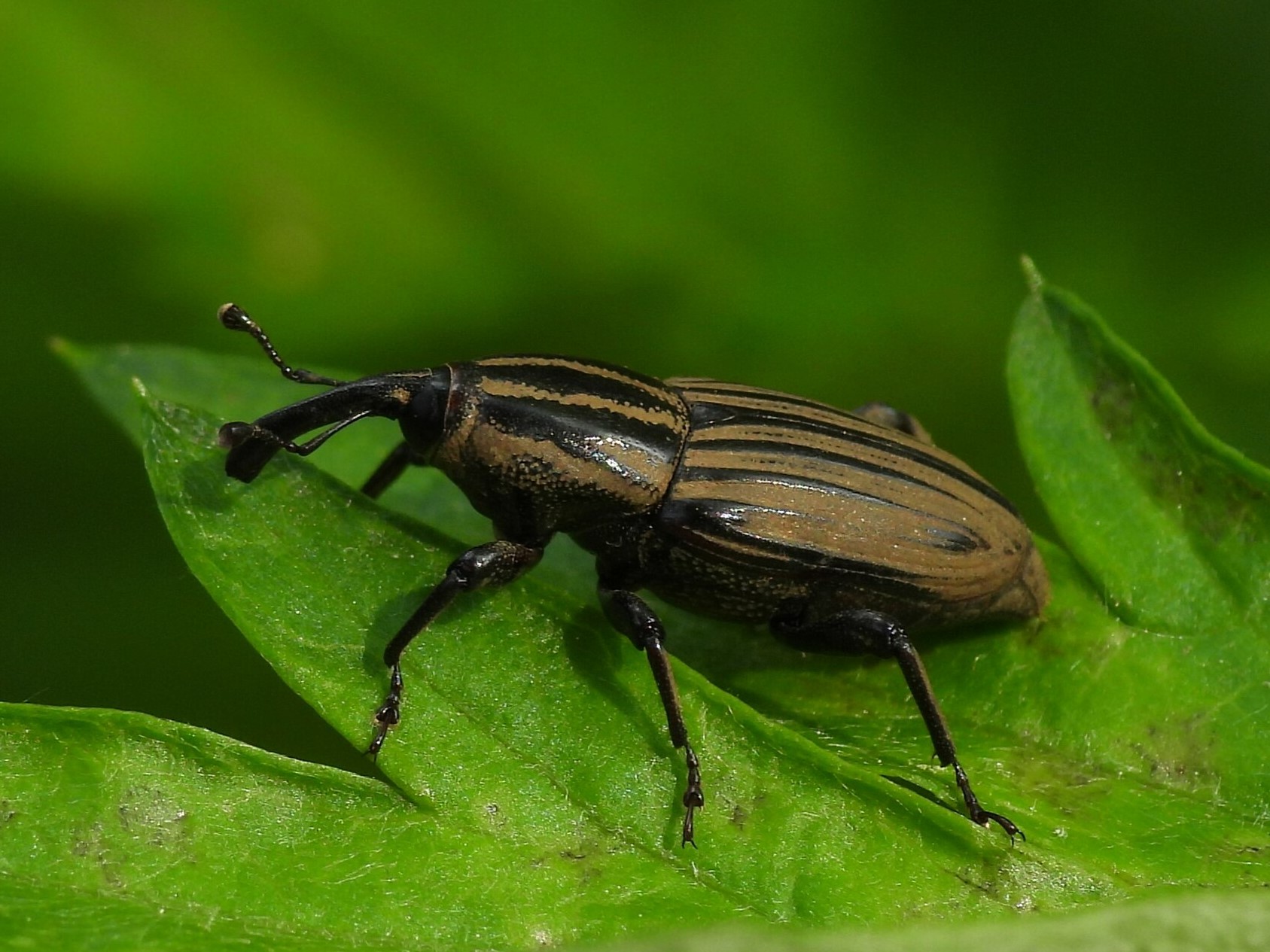
Billbug
insectSphenophorus spp.
A snout-nosed weevil whose legless larvae tunnel inside grass stems and then feed on roots, causing patches of turf that pull up easily and crumble into sawdust-like frass, often mistaken for drought damage.
- Hits
- Lawn/turf
- First fix
- Tug test on damaged patches
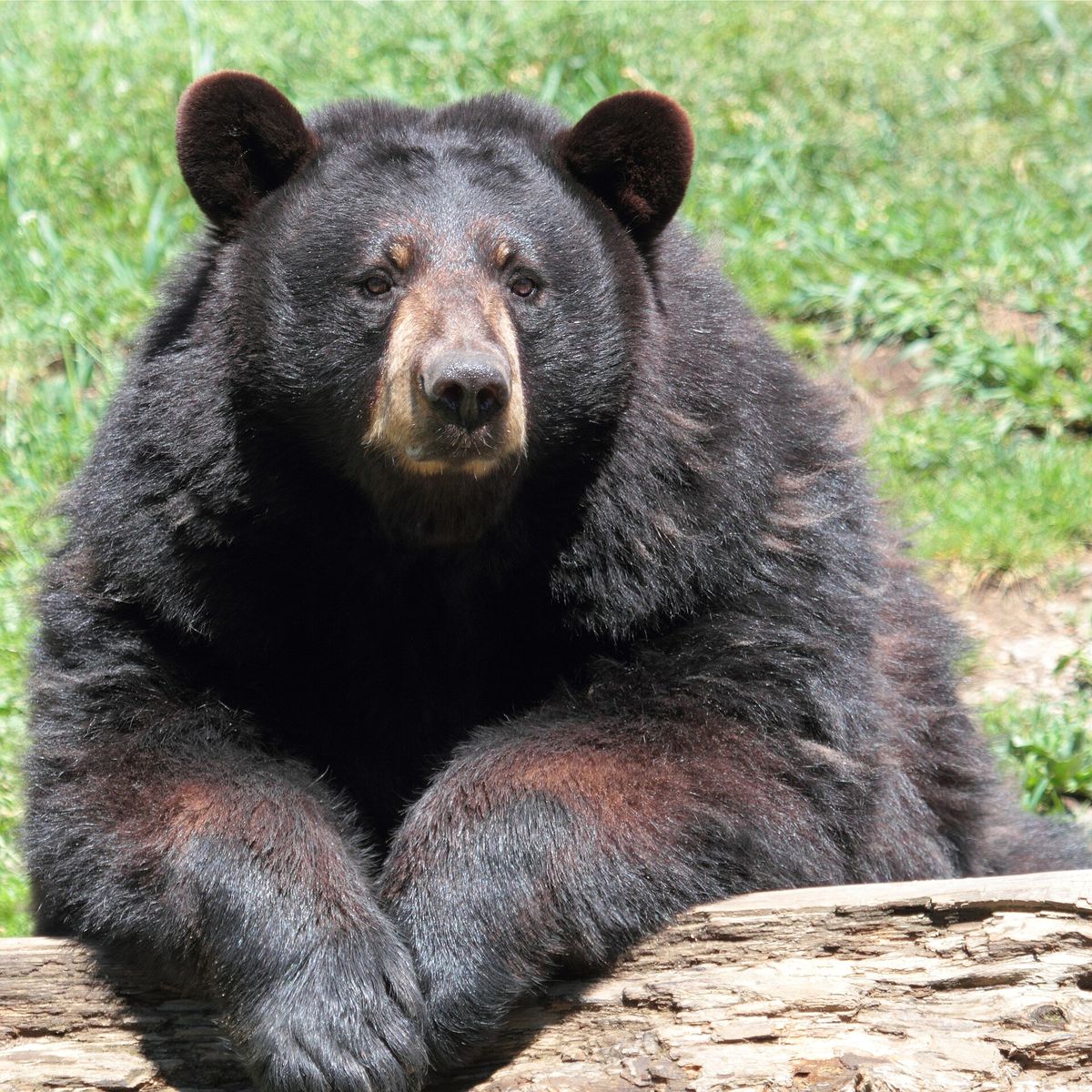
Black bear
animalUrsus americanus
A large, powerful omnivore drawn to gardens, compost, coops, and beehives mainly by smell. A fed bear that loses its fear of people is often ultimately killed by wildlife agencies, which is why removing attractants immediately and consistently is a safety issue as much as a garden one.
- Hits
- Sweet corn, Fruit trees, Beehives, Compost
- First fix
- Electric fencing around hives, coops, and orchards
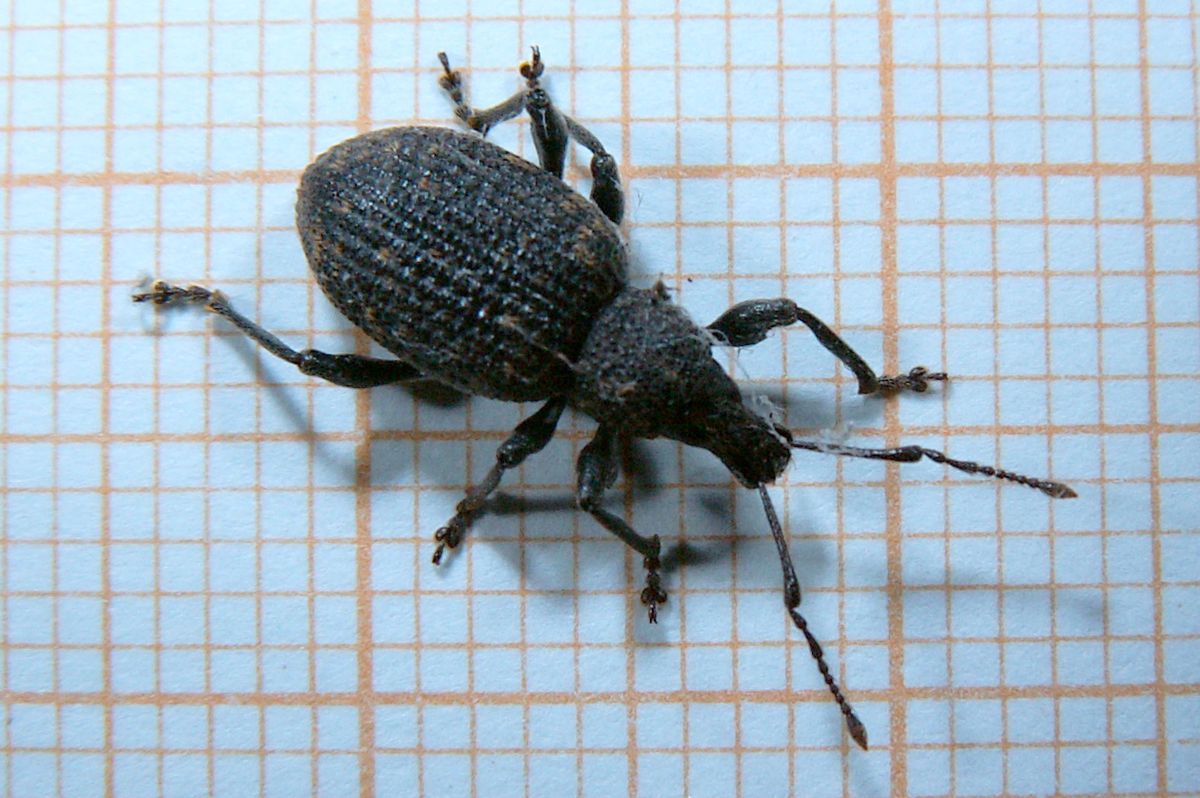
Black vine weevil
insectOtiorhynchus sulcatus
A dull black, flightless weevil active at night, notching leaf edges in a distinctive scalloped pattern. Its cream-colored larvae are the more serious threat, feeding on roots and crowns underground.
- Hits
- Strawberry
- First fix
- Nighttime handpicking with a flashlight
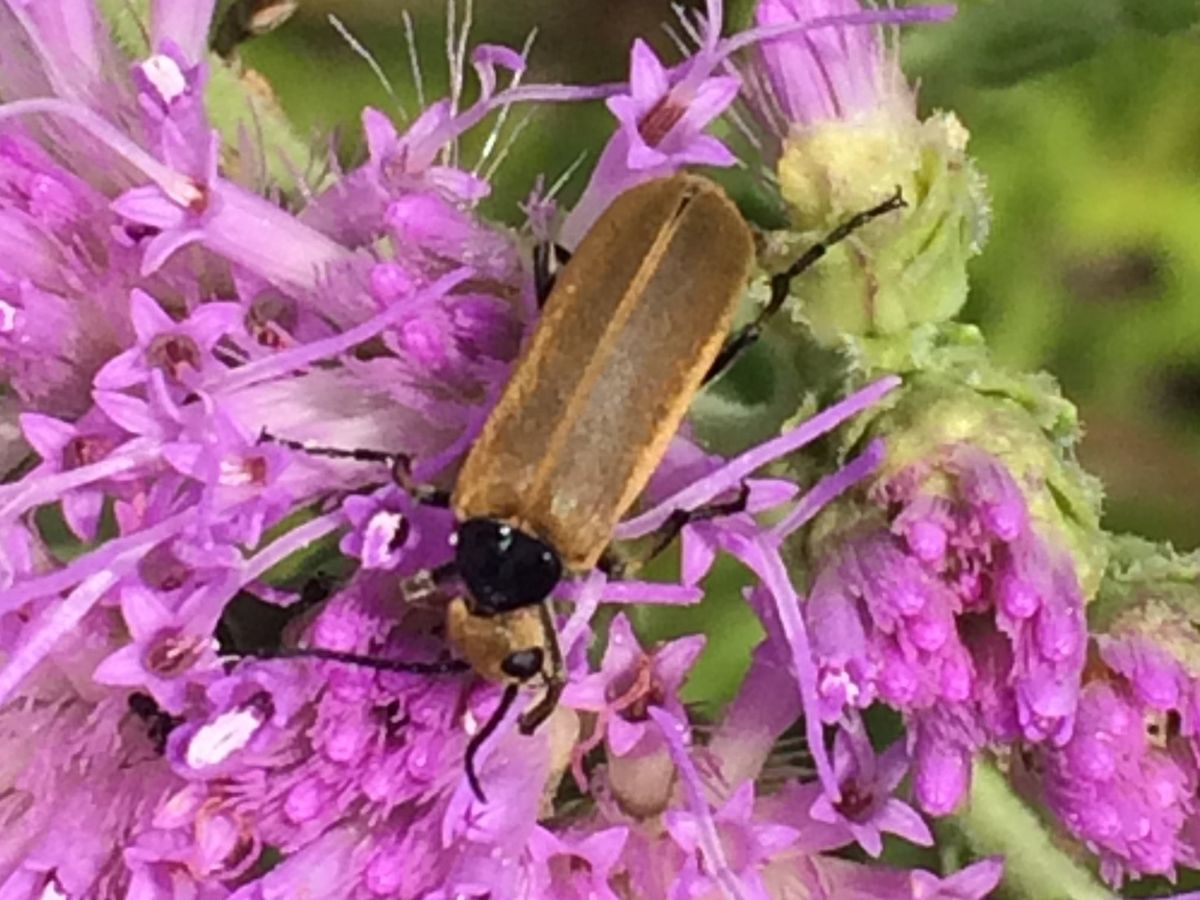
Blister beetle
insectEpicauta spp.
Elongated, soft-bodied beetles, often black, gray, or striped, that feed in swarms on foliage and flowers. They contain cantharidin, a blistering compound that irritates human skin on contact and is highly toxic to horses if beetles are baled into hay.
- Hits
- Tomato, Potato, Bush bean, Beet
- First fix
- Wear gloves, never crush by hand
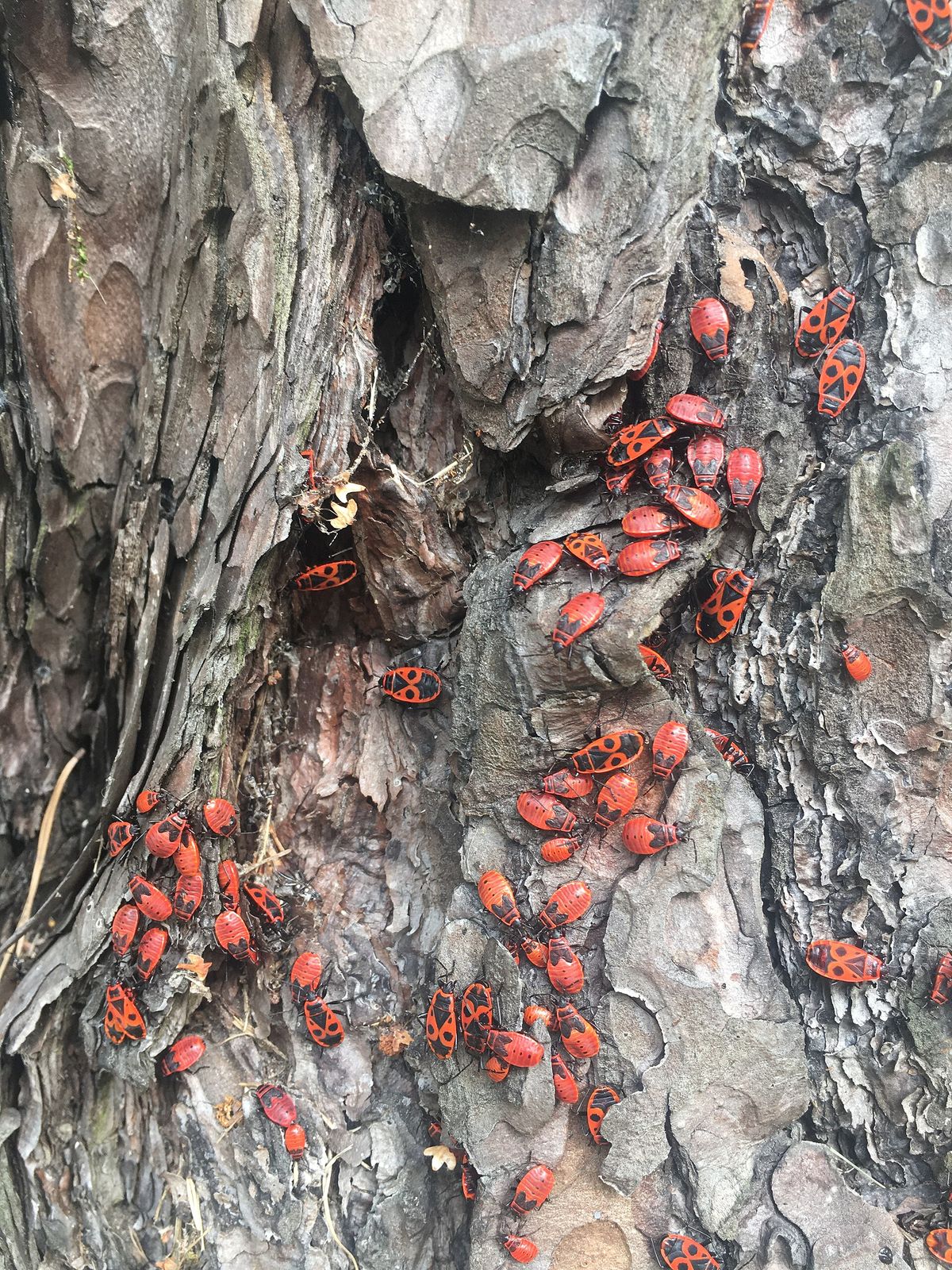
Boxelder bug
insectBoisea trivittata
A black bug with red-orange wing markings that gathers in large numbers on warm walls and rocks in fall, seeking shelter for winter. It feeds mainly on boxelder and maple seeds and rarely causes real garden damage.
- Hits
- Not a plant feeder
- First fix
- Sweep or vacuum congregations
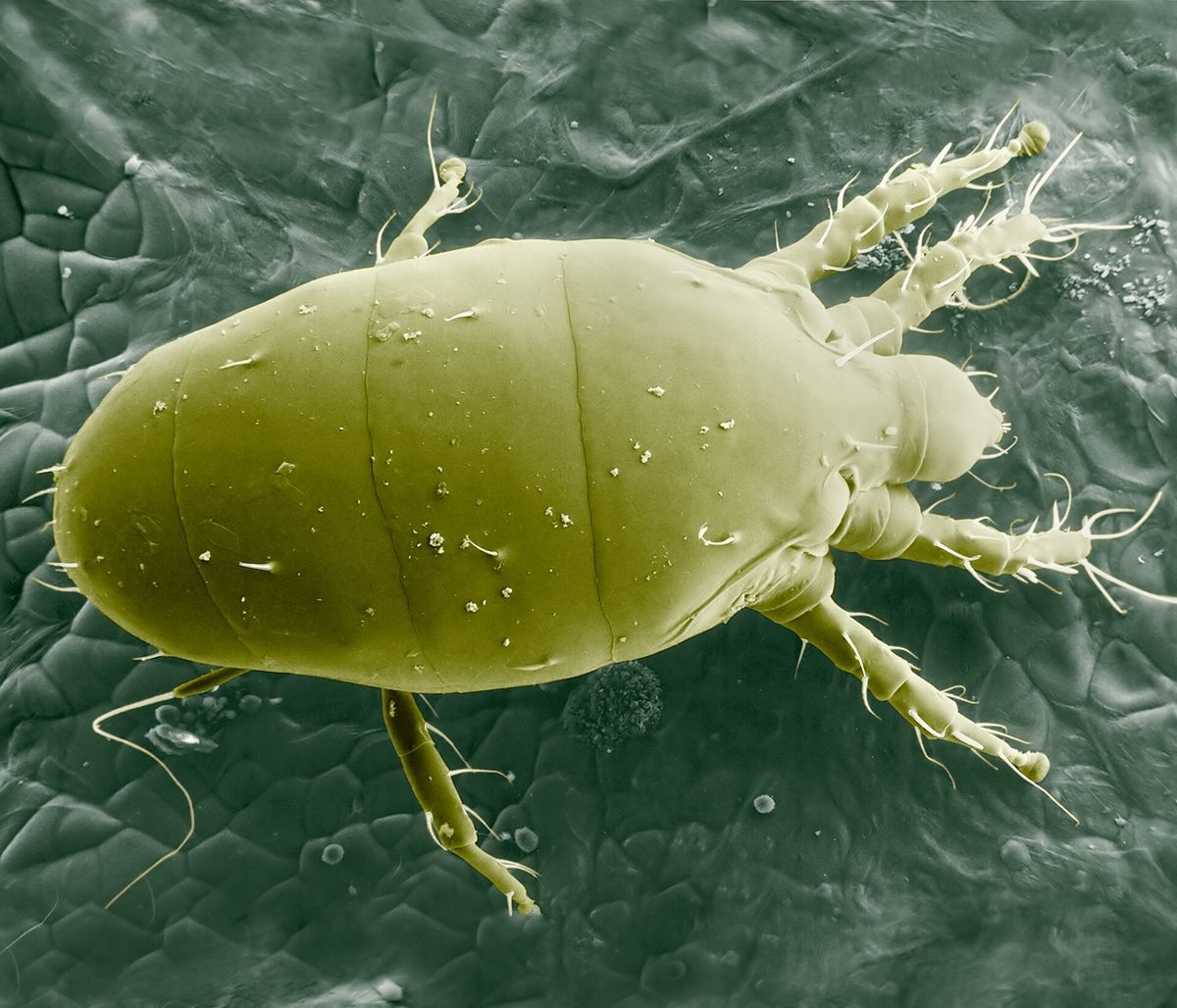
Broad mite
arachnidPolyphagotarsonemus latus
A mite so small it cannot be seen without magnification, causing distorted, twisted new growth and bronzed, brittle leaves that gardeners often mistake for herbicide damage or a virus.
- Hits
- Pepper, Eggplant, Tomato, Basil
- First fix
- Remove and destroy affected growing tips
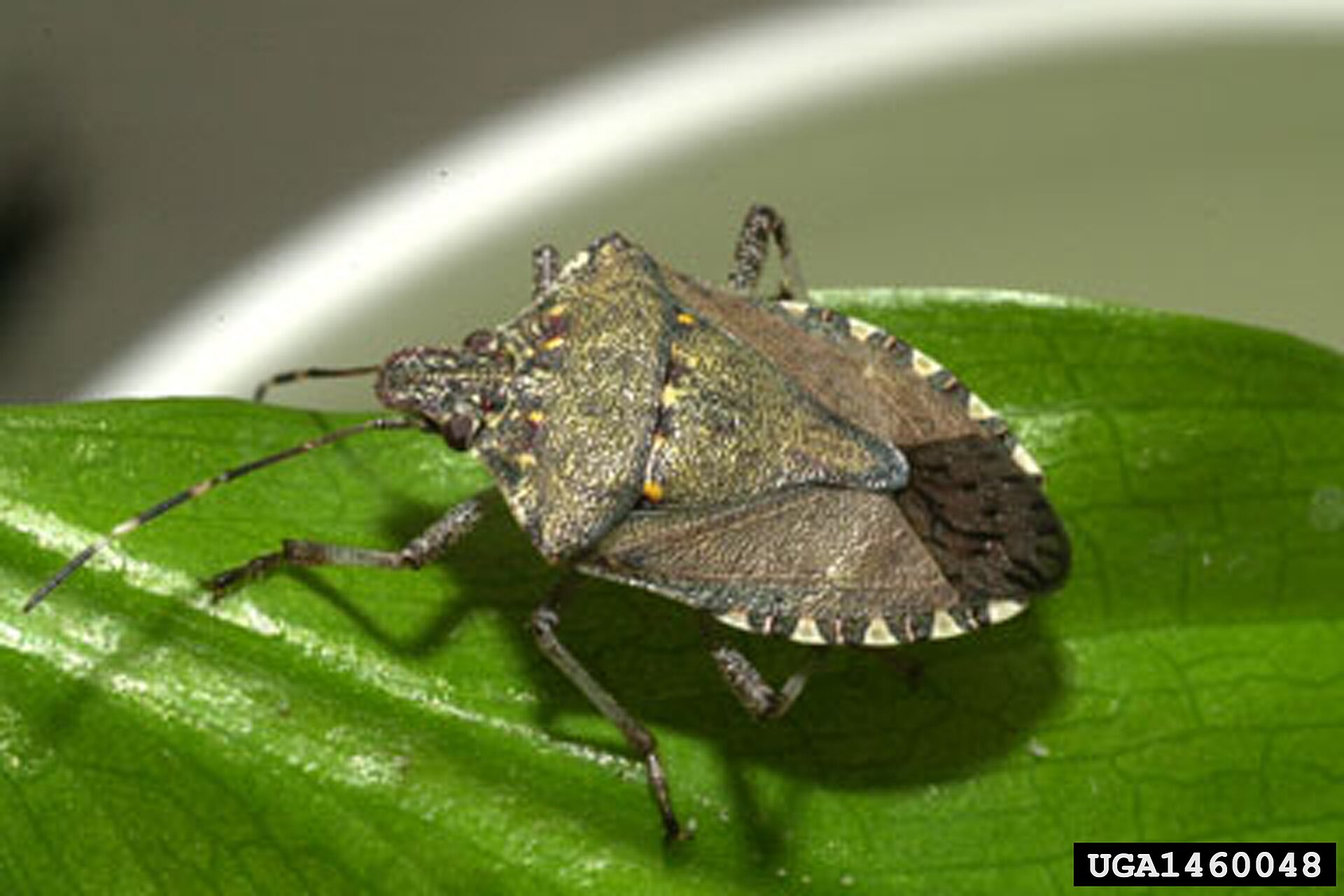
Brown marmorated stink bug
insectHalyomorpha halys
An invasive Asian stink bug, mottled brown with distinctive white bands on its antennae, that has spread across much of the US since the 1990s. It feeds on a very wide range of vegetables and fruit and is known for invading homes in large numbers each fall.
- Hits
- Tomato, Pepper, Bush bean, Sweet corn
- First fix
- Handpick and drop in soapy water
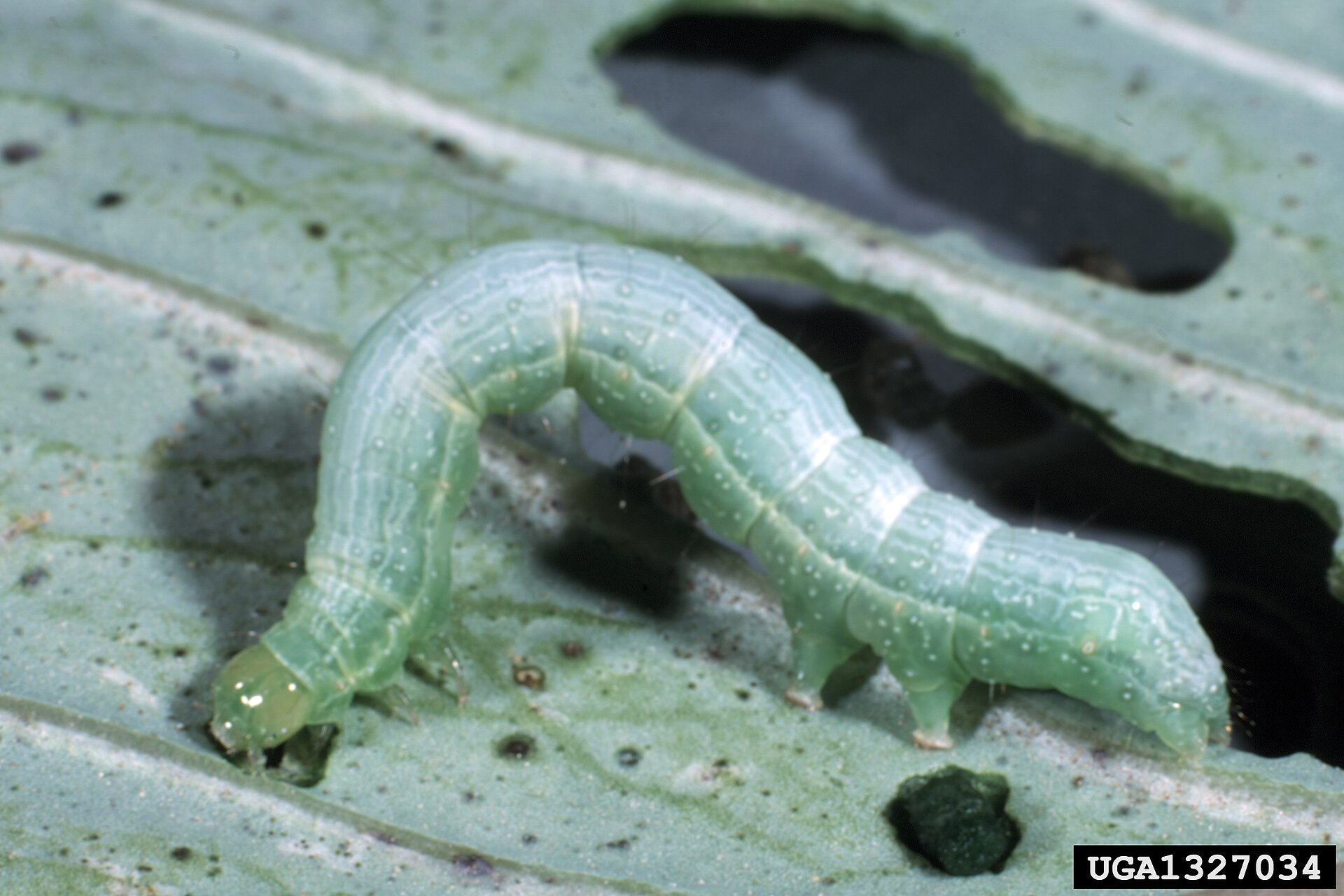
Cabbage looper
insectTrichoplusia ni
A pale-green caterpillar that arches its back into a loop as it crawls, lacking the middle prolegs true caterpillars have. The adult is a mottled brown-gray moth active at night.
- Hits
- Cabbage, Broccoli, Kale, Collards
- First fix
- Handpick
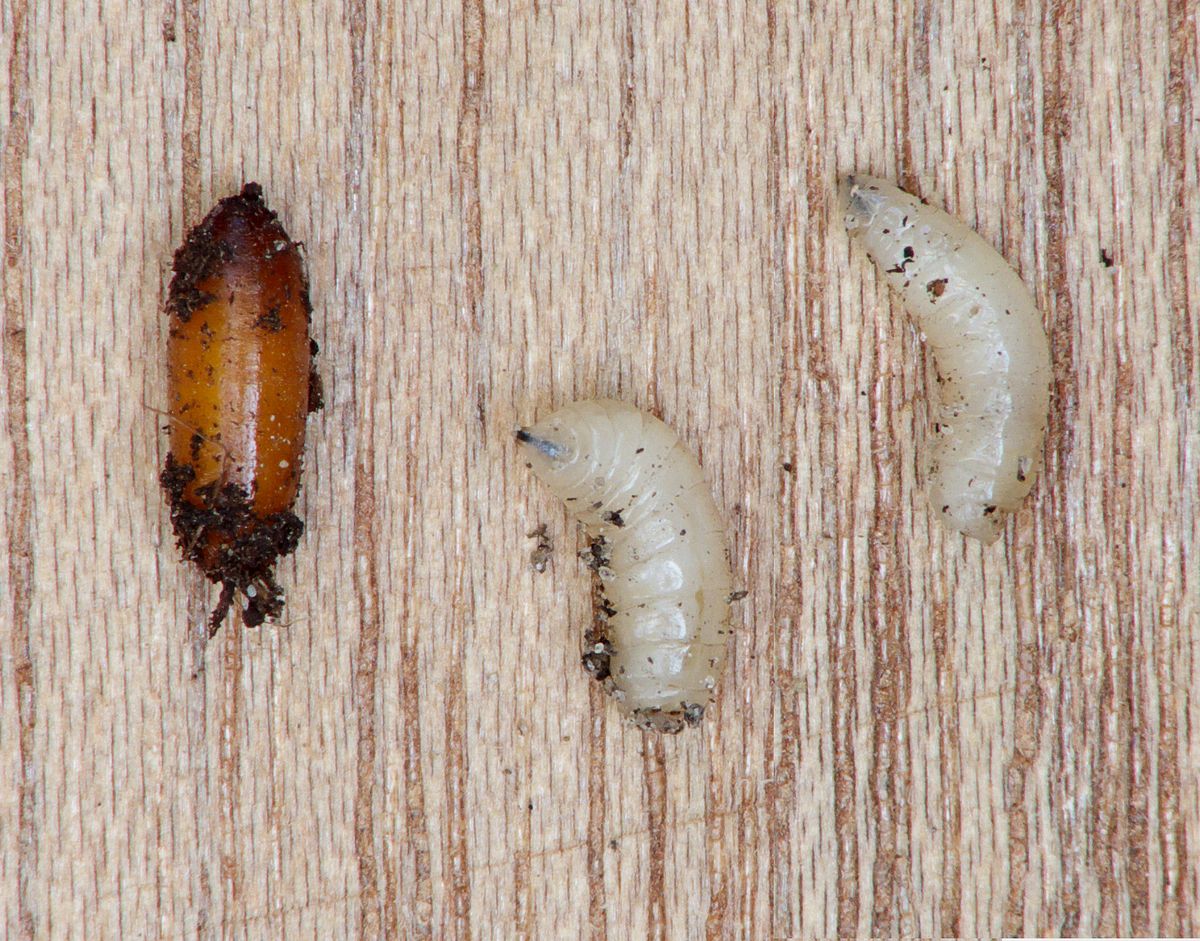
Cabbage maggot
insectDelia radicum
The larva of a small gray fly that resembles a housefly, laying eggs at the base of brassica stems in cool spring soil. Maggots tunnel into roots, and seedlings often wilt and die before any aboveground damage is obvious.
- Hits
- Cabbage, Broccoli, Radish, Turnip
- First fix
- Row cover or collars at transplant
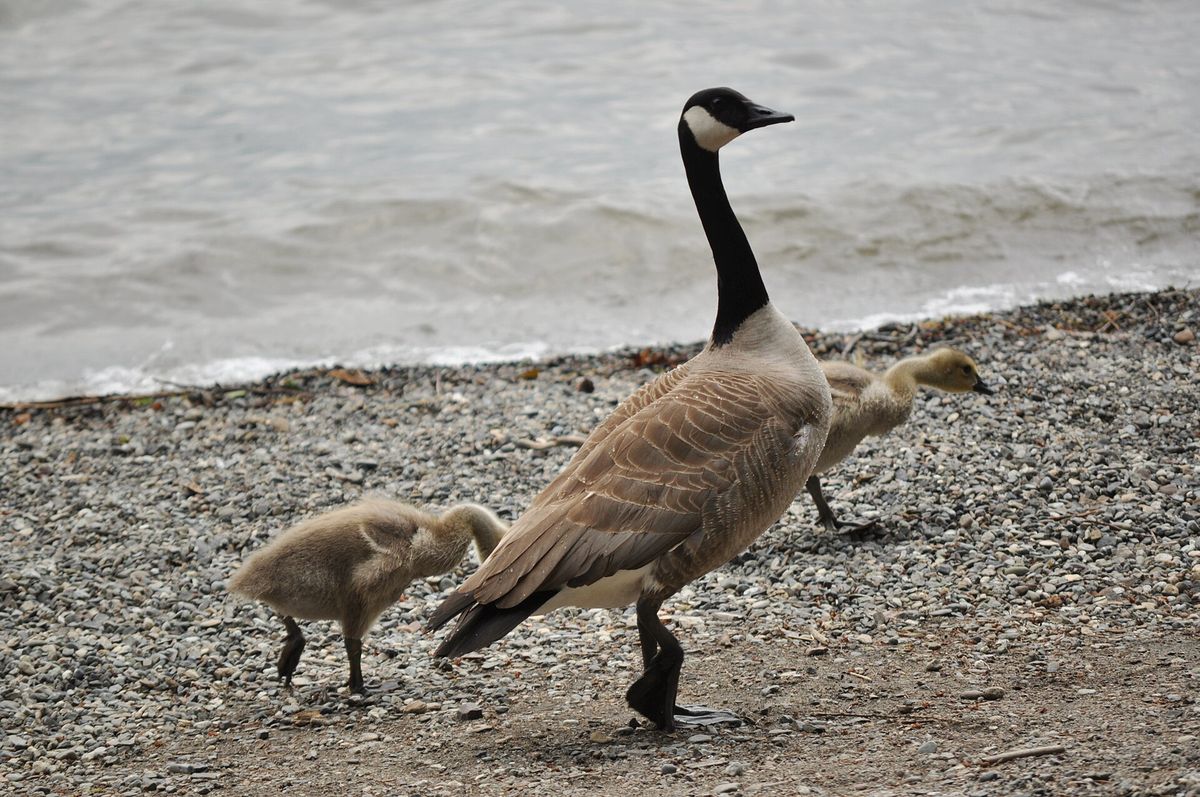
Canada goose
animalBranta canadensis
A large, grazing waterfowl that forms grass-cropping flocks near ponds, lawns, and garden edges. Canada geese are protected under the Migratory Bird Treaty Act, and resident (non-migratory) flocks are managed through permits, not backyard lethal control.
- Hits
- Lawn/turf, Lettuce, Young vegetable transplants, Clover cover crop
- First fix
- Break sightlines to water with fencing or plantings
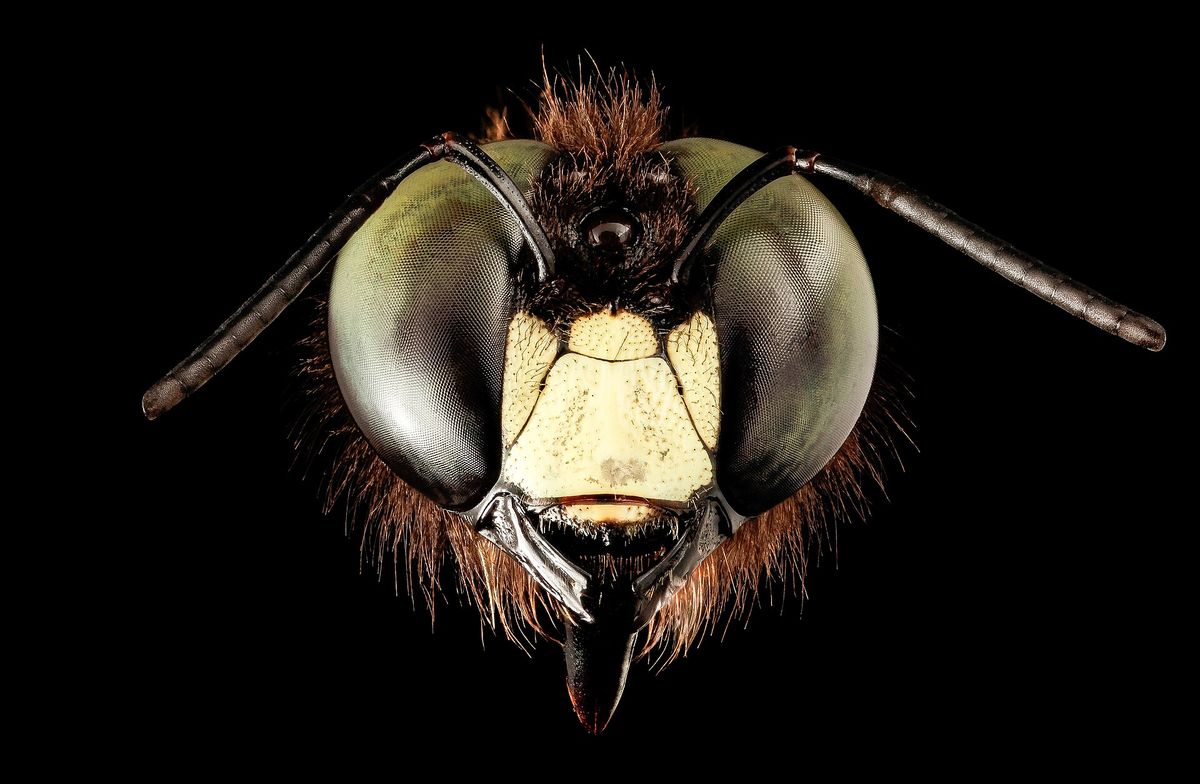
Carpenter bee
insectXylocopa spp.
A large, mostly black bee resembling a bumblebee that bores perfectly round half-inch holes into untreated wood (fences, arbors, raised bed frames) to nest, rather than eating garden plants. Males hover aggressively but cannot sting; females can but rarely do unless handled.
- Hits
- Not a plant feeder
- First fix
- Paint or seal exposed wood
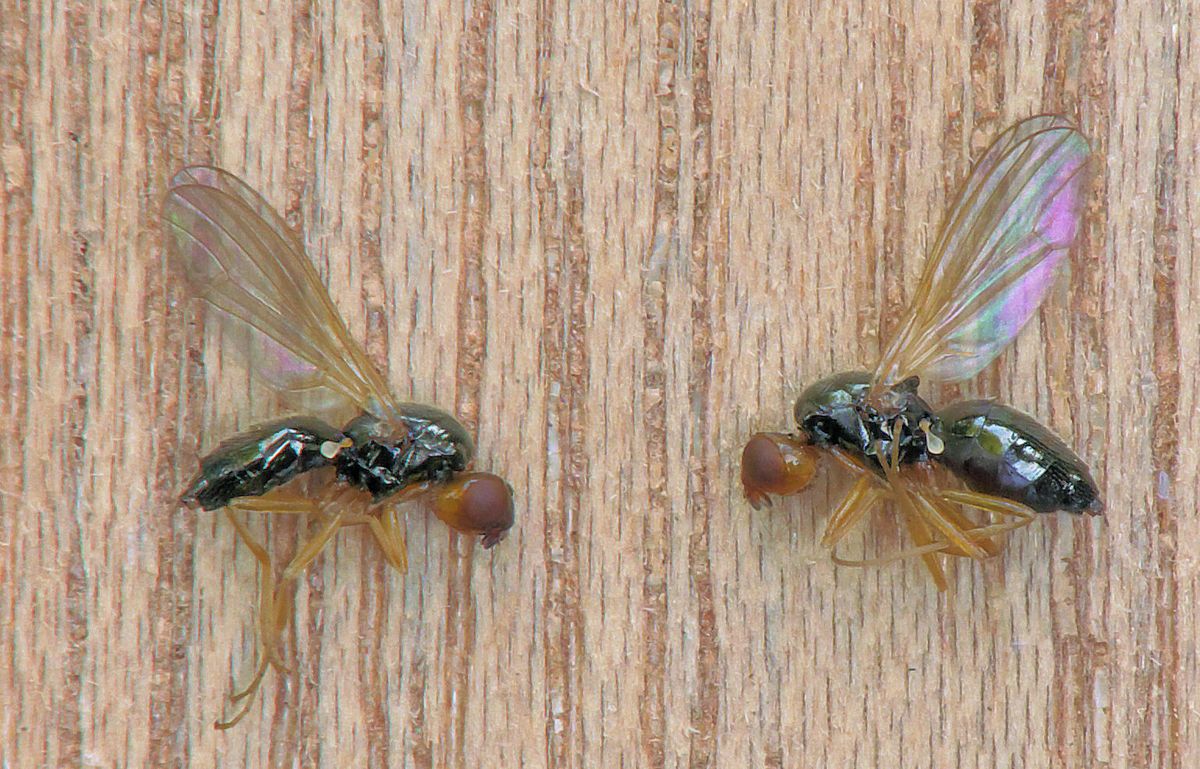
Carrot rust fly
insectPsila rosae
A small shiny black fly whose larvae tunnel into carrot roots, leaving rusty-brown scars and tunnels that ruin the harvest even when the tops look fine. Most common in cool, humid regions of the Pacific Northwest and Northeast.
- Hits
- Carrot, Celery, Parsley
- First fix
- Row cover the whole season
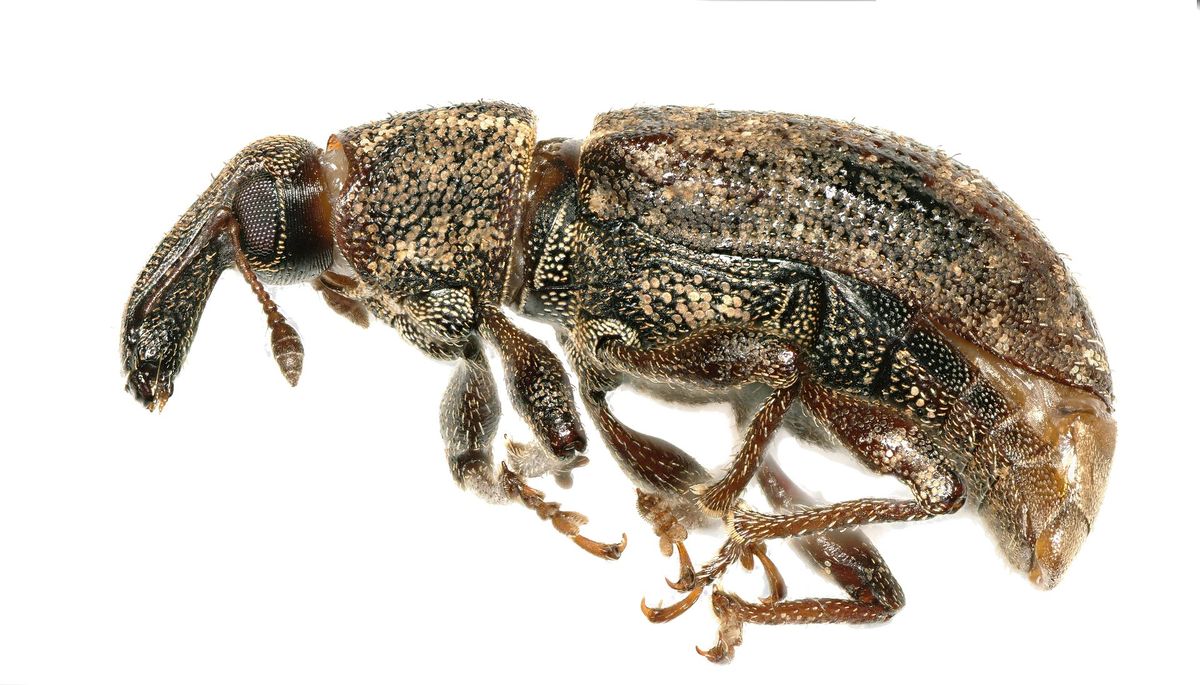
Carrot weevil
insectListronotus oregonensis
A small, dark snout beetle whose legless larvae tunnel through carrot crowns and roots, most damaging in the Northeast and Midwest.
- Hits
- Carrot, Celery, Parsley
- First fix
- Rotate carrots away from prior beds
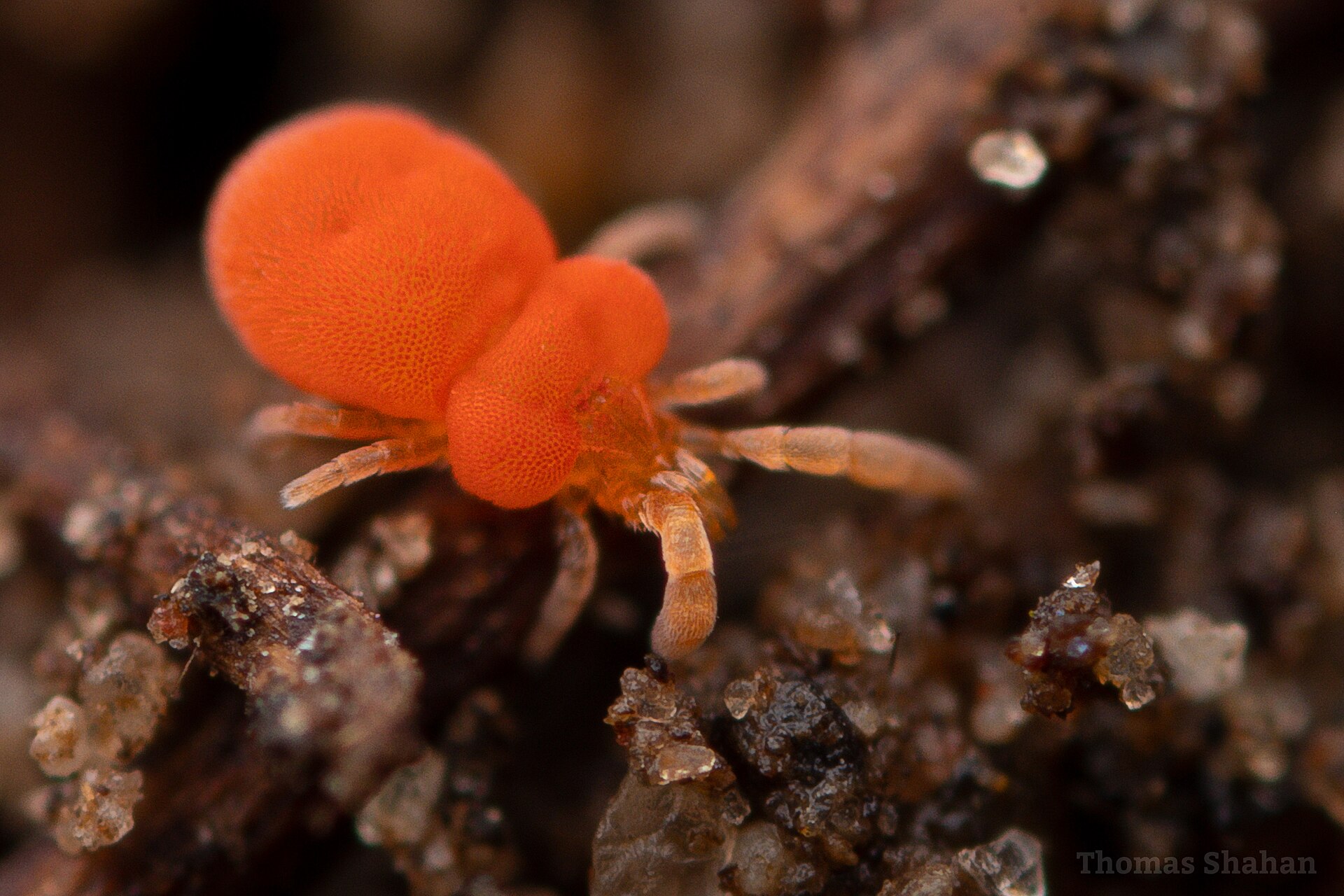
Chigger
arachnidTrombiculidae (larval mites)
The larval stage of a harvest mite, nearly invisible to the naked eye, that climbs onto skin from tall grass and weeds and causes intensely itchy welts, a human comfort and safety issue rather than a plant pest.
- Hits
- Not a plant feeder
- First fix
- Mow and clear tall grass and brush at garden edges
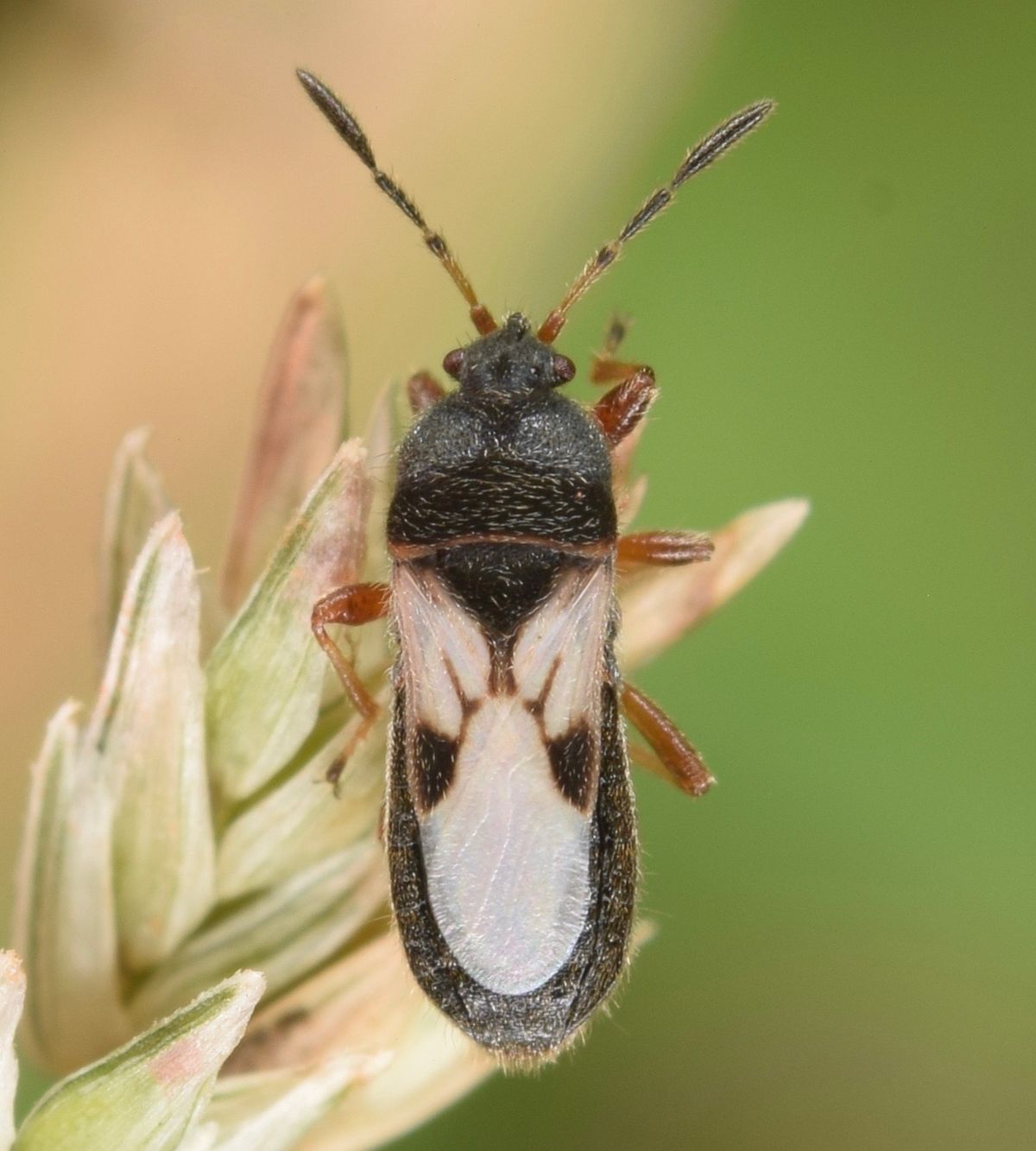
Chinch bug
insectBlissus leucopterus
A small black-and-white bug that feeds at the base of grass blades, causing irregular patches of turf to yellow and die, especially in hot, dry, sunny areas of the lawn.
- Hits
- Lawn/turf
- First fix
- Float test to confirm
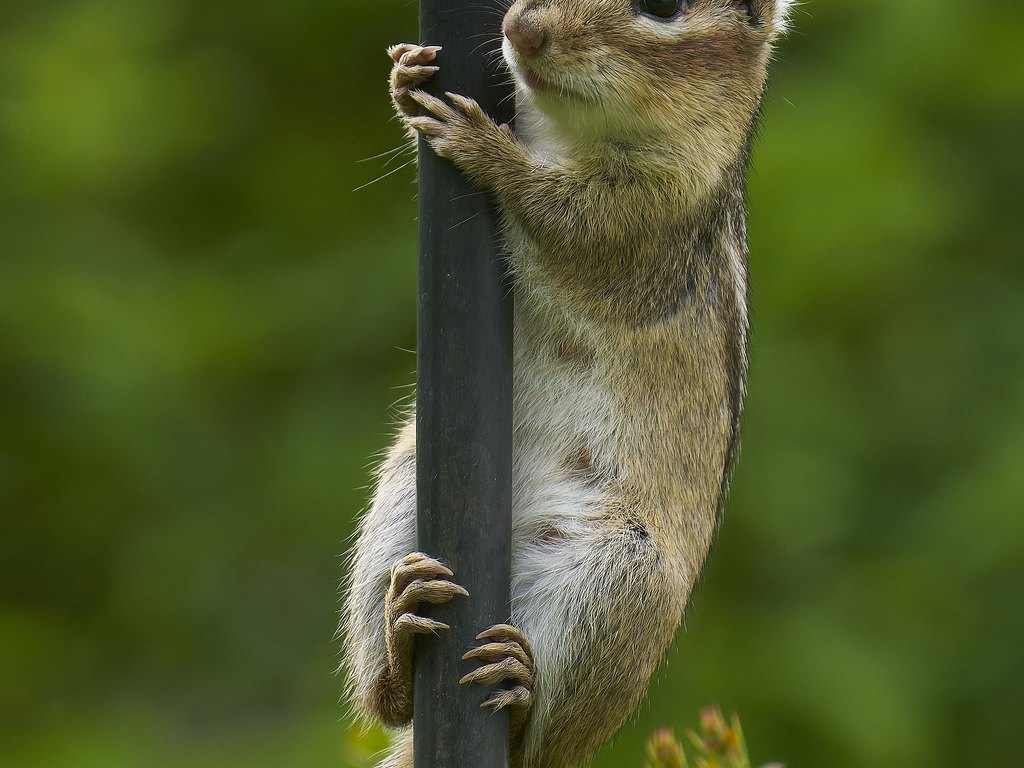
Chipmunk
animalTamias striatus
Small striped ground squirrel that raids seedbeds for fresh-planted seed and steals ripe berries. Digs 1-inch entrance holes hidden under rocks and edging.
- Hits
- Sunflower seed, Corn seed, Strawberry, Tomato (bites)
- First fix
- Cover fresh seed rows with hardware cloth
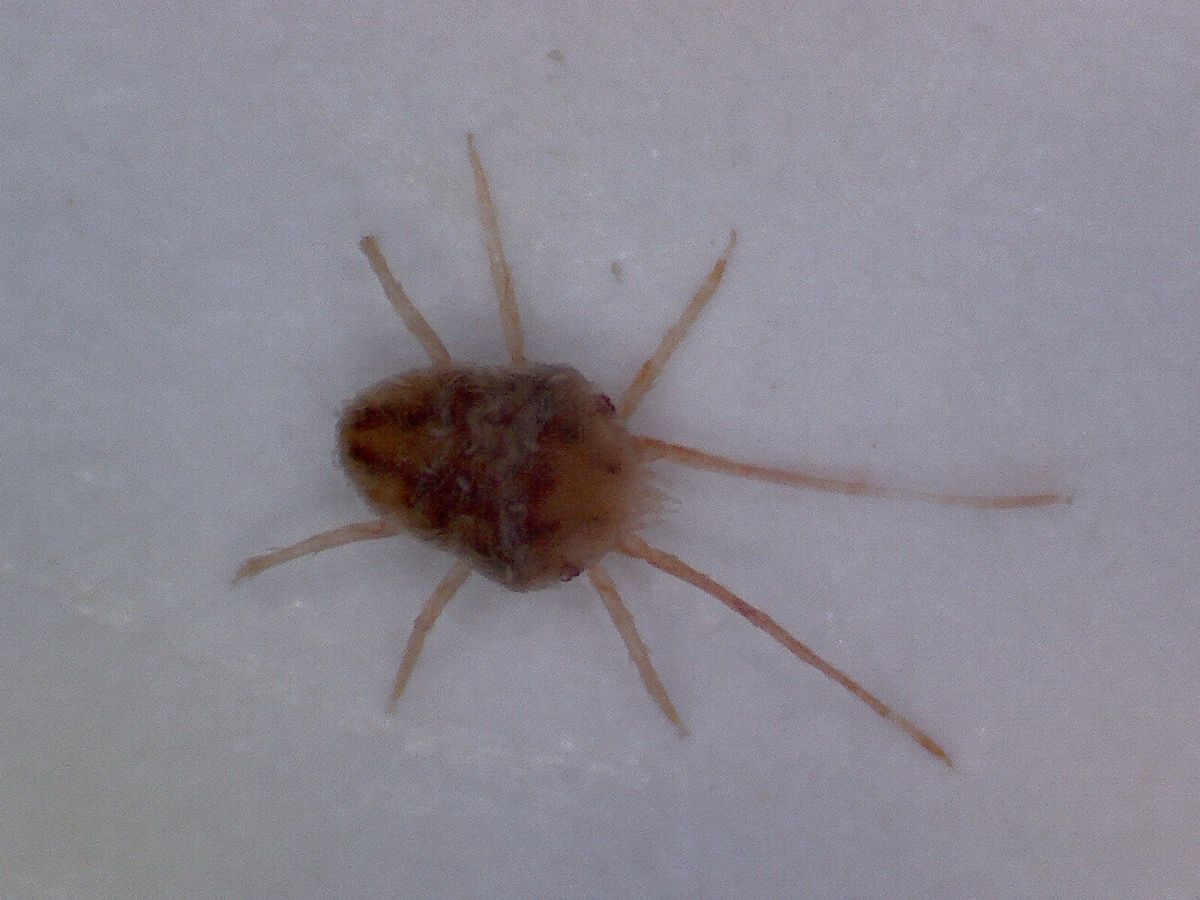
Clover mite
arachnidBryobia praetiosa
A reddish-brown mite, smaller than a pinhead, that feeds on grass and clover and sometimes leaves a rusty stain when crushed indoors after invading homes near well-fertilized lawns.
- Hits
- Not a plant feeder
- First fix
- Create a bare-soil or gravel barrier by the foundation
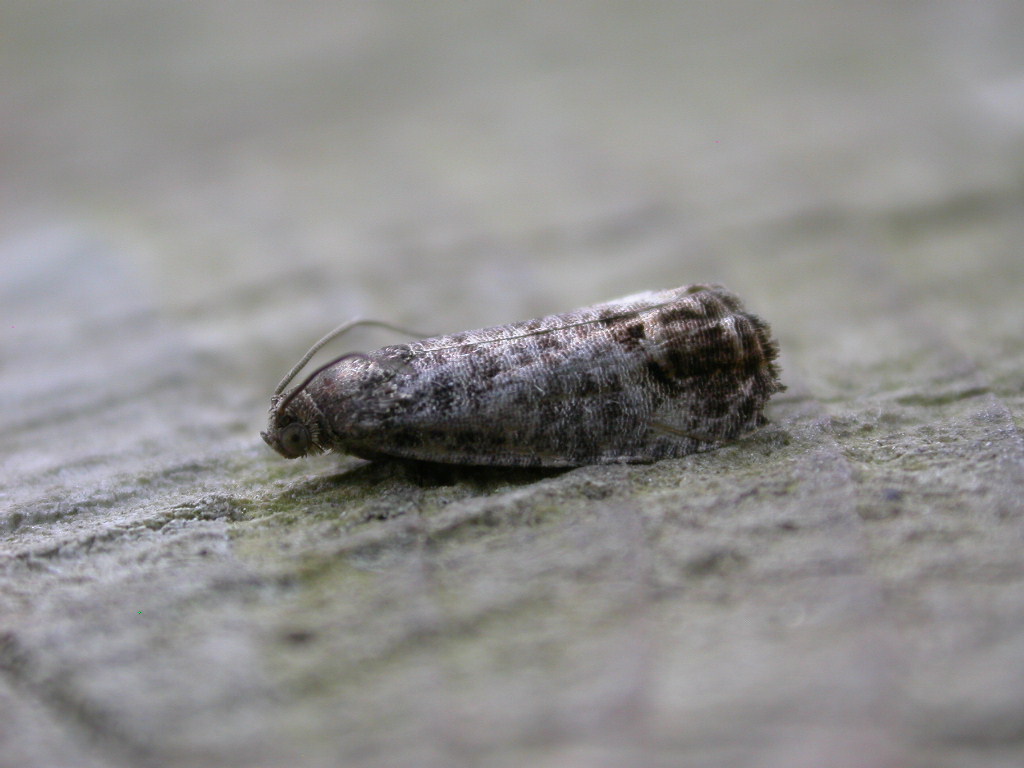
Codling moth
insectCydia pomonella
The classic 'worm in the apple.' A small caterpillar tunnels straight to the core, leaving a frass-plugged entry hole, usually at the calyx (blossom) end.
- Hits
- Apple, Pear
- First fix
- Bag individual fruit
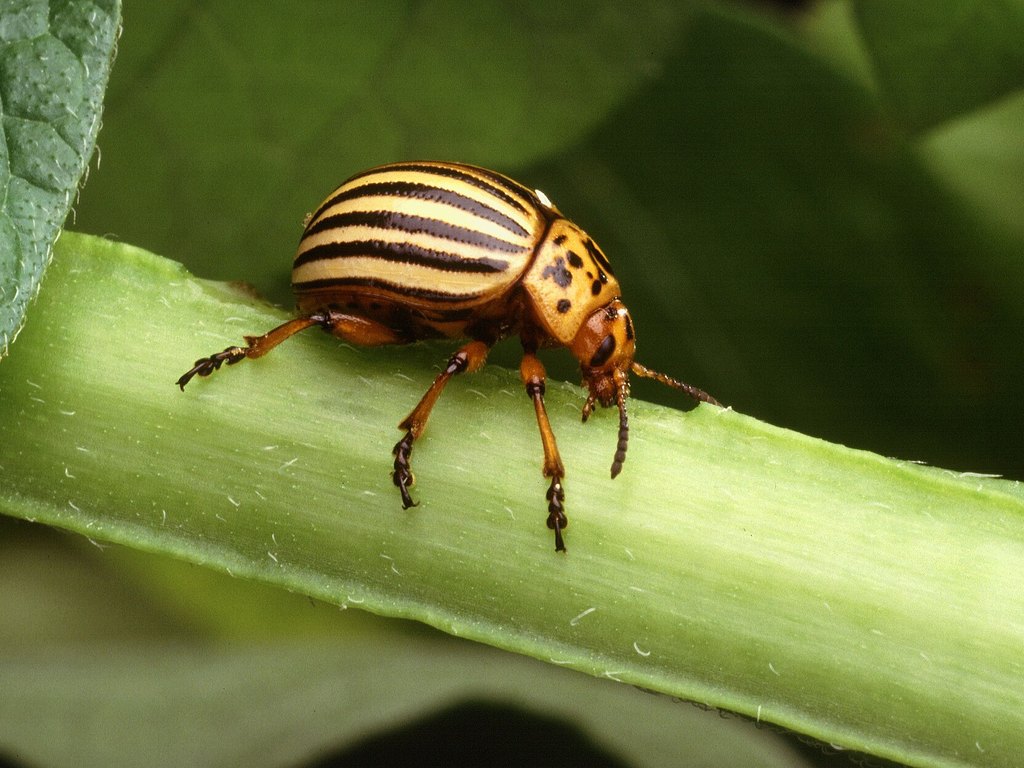
Colorado potato beetle
insectLeptinotarsa decemlineata
A round, hard-shelled 3/8-inch beetle with 10 black stripes on yellow wing covers. Larvae are humpbacked, red-orange, and softly grotesque, and even more voracious than the adults.
- Hits
- Potato, Eggplant, Tomato (occasionally), Pepper
- First fix
- Handpick daily during emergence
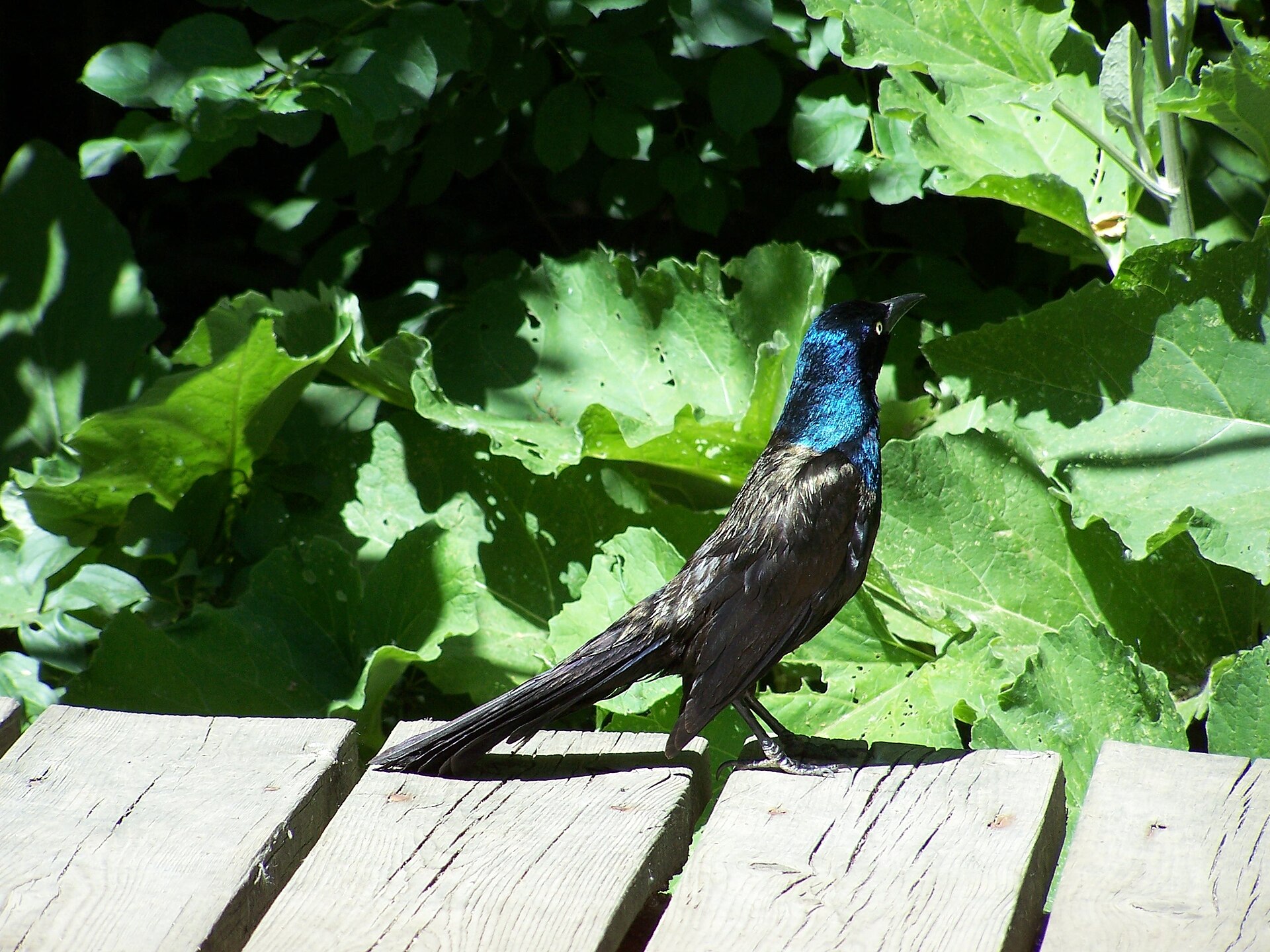
Common grackle
animalQuiscalus quiscula
A large, iridescent blackbird with a long keel-shaped tail that forages in bold, noisy flocks. Grackles are native and protected under the Migratory Bird Treaty Act, so control here means exclusion and deterrents, not harm.
- Hits
- Sweet corn, Sunflower, Tomato, Strawberry
- First fix
- Bag or net ears as corn silks brown
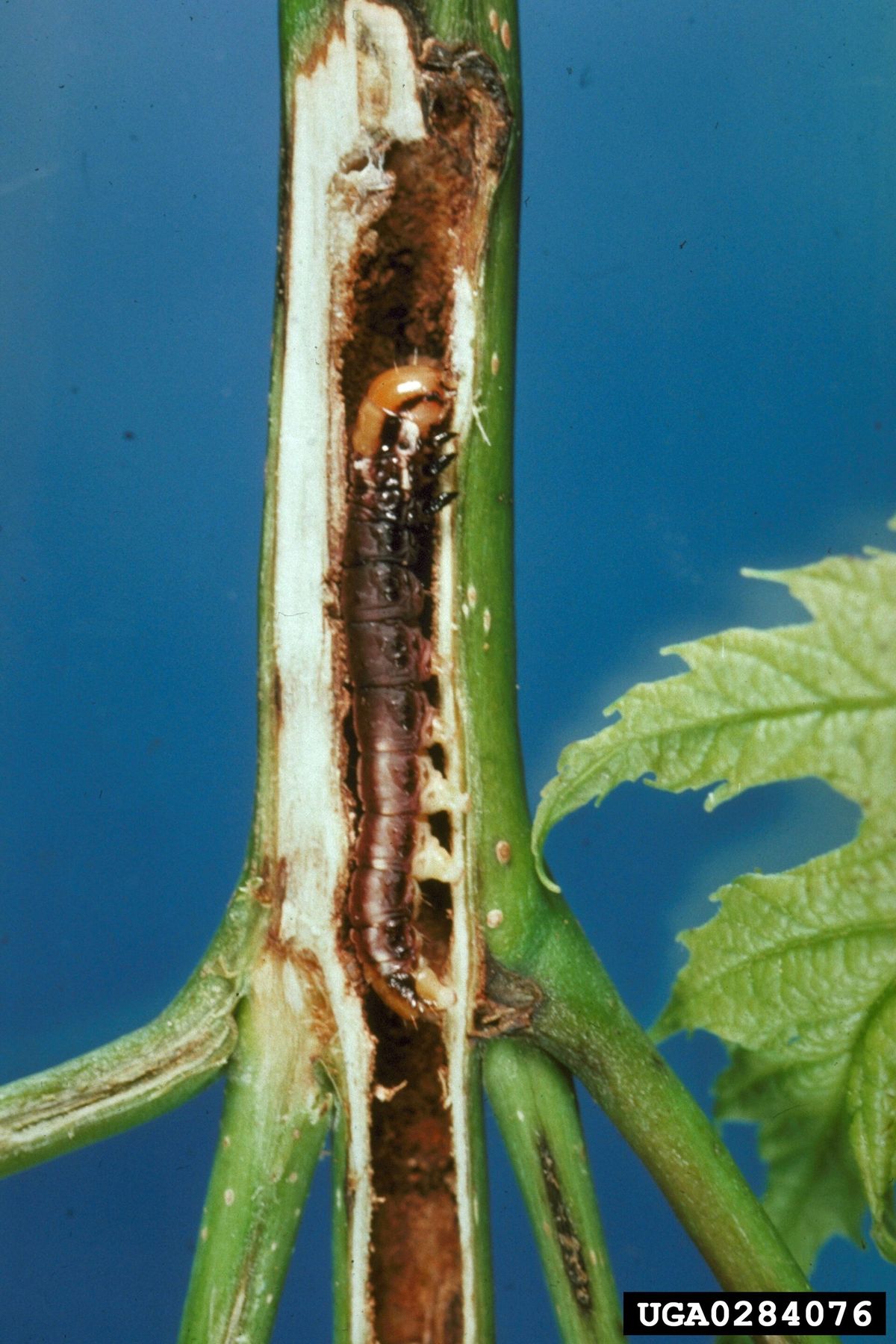
Common stalk borer
insectPapaipema nebris
A purple-and-cream banded caterpillar that starts life in weedy grass stems, then moves into garden crops, boring into stalks and causing wilting above the entry point.
- Hits
- Sweet corn, Tomato, Pepper
- First fix
- Mow grassy weeds around the garden in spring
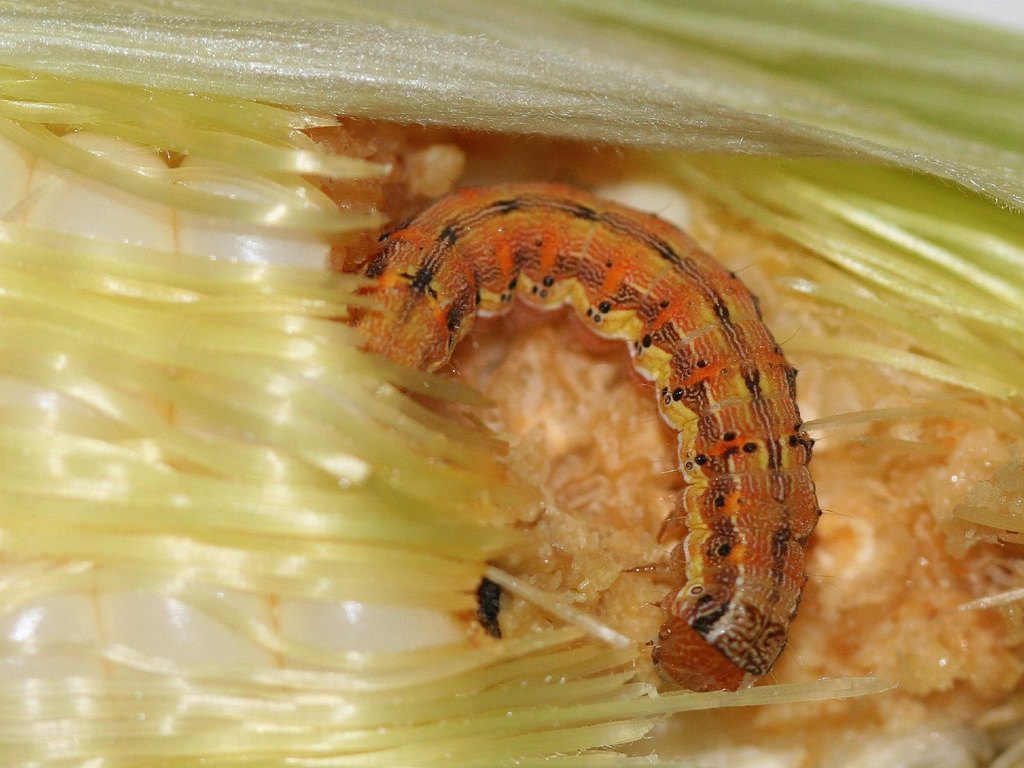
Corn earworm
insectHelicoverpa zea
One caterpillar, three names: it's the corn earworm in corn, the tomato fruitworm in tomatoes, and the bollworm in cotton. Tan, green, or pink with fine bristles and light stripes, it burrows into the tip of a corn ear or the shoulder of a tomato and eats from the inside.
- Hits
- Corn, Tomato, Pepper, Bean
- First fix
- Mineral oil on the silks
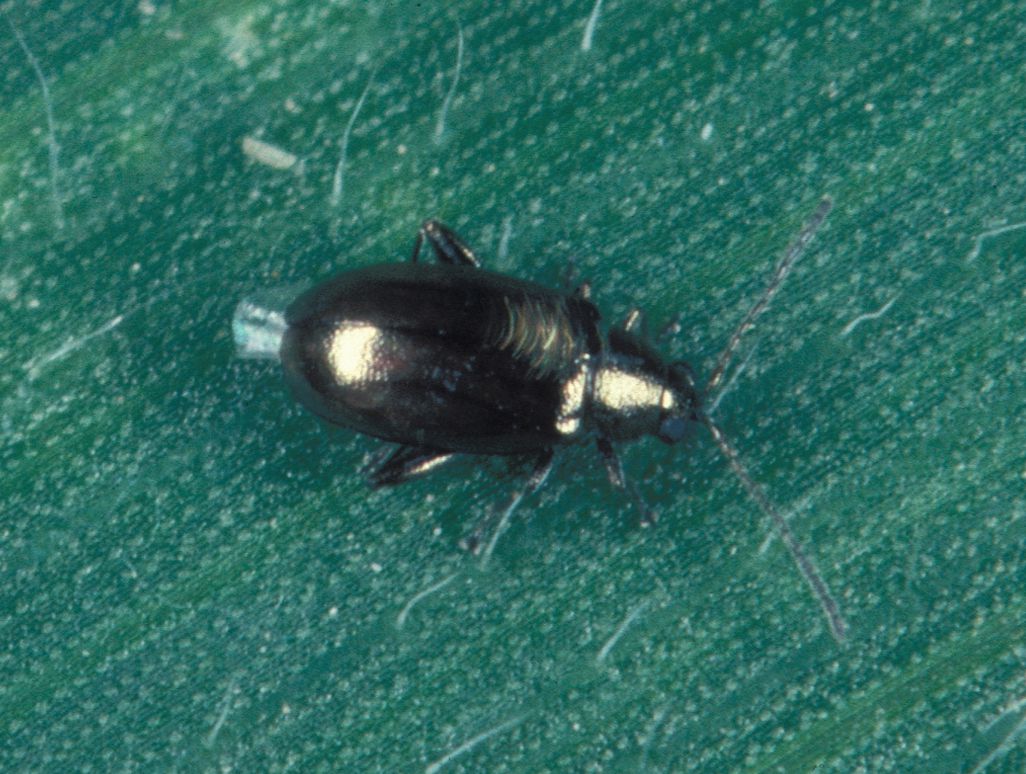
Corn flea beetle
insectChaetocnema pulicaria
A tiny, shiny black beetle that jumps like other flea beetles but is notable for spreading Stewart's bacterial wilt in sweet corn as it feeds, a disease that can kill seedlings outright.
- Hits
- Sweet corn
- First fix
- Grow resistant sweet corn varieties
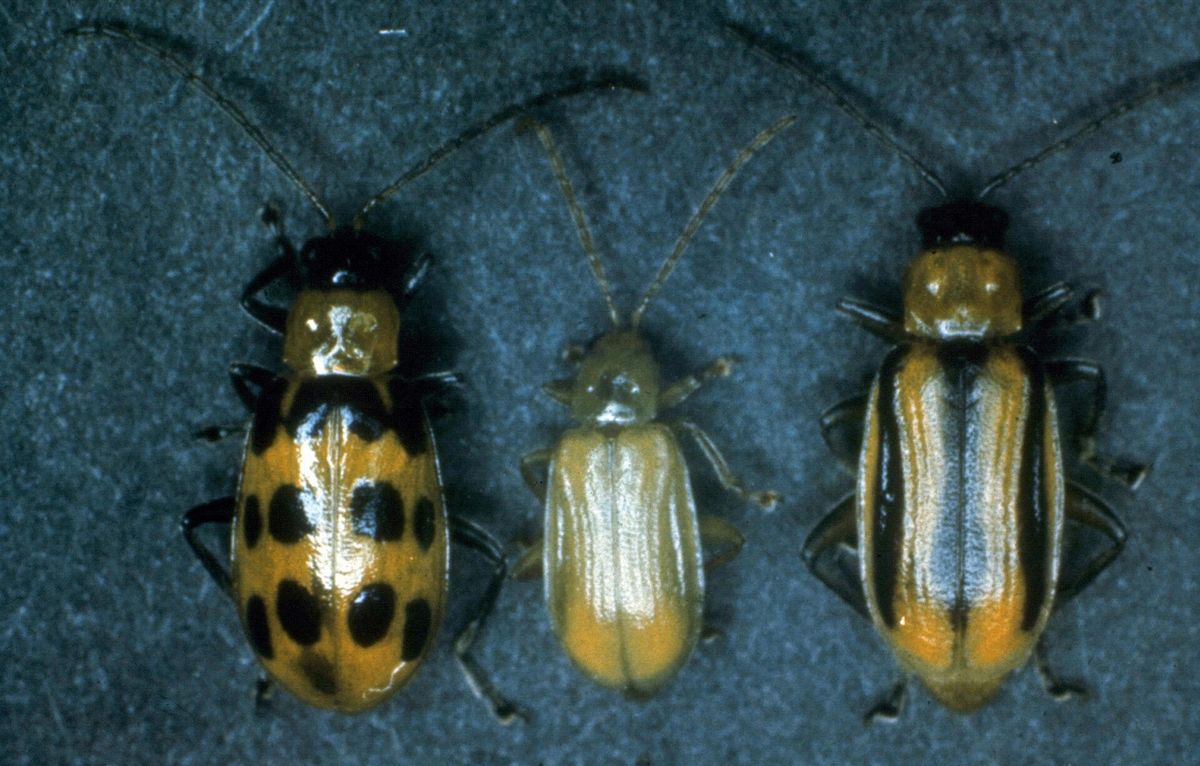
Corn rootworm
insectDiabrotica virgifera / D. barberi
Small yellow-green beetles whose larvae feed underground on corn roots, causing plants to lodge (fall over) in a distinctive 'goosenecking' pattern. Adults later feed on silks and can interfere with pollination.
- Hits
- Sweet corn
- First fix
- Rotate corn out of the bed
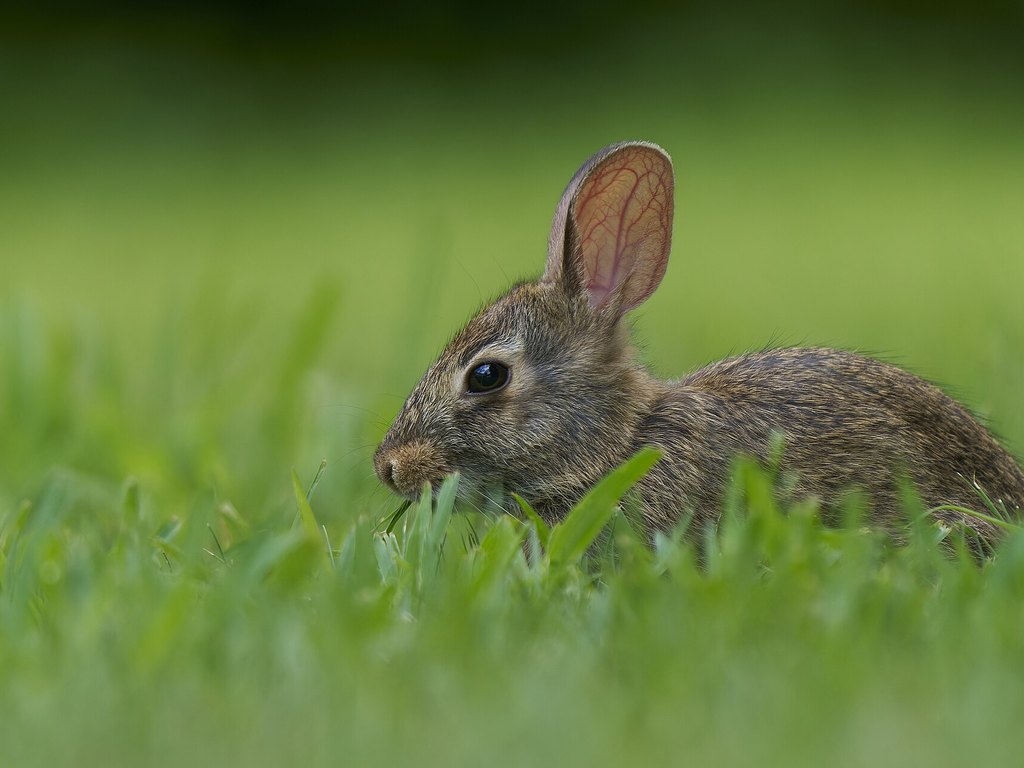
Cottontail rabbit
animalSylvilagus floridanus
The eastern cottontail is a compact, big-eyed grazer that moves through gardens at dawn and dusk, clipping tender plants at ground level with clean, scissor-like bites. A single doe can raise three to six litters per year, and once a young rabbit finds your lettuce row it will return until the row is gone. They rarely stray far from dense brush or a fence line, which is where they hide during the day.
- Hits
- Lettuce, Bean seedling, Pea, Broccoli seedling
- First fix
- 2 ft hardware cloth fence
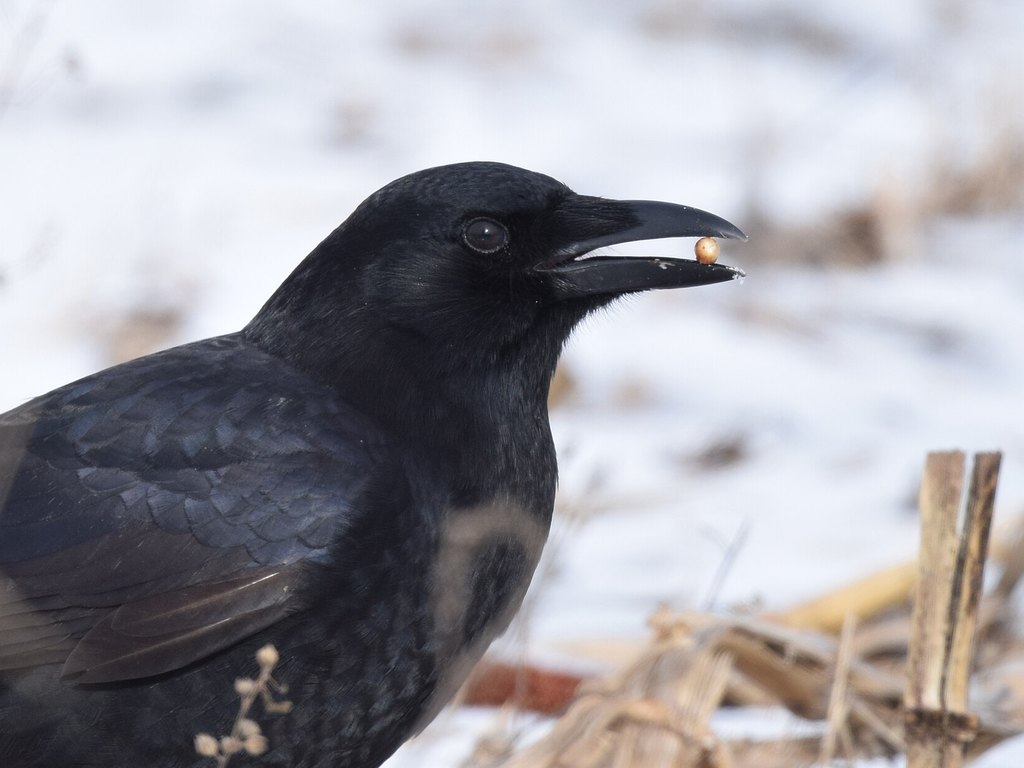
Crow & other birds
animalCorvus brachyrhynchos (crow), Turdus migratorius (robin), Sturnus vulgaris (starling)
Crows, starlings, robins, and sparrows are the garden's most clever thieves. They pull sprouting corn and sunflower seedlings for the seed, strip berry bushes clean, and peck holes in tomatoes during dry spells for moisture. Crows and starlings are especially cunning: they watch your routine, learn when you are not around, and will return in flocks until the crop is gone.
- Hits
- Sweet corn seedling, Sunflower seedling, Strawberry, Blueberry
- First fix
- 3/4-inch bird netting draped and secured
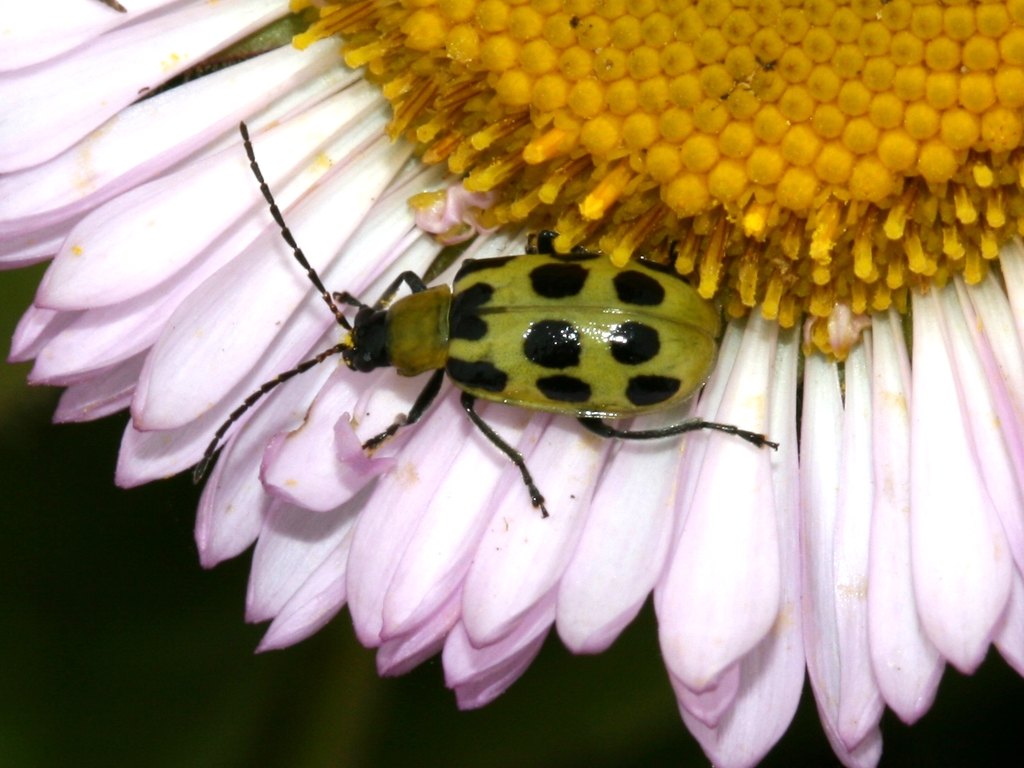
Cucumber beetle
insectAcalymma vittatum / Diabrotica undecimpunctata
A quarter-inch yellow beetle with black stripes (striped) or black spots (spotted) that swarms cucurbits. Worse than its feeding is the bacterial wilt it carries. A single infected beetle can doom a plant.
- Hits
- Cucumber, Zucchini, Squash, Pumpkin
- First fix
- Row cover until female flowers
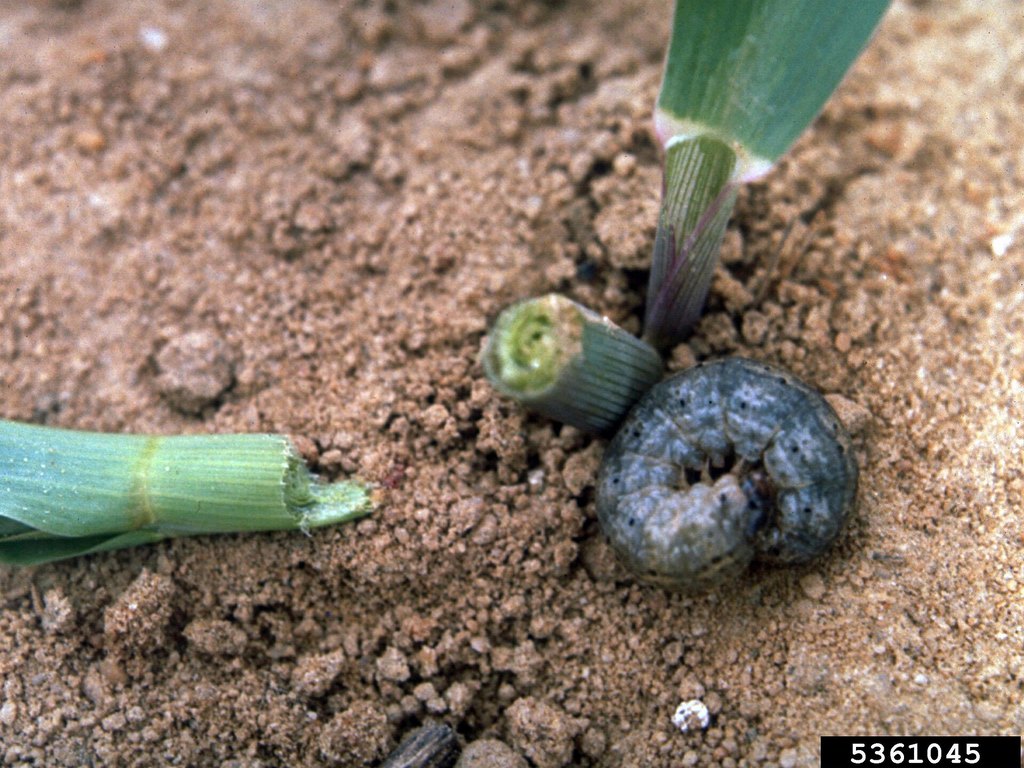
Cutworm
insectAgrotis spp. / Noctuidae
Cutworms are fat, greasy-looking gray-to-brown caterpillars that curl into a tight C when disturbed. They hide just under the soil surface by day and mow down seedlings at the stem line after dark. The classic 'my transplants were fine yesterday' pest.
- Hits
- Tomato, Pepper, Cabbage, Broccoli
- First fix
- Collars around every transplant
Cyclamen mite
arachnidPhytonemus pallidus
A microscopic mite that hides deep in unopened buds and the crown of low-growing plants, causing distorted, brittle, discolored new growth that never unfurls properly.
- Hits
- Strawberry
- First fix
- Remove and destroy the worst crowns
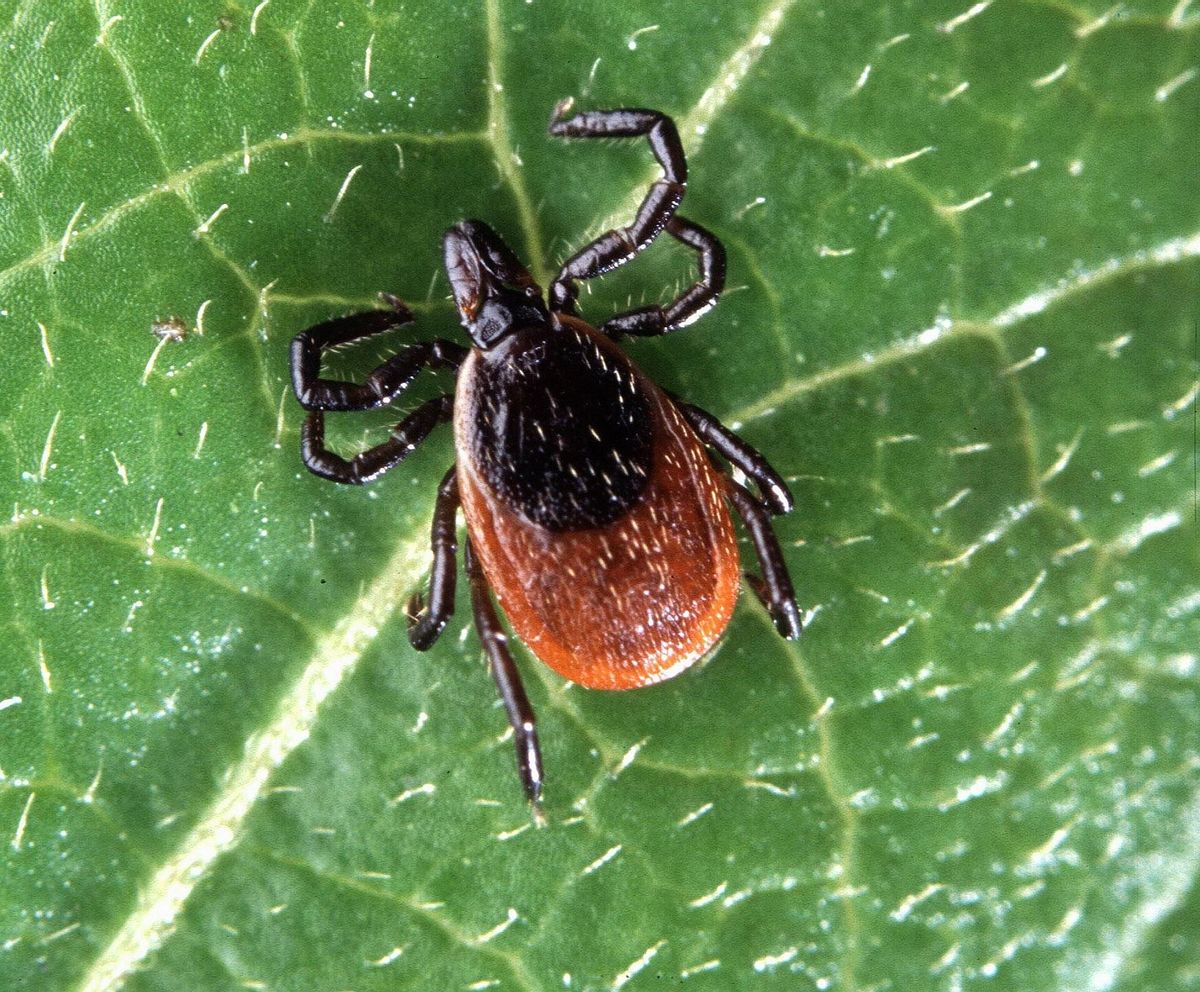
Deer tick (blacklegged tick)
arachnidIxodes scapularis
A small, dark tick that waits on tall grass and brush edges for a host to brush by, then attaches to feed on blood for days. It is the primary carrier of Lyme disease in much of the eastern and upper midwestern US, making garden-edge management a real safety issue, not just a nuisance.
- Hits
- Not a plant feeder
- First fix
- Keep a mowed, mulched buffer between garden and woods/tall grass
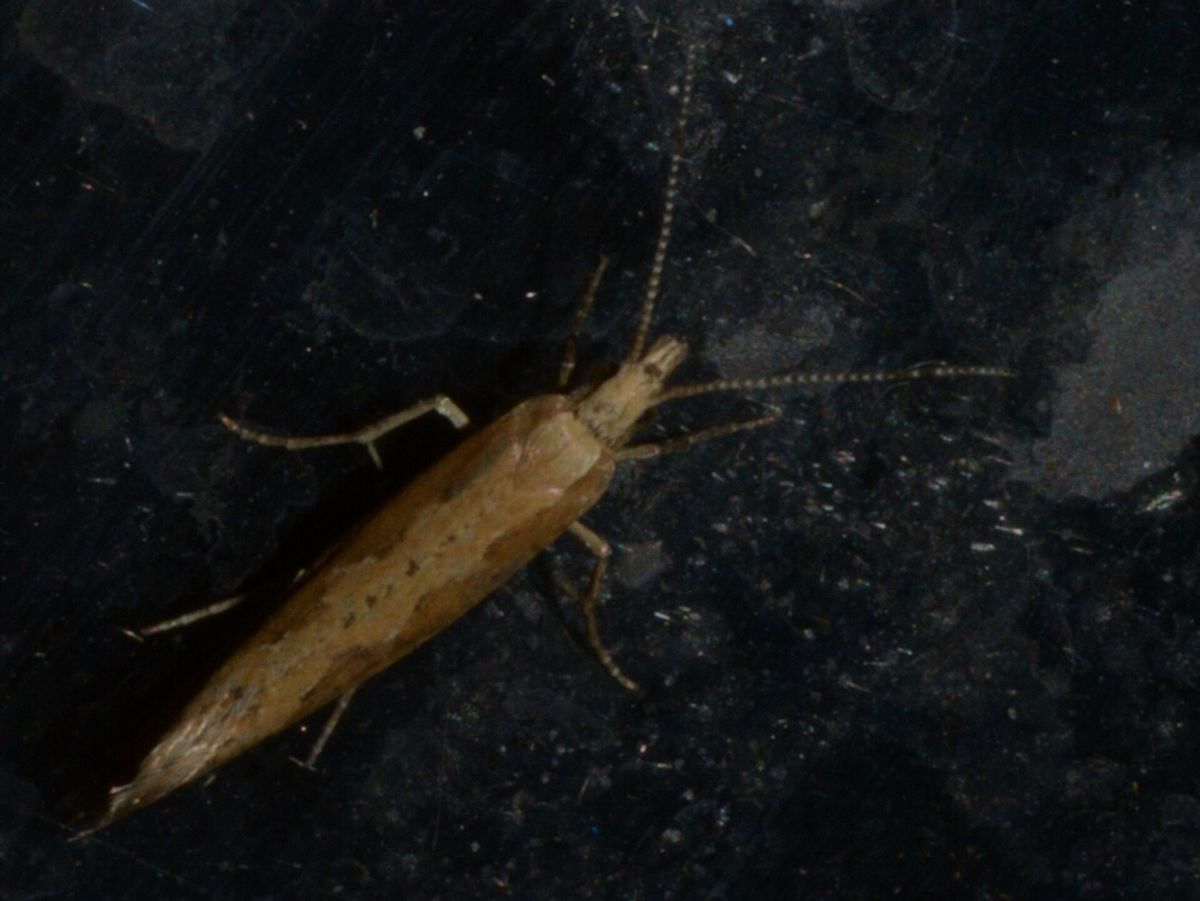
Diamondback moth
insectPlutella xylostella
A small, slender green caterpillar that wriggles violently and drops on a silk thread when disturbed. It is one of the most pesticide-resistant caterpillar pests in the world, so rotating tactics matters more than usual here.
- Hits
- Cabbage, Broccoli, Kale, Cauliflower
- First fix
- Row cover from transplant
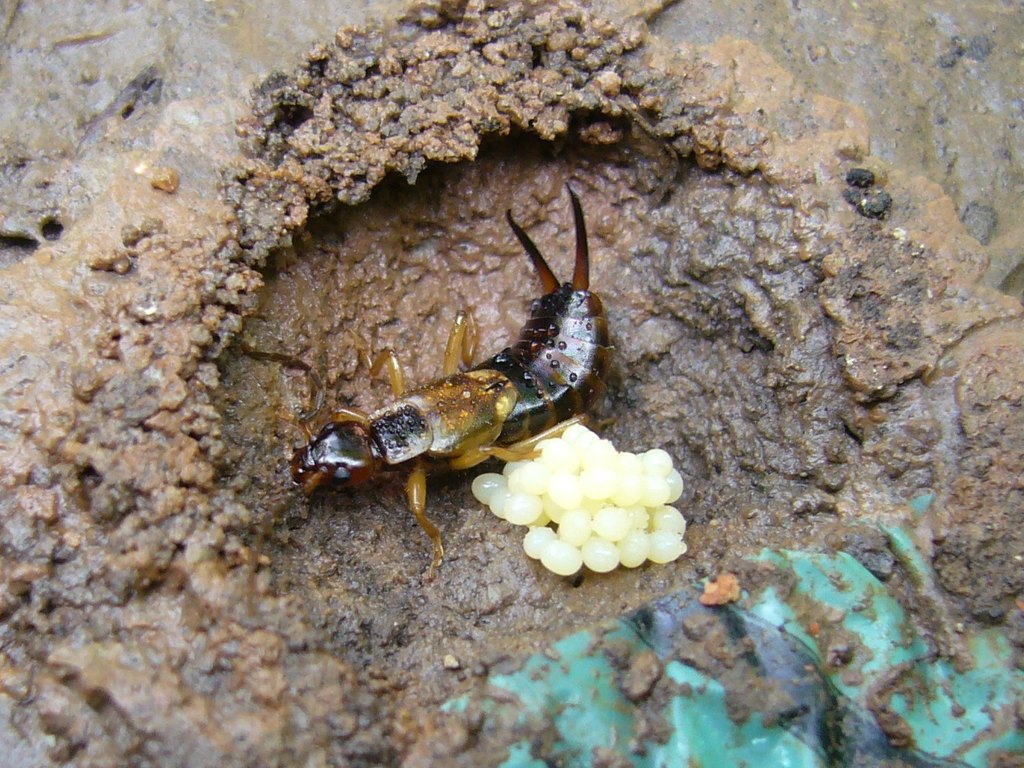
Earwig
insectForficula auricularia
Flat reddish-brown insects with rear pincers, active at night and hiding in tight damp crevices by day. They're genuinely double-edged: they eat aphids and insect eggs, but in numbers they shred seedlings, corn silks, and soft fruit.
- Hits
- Lettuce, Seedlings, Corn, Strawberry
- First fix
- Rolled newspaper or bamboo traps
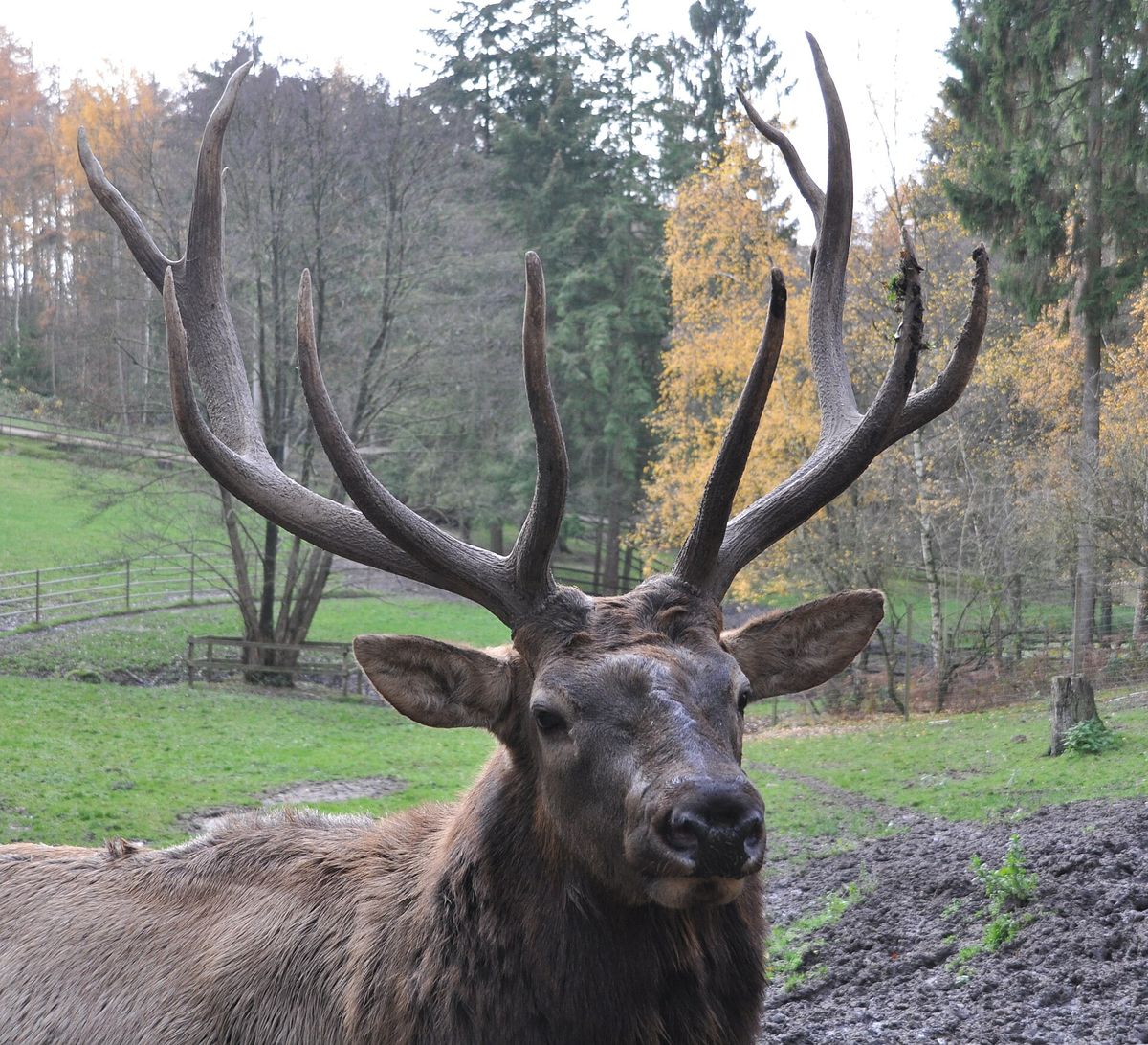
Elk
animalCervus canadensis
A large native grazer that moves in herds and can devastate a garden or orchard in a single overnight visit where its range overlaps rural and mountain-edge properties. Elk are a managed game species; lethal control outside a licensed hunt is generally illegal.
- Hits
- Fruit trees (bark & branches), Vegetable garden (broadly), Hay/alfalfa, Young trees/shrubs
- First fix
- Tall, sturdy fencing (7-8 ft)
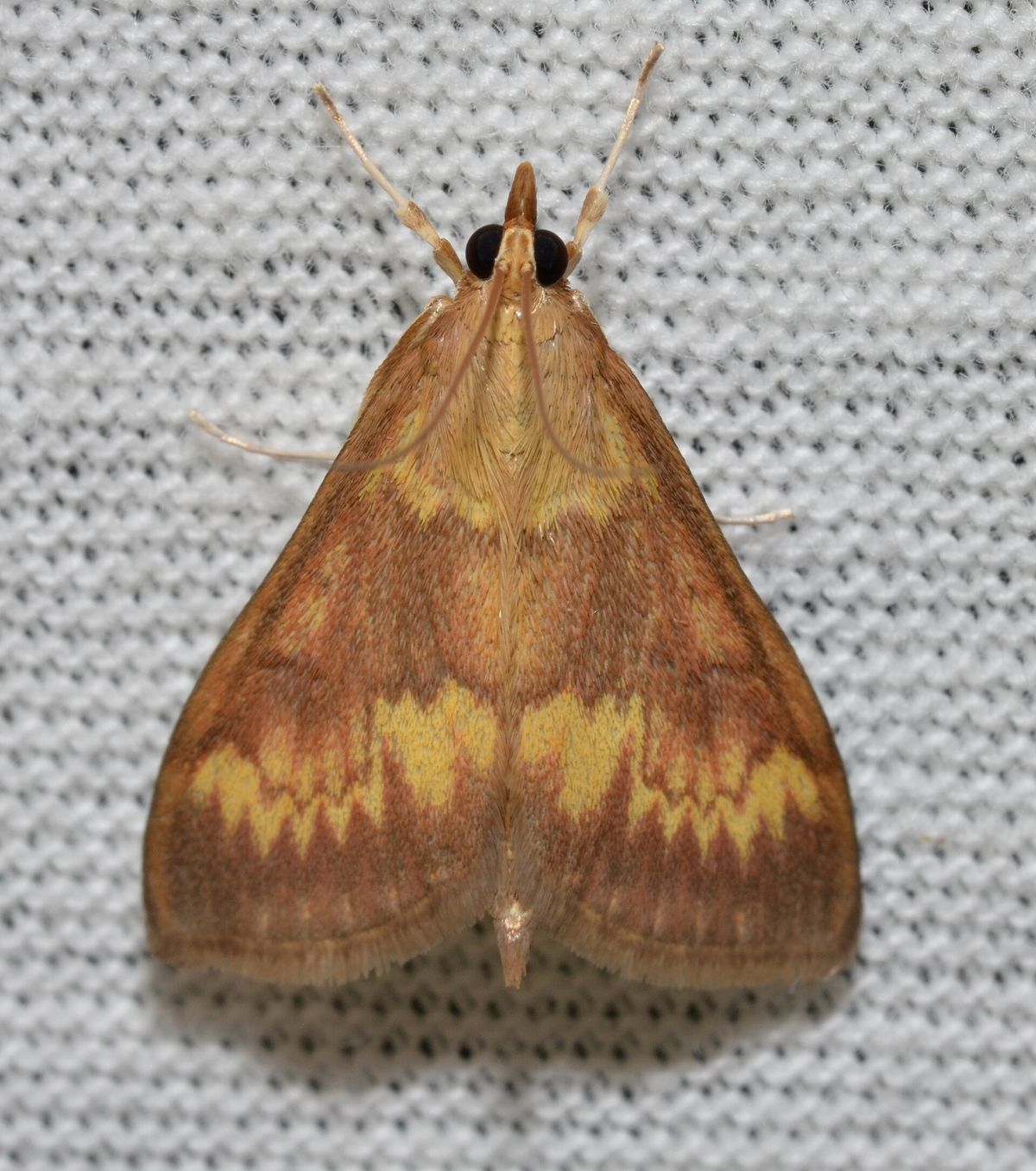
European corn borer
insectOstrinia nubilalis
A cream-colored caterpillar with a brown head that tunnels into corn stalks, ears, and pepper fruit. Entry holes often show a small pile of sawdust-like frass just outside.
- Hits
- Sweet corn, Pepper
- First fix
- Destroy stalks after harvest
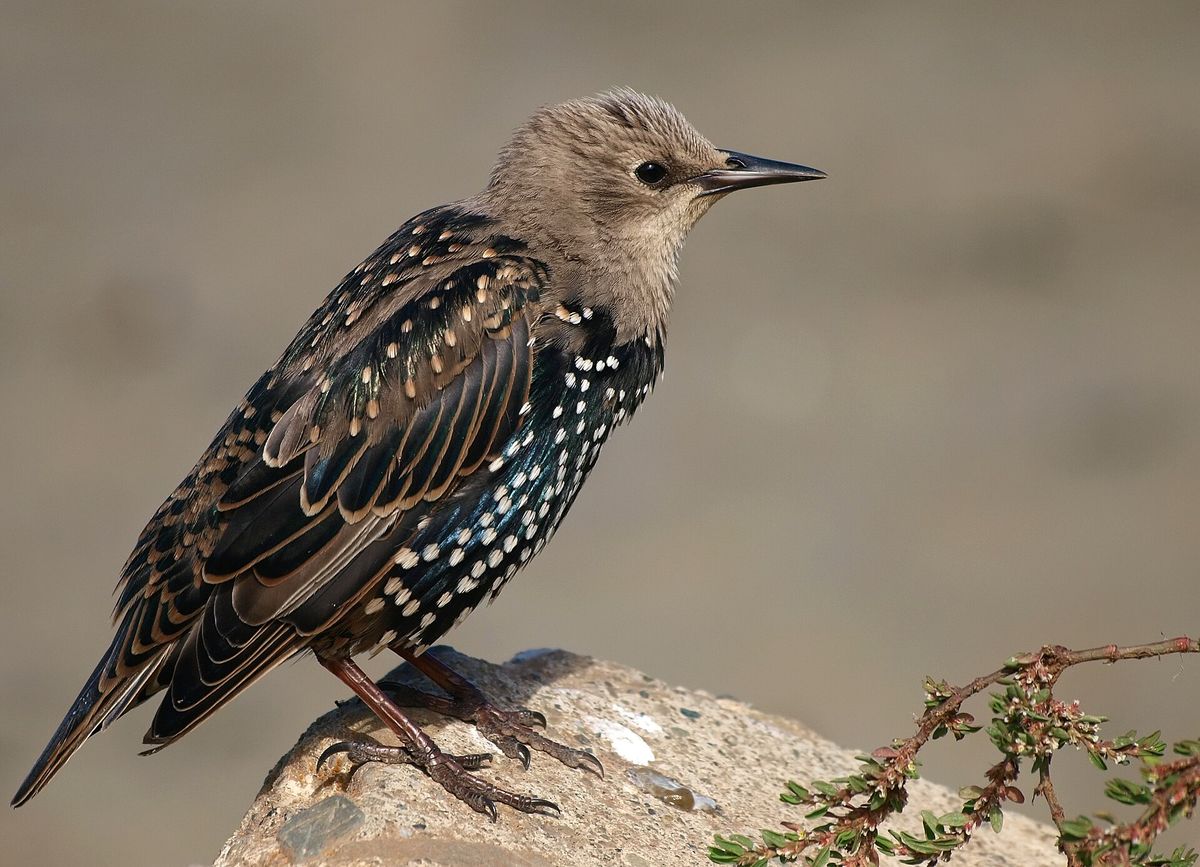
European starling
animalSturnus vulgaris
An introduced, iridescent black bird that travels in large, noisy flocks and out-competes native cavity-nesting birds for nest sites. Unlike almost every native songbird, starlings are NOT protected under the Migratory Bird Treaty Act because they are non-native, which is why exclusion and legal deterrents are fair game here.
- Hits
- Cherry, Grape, Blueberry, Strawberry
- First fix
- Netting over fruit
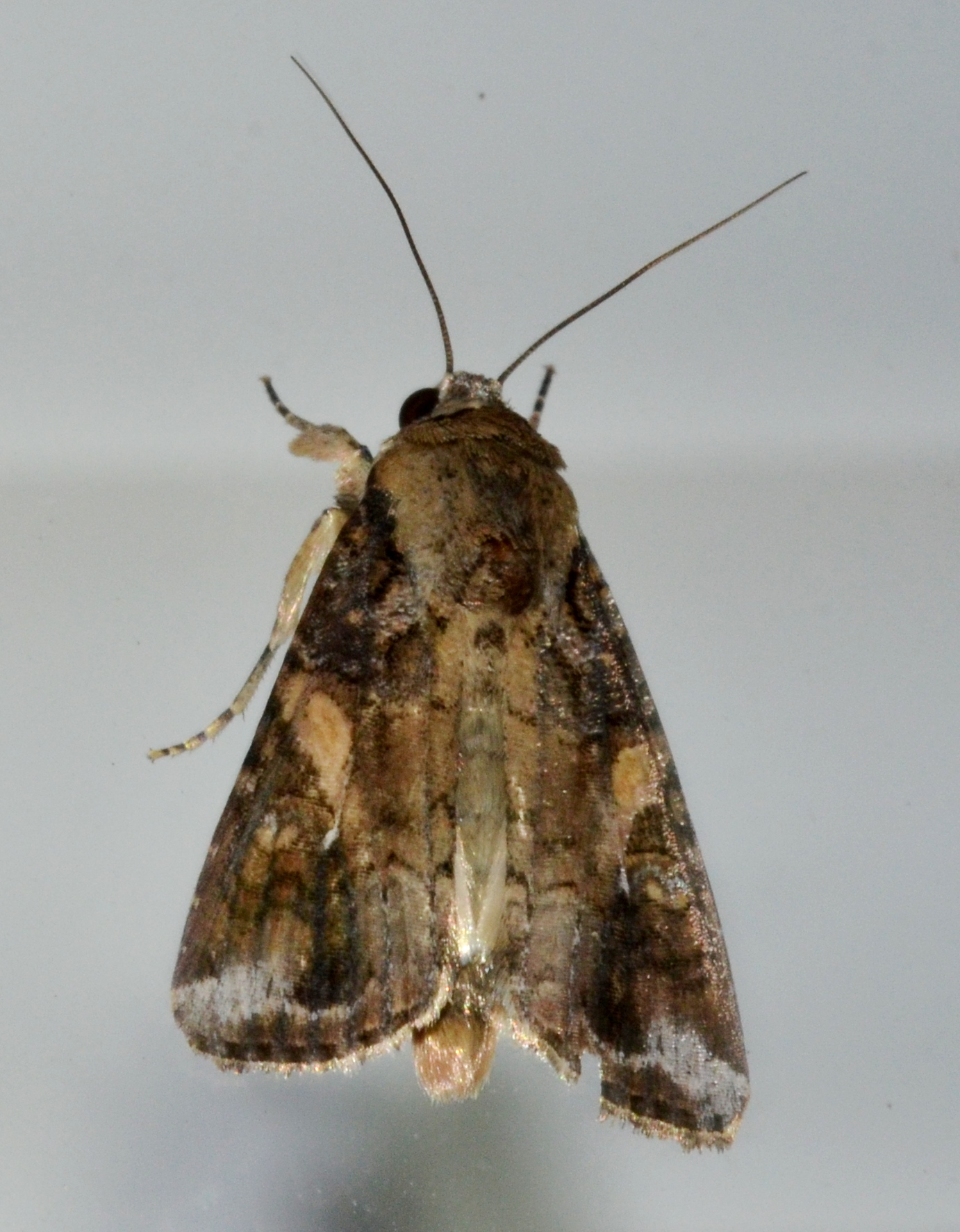
Fall armyworm
insectSpodoptera frugiperda
A striped caterpillar with a distinctive inverted 'Y' on its head that moves through fields in large numbers, stripping foliage as it goes. It cannot survive northern winters but migrates north each year on storm fronts.
- Hits
- Sweet corn, Bush bean, Lettuce, Spinach
- First fix
- Scout corn whorls
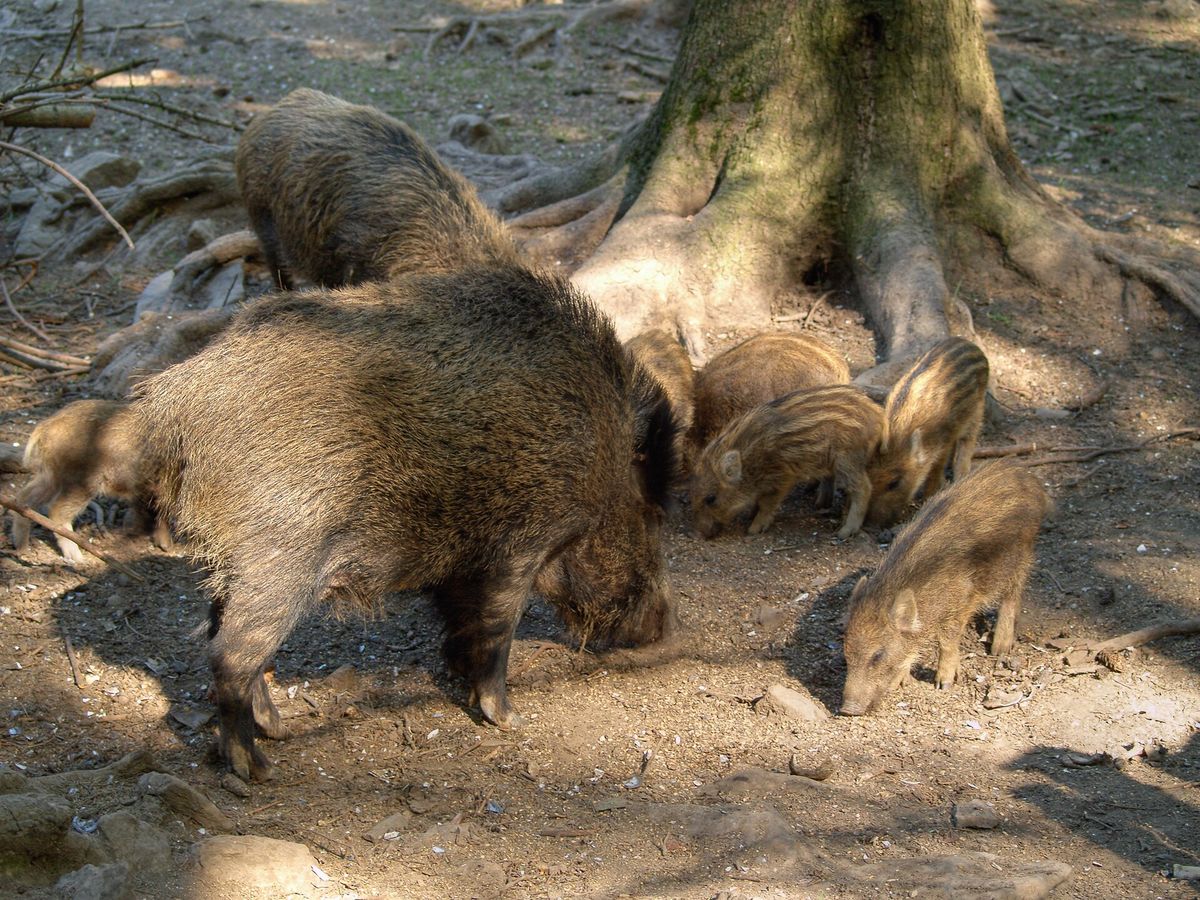
Feral hog
animalSus scrofa
A destructive, non-native, and highly prolific invasive species that roots through soil hunting roots, grubs, and bulbs, tearing up huge areas of garden and pasture in a single night. Unlike most wildlife on this list, feral hogs are an invasive species that most states actively encourage removing.
- Hits
- Root vegetables, Sweet corn, Melon, Lawn/pasture
- First fix
- Heavy-duty exclusion fencing
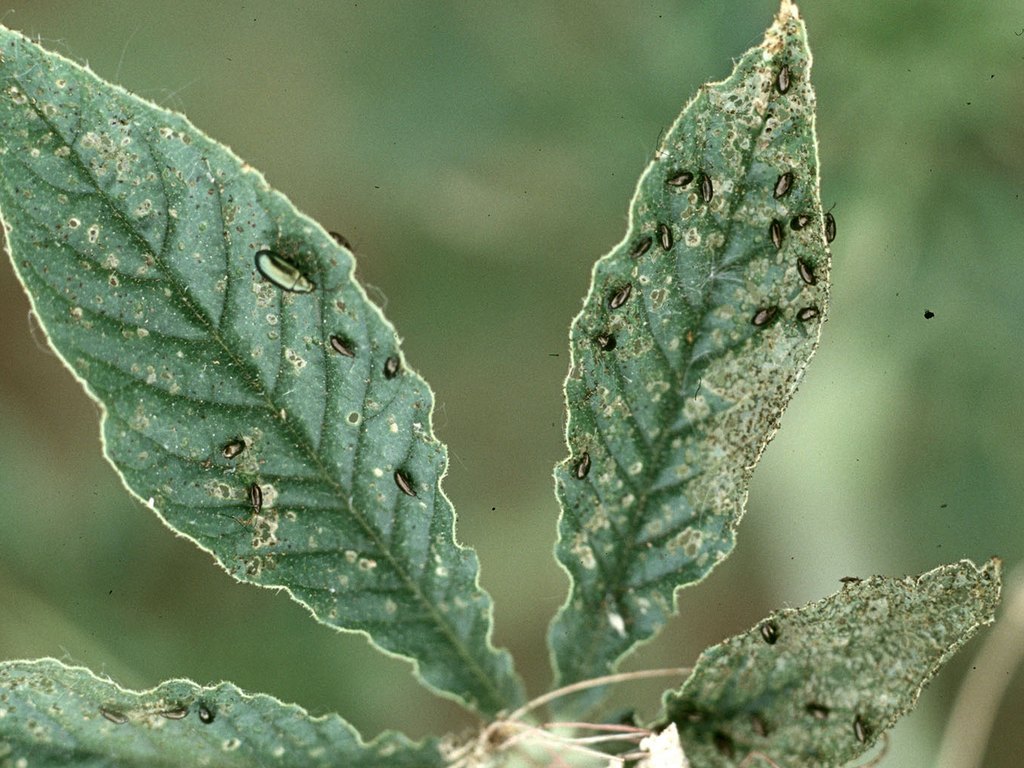
Flea beetle
insectChrysomelidae (Alticini)
Tiny (1/16 inch) shiny black or bronze beetles that jump like fleas when disturbed. Individually harmless-looking, but they arrive in swarms and can shred a seedling in days.
- Hits
- Eggplant, Radish, Arugula, Bok choy
- First fix
- Row cover from seeding
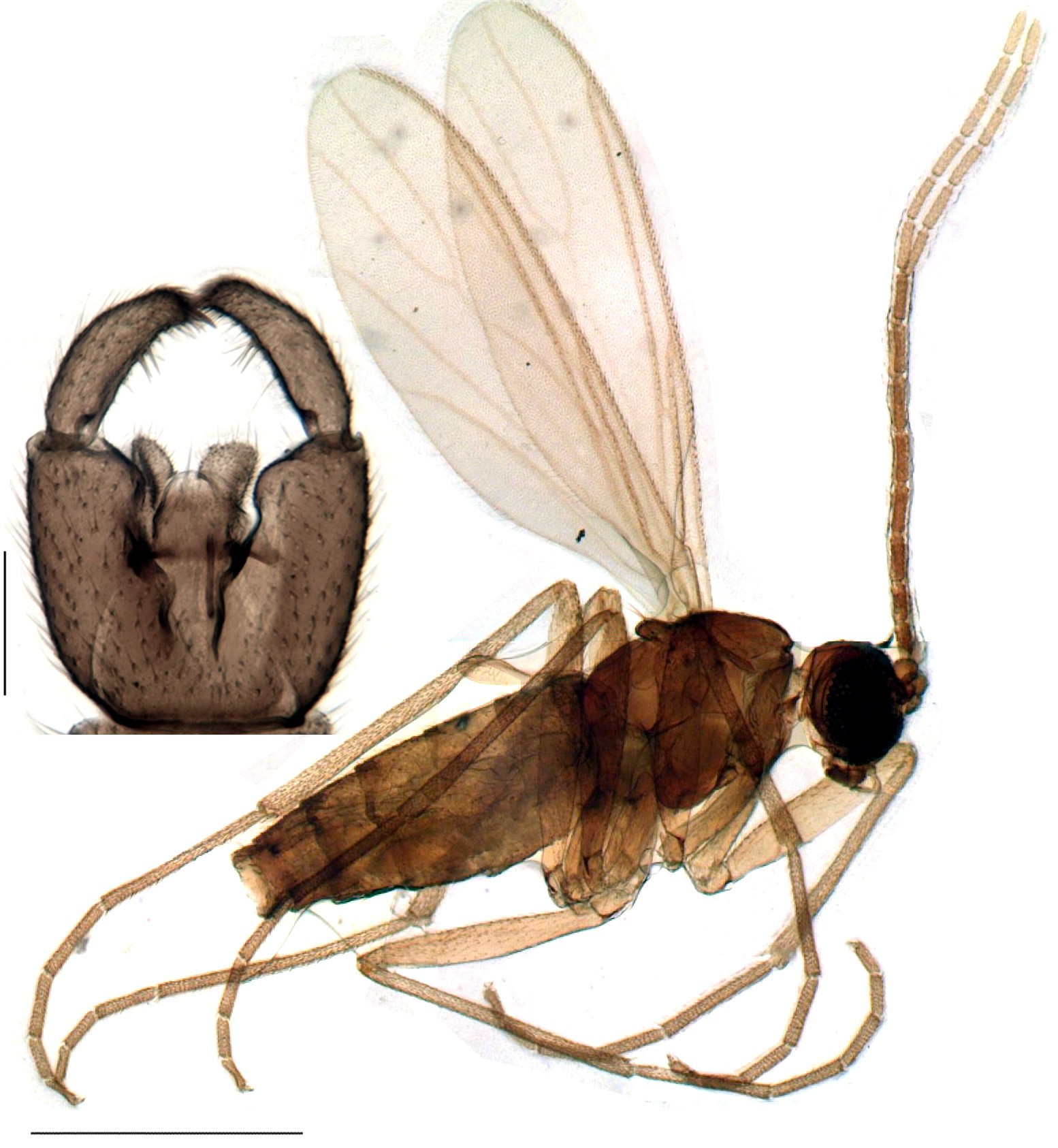
Fungus gnat
insectBradysia spp.
Small, mosquito-like flies that hover around seed-starting trays and houseplants. Adults are mostly a nuisance; larvae in the soil feed on fungi and organic matter but can nibble root hairs of seedlings in consistently wet mix.
- Hits
- Lettuce, Basil, Tomato
- First fix
- Let the soil surface dry between waterings
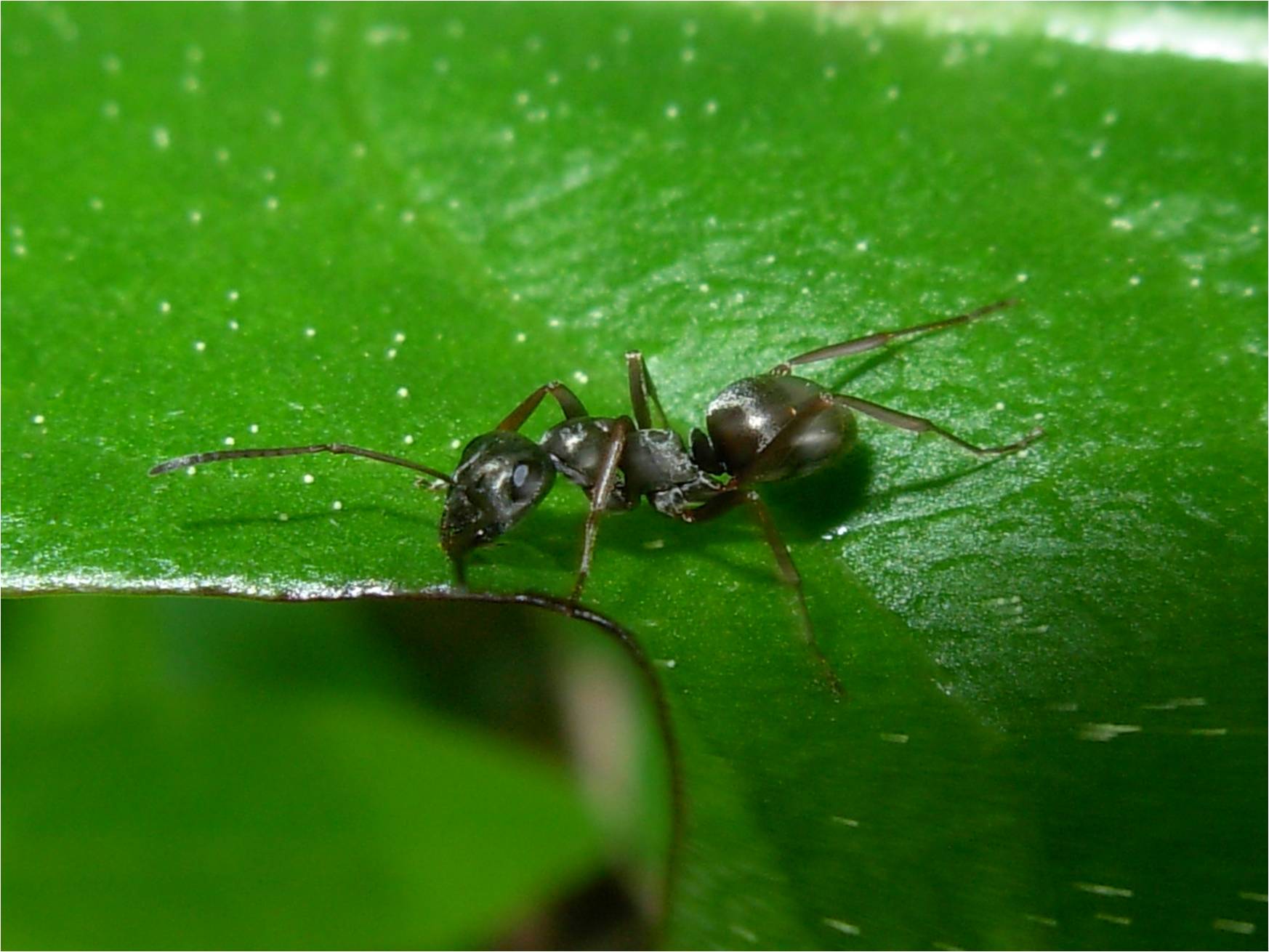
Garden ants
insectLasius spp., Tapinoma spp.
Most garden ants do little direct plant damage themselves, but they farm aphids, scale, and mealybugs for honeydew, protecting those pests from predators and moving them to new growth.
- Hits
- Tomato, Pepper, Bean, Kale
- First fix
- Control the aphids, not just the ants
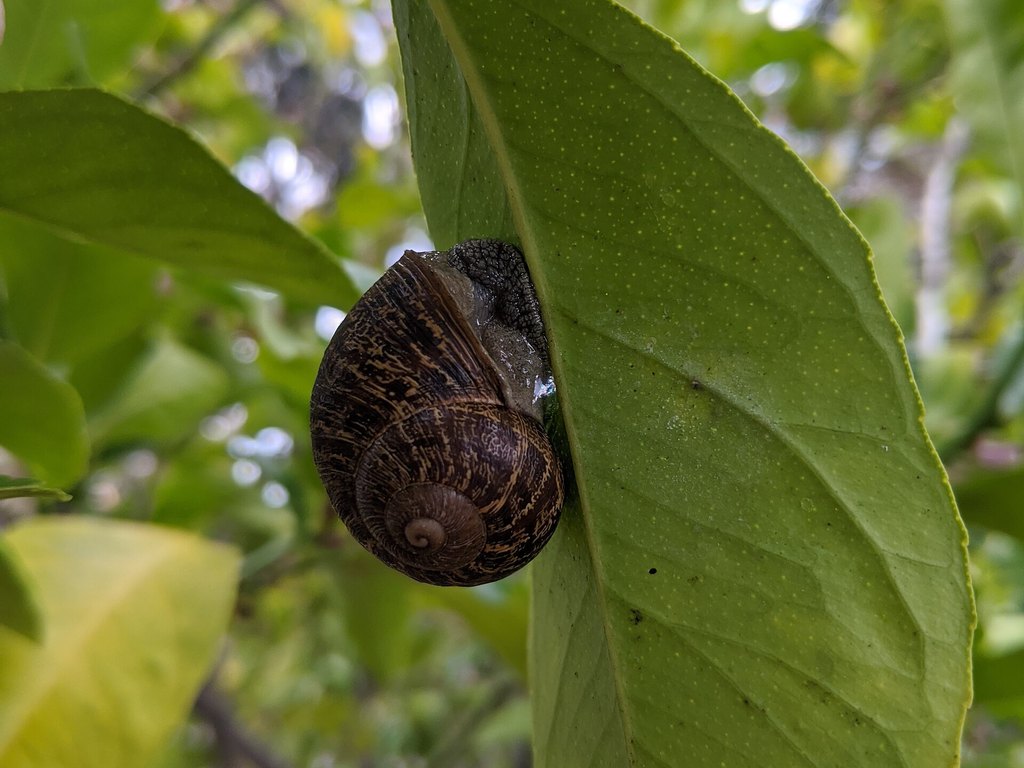
Garden snail
molluskCornu aspersum
The brown garden snail carries a coiled tan-and-brown shell and glides on a slime trail. Introduced to North America as food, it now feeds at night and on damp overcast days, hiding under pots, boards, and ground cover by day.
- Hits
- Lettuce, Basil, Bean, Strawberry
- First fix
- Night hunts after watering
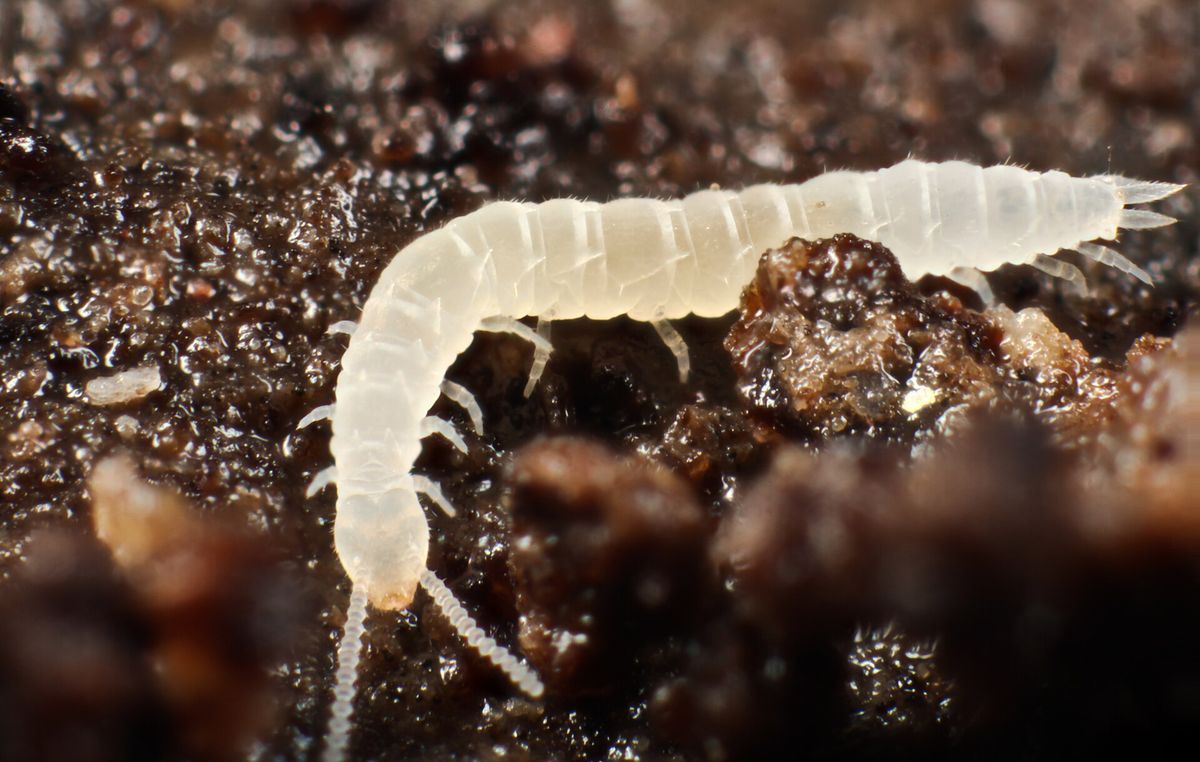
Garden symphylan
arachnidScutigerella immaculata
A small, fast-moving, white, many-legged soil dweller resembling a tiny centipede. It lives deep in the soil and feeds on fine root hairs, causing patchy stunting that's easy to mistake for a nutrient problem.
- Hits
- Lettuce, Spinach, Carrot, Bush bean
- First fix
- Dig and inspect roots of stunted patches
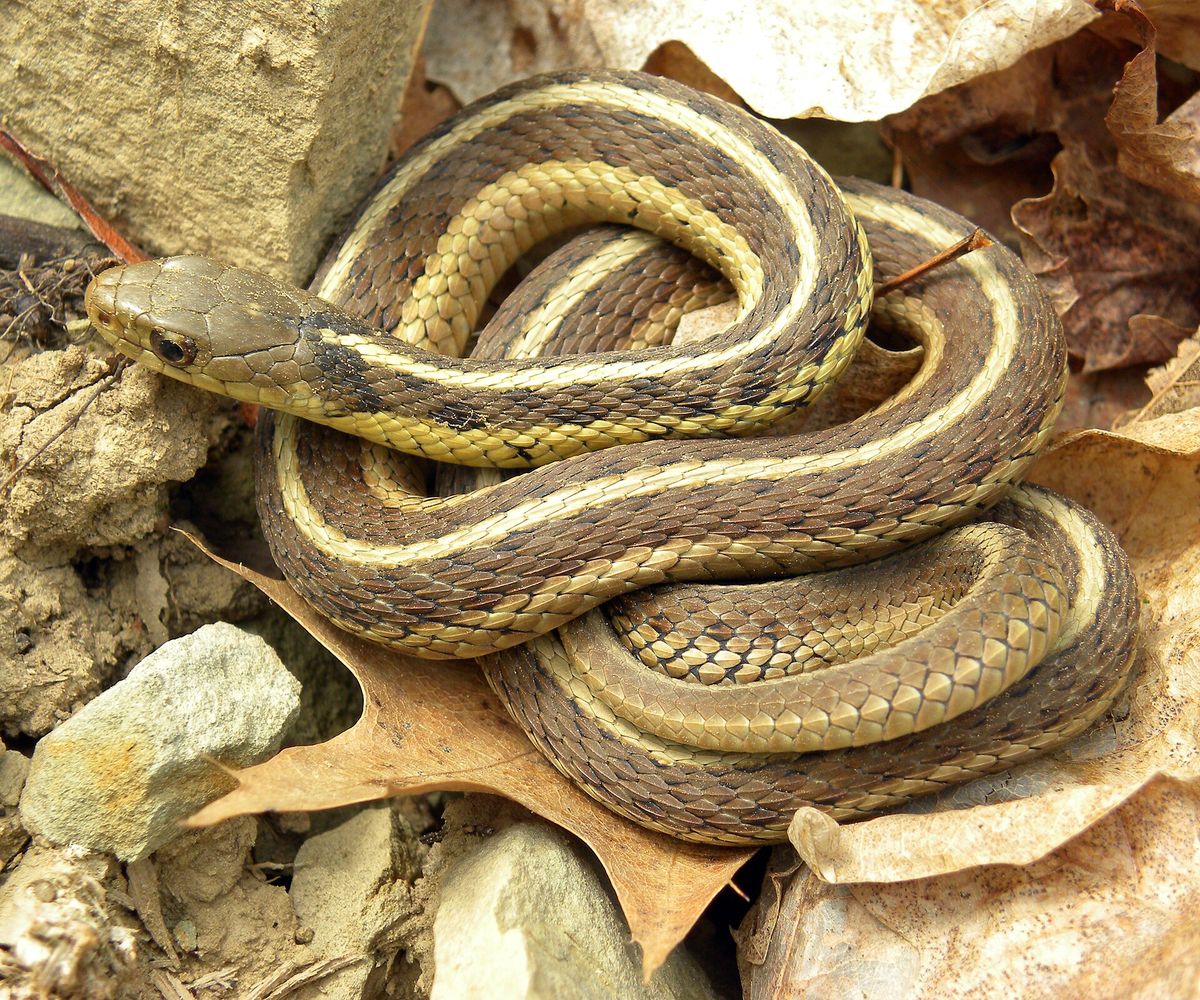
Garter snake
animalThamnophis sirtalis
A small, harmless, non-venomous native snake that hunts slugs, grubs, and rodents in the garden. Garter snakes are one of the best allies a garden can have and pose no threat to people or pets; the right response to finding one is almost always to leave it alone.
- Hits
- Not a plant feeder
- First fix
- Leave it alone
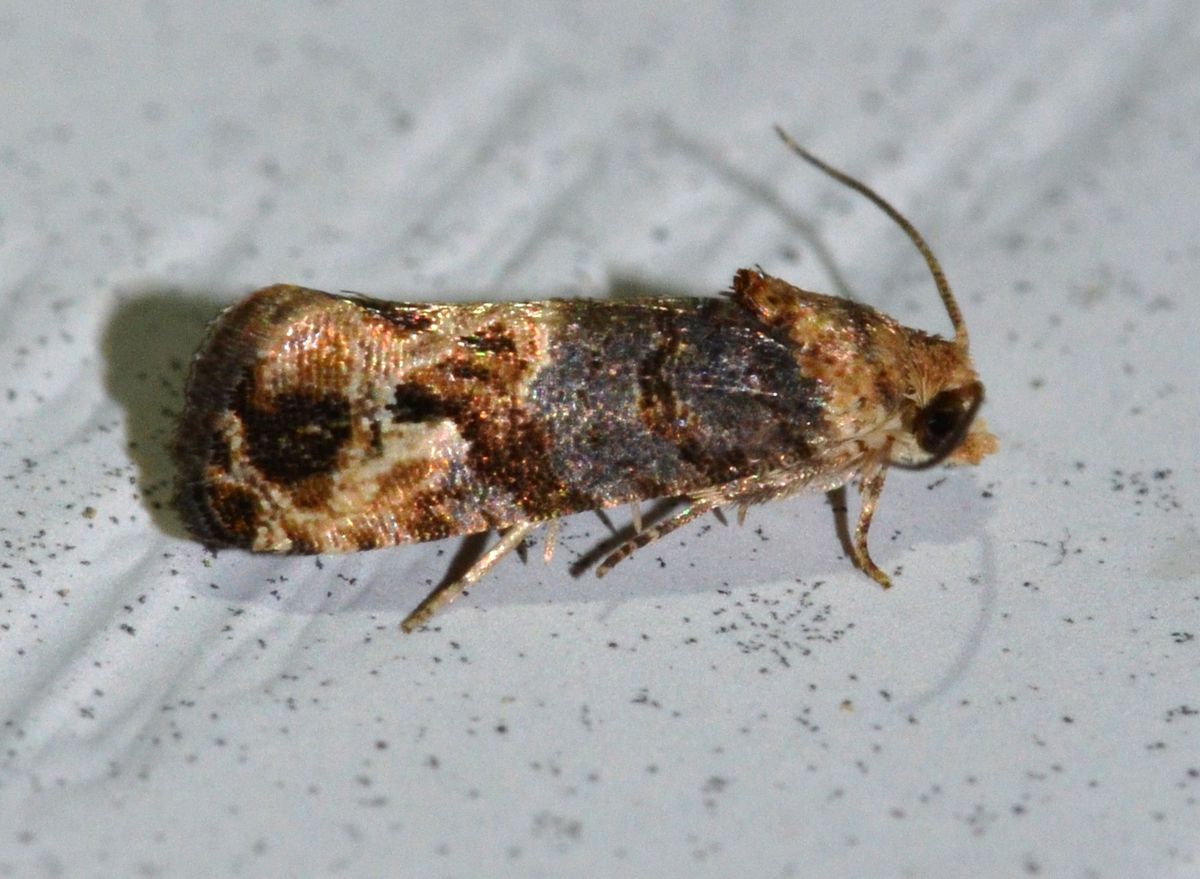
Grape berry moth
insectParalobesia viteana
A small caterpillar that webs together grape berries and tunnels inside them, causing early coloring and rot on individual berries within a cluster well before the rest ripen.
- Hits
- Grape
- First fix
- Rake and destroy fallen leaves in fall
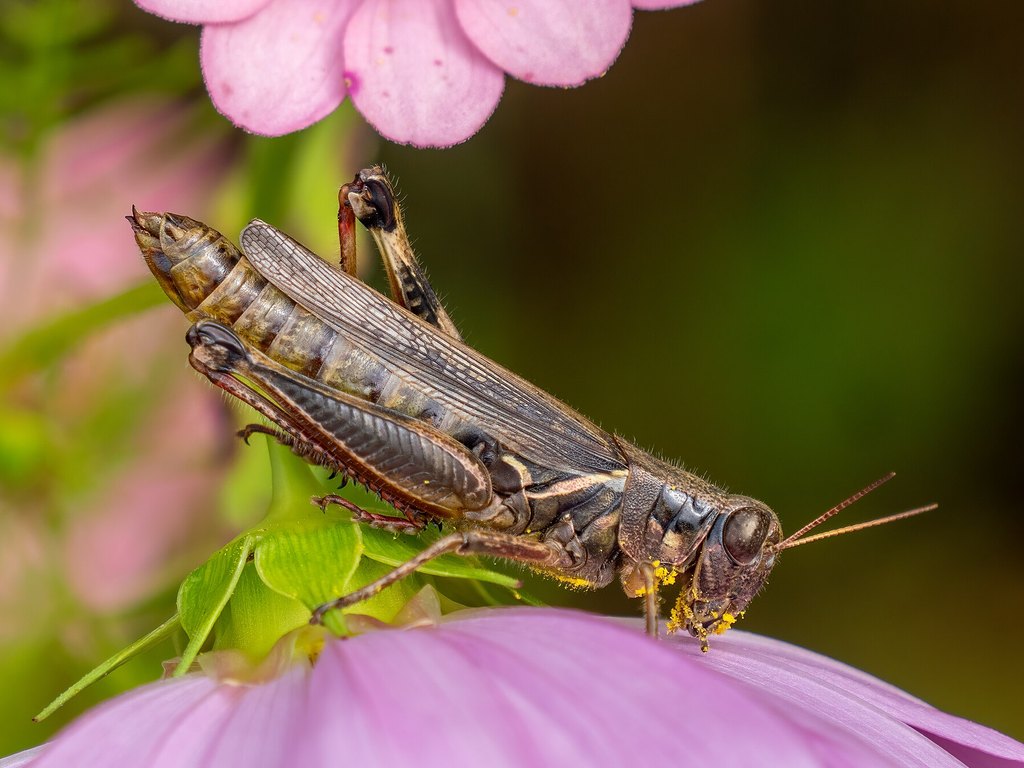
Grasshopper
insectMelanoplus spp.
Strong-jawed jumping insects that hatch in weedy field margins and move into gardens as those margins dry out. In hot, dry years populations boom and a garden can be stripped in a week. They are hardest to fight once adults are flying.
- Hits
- Bean, Lettuce, Corn, Carrot tops
- First fix
- Target the nymph stage in field margins
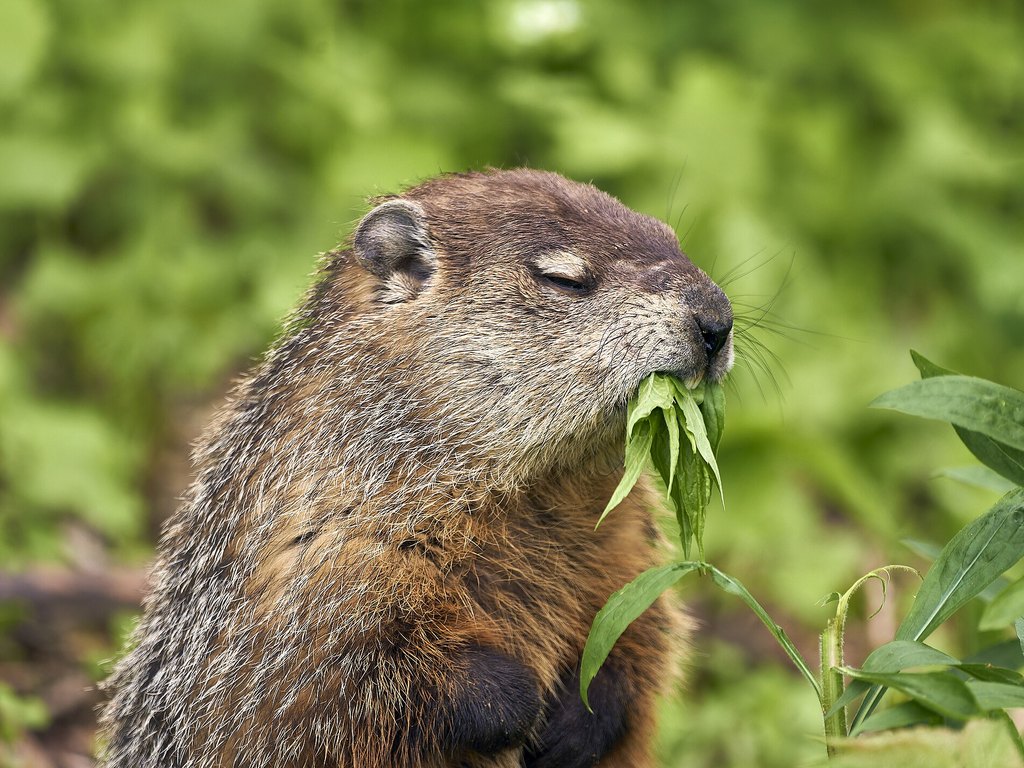
Groundhog (woodchuck)
animalMarmota monax
The groundhog, or woodchuck, is a stocky, 5-15 lb burrowing herbivore with short legs and a blunt, watchful face. It can clear a full row of beans in one morning, then retreat to a burrow with multiple entrances along a fence line or garden edge. Groundhogs are creatures of habit: they emerge at the same time each day, follow the same paths, and will quickly stake a territory around a reliable food source.
- Hits
- Bean, Pea, Broccoli, Cabbage
- First fix
- Fence with buried apron + electric top wire
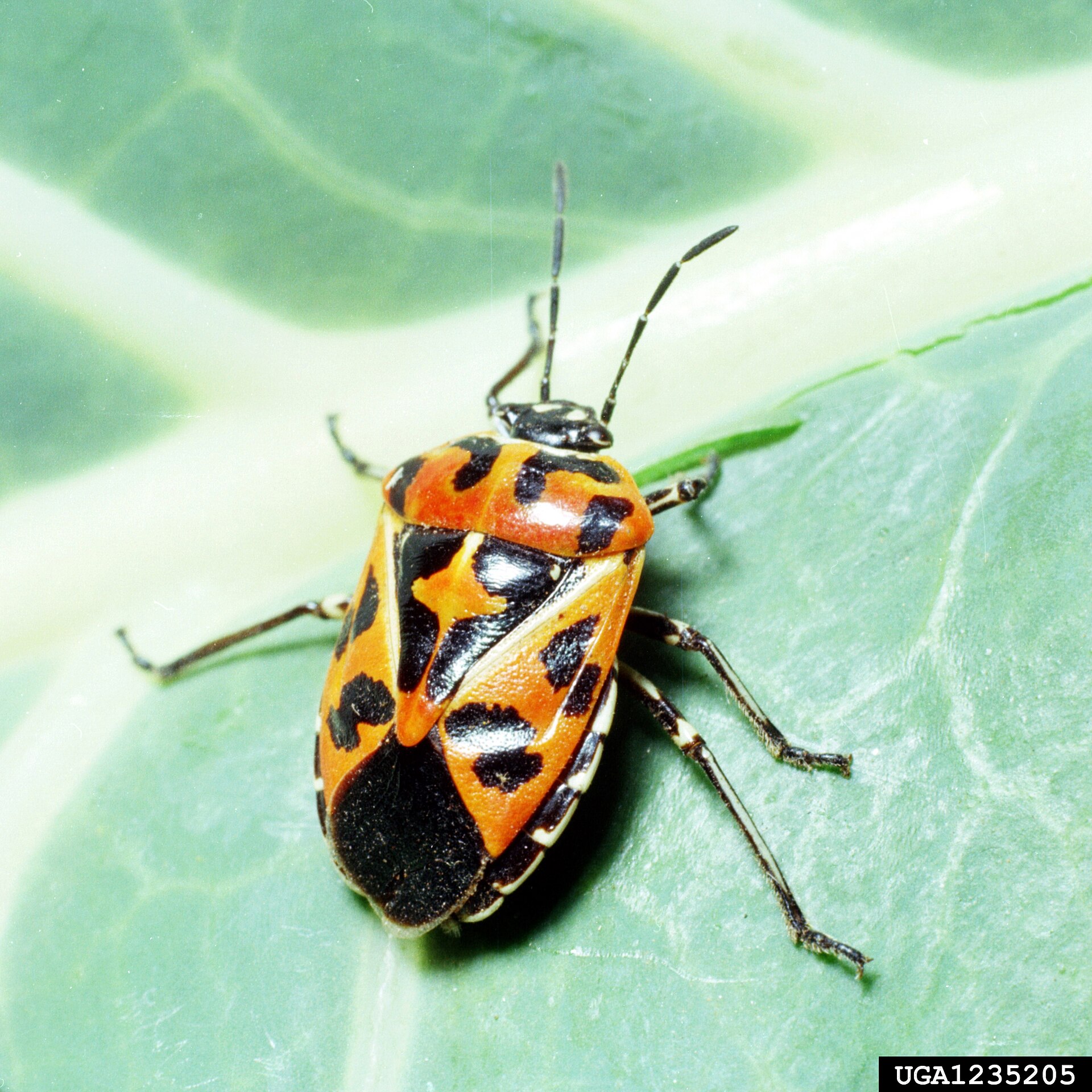
Harlequin bug
insectMurgantia histrionica
A shield-shaped stink bug relative with a striking black-and-orange pattern, common on brassicas in warm regions. Both nymphs and adults feed in clusters and can quickly wilt and kill young plants.
- Hits
- Cabbage, Kale, Broccoli, Collards
- First fix
- Handpick adults and nymphs
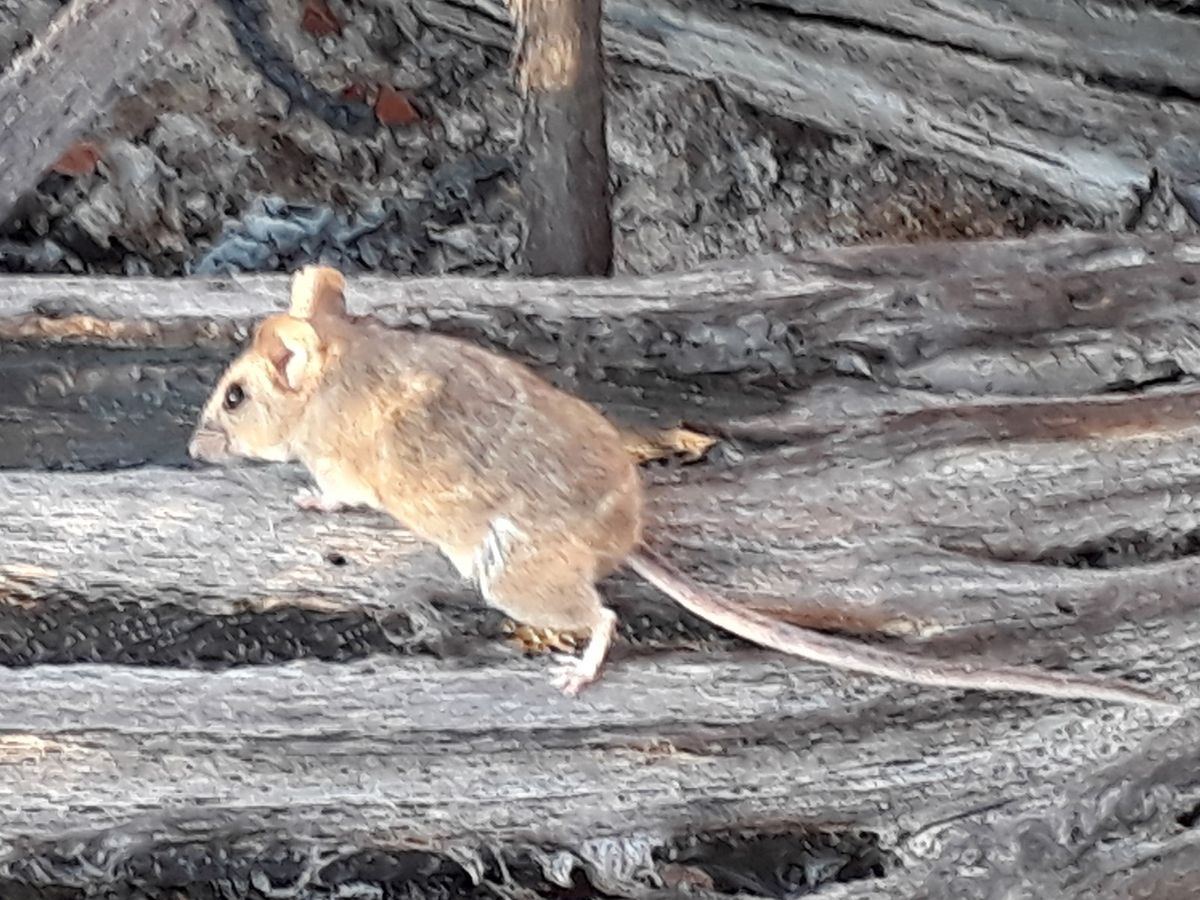
House mouse / deer mouse
animalMus musculus / Peromyscus maniculatus
A small, prolific rodent that nests in sheds, mulch, and dense cover, and raids stored seed and low-hanging produce. Deer mice can carry hantavirus, so use gloves and avoid stirring up dust when cleaning areas with droppings.
- Hits
- Stored seed, Melon, Squash, Corn
- First fix
- Store seed in sealed containers
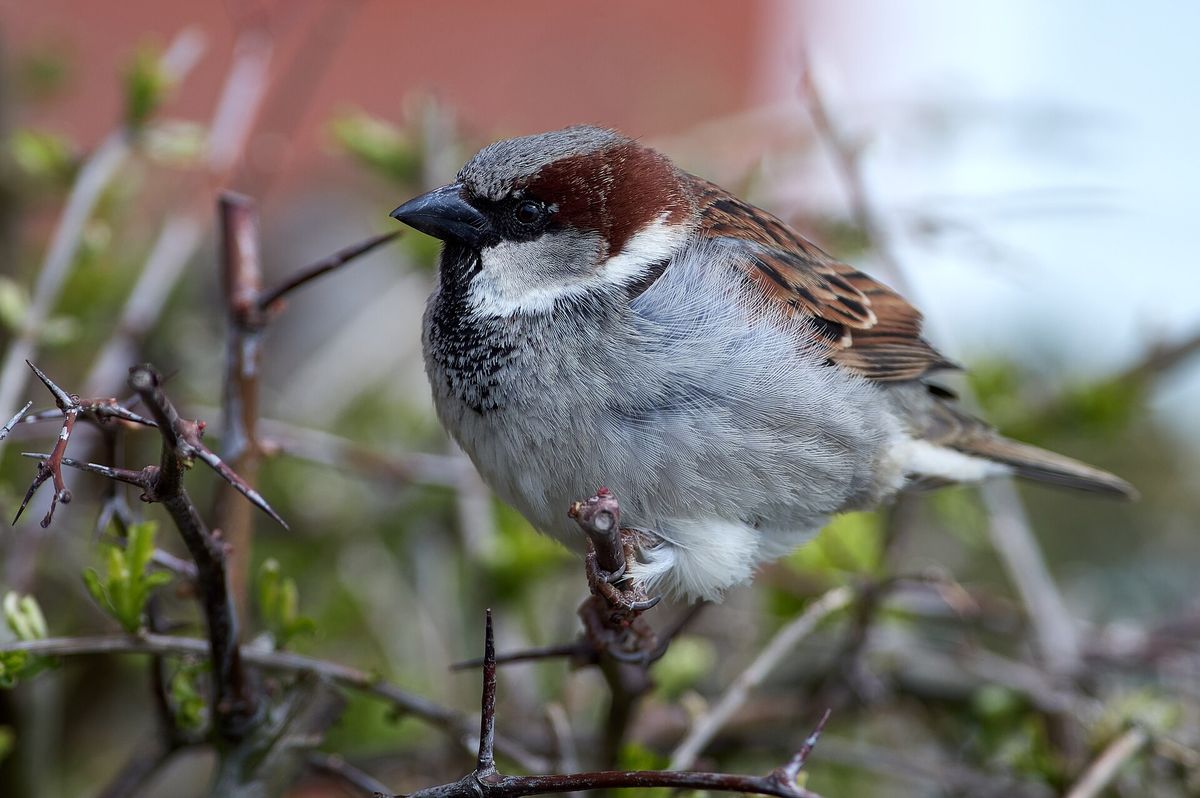
House sparrow
animalPasser domesticus
A small, non-native seed-eating bird that nests in cavities and thrives around structures and gardens. Because it's an introduced species, the house sparrow is one of the few birds not protected under the Migratory Bird Treaty Act, though the kindest and most effective controls are still exclusion, not harm.
- Hits
- Sunflower, Lettuce seedling, Sweet corn, Berry
- First fix
- Row cover on seedlings
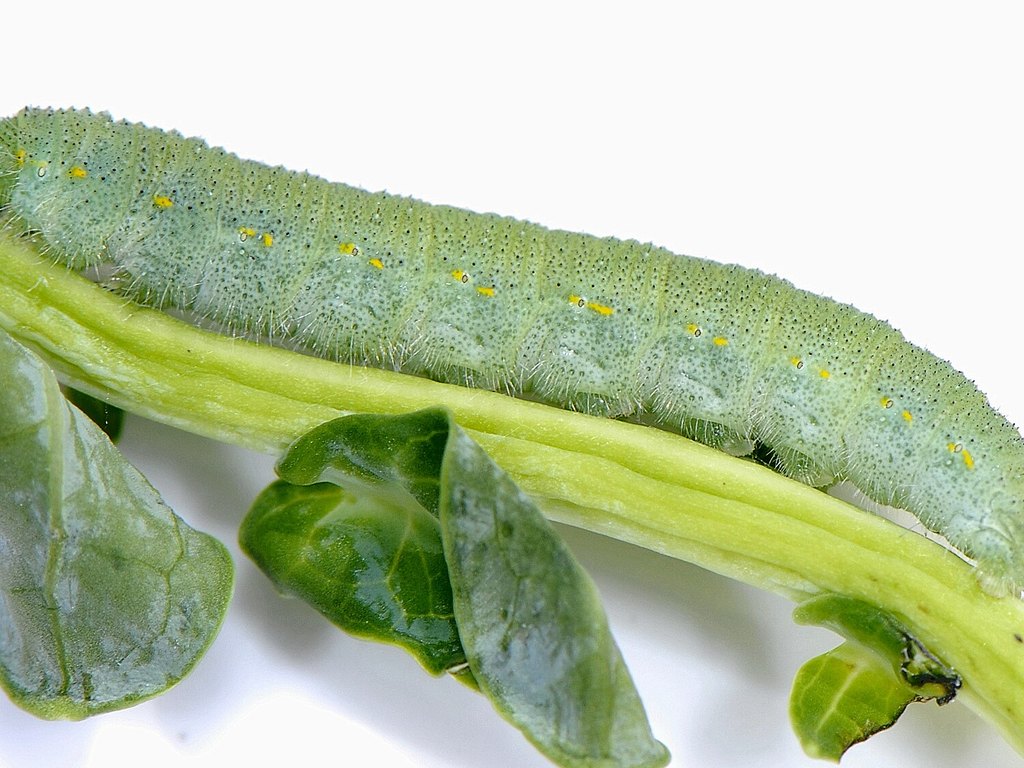
Imported cabbage worm
insectPieris rapae
The velvety-green caterpillar of the small white butterfly you see fluttering over the garden. Blends with kale and cabbage leaves so well you often only see the damage.
- Hits
- Kale, Cabbage, Broccoli, Brussels sprout
- First fix
- Floating row cover from transplant
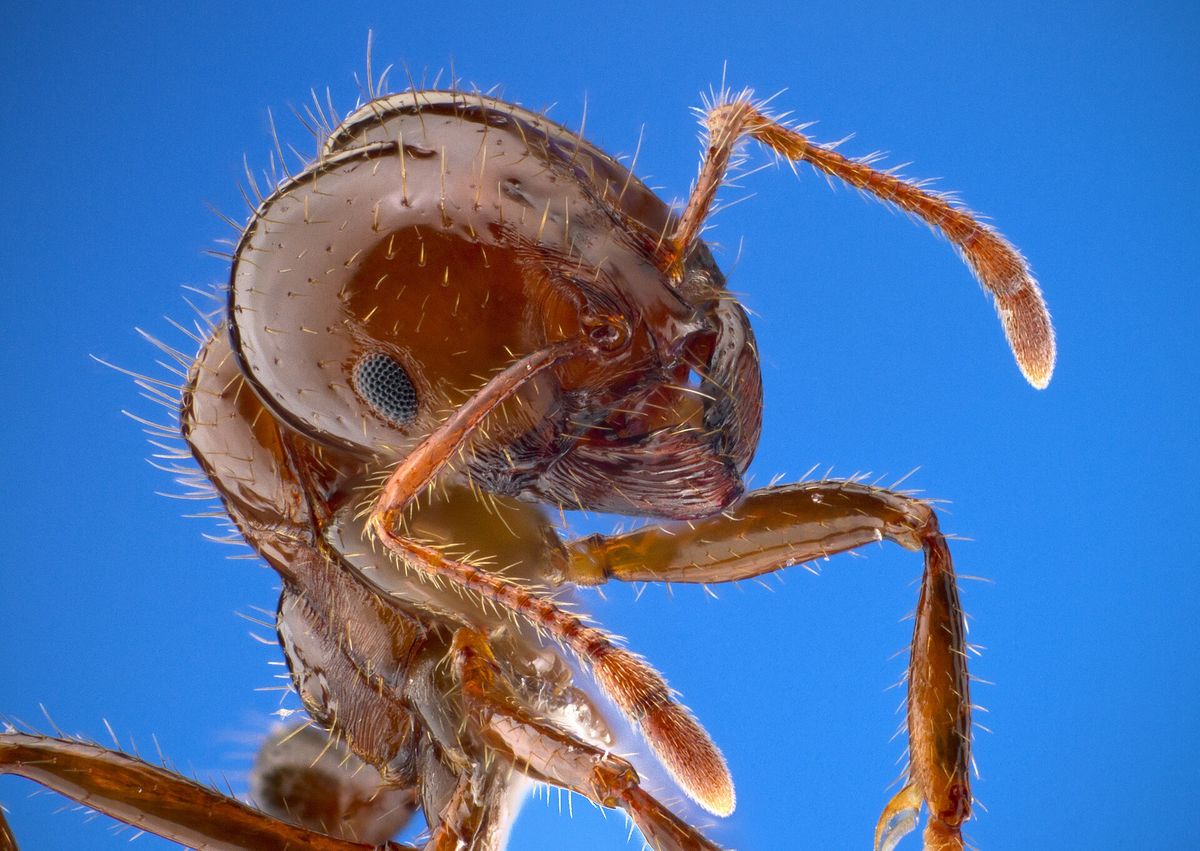
Imported fire ant
insectSolenopsis invicta
An aggressive invasive ant common across the southern US, building dome-shaped mounds and delivering painful, burning stings in swarms when a mound is disturbed. Stings can cause a dangerous allergic reaction in sensitive people, pets, and small children, and mounds in beds or near play areas need careful handling.
- Hits
- Sweet corn, Bush bean, Strawberry
- First fix
- Pour boiling water on small mounds
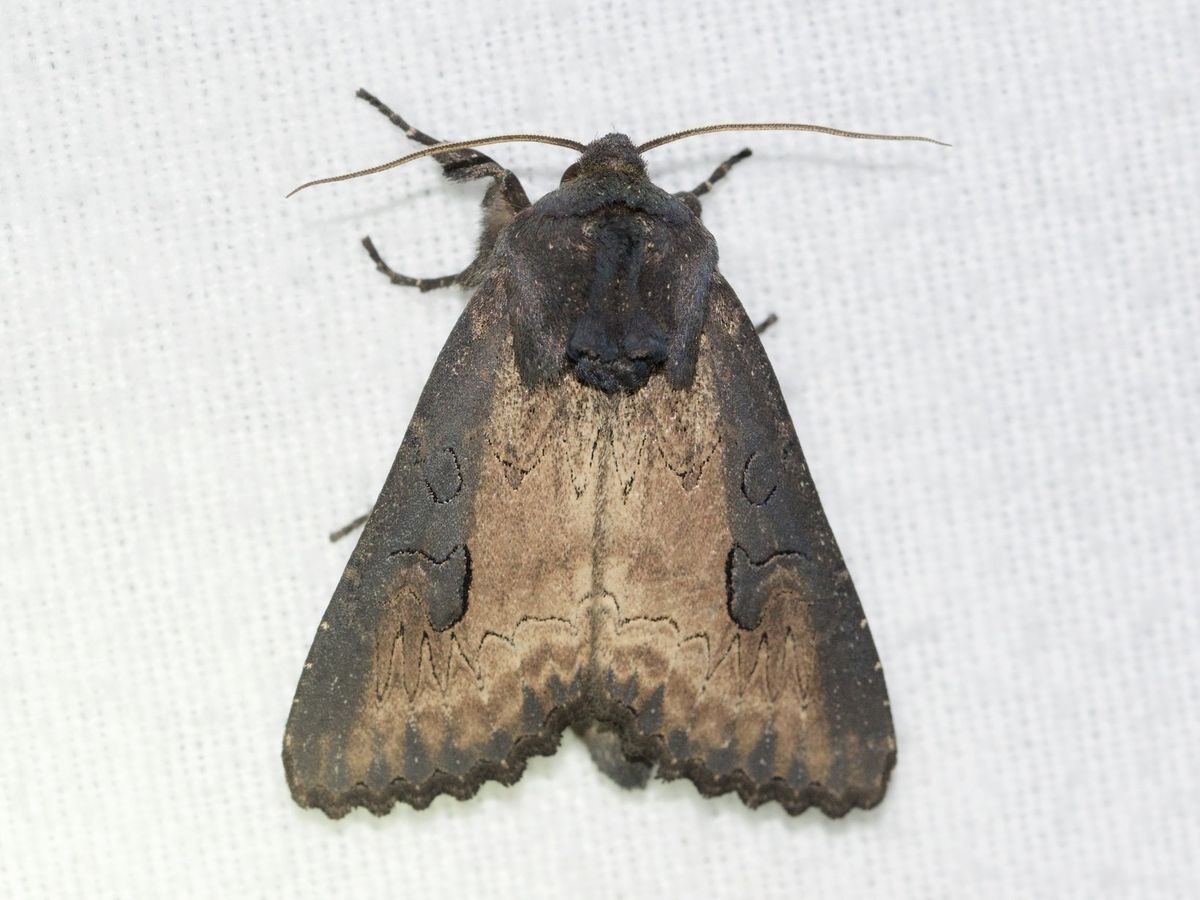
Iris borer
insectMacronoctua onusta
Though iris is ornamental, this borer's caterpillar also readily attacks nearby garden plants sharing a bed edge; the pink-tinged caterpillar tunnels down leaves into rhizomes, inviting soft rot.
- Hits
- Not a plant feeder
- First fix
- Cut and destroy old foliage each fall
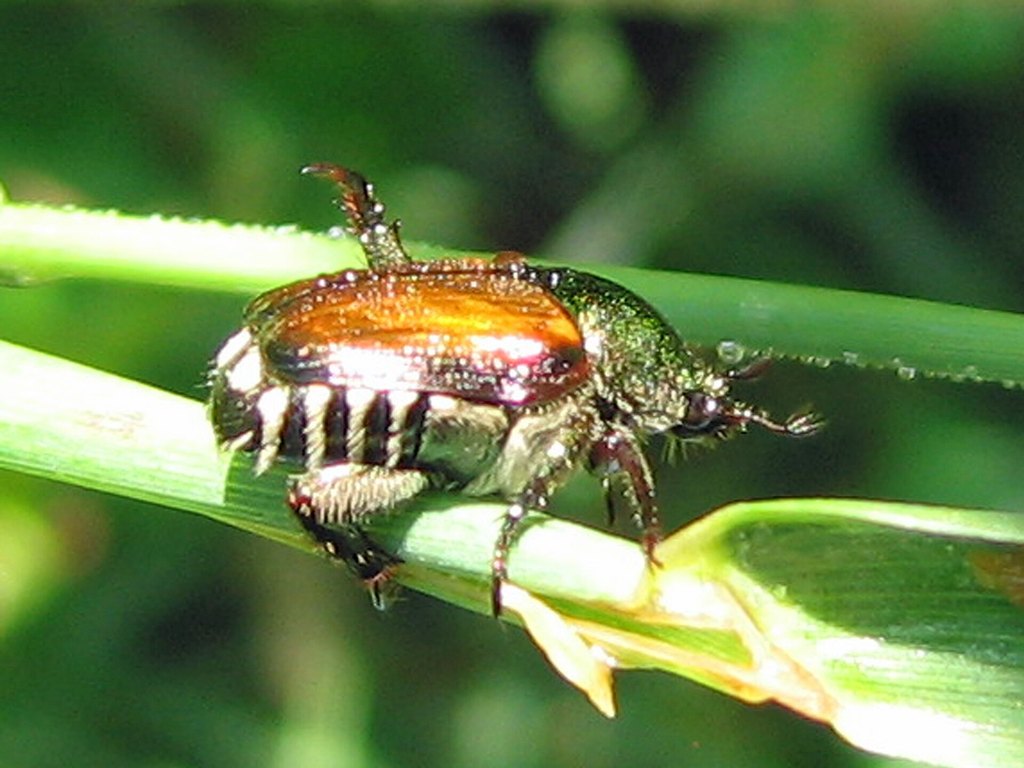
Japanese beetle
insectPopillia japonica
A metallic-green half-inch beetle with copper wing covers and small white tufts along the sides. Feeds in loud groups. Hundreds can appear on a single plant on a hot summer morning.
- Hits
- Bean, Basil, Strawberry, Grape
- First fix
- Handpick into soapy water at dawn
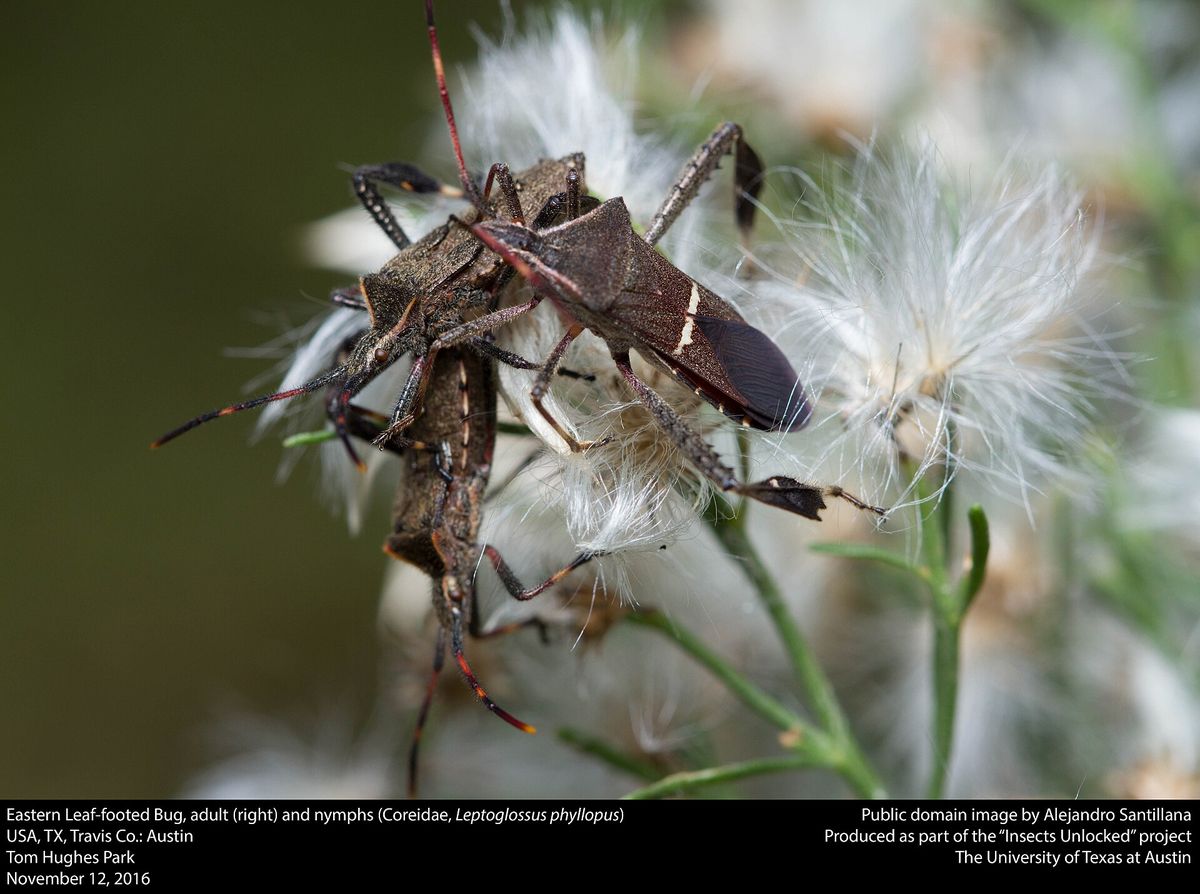
Leaffooted bug
insectLeptoglossus phyllopus
A large brown stink bug relative named for the flattened, leaf-shaped segments on its hind legs. It feeds on developing seeds and fruit and can carry yeasts that cause fruit to rot from the inside.
- Hits
- Tomato, Pepper, Bush bean, Pumpkin
- First fix
- Handpick in cool morning hours
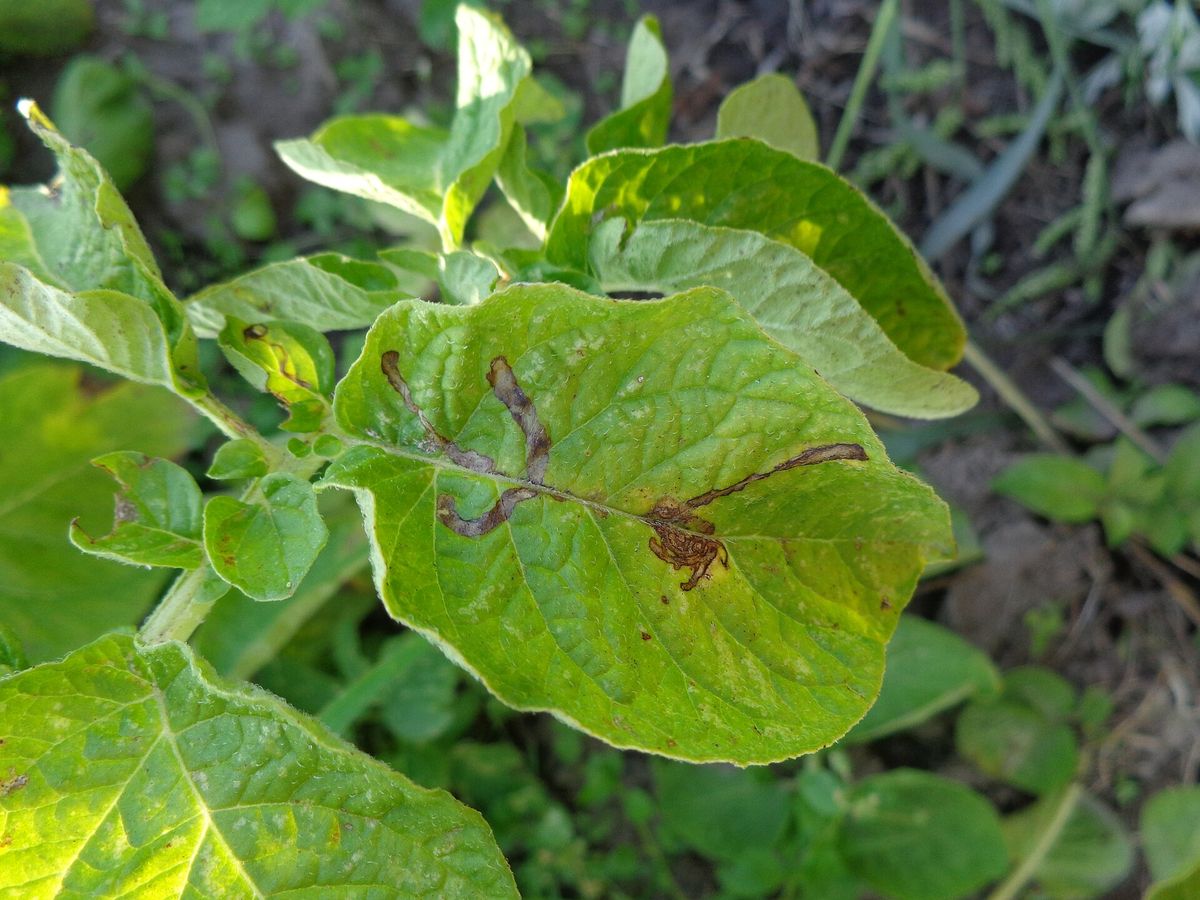
Leafminer
insectLiriomyza spp.
Tiny fly larvae that tunnel between the top and bottom surfaces of a leaf, leaving pale winding trails. Adults are small black-and-yellow flies that puncture leaves to feed and lay eggs.
- Hits
- Spinach, Swiss Chard, Beet, Lettuce
- First fix
- Squeeze mined leaves
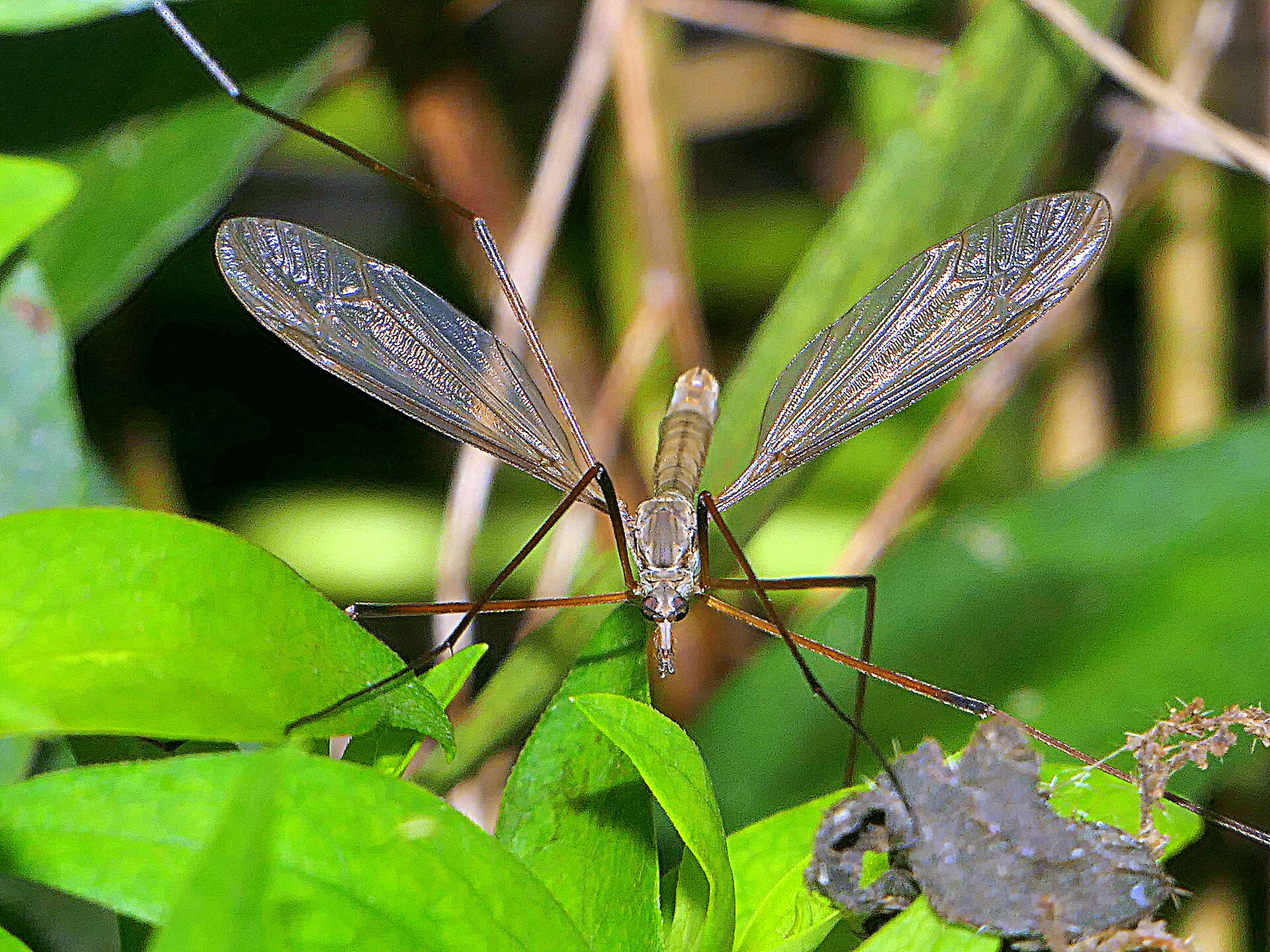
Leatherjacket (crane fly larva)
insectTipula spp.
The gray-brown, tough-skinned larva of the crane fly (often mistaken for a giant mosquito, though adults don't bite), living in turf and feeding on grass and seedling roots, most damaging after wet falls and winters.
- Hits
- Lawn/turf
- First fix
- Improve drainage in low, soggy turf areas
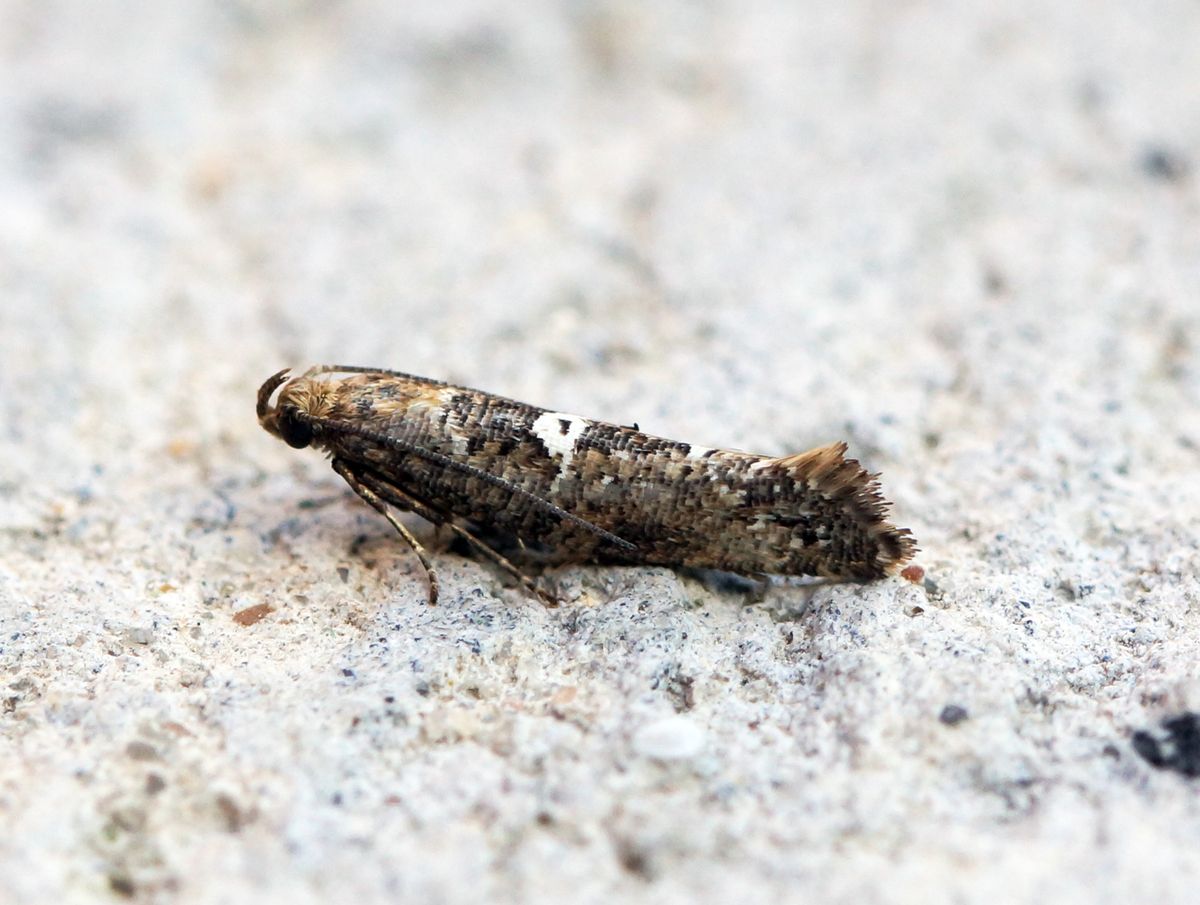
Leek moth
insectAcrolepiopsis assectella
An invasive moth spreading through the Northeast and parts of Canada whose larvae mine and tunnel into leek, onion, and garlic leaves and bulbs, leaving windowed leaves and frass-filled tunnels.
- Hits
- Leek, Onion, Garlic, Chives
- First fix
- Row cover from planting
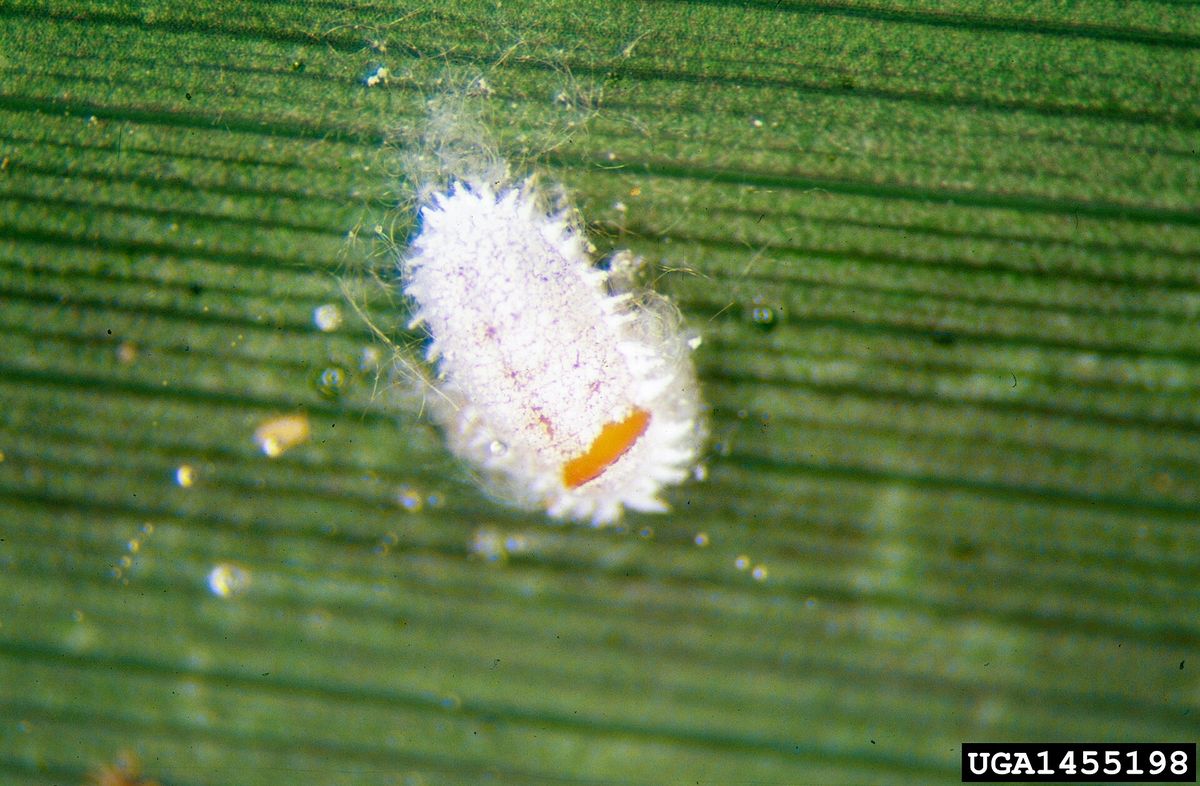
Mealybug
insectPseudococcidae
Soft, oval insects covered in white waxy fluff that cluster in leaf axils, stem joints, and container-grown plant crowns. Common on overwintered potted herbs and greenhouse-started transplants.
- Hits
- Basil, Rosemary, Pepper, Tomato
- First fix
- Alcohol swab
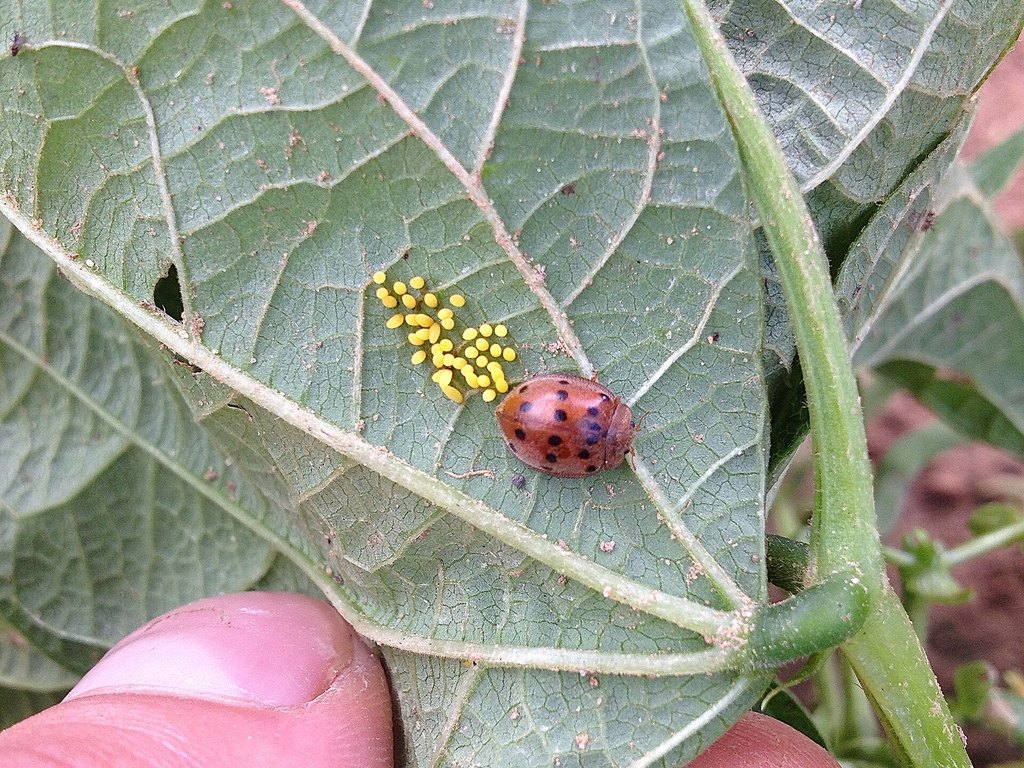
Mexican bean beetle
insectEpilachna varivestis
A lady-beetle relative gone rogue: coppery-orange with 16 black spots, and its fuzzy yellow spiny larvae are the real destroyers. Both feed on the underside of bean leaves, leaving a lacy skeleton.
- Hits
- Bean, Snap bean, Lima bean, Cowpea
- First fix
- Crush the yellow egg clusters
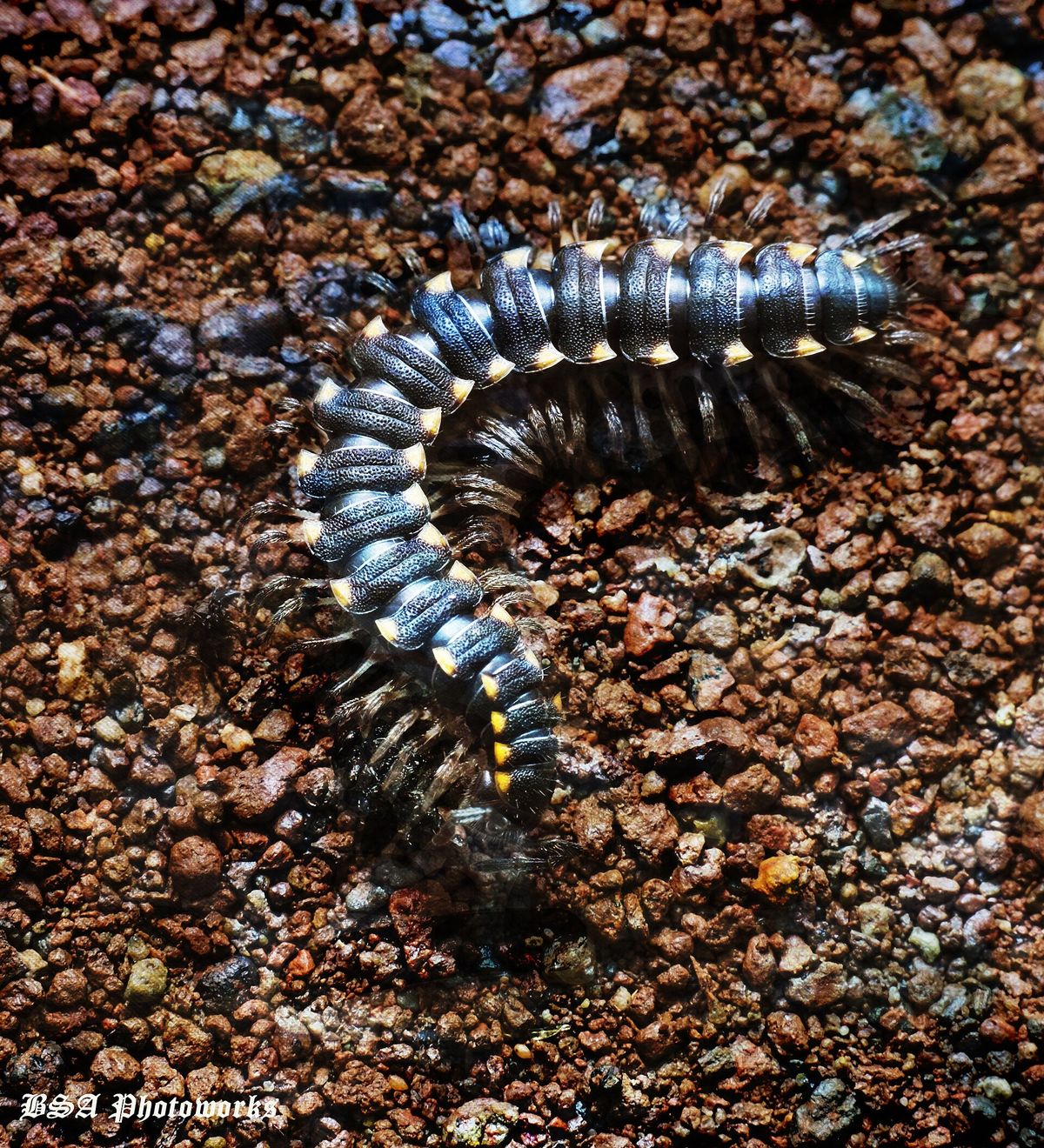
Millipede
arachnidDiplopoda
Slow-moving, many-legged decomposers that curl into a tight coil when disturbed. Mostly beneficial in the garden, breaking down decaying matter, but can nibble seedlings and ripening fruit touching the soil during large population booms.
- Hits
- Strawberry, Lettuce
- First fix
- Reduce excess mulch and moisture
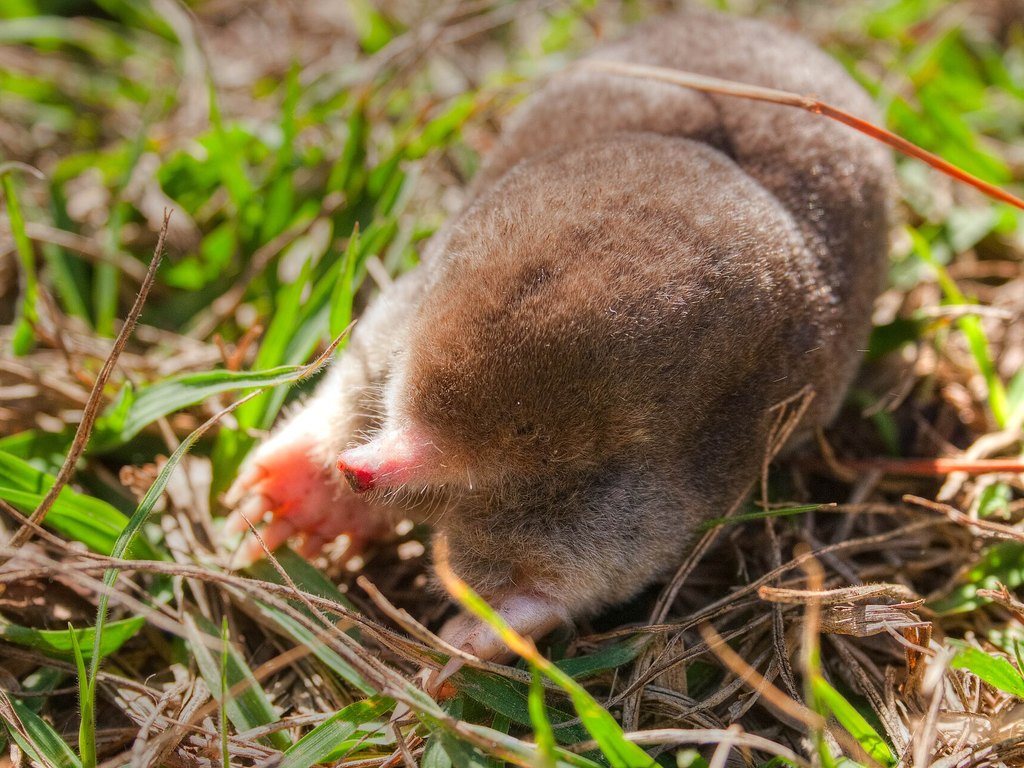
Mole
animalScalopus aquaticus / Talpidae
The eastern mole is a velvet-furred, insect-eating digger with broad, spade-like front paws and a pointed snout. It is not a garden pest in the usual sense: it does not eat plants, and it consumes large numbers of beetle grubs and cutworms. Its offense is cosmetic. Raised, squishy feeding tunnels and volcano-shaped soil mounds across lawns and beds. Many gardeners mistake vole damage for mole damage, so a proper ID can save you from the wrong battle.
- Hits
- Lawn (surface tunnels), Seedlings disturbed by tunneling
- First fix
- Tolerate them: they eat pest grubs
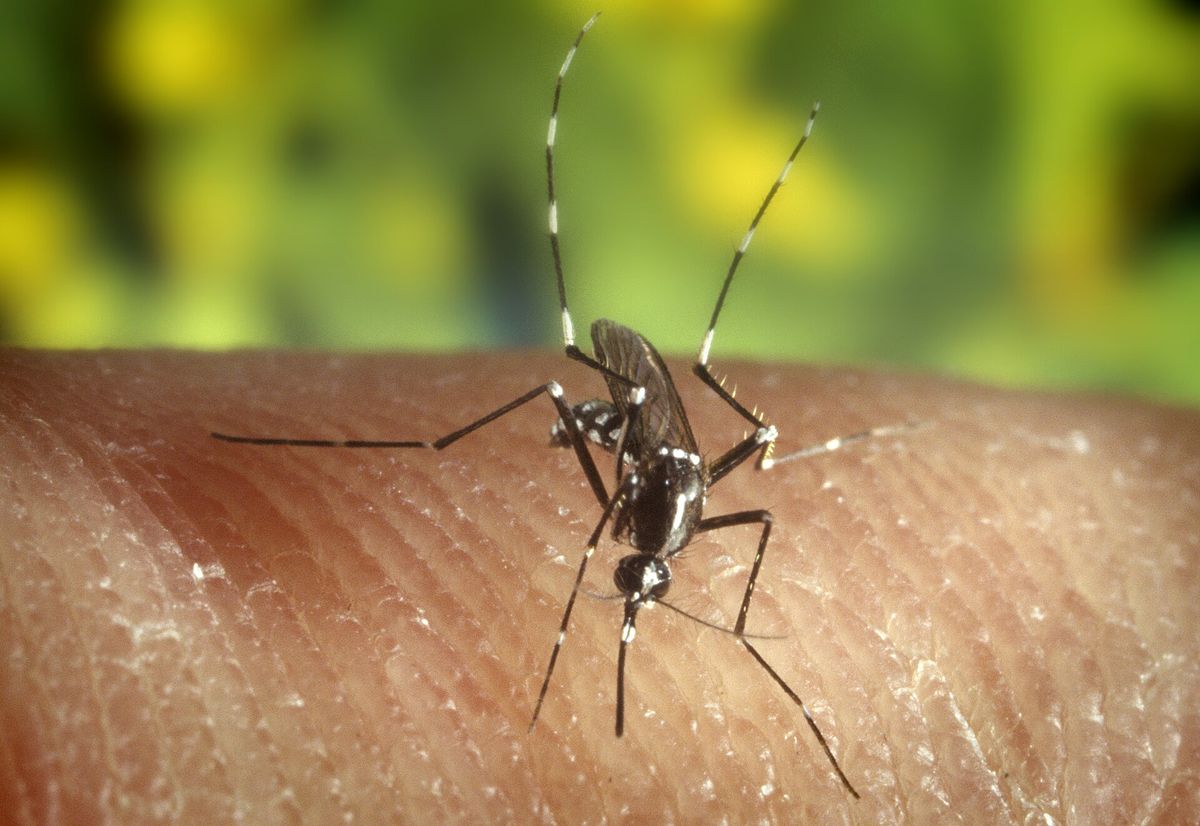
Mosquito
insectCulicidae
A blood-feeding fly that breeds in any standing water it can find, from a forgotten saucer under a pot to a rain barrel. Not a plant pest, but a human and pet health risk since it can transmit West Nile virus and other diseases.
- Hits
- Not a plant feeder
- First fix
- Dump standing water weekly
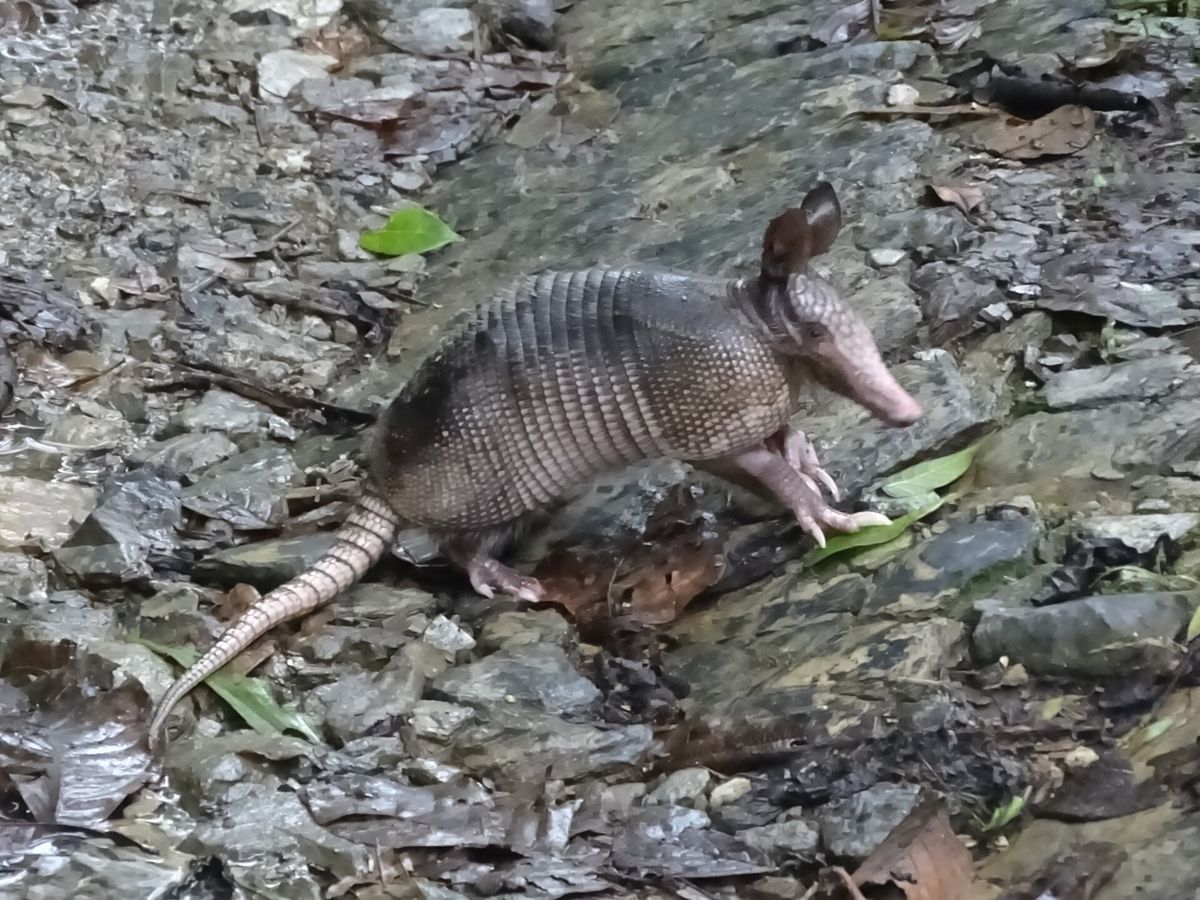
Nine-banded armadillo
animalDasypus novemcinctus
A nocturnal, armor-plated burrower that digs shallow, cone-shaped holes hunting grubs, earthworms, and insects. Its digging can uproot seedlings and undermine raised beds, but like the skunk, it's usually chasing a grub problem, not the plants themselves.
- Hits
- Lawn/turf, Raised bed edges, Root vegetable seedlings
- First fix
- Treat the grubs
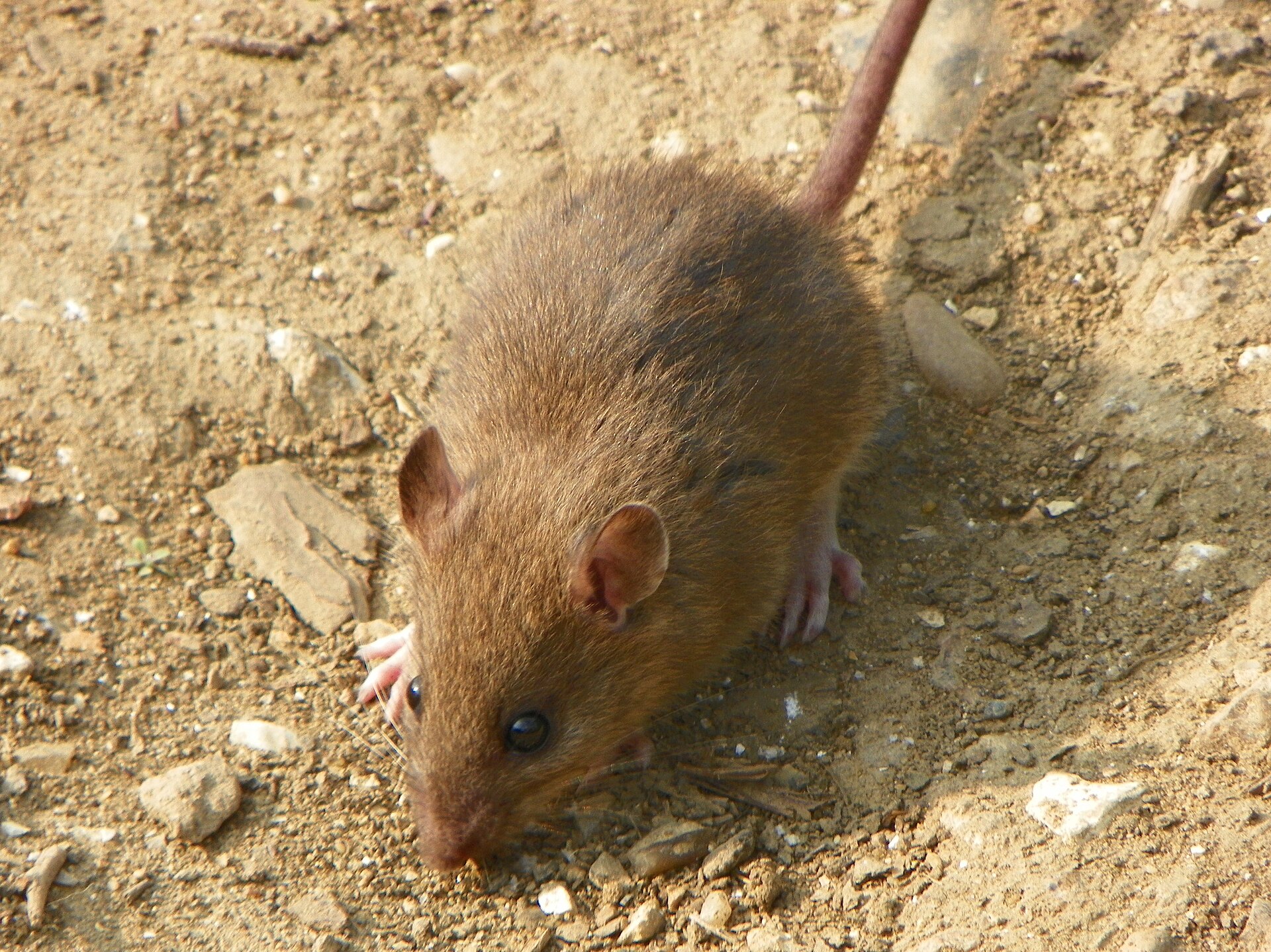
Norway rat / roof rat
animalRattus norvegicus / Rattus rattus
A highly adaptable rodent that burrows around compost piles, sheds, and coops, and climbs into fruit trees and vine crops. Rats are prolific breeders and can carry disease, so exclusion and sanitation are worth taking seriously rather than tolerating.
- Hits
- Sweet corn, Melon, Squash, Fruit trees
- First fix
- Remove food and shelter first
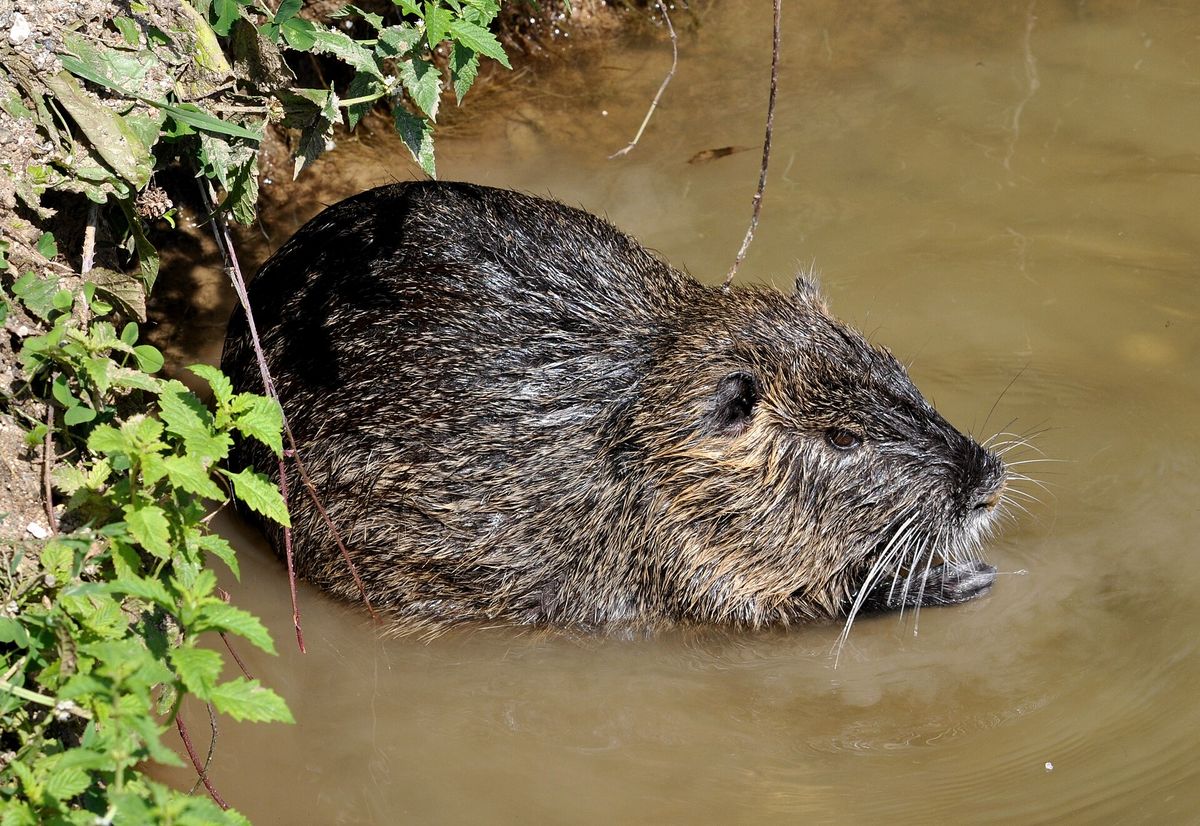
Nutria
animalMyocastor coypus
A large, non-native semi-aquatic rodent that burrows into pond and ditch banks and devastates wetland and garden vegetation near water. Nutria are an invasive species in most of the US and are actively targeted for eradication in many states, unlike most animals on this list.
- Hits
- Pond-edge vegetation, Root vegetables near water, Rice/grain (regional), Levee/bank plantings
- First fix
- Report to state wildlife/agriculture agency
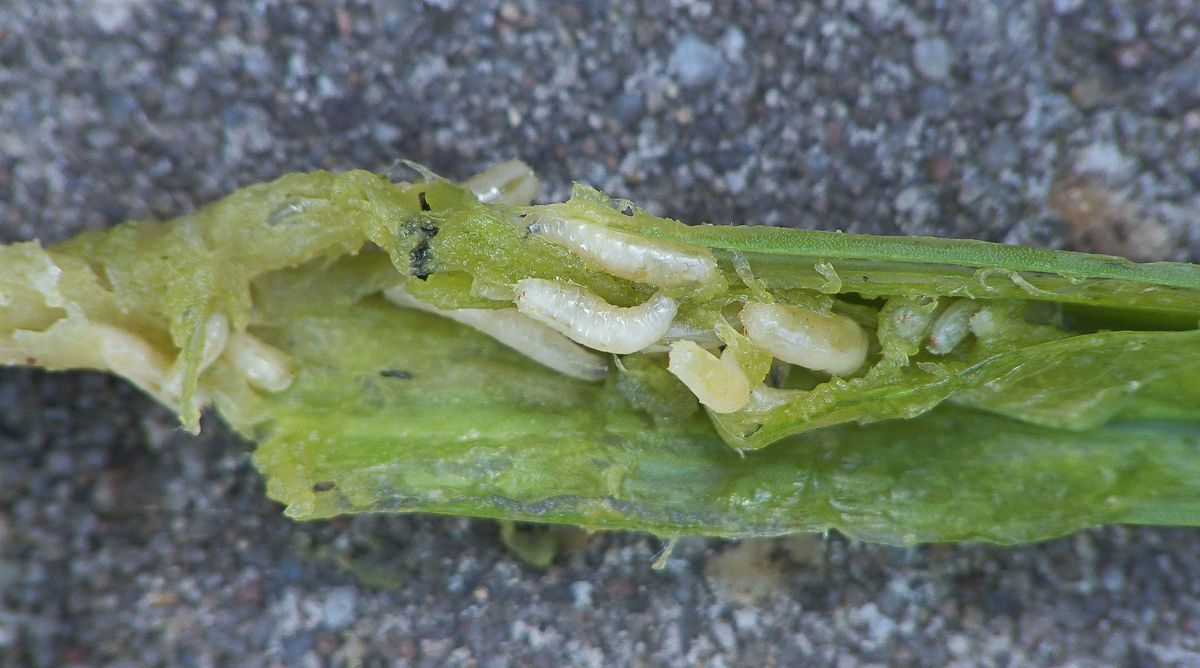
Onion maggot
insectDelia antiqua
A close relative of the cabbage maggot fly whose larvae tunnel into onion, garlic, and leek bulbs, often entering through the base. Seedlings wilt and topple; established bulbs develop soft, rotten cores.
- Hits
- Onion, Garlic, Leek
- First fix
- Row cover from seeding to bulbing
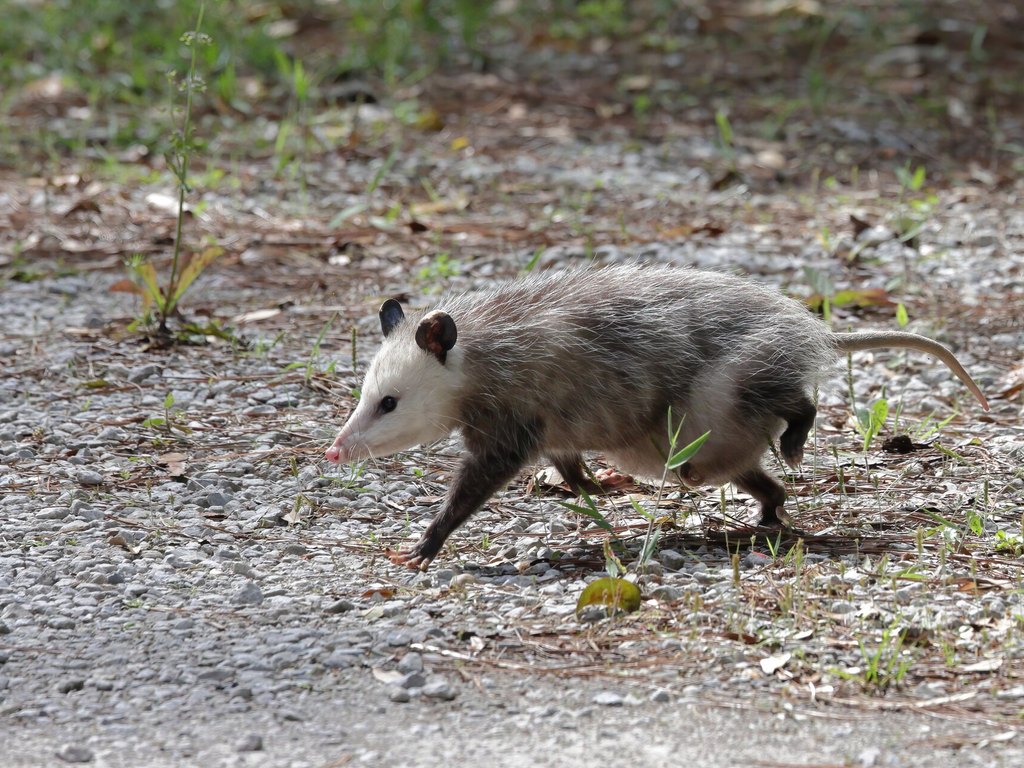
Opossum
animalDidelphis virginiana
North America's only marsupial: cat-sized, gray, with a pointed white face and naked tail. Mostly a friend (it eats ticks, slugs, roaches, and carrion) but it will help itself to ripe fruit, corn, compost, and chicken eggs at night.
- Hits
- Corn, Tomato, Melon, Grape
- First fix
- Remove the food, not the animal
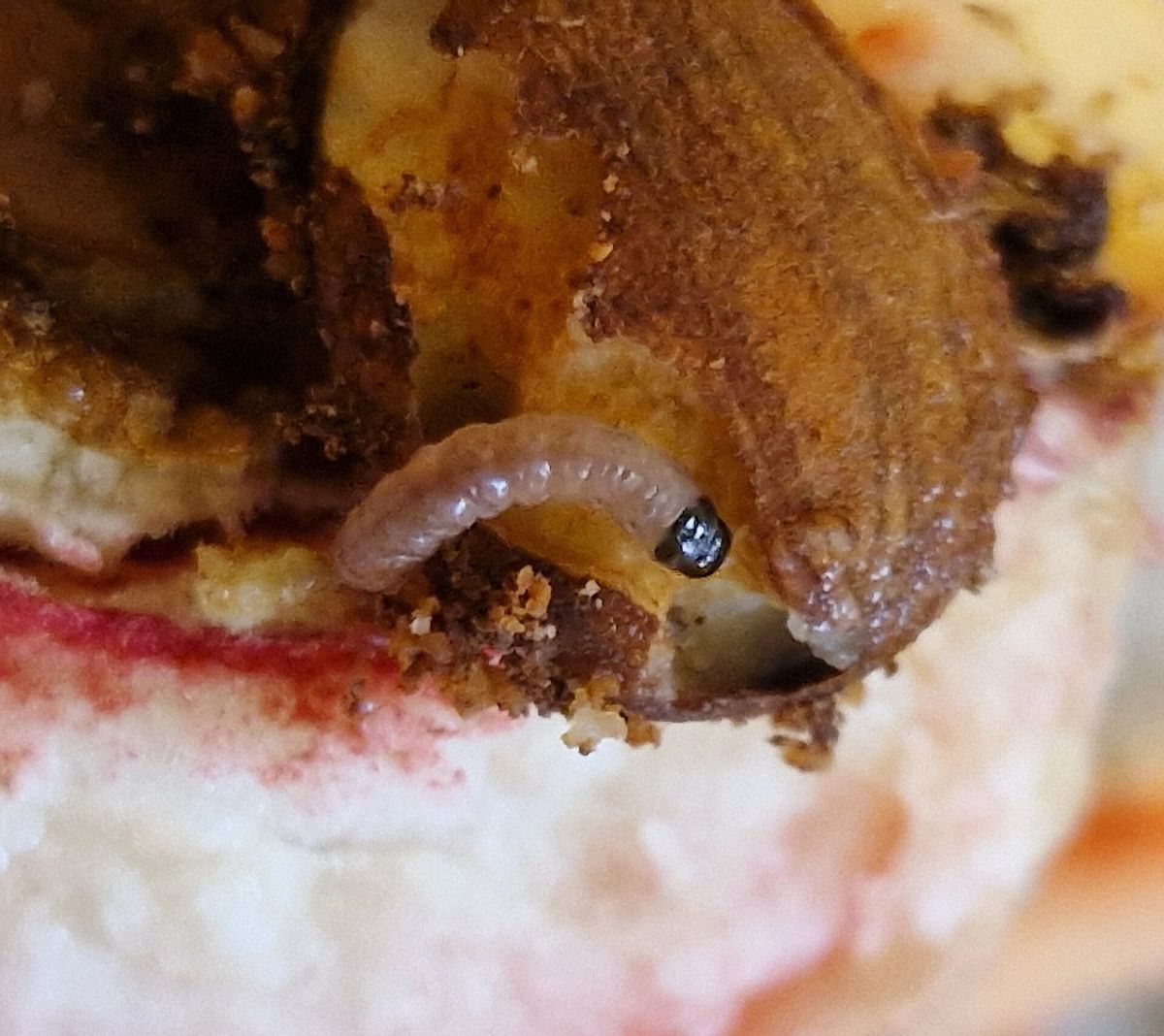
Oriental fruit moth
insectGrapholita molesta
A small caterpillar closely related to codling moth that tunnels into new shoot tips early in the season, then moves into fruit as it ripens, leaving a similar frass-plugged hole.
- Hits
- Peach, Plum, Apple, Pear
- First fix
- Prune out wilted shoot tips
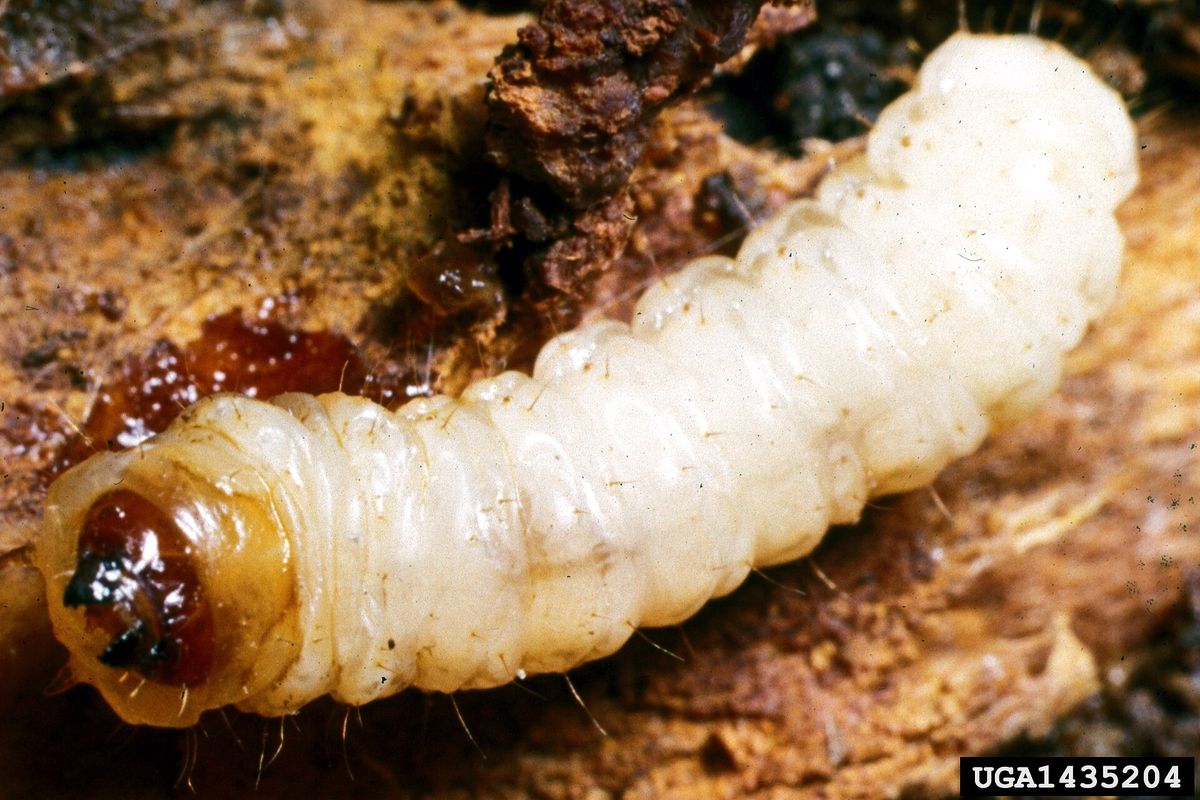
Peachtree borer
insectSynanthedon exitiosa
A clear-winged, wasp-mimicking moth whose larvae tunnel into the trunk at or just below the soil line, girdling the tree over time. Gummy sap mixed with frass at the base of the trunk is the telltale sign.
- Hits
- Peach, Plum, Cherry
- First fix
- Check trunk base for gummy frass
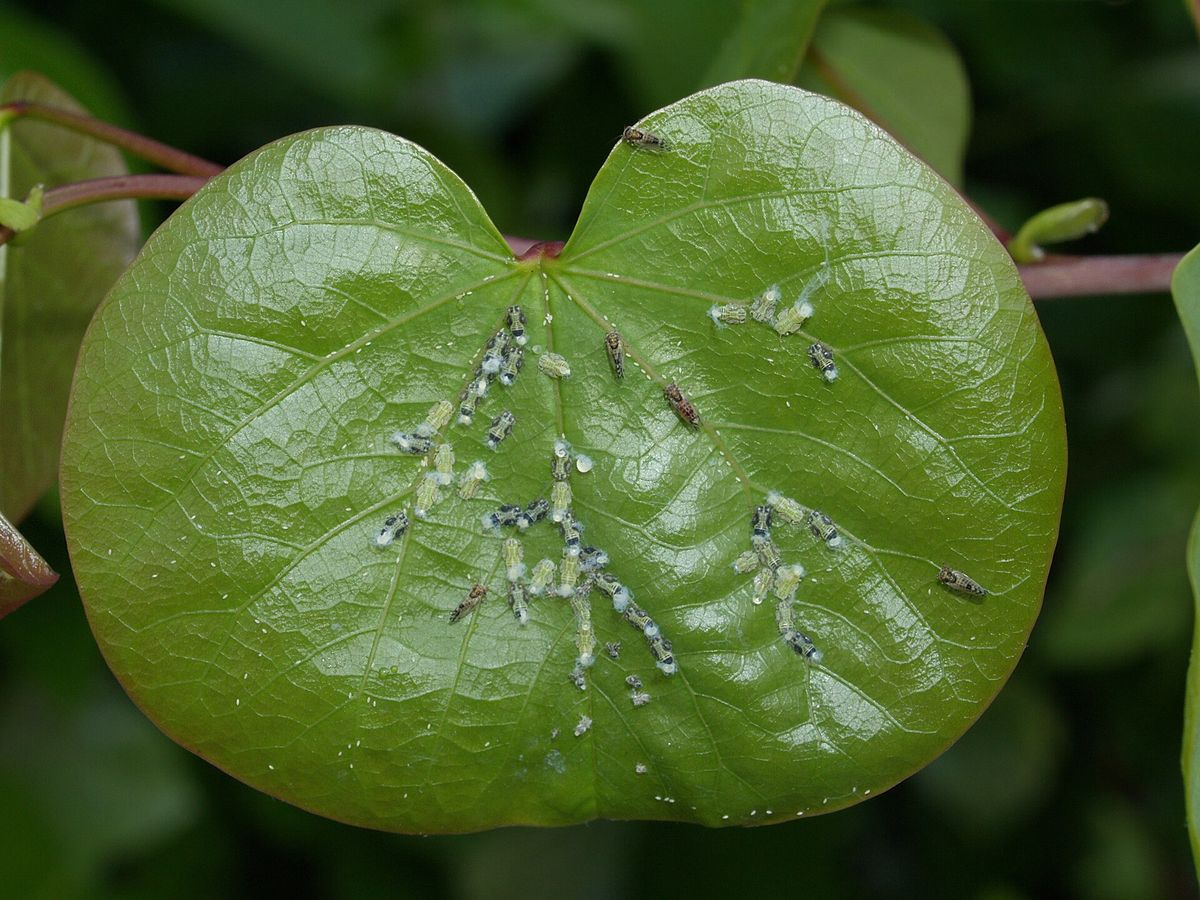
Pear psylla
insectCacopsylla pyricola
A small jumping insect specific to pear trees that produces heavy honeydew, leading to sooty mold and a condition called 'pear decline' when populations are chronic.
- Hits
- Pear
- First fix
- Dormant oil spray
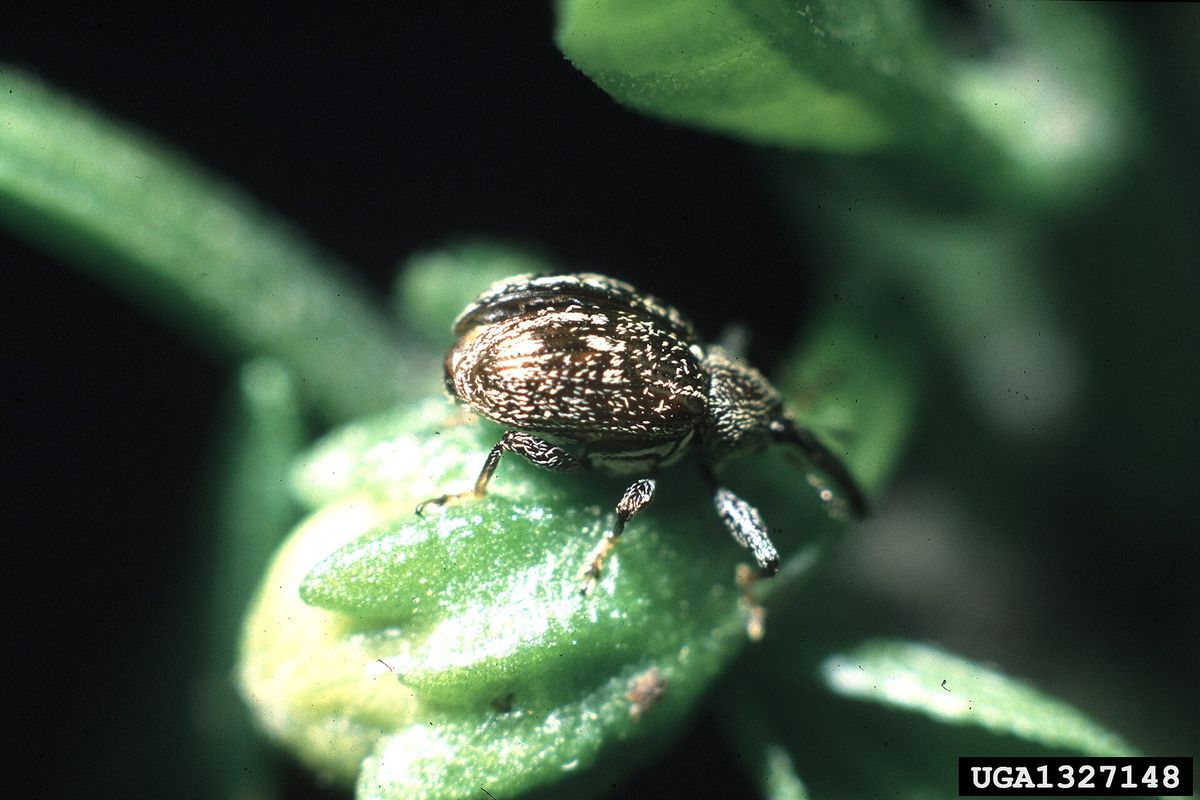
Pepper weevil
insectAnthonomus eugenii
A tiny dark-brown snout beetle whose larvae develop entirely inside pepper pods and flower buds, so damage is invisible until the fruit is cut open or drops prematurely.
- Hits
- Pepper
- First fix
- Remove and destroy dropped pods and buds
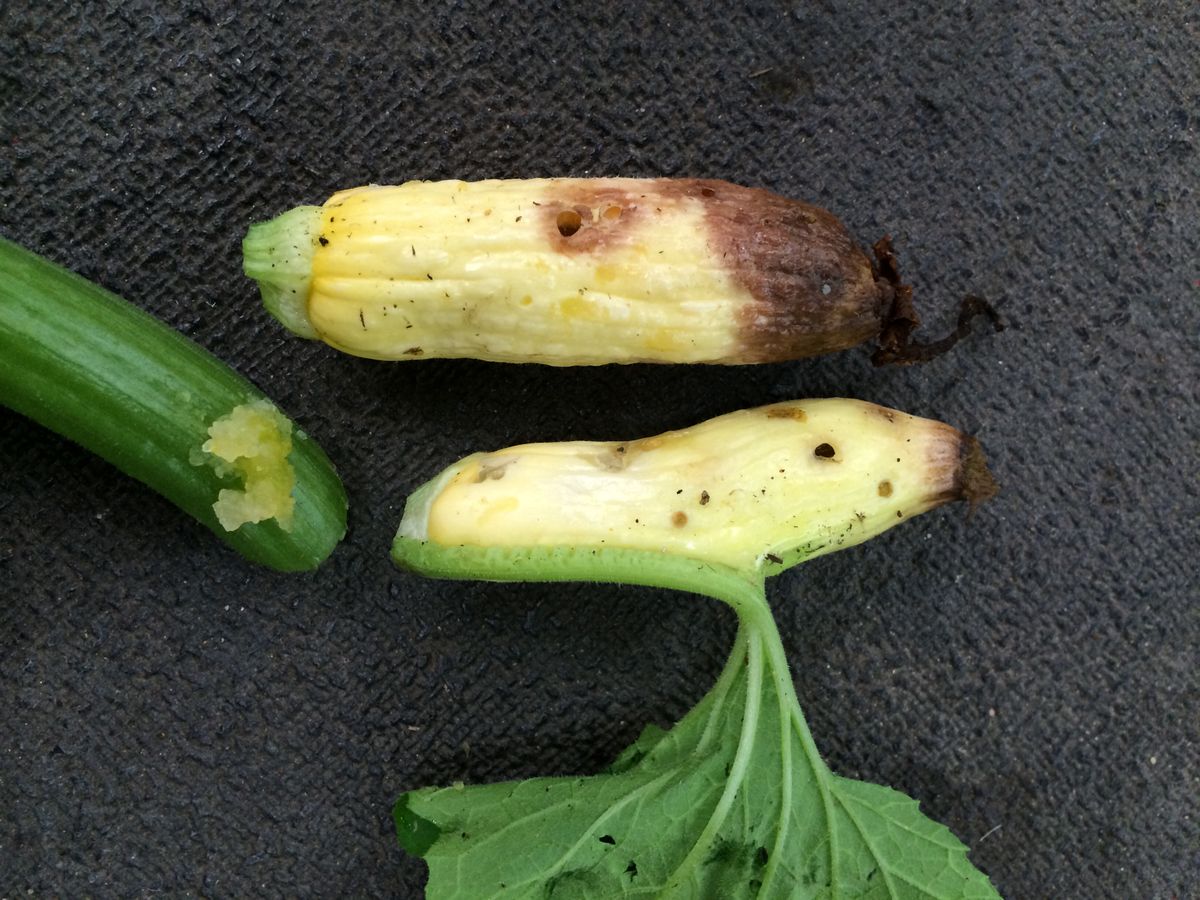
Pickleworm
insectDiaphania nitidalis
A yellow-green caterpillar with dark spots that bores into cucurbit flowers, then fruit, most damaging in the warm-season South where it doesn't overwinter but migrates north each year.
- Hits
- Cucumber, Zucchini, Winter squash, Pumpkin
- First fix
- Scout blossoms daily during fruiting
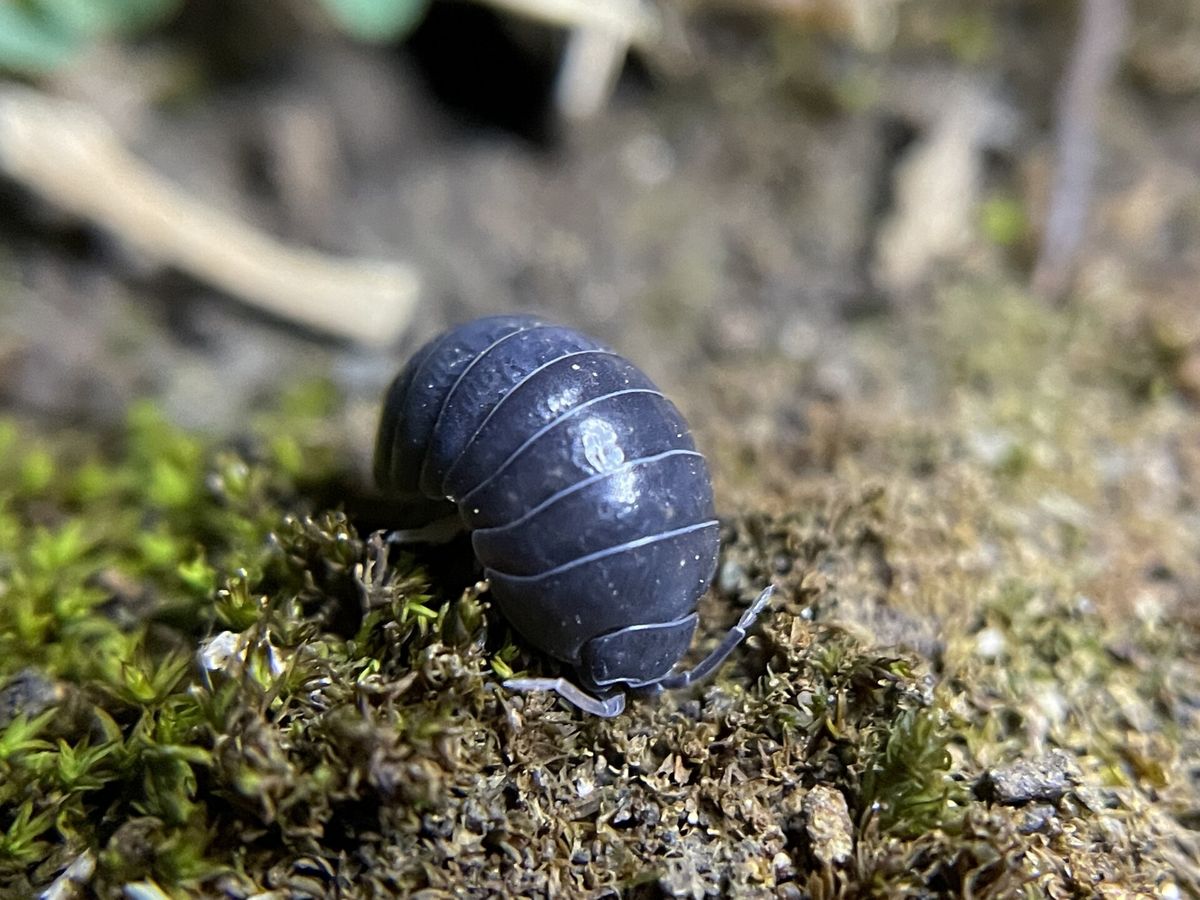
Pillbug / sowbug
arachnidArmadillidiidae / Oniscidae
Not insects but land-dwelling crustaceans, these gray, segmented decomposers mostly eat rotting plant matter in mulch and compost. They become a nuisance only when they turn to seedlings and strawberries in very moist, mulch-heavy beds.
- Hits
- Strawberry, Lettuce, Radish
- First fix
- Reduce excess mulch and moisture around seedlings
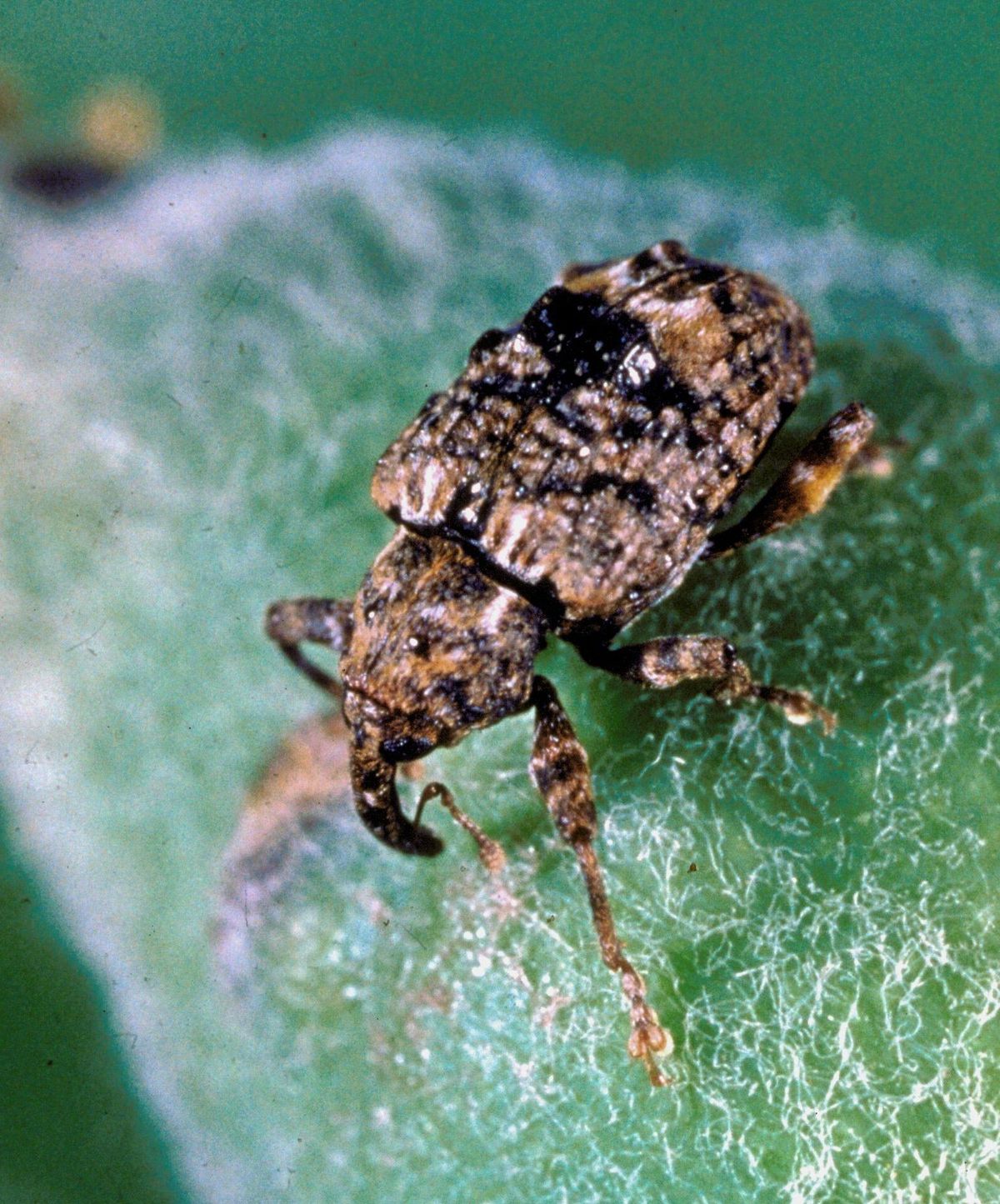
Plum curculio
insectConotrachelus nenuphar
A small, dark snout beetle that leaves a distinctive crescent-shaped scar when it lays eggs in young fruit. A major pest of stone fruit and apples east of the Rockies.
- Hits
- Plum, Peach, Cherry, Apple
- First fix
- Shake and catch beetles
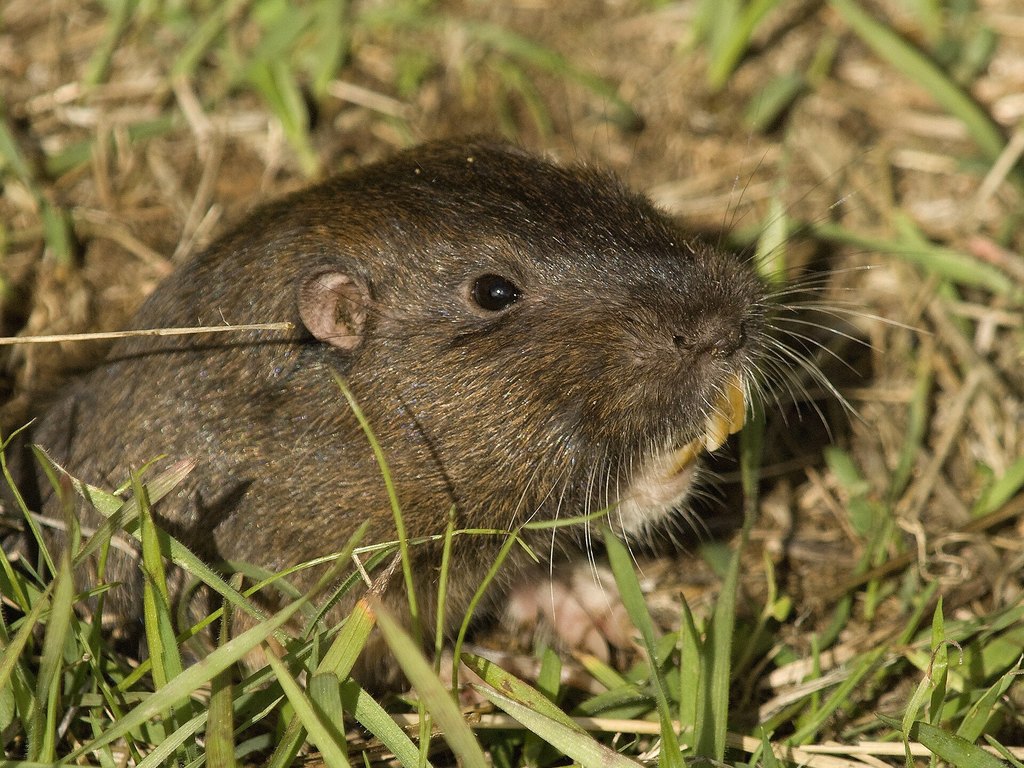
Pocket gopher
animalGeomyidae (Thomomys spp.)
The pocket gopher is a solitary, underground engineer that spends nearly its whole life in a dark tunnel system. It has huge front teeth, small eyes, and fur-lined cheek pouches that give it its name. A gopher can pull a healthy carrot, potato, or young fruit tree straight down into its burrow. Plant and all. Leaving a fan-shaped mound of soil with a plugged hole to one side. Its damage is sudden and absolute, and it defends its tunnel aggressively from intruders.
- Hits
- Carrot, Potato, Onion, Any bulb
- First fix
- Gopher wire baskets around root balls
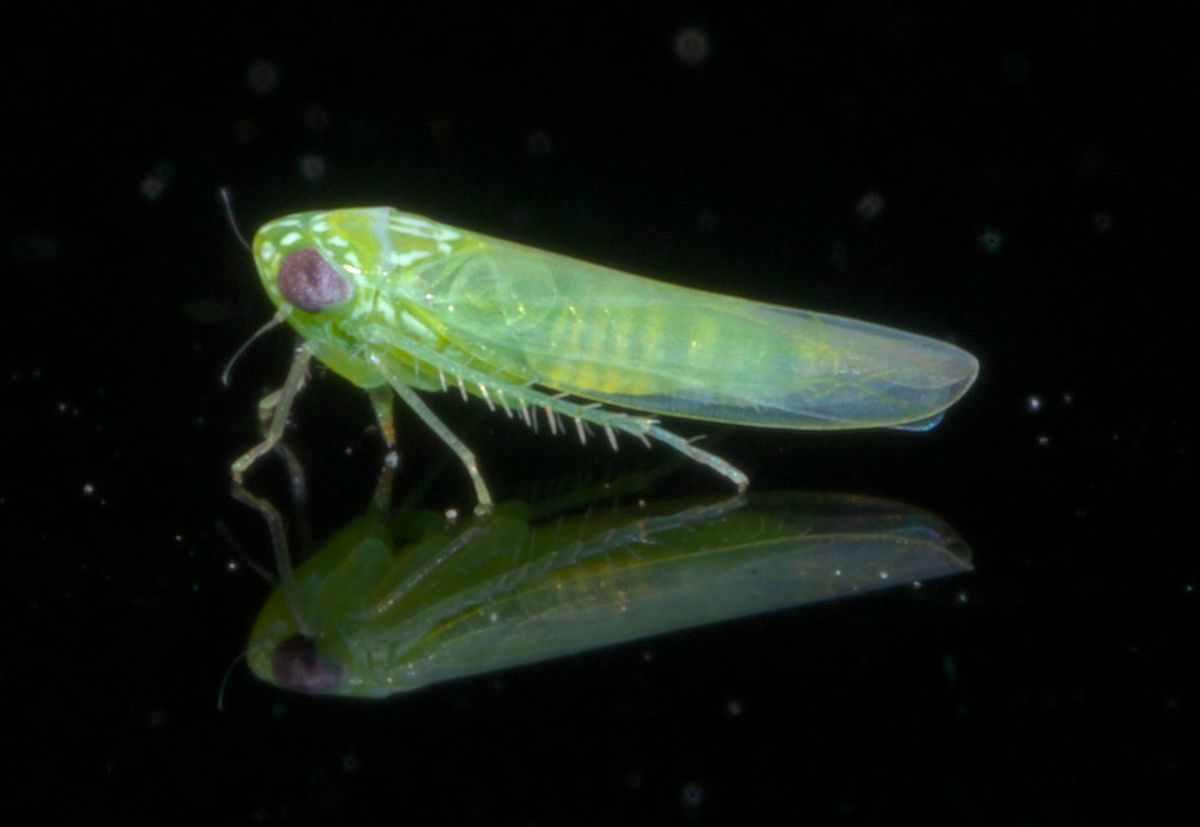
Potato leafhopper
insectEmpoasca fabae
A small, wedge-shaped, bright-green insect that flies up in clouds when disturbed. It injects a toxin as it feeds, causing a triangular yellow-brown leaf-edge burn called 'hopperburn.'
- Hits
- Potato, Bush bean, Strawberry
- First fix
- Row cover young plants
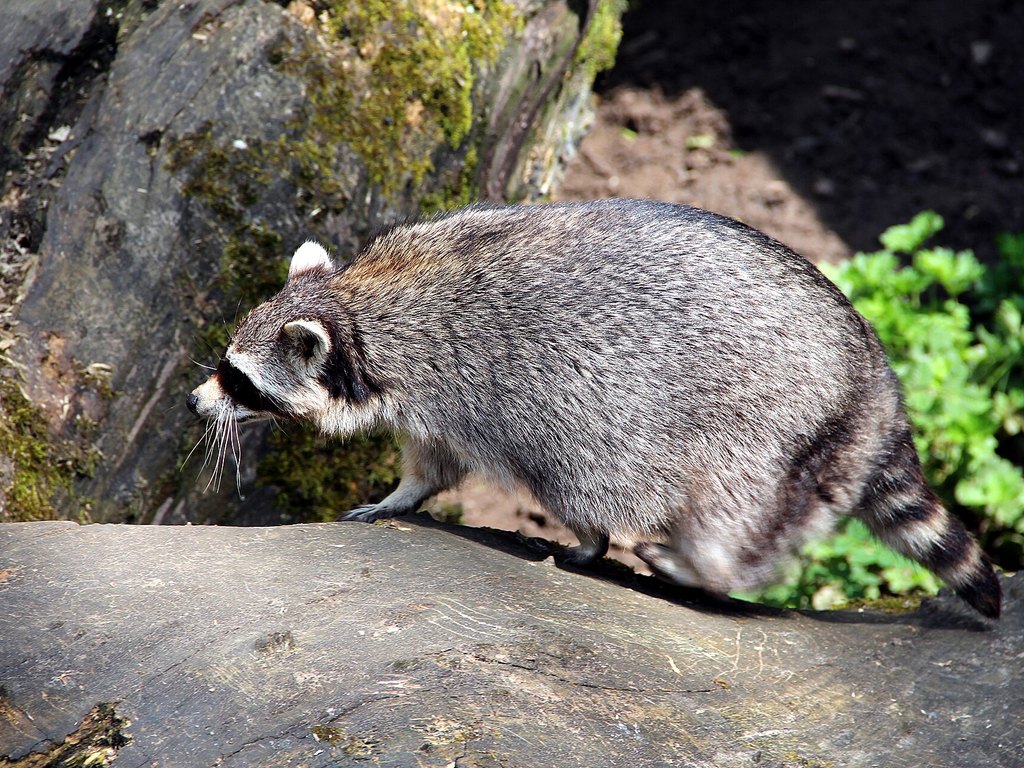
Raccoon
animalProcyon lotor
Highly intelligent, dexterous nocturnal omnivore. Notorious for pulling down sweet corn the night before you plan to pick.
- Hits
- Sweet corn, Melon, Grape, Strawberry
- First fix
- Electric fence: two strands at 6 in and 12 in
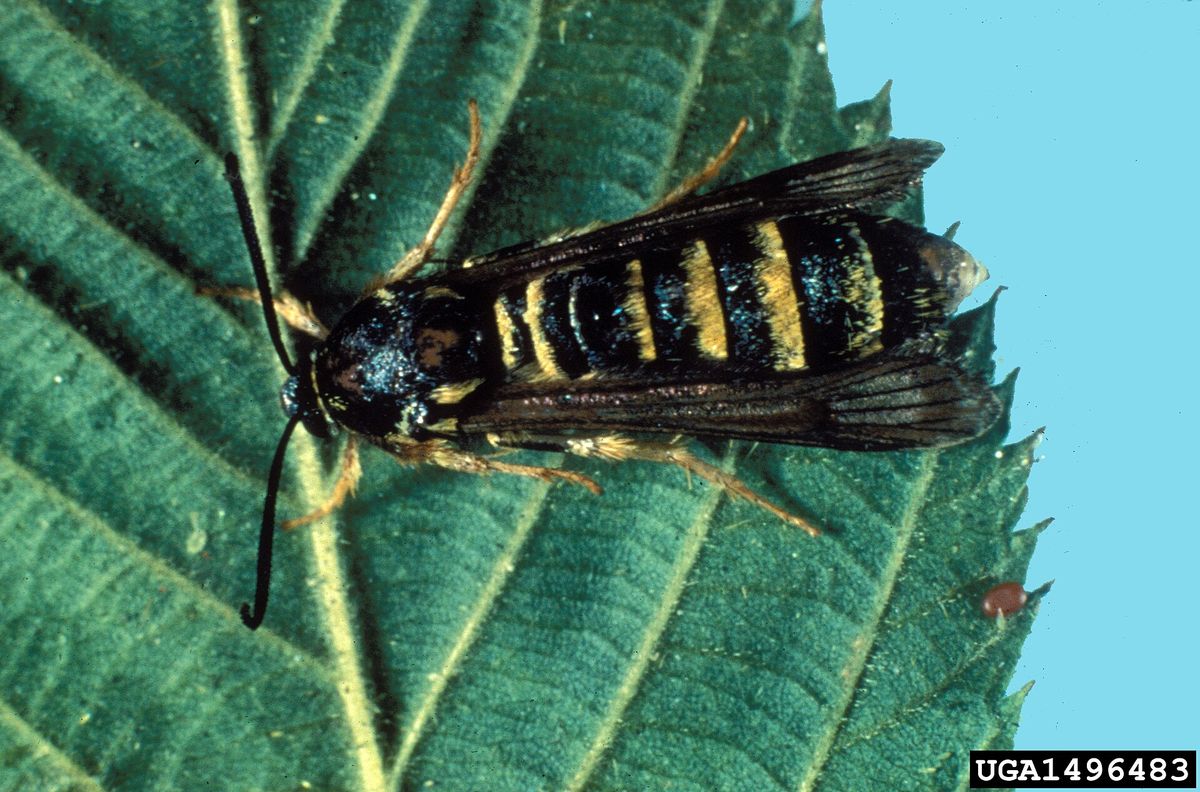
Raspberry crown borer
insectPennisetia marginata
A clearwing moth larva that spends up to two years tunneling in raspberry and blackberry canes and crowns, causing canes to wilt and snap at the base.
- Hits
- Raspberry, Blackberry
- First fix
- Remove and destroy wilted canes at the base
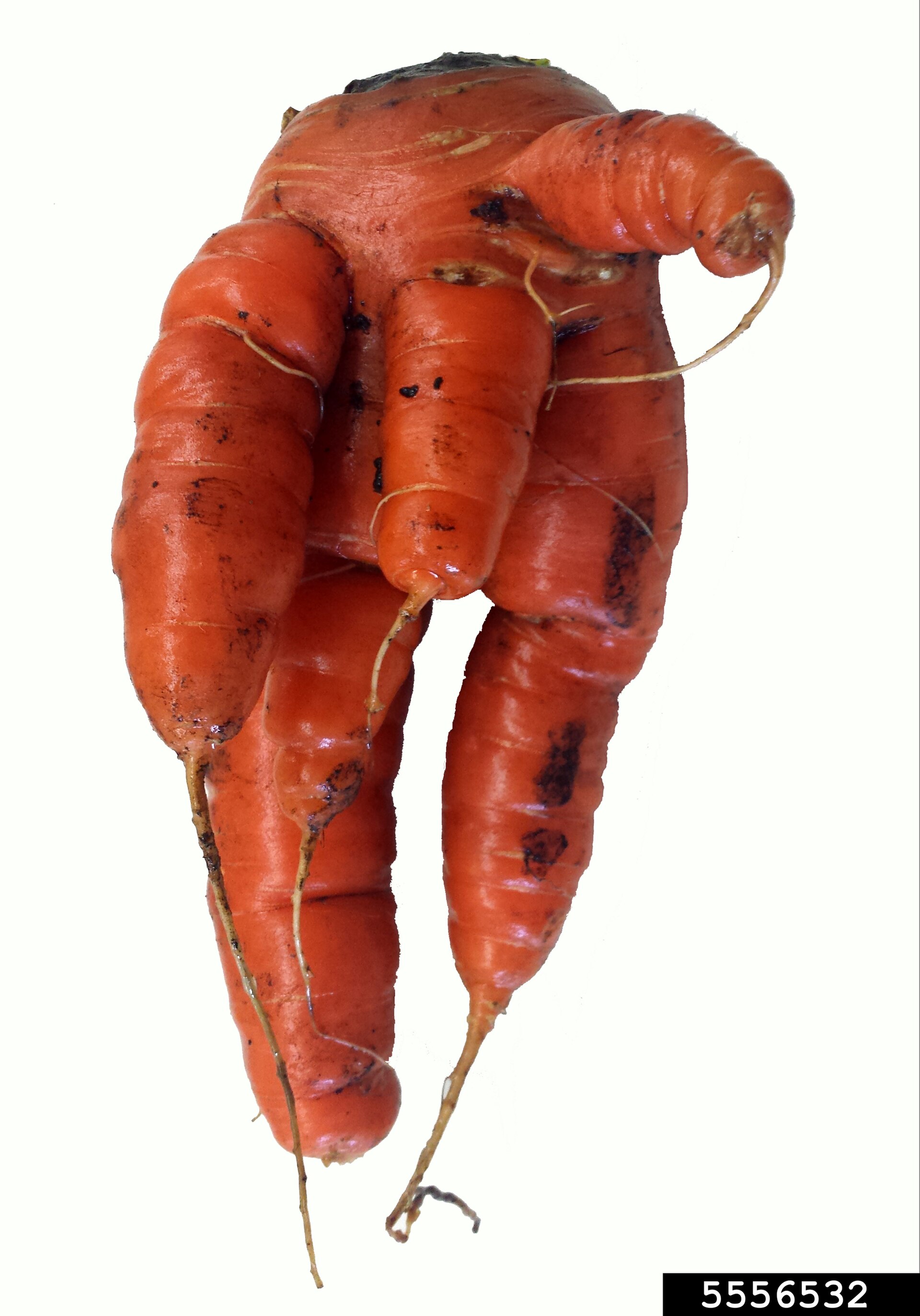
Root-knot nematode
arachnidMeloidogyne spp.
Microscopic roundworms that invade roots and trigger galls (knots) that block water and nutrient uptake. Damage is invisible above ground until plants wilt in the heat of the day despite moist soil, or when roots are dug up and show beaded swellings.
- Hits
- Tomato, Carrot, Okra, Cucumber
- First fix
- Solarize the bed
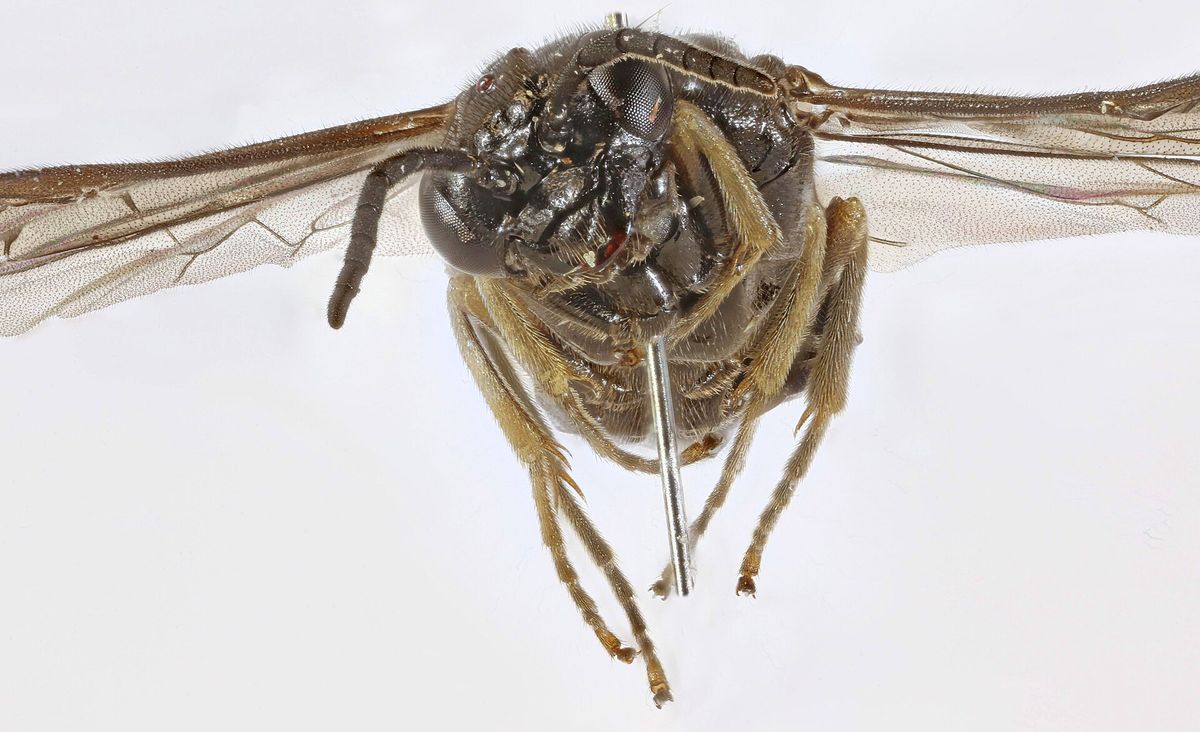
Sawfly (roseslug)
insectEndelomyia aethiops and related species
The larva looks like a small green caterpillar or slug but is actually a wasp relative; it skeletonizes leaves from the underside, leaving a lacy, translucent 'window' pattern. Not a true caterpillar, so Bt does not control it.
- Hits
- Rosemary, Pear, Cherry
- First fix
- Hose off larvae
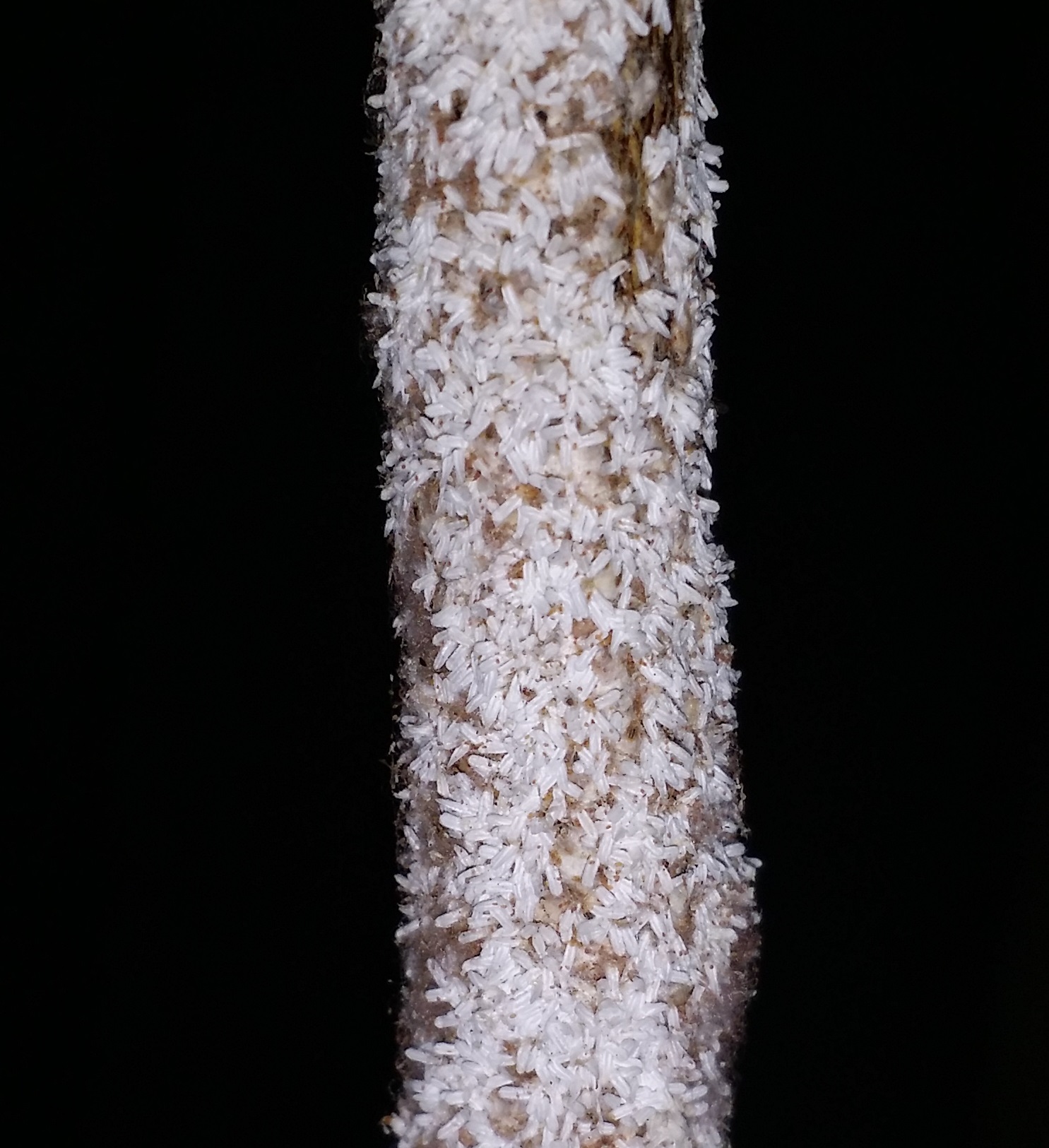
Scale insects
insectCoccoidea (armored & soft scale)
Tiny, immobile insects that look like small bumps or shells stuck to stems and leaf undersides rather than typical bugs. Soft scales excrete honeydew that grows sooty mold; armored scales feed under a hard waxy shield.
- Hits
- Apple, Pear, Peach, Grape
- First fix
- Prune out heavily infested wood
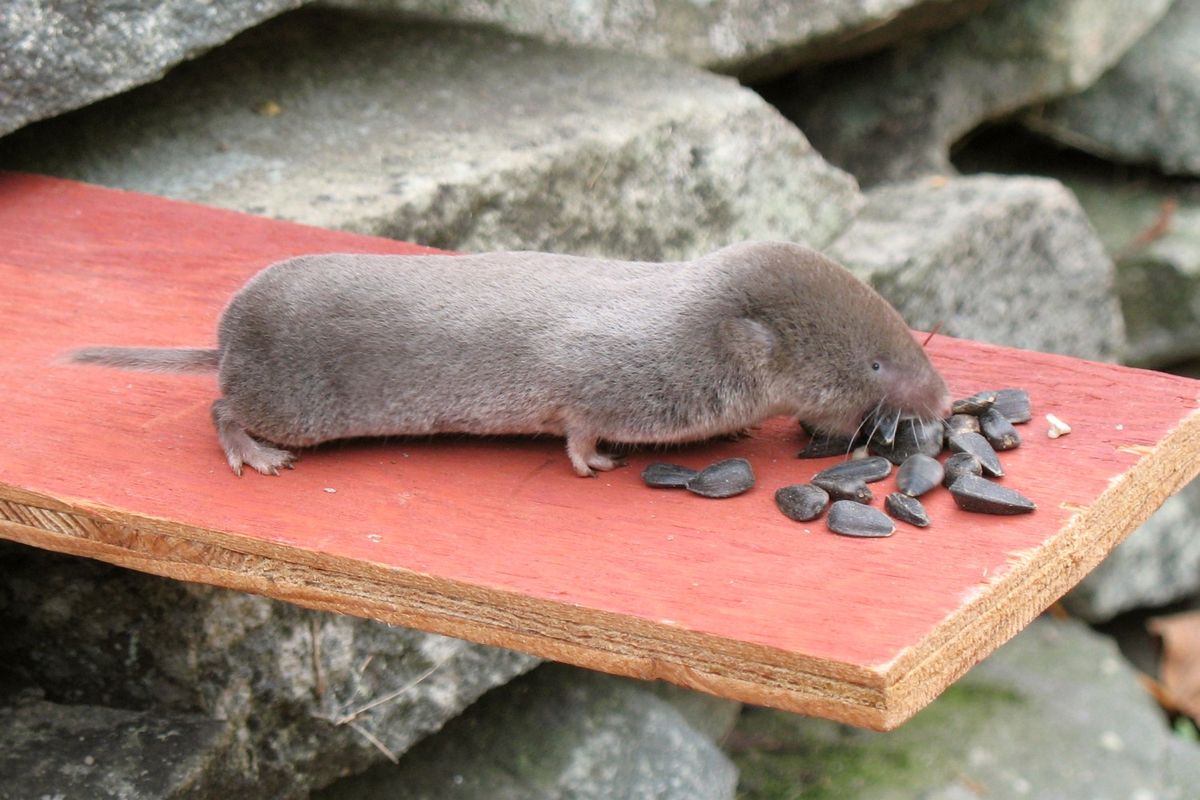
Shrew
animalSorex spp. / Blarina spp.
A tiny, mole-like insectivore often mistaken for a mouse, but with a pointed snout and a voracious appetite for insects, grubs, slugs, and earthworms. Shrews eat little to no plant material and are one of the most overlooked garden allies: most 'shrew damage' reports are actually voles using the same runways.
- Hits
- Not a plant feeder
- First fix
- Leave it be
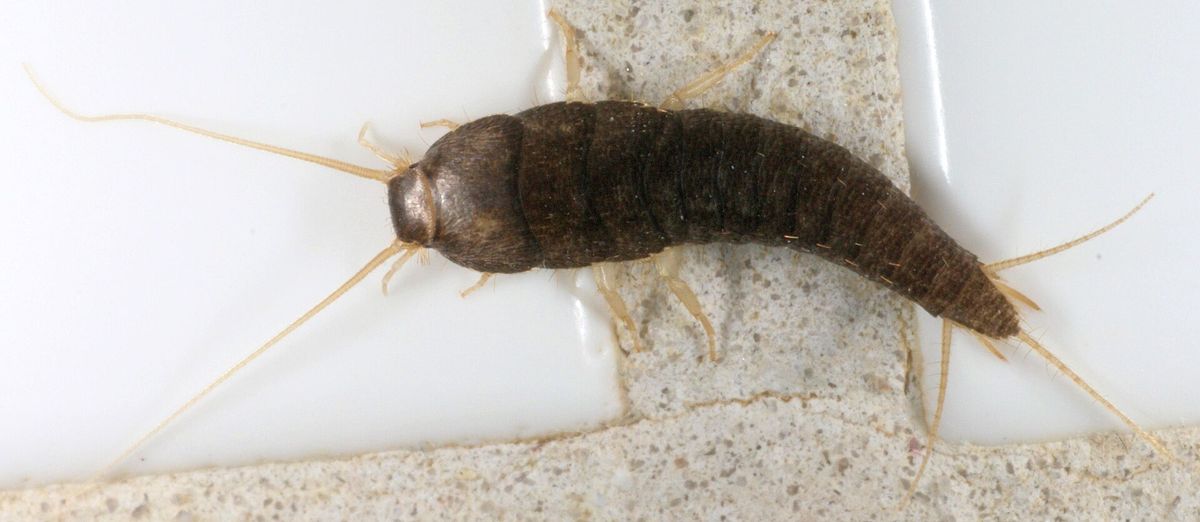
Silverfish
insectLepisma saccharinum
A wingless, silvery, fish-shaped insect found in damp sheds, greenhouses, and mulch piles, feeding on starches, paper, and decaying plant matter. Almost never a direct threat to living garden plants.
- Hits
- Not a plant feeder
- First fix
- Reduce humidity and clutter in storage areas
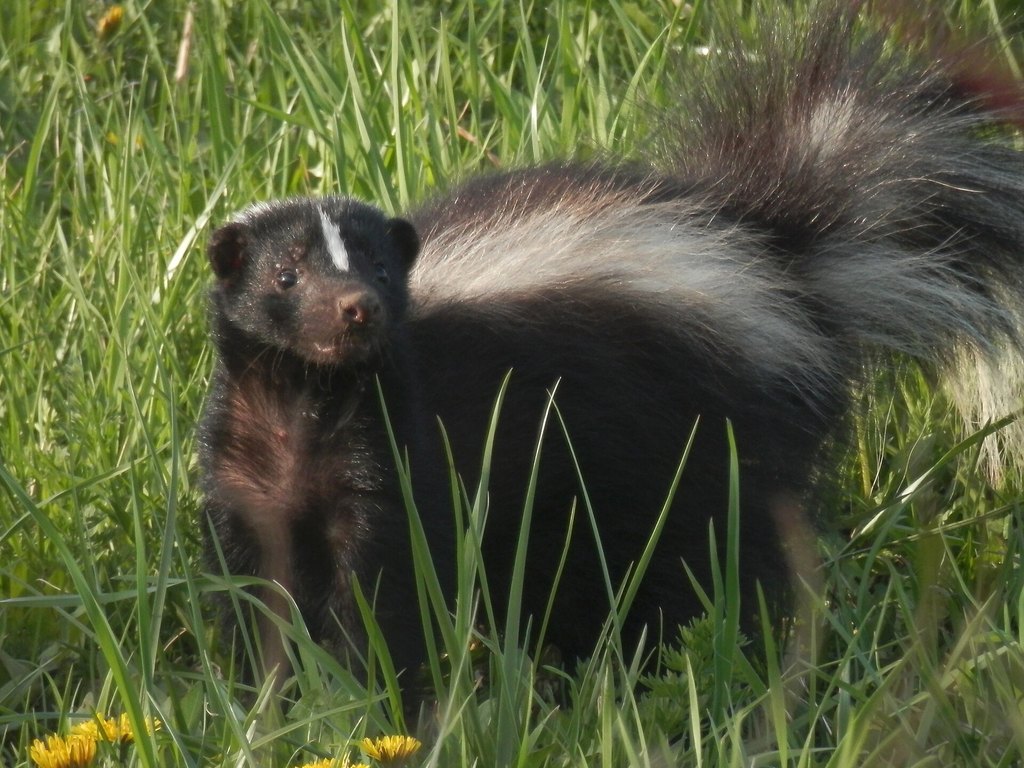
Skunk
animalMephitis mephitis
The striped skunk is a slow-moving nocturnal digger that eats grubs, insects, eggs, and ripe produce. Most 'skunk damage' in a garden is actually grub hunting, cone-shaped holes in beds and rolled-back turf, which means the real problem is the grubs.
- Hits
- Lawn/turf, Beds with grubs, Corn, Berries
- First fix
- Fix the grubs and the skunk leaves
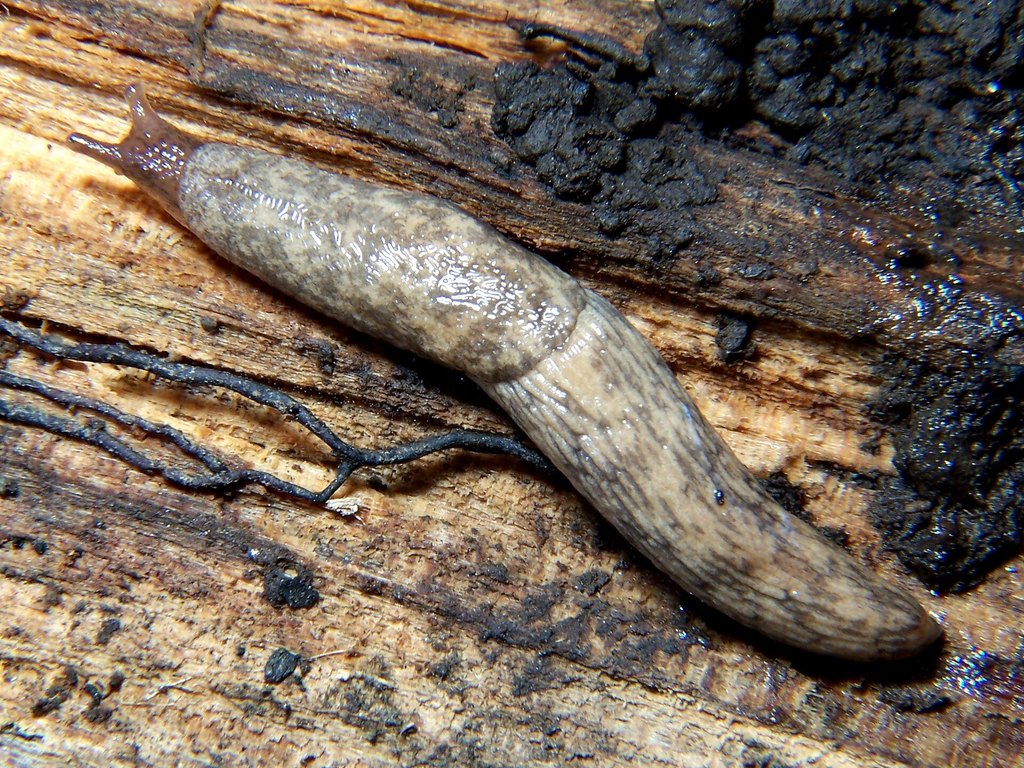
Slugs & snails
molluskGastropoda spp.
Soft-bodied mollusks that feed at night in moist conditions. Slime trails on soil or leaves in the morning are the smoking gun. Prefer tender greens, seedlings, and fruit lying on the soil.
- Hits
- Lettuce, Spinach, Strawberry, Basil
- First fix
- Beer trap
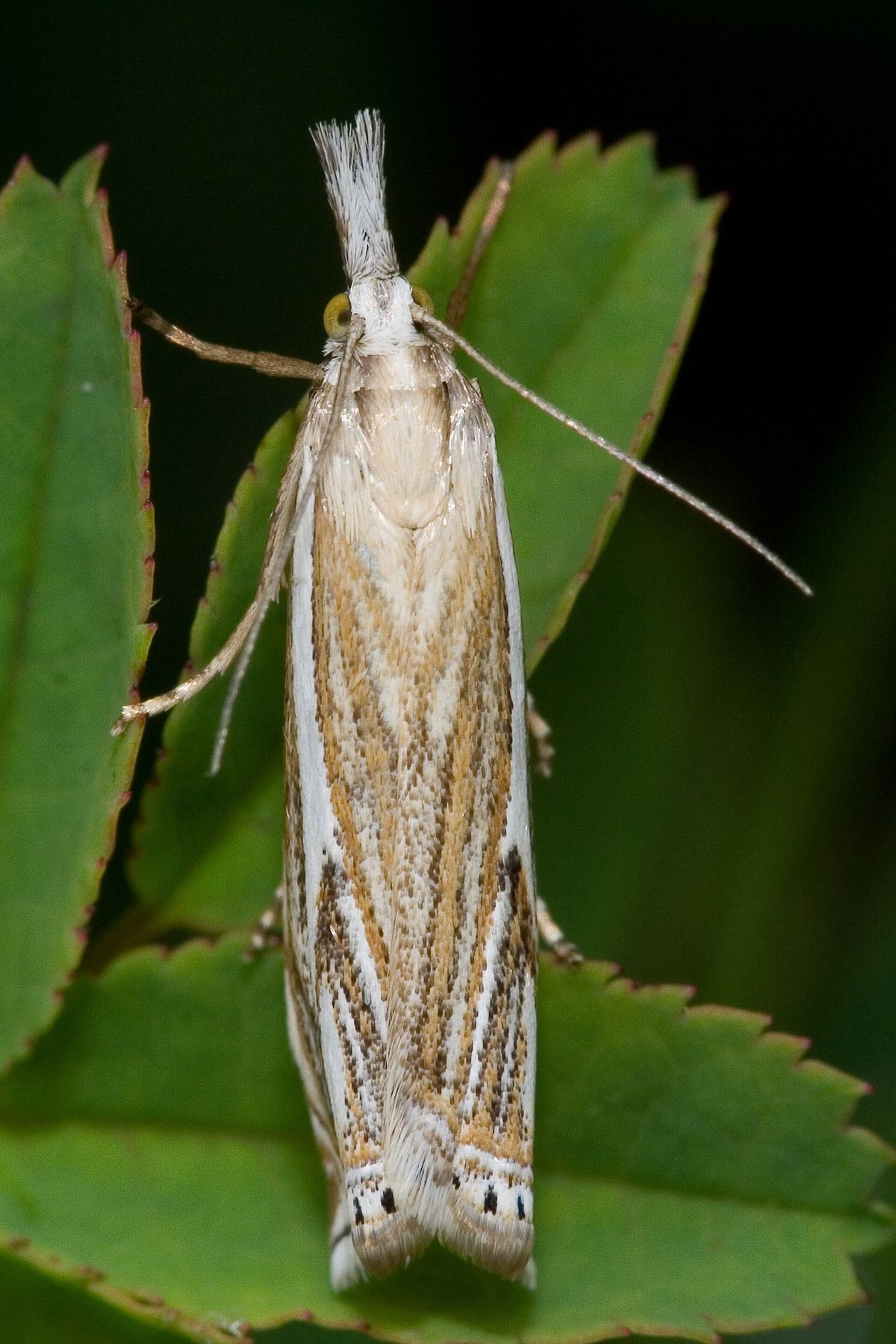
Sod webworm
insectCrambus spp. and related species
The larva of a small tan moth that hides in a silk-lined tunnel by day and chews grass blades at the crown at night, leaving ragged, thin patches that birds often peck at looking for a meal.
- Hits
- Lawn/turf
- First fix
- Soap flush test
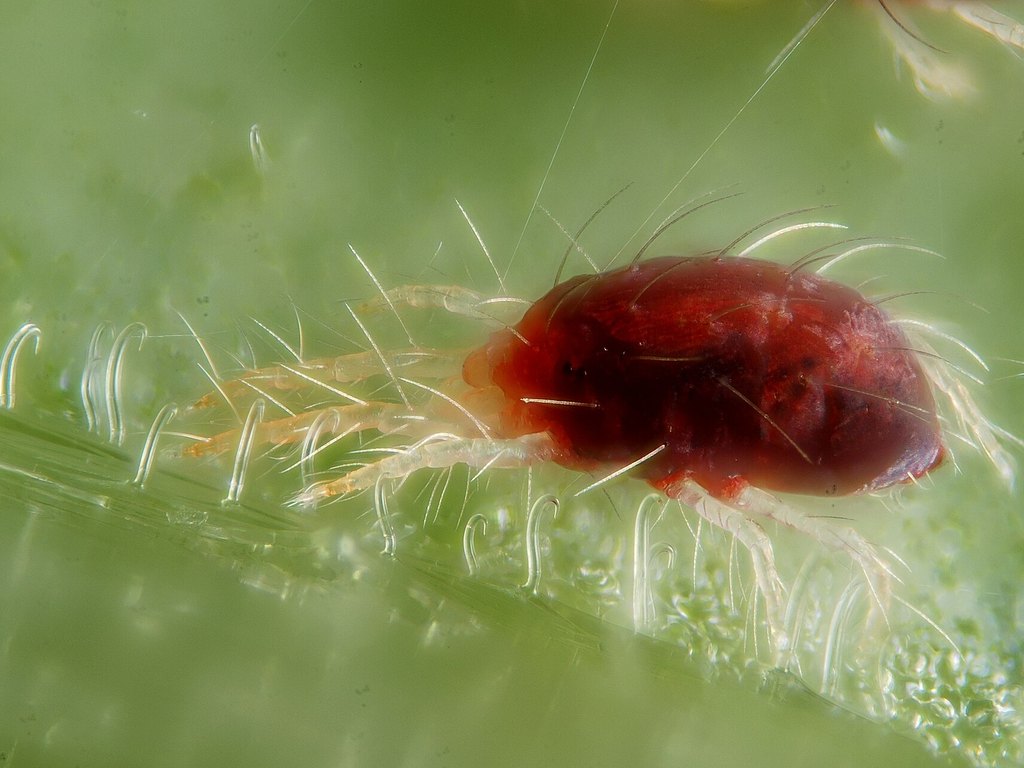
Spider mite
arachnidTetranychus urticae
Spider mites are not true insects. They are eight-legged arachnids, barely visible without a hand lens. A single colony looks like pale dust on a leaf underside; by the time you see fine silk webbing between stems and leaves, the population is already booming. They love heat, drought, and still air, and in hot weather a generation can complete in 5 days.
- Hits
- Bean, Tomato, Strawberry, Cucumber
- First fix
- Blast leaf undersides with water
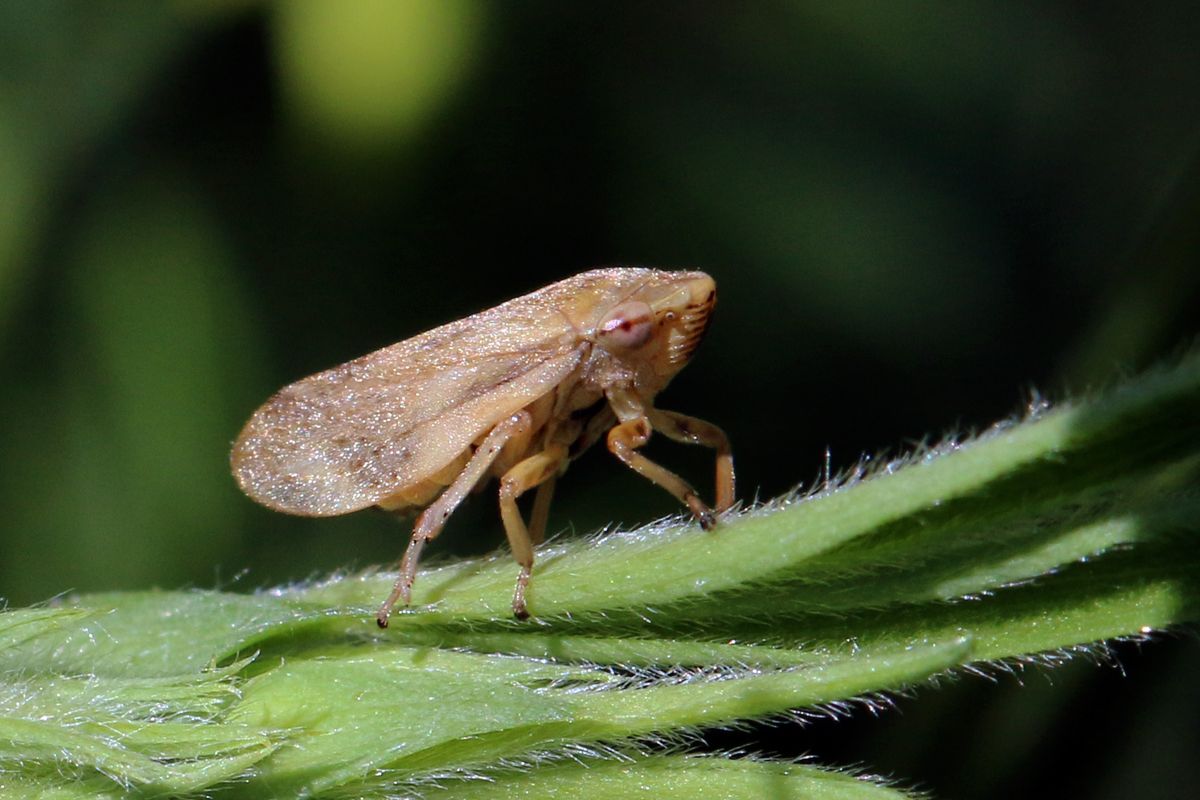
Spittlebug
insectPhilaenus spumarius
Best known for the foamy white 'spit' masses nymphs create on stems to hide and stay moist while they feed. Damage is usually cosmetic in home gardens, though heavy infestations can stunt tender growth.
- Hits
- Strawberry, Rosemary, Lavender, Thyme
- First fix
- Hose off the foam
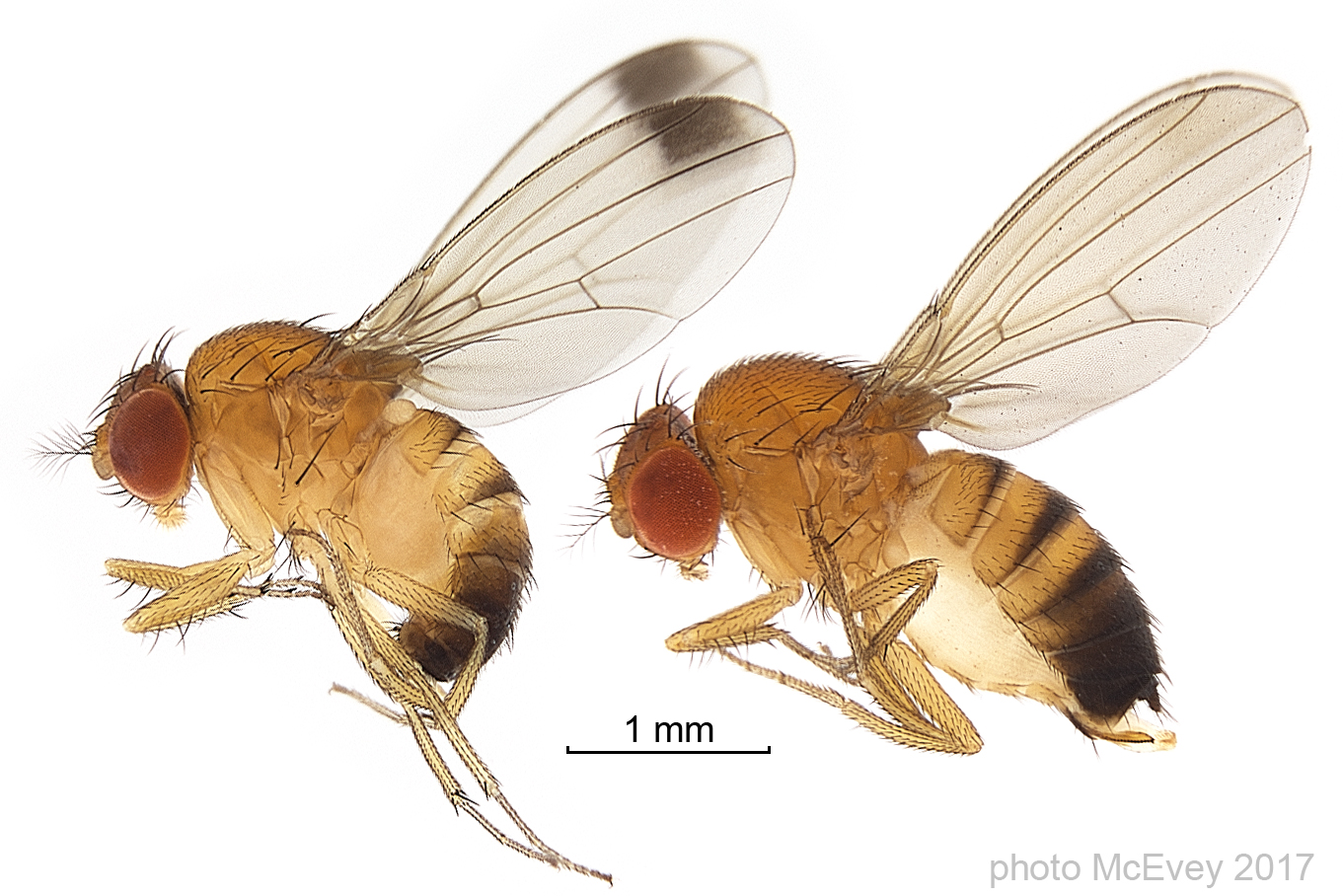
Spotted wing drosophila
insectDrosophila suzukii
Unlike common fruit flies that only attack overripe fruit, this small fly's serrated egg-laying organ lets females cut into firm, ripening fruit. Larvae hatch inside, so damage often isn't visible until the fruit collapses.
- Hits
- Raspberry, Blackberry, Blueberry, Strawberry
- First fix
- Harvest ripe fruit daily
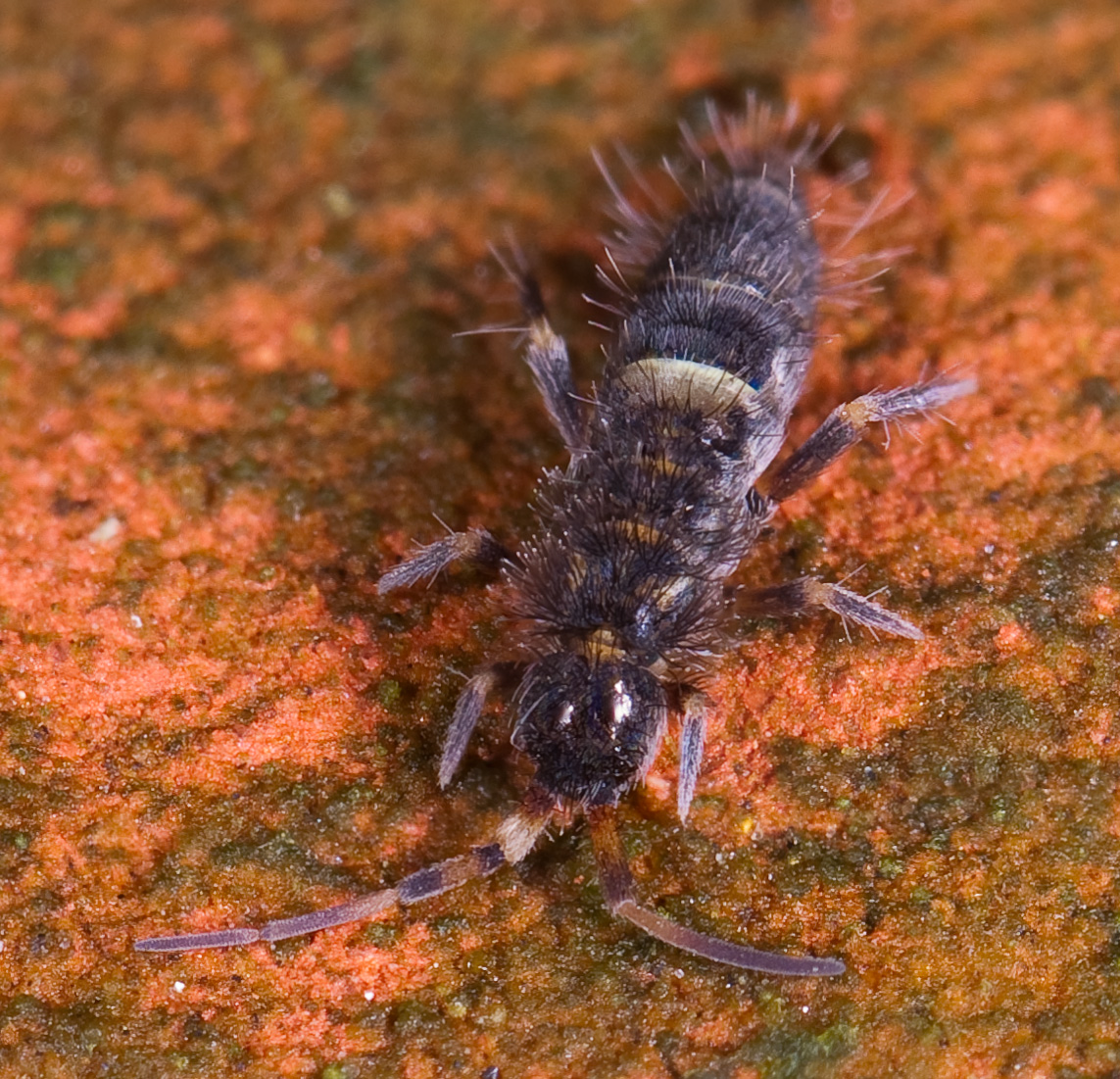
Springtails
arachnidCollembola
Tiny (often under 1/16 inch), wingless soil dwellers that spring away when disturbed. The overwhelming majority are harmless or beneficial decomposers; they only draw concern when found in huge numbers around overwatered seedlings.
- Hits
- Not a plant feeder
- First fix
- Let the soil surface dry between waterings
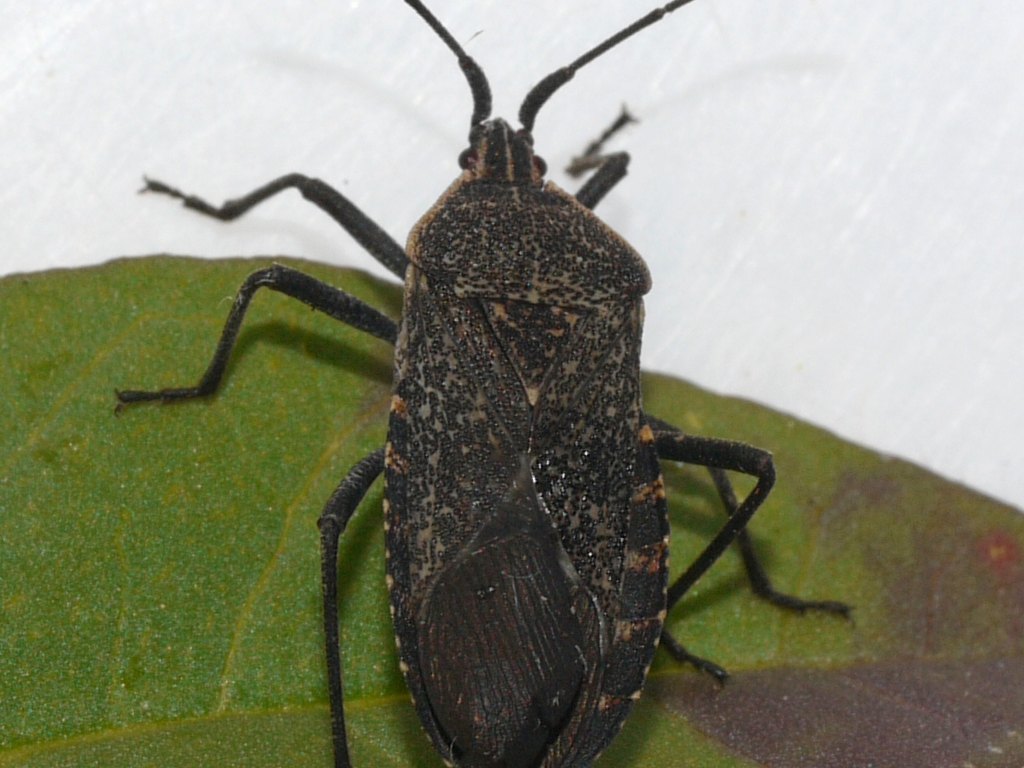
Squash bug
insectAnasa tristis
Flat-backed, gray-brown 5/8-inch bugs that congregate on squash and pumpkin. Nymphs are tiny and gray with black legs; egg clusters are bronze and laid in tidy rows on leaf undersides.
- Hits
- Zucchini, Winter squash, Pumpkin, Cucumber (occasionally)
- First fix
- Crush egg clusters
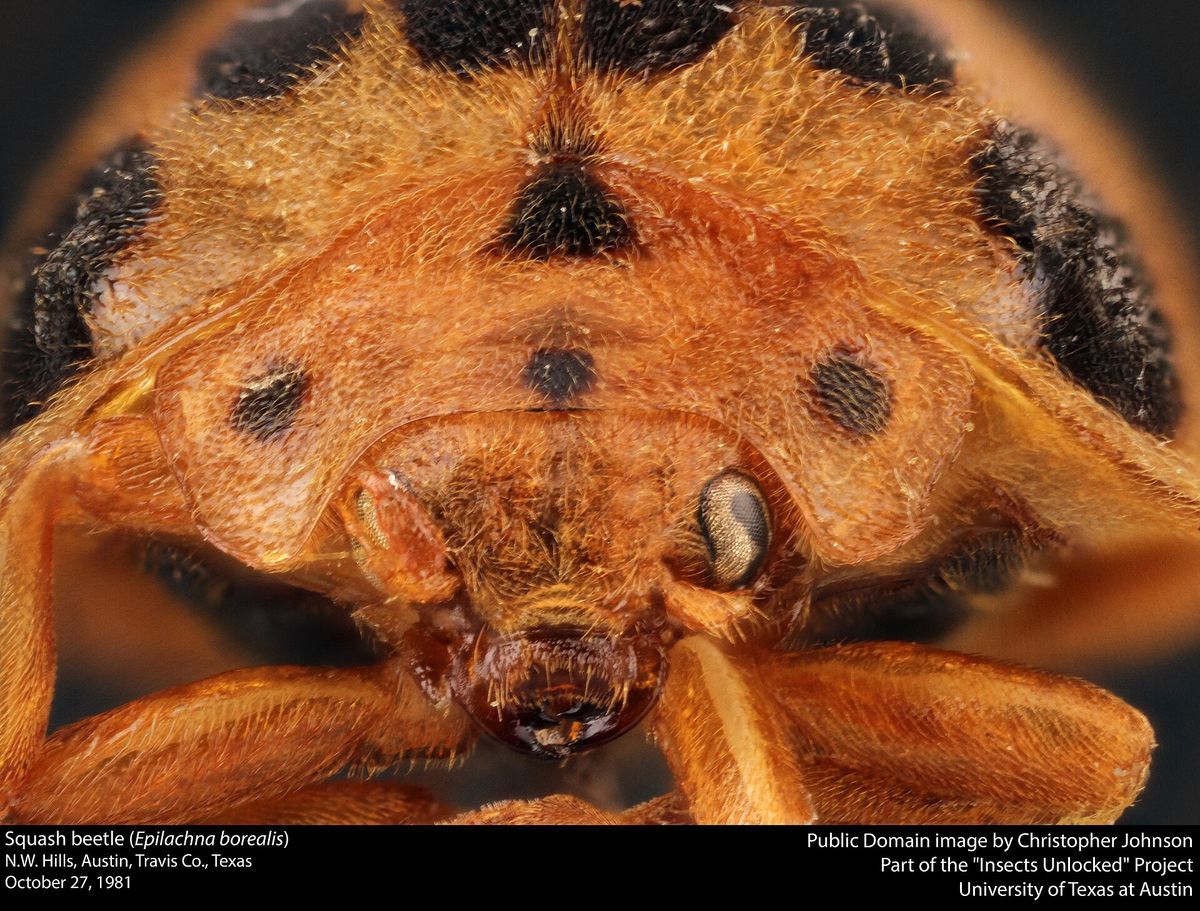
Squash lady beetle
insectEpilachna borealis
A yellow-orange beetle with black spots that looks like an oversized, fuzzy lady beetle, but unlike its beneficial relatives, it eats leaves rather than aphids. Larvae are spiny and yellow.
- Hits
- Zucchini, Winter squash, Pumpkin, Cucumber
- First fix
- Handpick adults and larvae
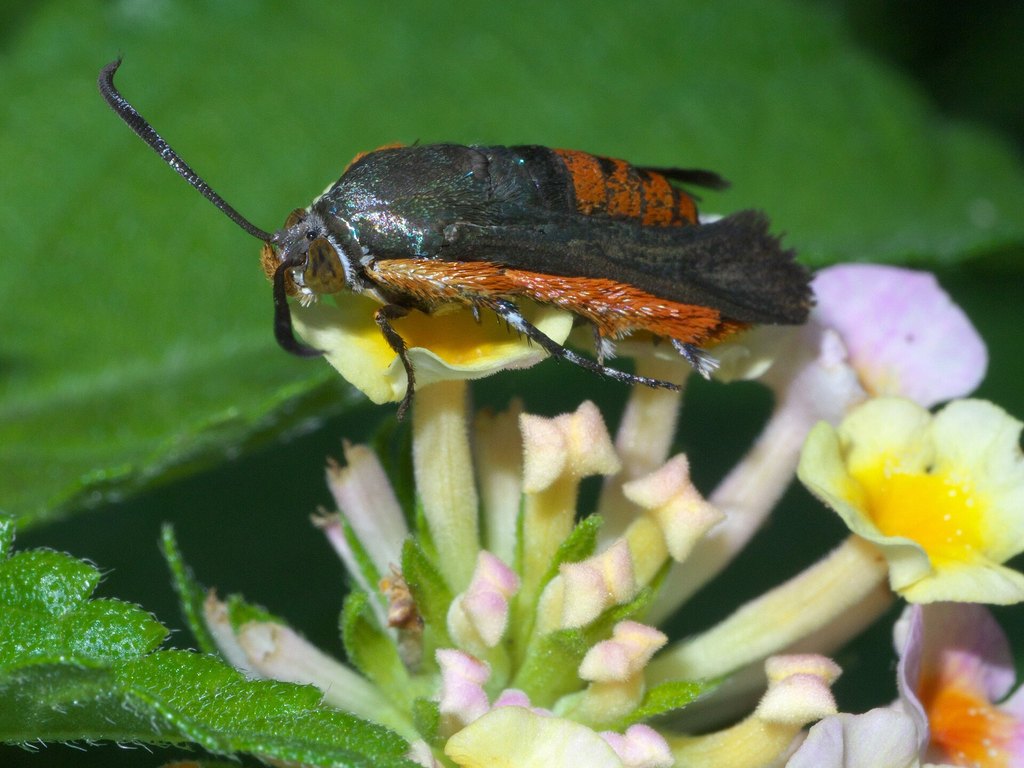
Squash vine borer
insectMelittia cucurbitae
The adult is a stunning orange-and-black day-flying moth that looks like a wasp. Its larva tunnels inside squash stems. You rarely see the borer, only the sudden wilt of a healthy plant in mid-summer.
- Hits
- Zucchini, Yellow squash, Pumpkin, Winter squash (especially C. pepo & C. maxima)
- First fix
- Wrap stem base in foil at transplant
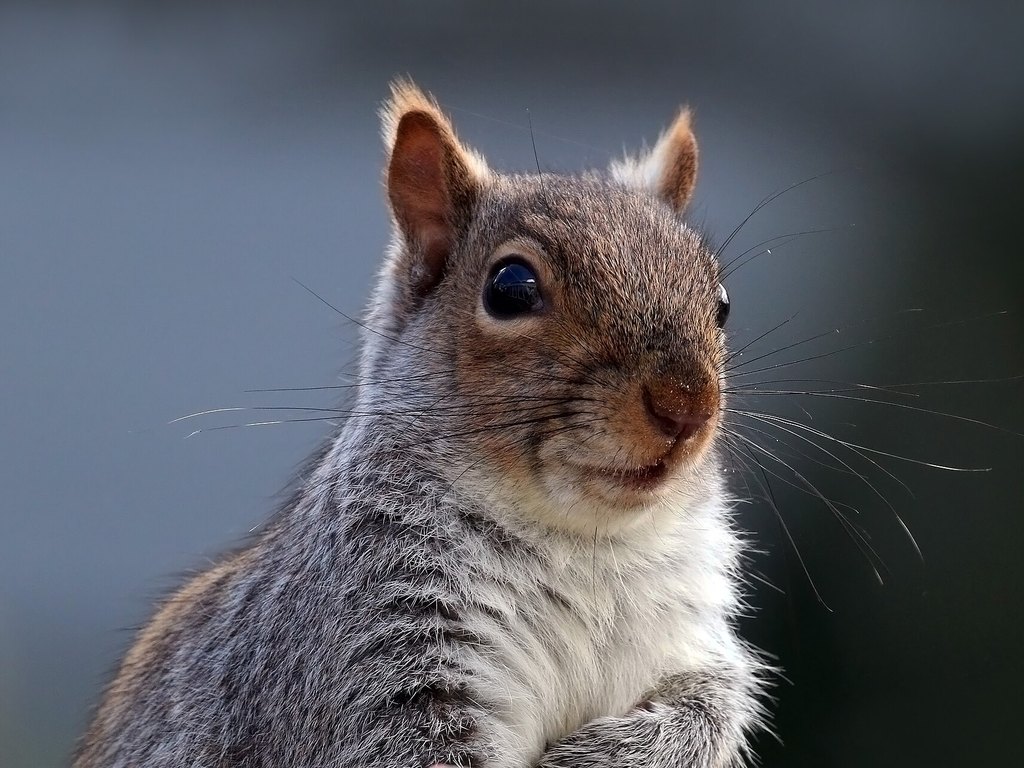
Squirrel
animalSciurus carolinensis / Sciurus niger
The gray squirrel is an agile, quick-footed climber and digger that treats gardens like a personal pantry. It raids tomatoes for moisture, digs up bulbs, and makes off with corn, peaches, and strawberries. Often taking a single bite and leaving the rest. Where there are mature trees, squirrels are nearly impossible to exclude, so the best strategy is to make your garden less attractive than the surrounding woods.
- Hits
- Tomato, Strawberry, Corn, Apple
- First fix
- Bird netting over ripening fruit
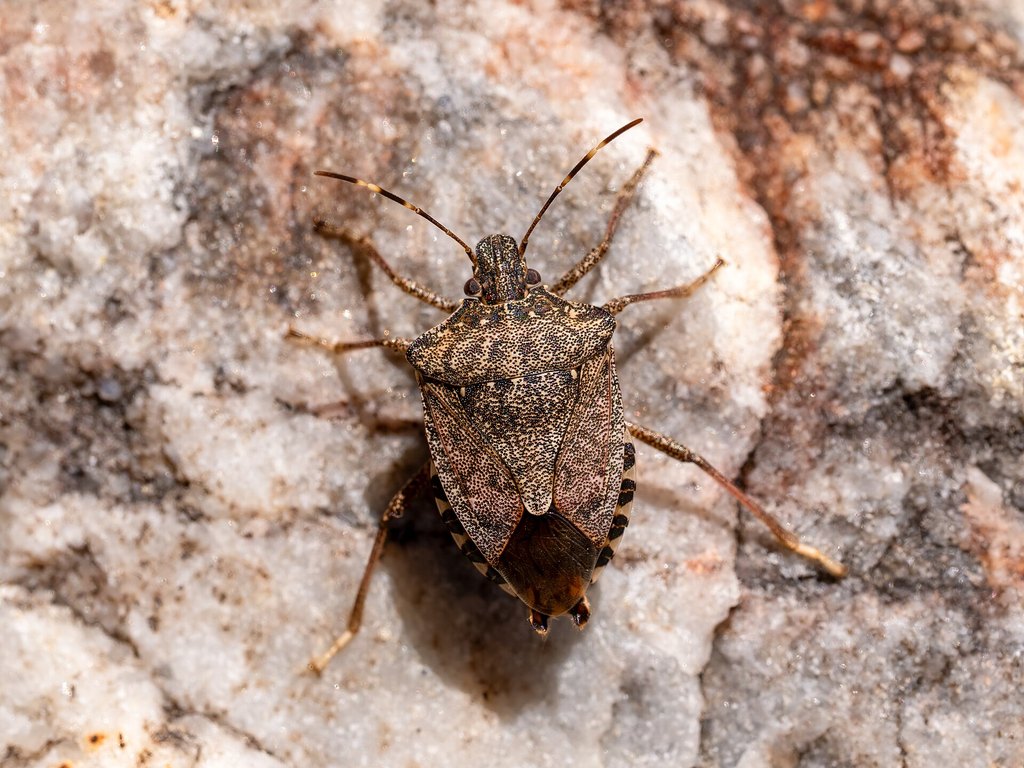
Stink bug
insectHalyomorpha halys (and native Pentatomidae)
Shield-shaped bugs, mottled brown (the invasive brown marmorated) or bright green, that pierce fruit and pods to feed. They release a pungent cilantro-skunk odor when handled or crushed, and pile into houses to overwinter.
- Hits
- Tomato, Pepper, Bean, Okra
- First fix
- Morning hand-collection into soapy water
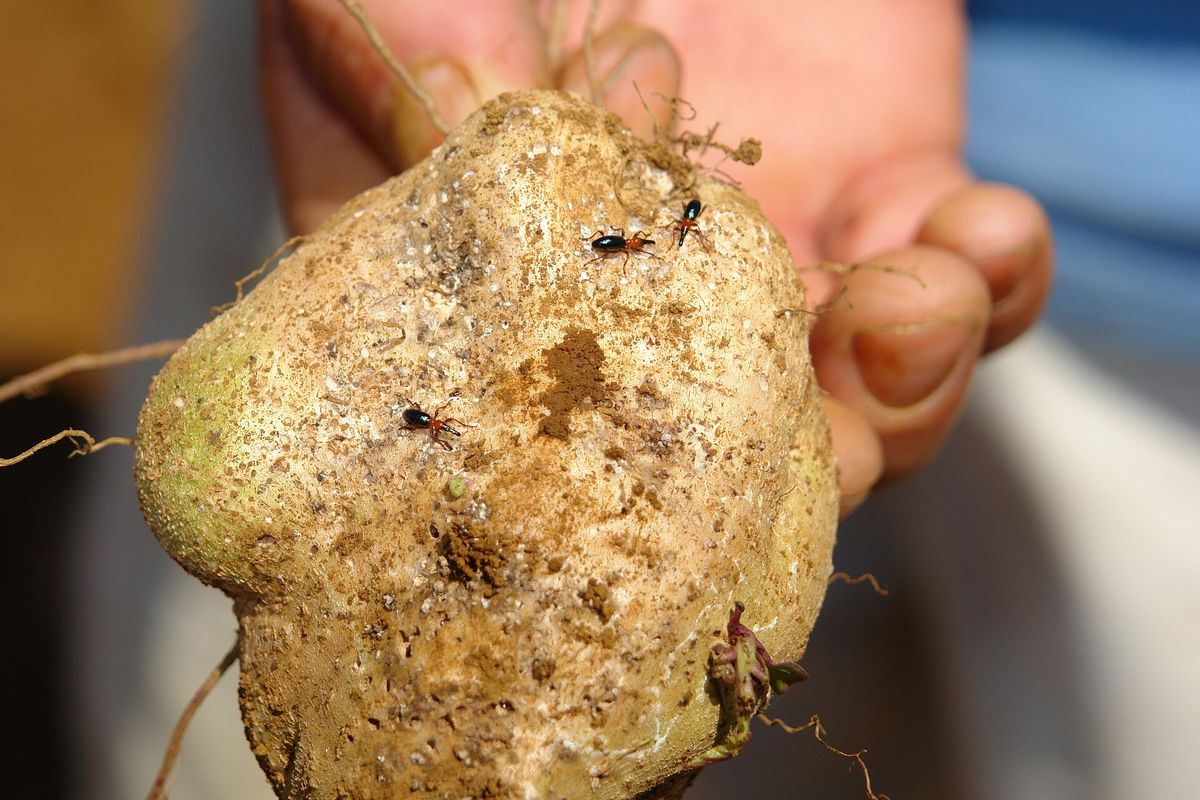
Sweetpotato weevil
insectCylas formicarius
A slender, ant-like weevil with an orange body and blue-black wing covers, a serious pest of sweet potato in the South. Larvae tunnel inside roots and produce a bitter, musty compound that makes infested roots inedible.
- Hits
- Sweet Potato
- First fix
- Hill soil high over developing roots
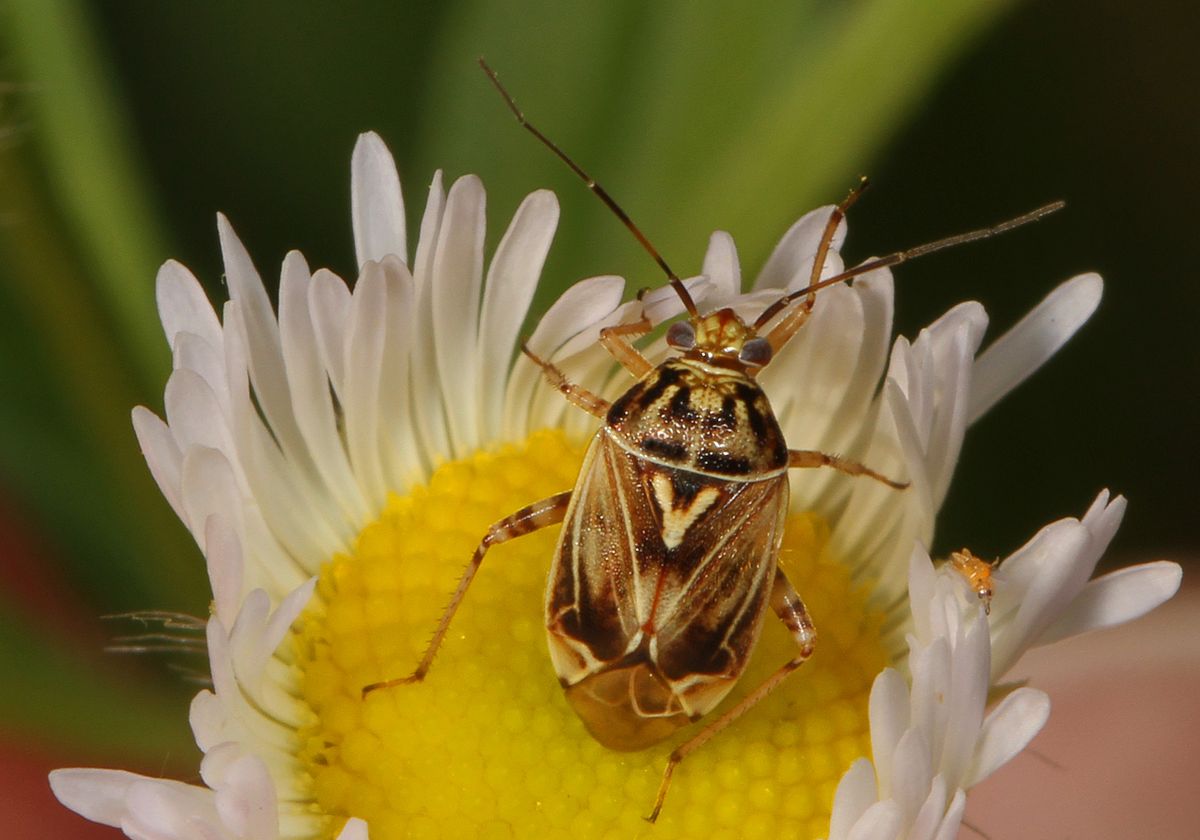
Tarnished plant bug
insectLygus lineolaris
A fast-moving, mottled brown-and-yellow bug about a quarter-inch long that injects toxic saliva as it feeds, killing tissue around each feeding site. It attacks a very wide range of vegetables and fruit.
- Hits
- Strawberry, Bush bean, Celery, Potato
- First fix
- Keep the garden and margins weeded
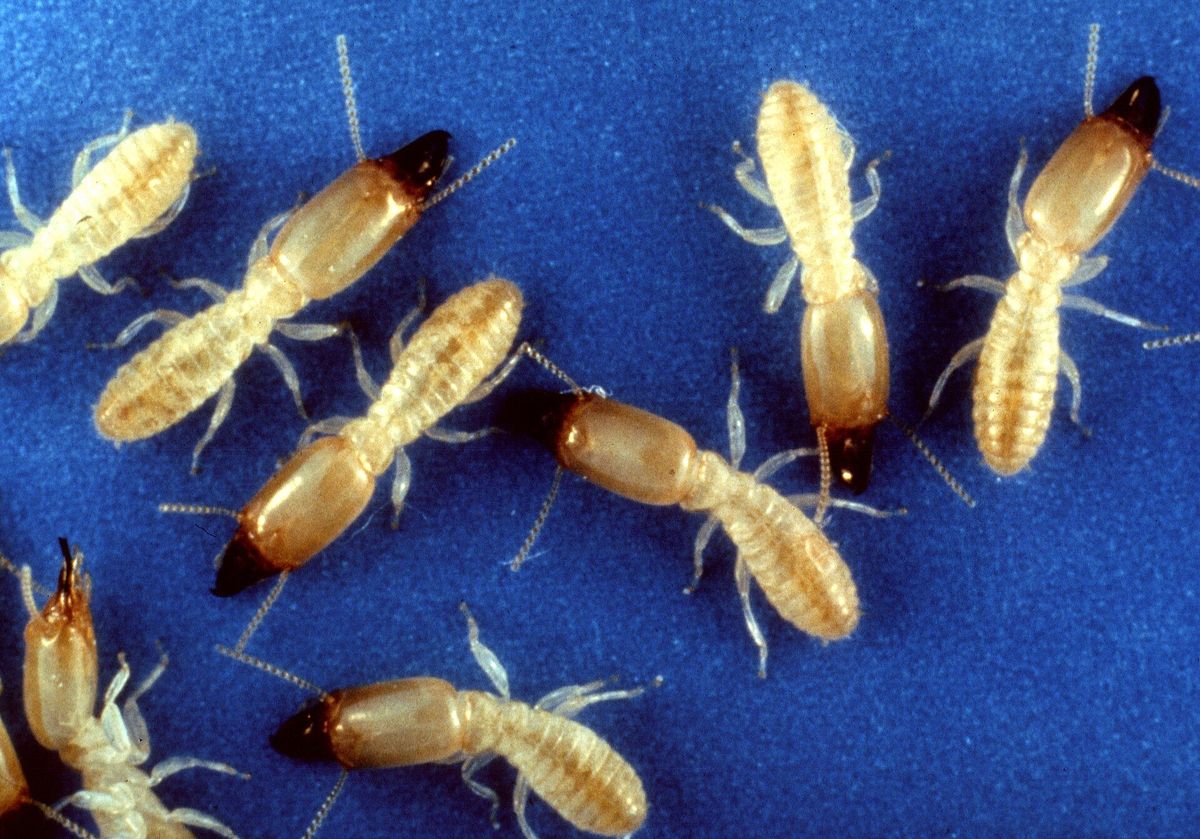
Termites (near raised beds)
insectReticulitermes spp.
Subterranean termites do not eat living garden plants, but they will hollow out untreated wood raised-bed frames, fence posts, and mulch piled against a home's foundation. The real risk is structural, not to crops.
- Hits
- Not a plant feeder
- First fix
- Keep wood off the soil
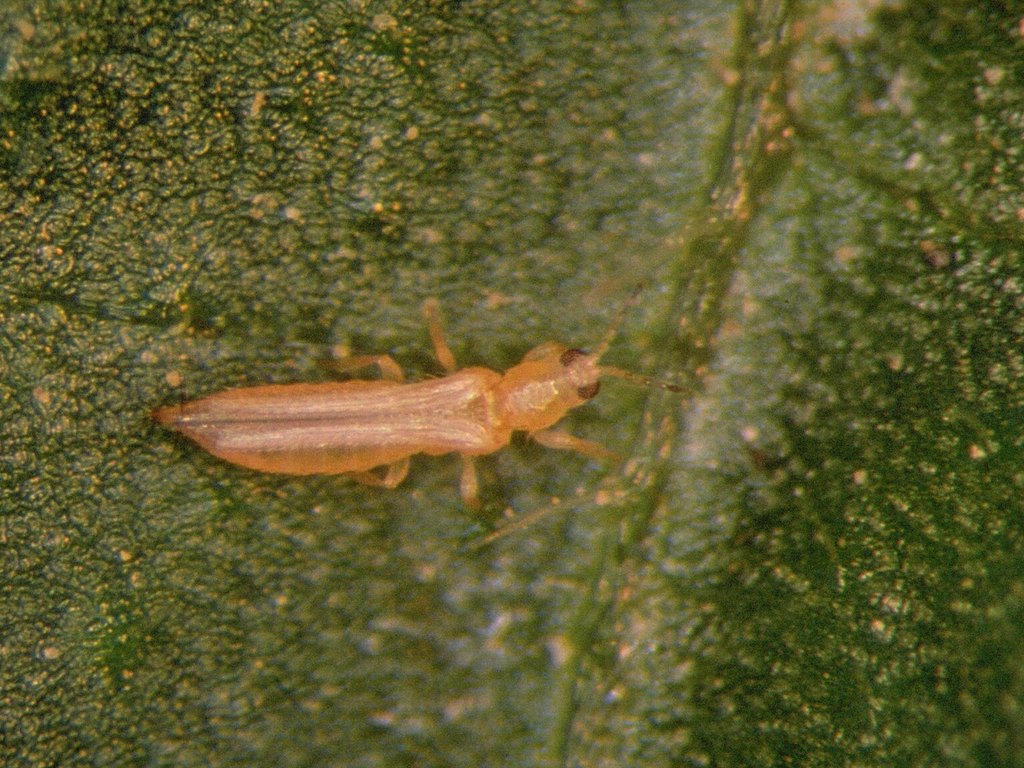
Thrips
insectFrankliniella / Thrips spp.
Slender insects barely 1/25 in long, pale yellow to dark brown, that rasp plant cells open and drink the contents. They also vector tomato spotted wilt and impatiens necrotic spot virus, which is often worse than the feeding itself.
- Hits
- Onion, Tomato, Pepper, Bean
- First fix
- Blue or yellow sticky cards
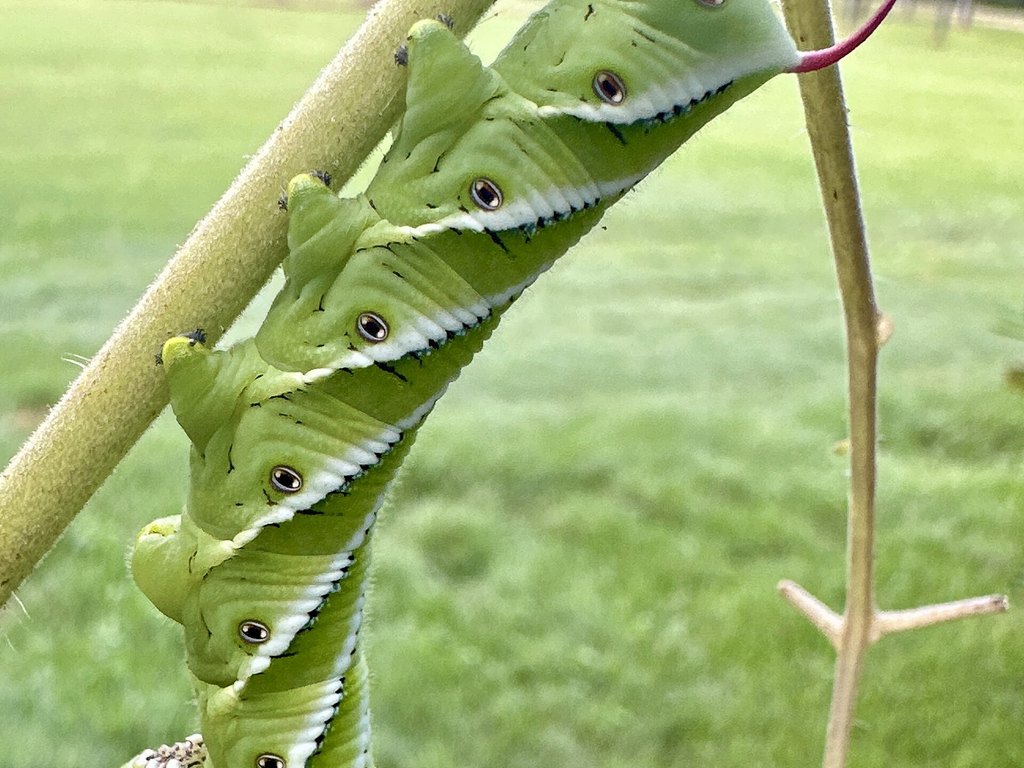
Tomato hornworm
insectManduca quinquemaculata
The tomato hornworm is a 3-4 inch bright-green caterpillar with white V-shaped stripes and a soft, curved 'horn' on the rear. Camouflaged perfectly against tomato foliage, one worm can strip a plant overnight.
- Hits
- Tomato, Pepper, Eggplant, Potato
- First fix
- Handpick at dusk with a UV flashlight
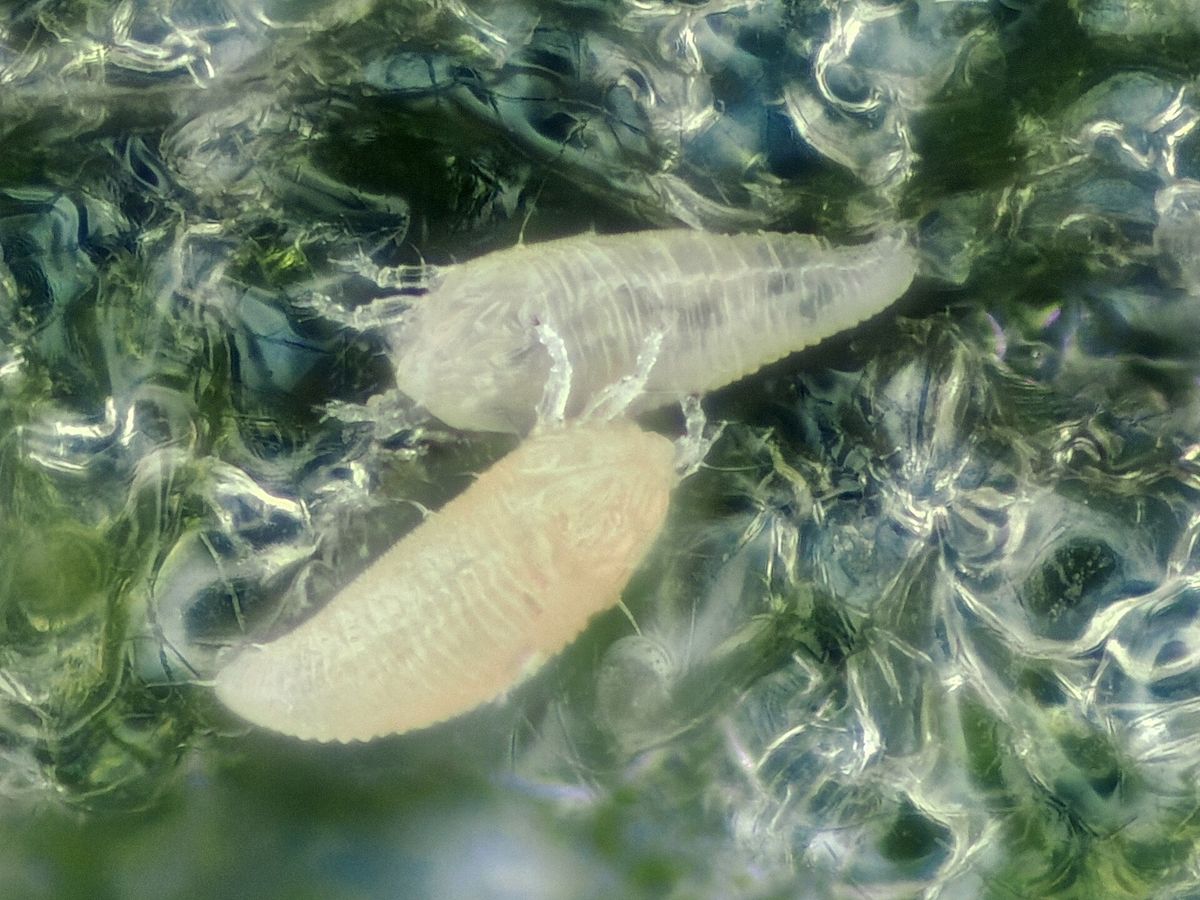
Tomato russet mite
arachnidAculops lycopersici
An even smaller relative of the broad mite, invisible without a strong hand lens, that causes lower stems and leaves to bronze, dry, and curl upward starting from the base of the plant.
- Hits
- Tomato, Potato, Pepper
- First fix
- Prune and remove affected lower growth early
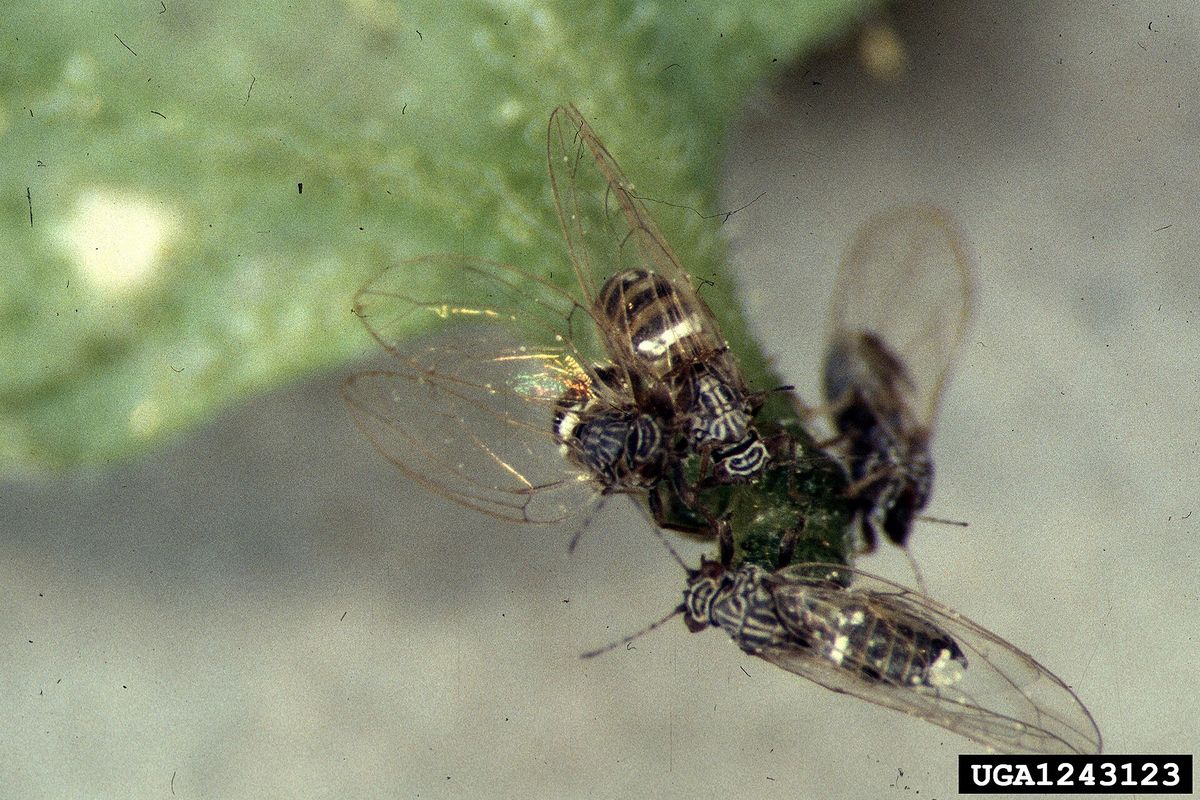
Tomato/potato psyllid
insectBactericera cockerelli
A tiny, jumping insect resembling a miniature cicada that feeds on nightshades and can transmit the bacterium behind 'zebra chip' in potatoes and psyllid yellows in tomatoes. Nymphs are flat, scale-like, and often overlooked.
- Hits
- Tomato, Potato, Pepper, Eggplant
- First fix
- Yellow sticky traps
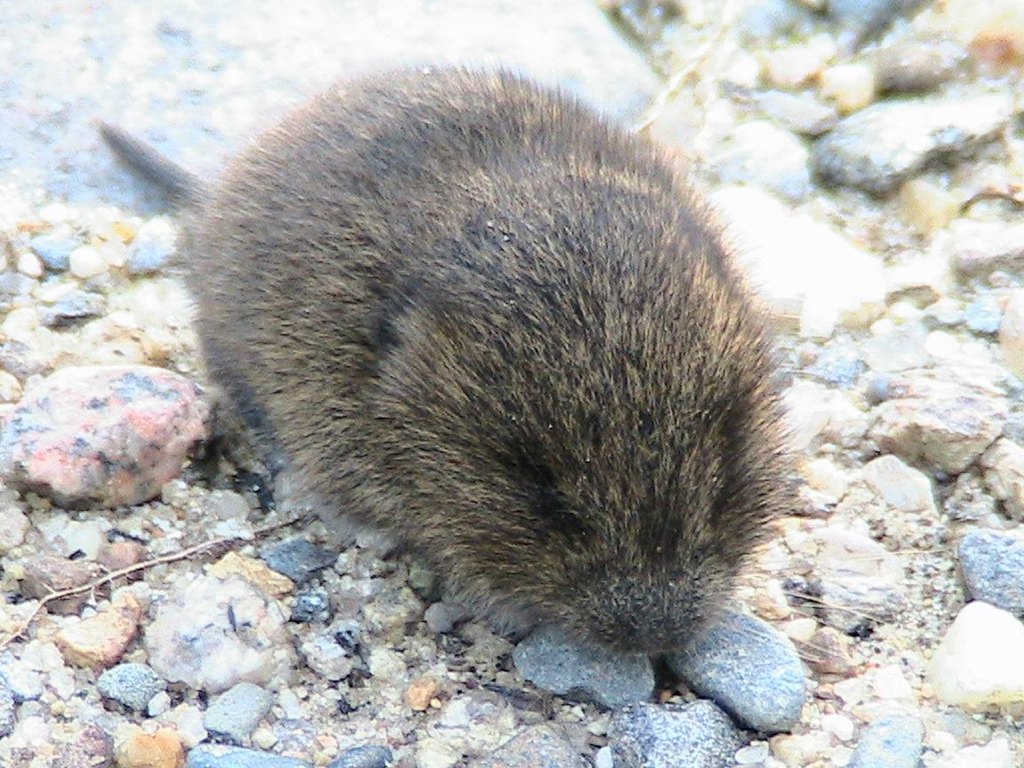
Vole
animalMicrotus spp.
The vole, or meadow mouse, is a small, stocky rodent with a short tail, tiny ears, and a blunt snout. It is not a mole: it tunnels at the surface, not deep underground, and it eats plants, not insects. Voles leave 1-2 inch runways through grass and mulch, and in winter they tunnel under snow to girdle the bark of young fruit trees and shrubs. Their populations can double in a month when cover and food are plentiful.
- Hits
- Potato, Sweet potato, Carrot, Beet
- First fix
- 1/4-inch hardware cloth trunk guards
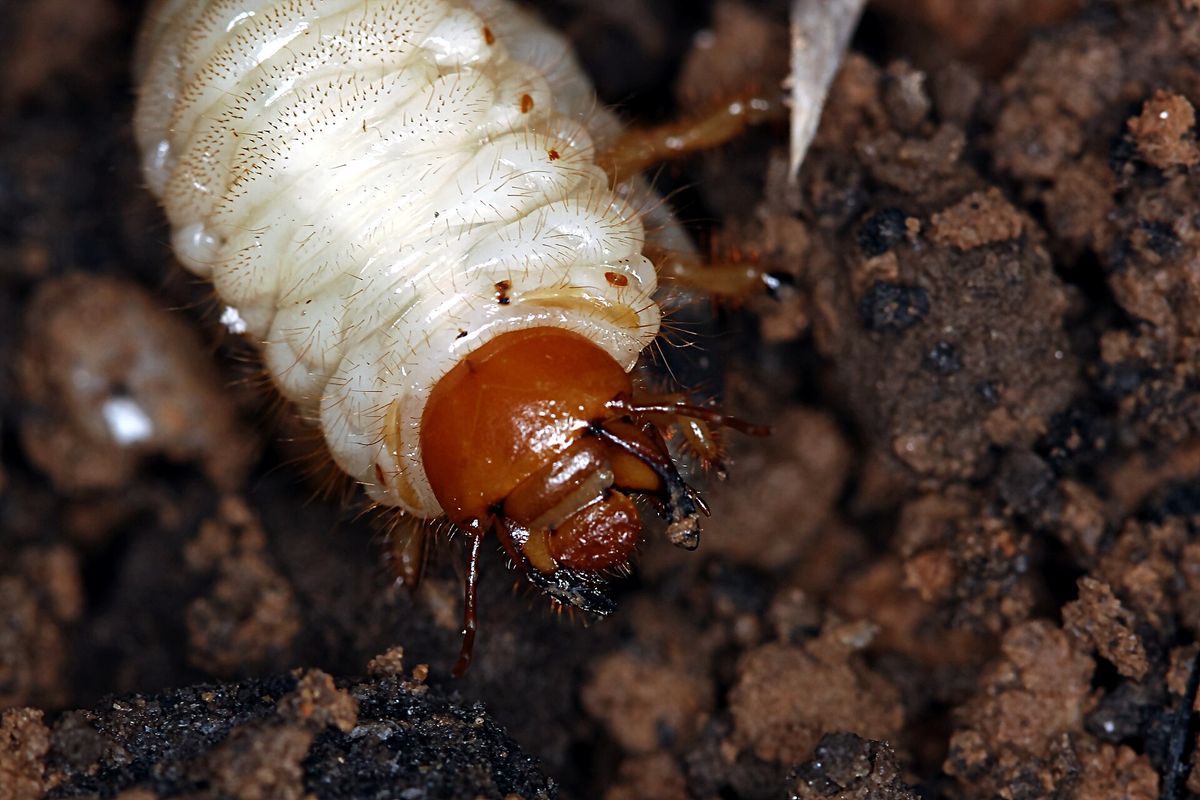
White grub
insectPhyllophaga spp. (May/June beetle)
A plump, C-shaped white larva with a brown head, living in soil and feeding on grass and vegetable roots. It is the larval stage of May and June beetles and is a favorite food of skunks, moles, and birds, whose digging is often the first sign of a grub problem.
- Hits
- Lawn/turf, Potato, Sweet corn, Strawberry
- First fix
- Beneficial nematodes or milky spore
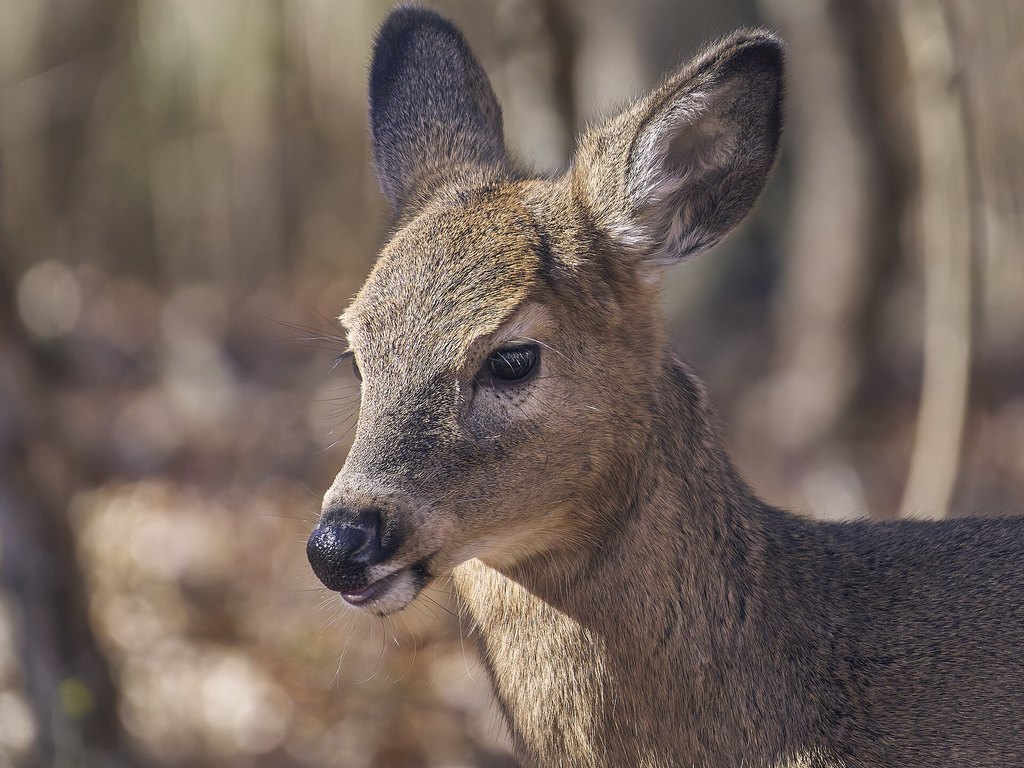
White-tailed deer
animalOdocoileus virginianus
The white-tailed deer is a quiet, 100-250 lb browser that appears at dawn and dusk like a ghost at the edge of the yard. A single doe can eat 5-7 lb of foliage a night, and once she finds a reliable bed she will return nightly, teaching her fawns the same route. Look for ragged, torn stems (deer have no lower front teeth, so they tear rather than clip), neat hoof prints in soft soil, and a sharp browse line on shrubs and trees.
- Hits
- Lettuce, Bean, Sweet corn, Strawberry
- First fix
- 8 ft woven-wire fence
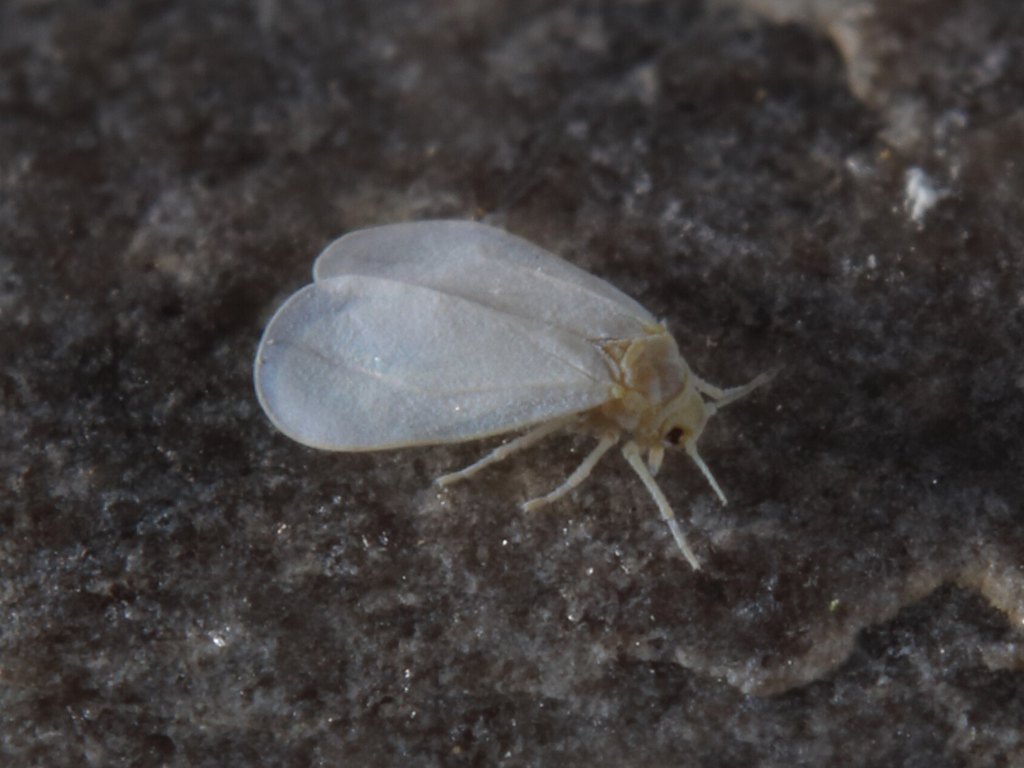
Whitefly
insectBemisia tabaci / Trialeurodes vaporariorum
Whiteflies are tiny, moth-like sap suckers: about 1/16 inch long, pale yellow or white, and triangular when at rest. Disturb a leaf and they flutter up in a cloud like living ash. The nymphs are the real problem: flat, scale-like, and glued to the underside of leaves, quietly draining plant juices while excreting sticky honeydew.
- Hits
- Tomato, Pepper, Eggplant, Bean
- First fix
- Yellow sticky traps at canopy height
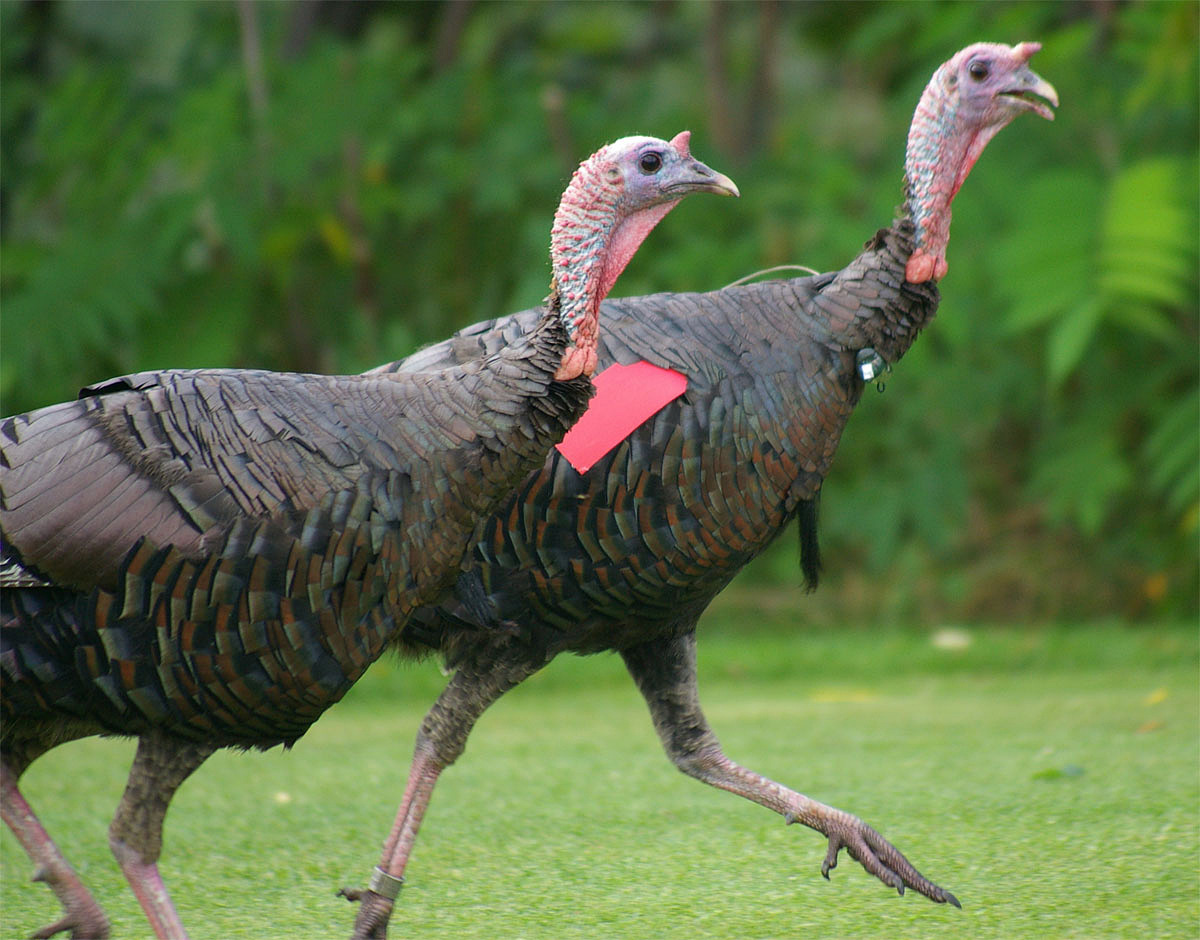
Wild turkey
animalMeleagris gallopavo
A large native ground-forager that travels in flocks and scratches through mulch and beds hunting insects, seeds, and greens. Wild turkeys are a game species managed by state wildlife agencies, so lethal control outside a licensed hunting season is generally illegal.
- Hits
- Sweet corn, Lettuce, Berry, Tomato seedling
- First fix
- Fence the vegetable garden
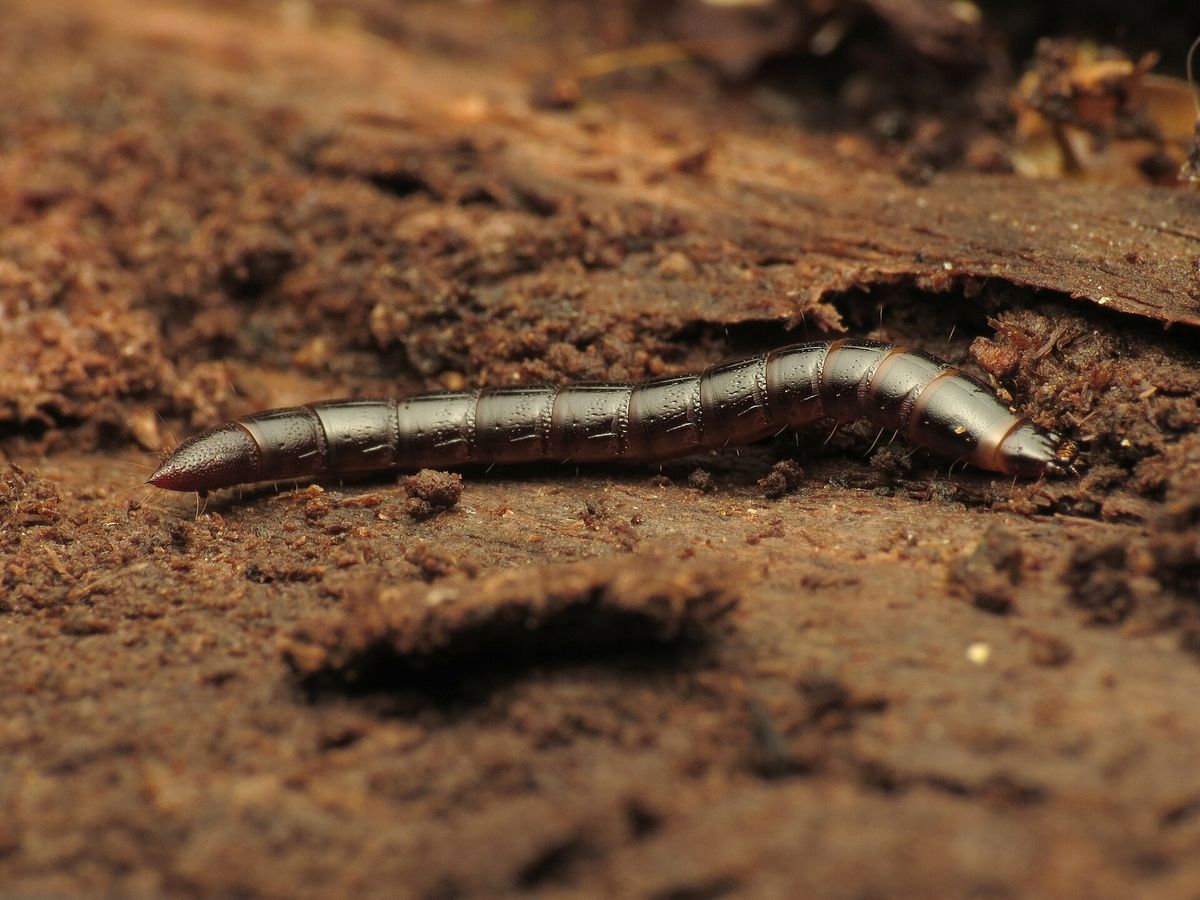
Wireworm
insectElateridae (Melanotus, Limonius spp.)
The slender, hard, shiny yellow-brown larva of the click beetle, living in soil for up to five years before pupating. It bores into planted seed and root crops, doing its worst damage in beds recently converted from lawn.
- Hits
- Potato, Carrot, Sweet Potato, Sweet corn
- First fix
- Potato-trap monitoring
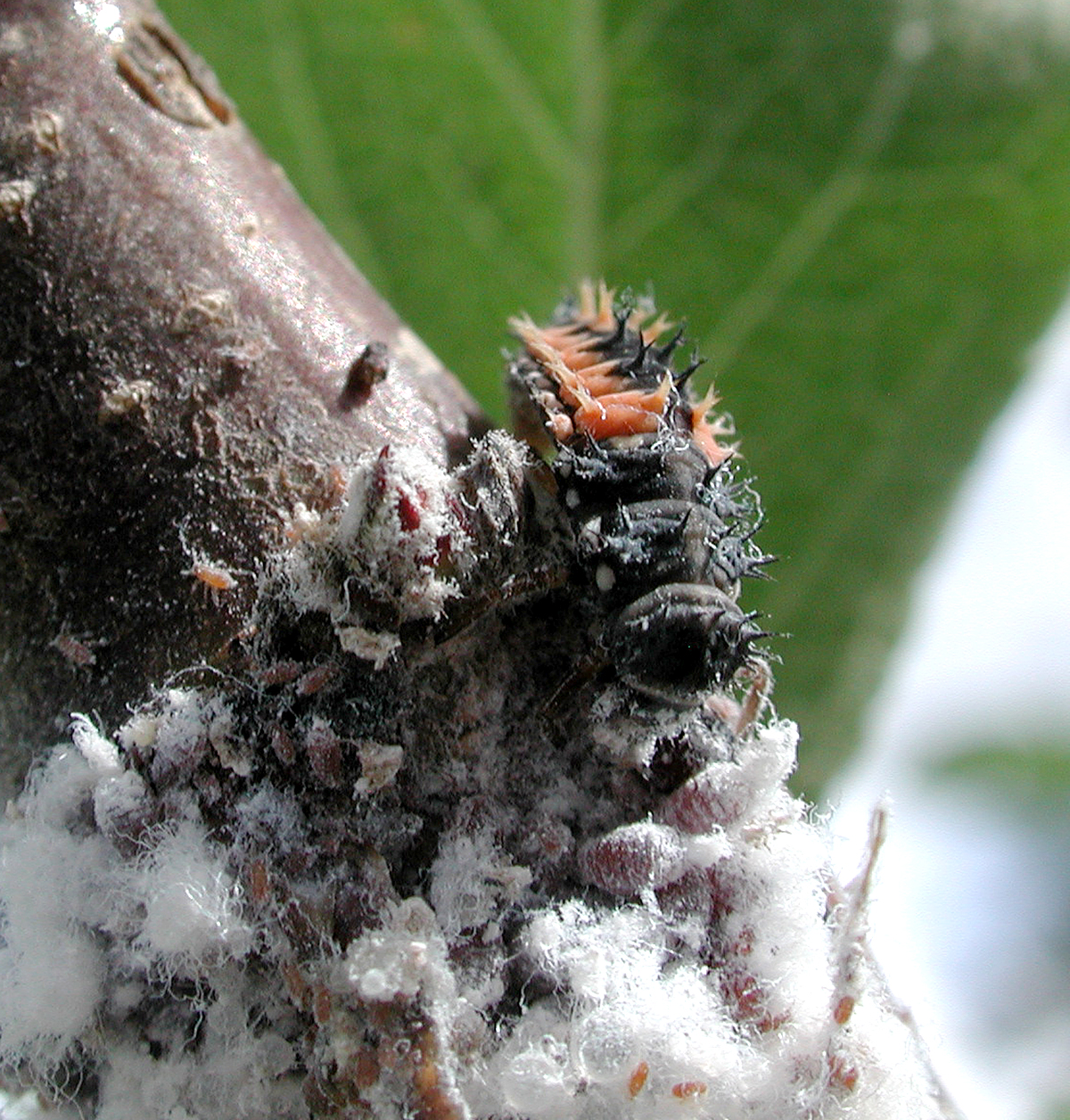
Woolly apple aphid
insectEriosoma lanigerum
A blue-gray aphid that covers itself in a white, cottony wax, forming fuzzy tufts on bark wounds, pruning cuts, and roots. Colonies on roots can stunt young trees more than the visible above-ground colonies suggest.
- Hits
- Apple
- First fix
- Prune to remove heavy colonies
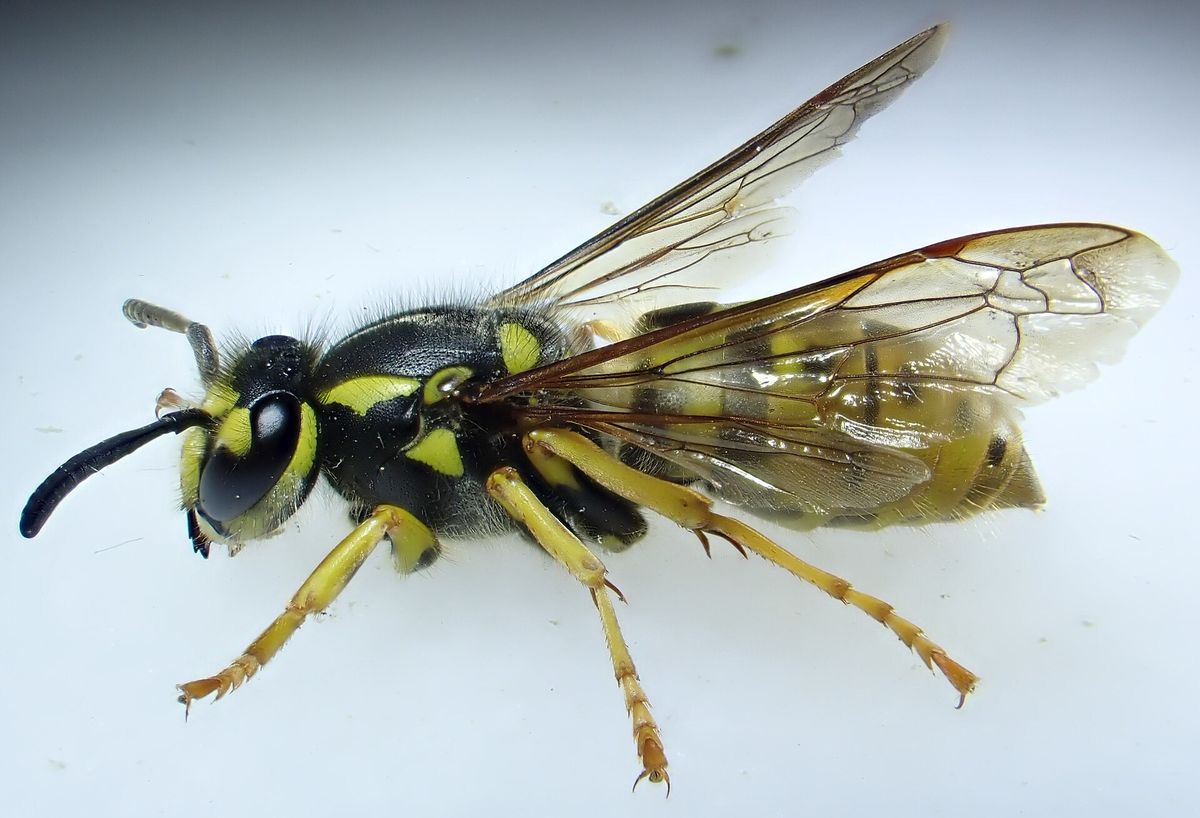
Yellowjacket
insectVespula spp.
A black-and-yellow ground- or cavity-nesting wasp that preys on other insects for most of the season but becomes an aggressive nuisance around ripe fruit and sugary food in late summer and fall. Stings can cause a serious allergic reaction in sensitive people and pets; nests near paths should be treated with caution.
- Hits
- Grape, Apple, Peach, Fig
- First fix
- Pick up fallen and overripe fruit daily
Not sure what you're looking at? Snap a photo and let pest detection identify it.