
House sparrow identification & organic control
Passer domesticus
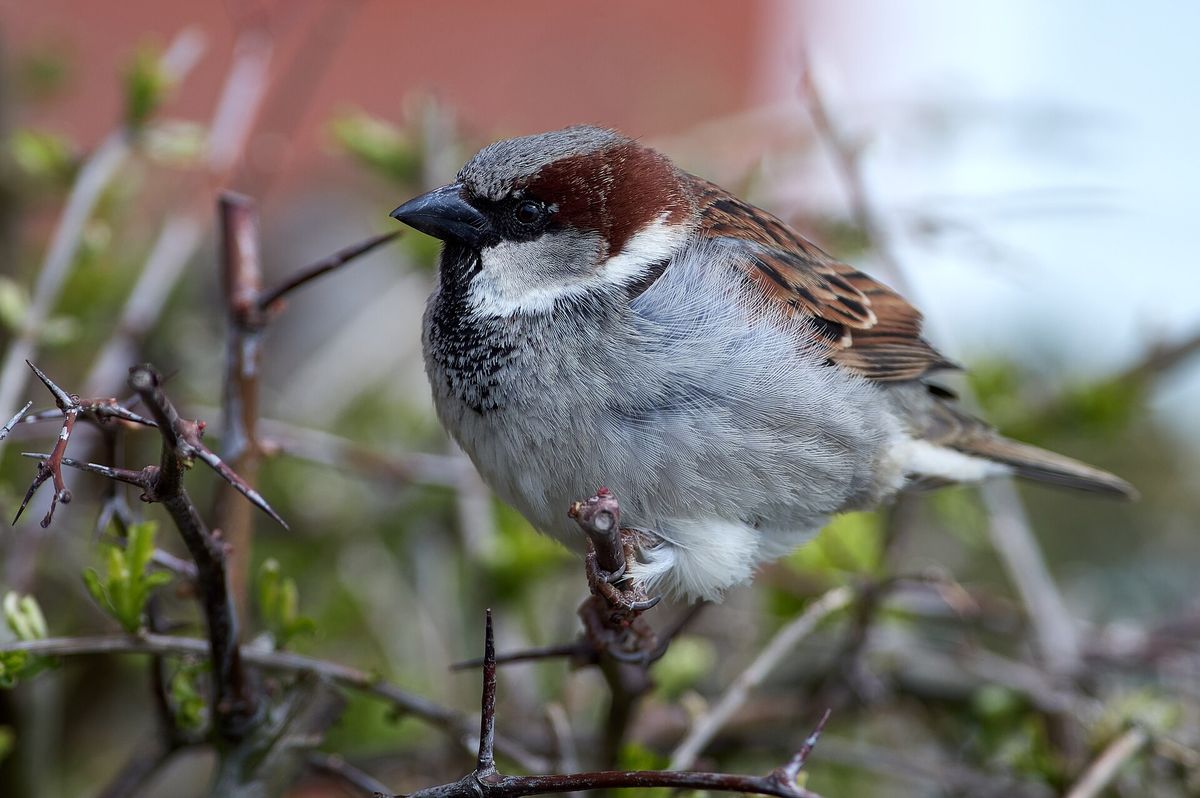
How to identify house sparrow
A small, non-native seed-eating bird that nests in cavities and thrives around structures and gardens. Because it's an introduced species, the house sparrow is one of the few birds not protected under the Migratory Bird Treaty Act, though the kindest and most effective controls are still exclusion, not harm.
Crops attacked by house sparrow
Sunflower, Lettuce seedling, Sweet corn, Berry.
Strips sunflower heads and seedling greens, shreds flower buds for nesting material, and competes aggressively with native cavity nesters like bluebirds.
Life cycle
- Year-round resident flocks (All year) — Non-migratory; feeds around structures and gardens continuously.
- Nesting (multiple broods) (Spring–summer) — Aggressively takes over nest boxes, sometimes killing native chicks and eggs.
- Post-fledging flocking (Summer) — Larger flocks hit seedlings and ripening seed heads.
- Fall/winter flocking (Fall–winter) — Feeds at bird feeders and stored grain/feed.
Natural, organic house sparrow control
- 1. Row cover on seedlings · low effort
Lightweight cover over direct-seeded lettuce and greens keeps sparrows from shredding new growth.
When: At seeding to first true leaves
- 2. Netting on sunflowers and berries · medium effort
Loose mesh bags over individual sunflower heads or netting over berry rows protects ripening seed and fruit.
When: As heads/fruit mature
- 3. Use sparrow-resistant nest box designs · medium effort
Monitor and remove house sparrow nests (not native species) from boxes intended for bluebirds and swallows; a sparrow spooker device over the box also helps.
When: Nesting season
Fastest-fix products
- Floating row cover — Keeps sparrows off vulnerable seedlings without chemicals. · Garden centers, Amazon
- Fine bird netting — Protects sunflower heads and berries from flocking sparrows. · Amazon, garden centers
Prevention
- Keep spilled birdseed cleaned up; it's a major sparrow attractant.
- Check and manage nest boxes weekly during nesting season to protect native cavity nesters.
- Cover seedlings until established.