
Chipmunk identification & organic control
Tamias striatus
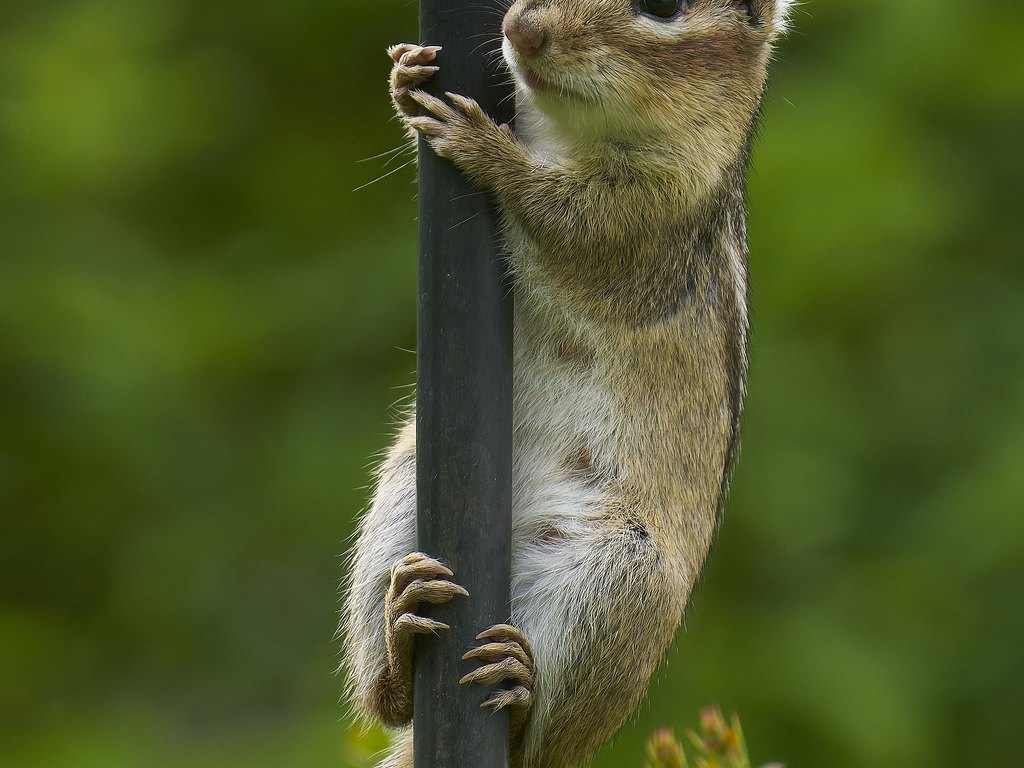
How to identify chipmunk
Small striped ground squirrel that raids seedbeds for fresh-planted seed and steals ripe berries. Digs 1-inch entrance holes hidden under rocks and edging.
Crops attacked by chipmunk
Sunflower seed, Corn seed, Strawberry, Tomato (bites), Fall bulbs, Pea seedling.
Seed disappears from freshly planted rows overnight; strawberries have single bite marks; small round holes near beds and containers.
Life cycle
- Spring litter (April-May) — Fresh burrow holes appear along bed edges and foundations.
- Summer litter (July-Aug) — Seedling and strawberry damage doubles as juveniles claim territory.
- Fall caching (Sept-Oct) — Aggressive digging through beds and pots to stockpile seeds and bulbs.
- Winter torpor (Nov-March) — Underground in their larder, waking on warm days to feed nearby.
Natural, organic chipmunk control
- 1. Cover fresh seed rows with hardware cloth · low effort
Lay a 12 in wide strip of 1/4-inch hardware cloth over seeded rows until sprouts are 2 in tall.
When: At sowing
- 2. Snap traps in a bait station · medium effort
Peanut-butter-baited rat-sized snap trap inside a covered box with 2-inch access holes.
When: Population explosion
- 3. Remove rock piles & stacked wood near the garden · medium effort
Chipmunks nest in stone walls, retaining rocks, and lumber. Eliminate cover within 20 ft.
When: Spring
Fastest-fix products
- 1/4-inch galvanized hardware cloth — Same material that protects trees; also stops chipmunk seed theft. · Home Depot
- Havahart X-Small live trap — Sized for chipmunks; bait with sunflower seed or peanut. · Amazon
Prevention
- Do not spill birdseed near the garden. Chipmunks colonize any easy food source.
- Screen bulb plantings with hardware cloth until frost.
- Keep container plants off stone walls and rock edging where chipmunks travel.