
Tomato/potato psyllid identification & organic control
Bactericera cockerelli
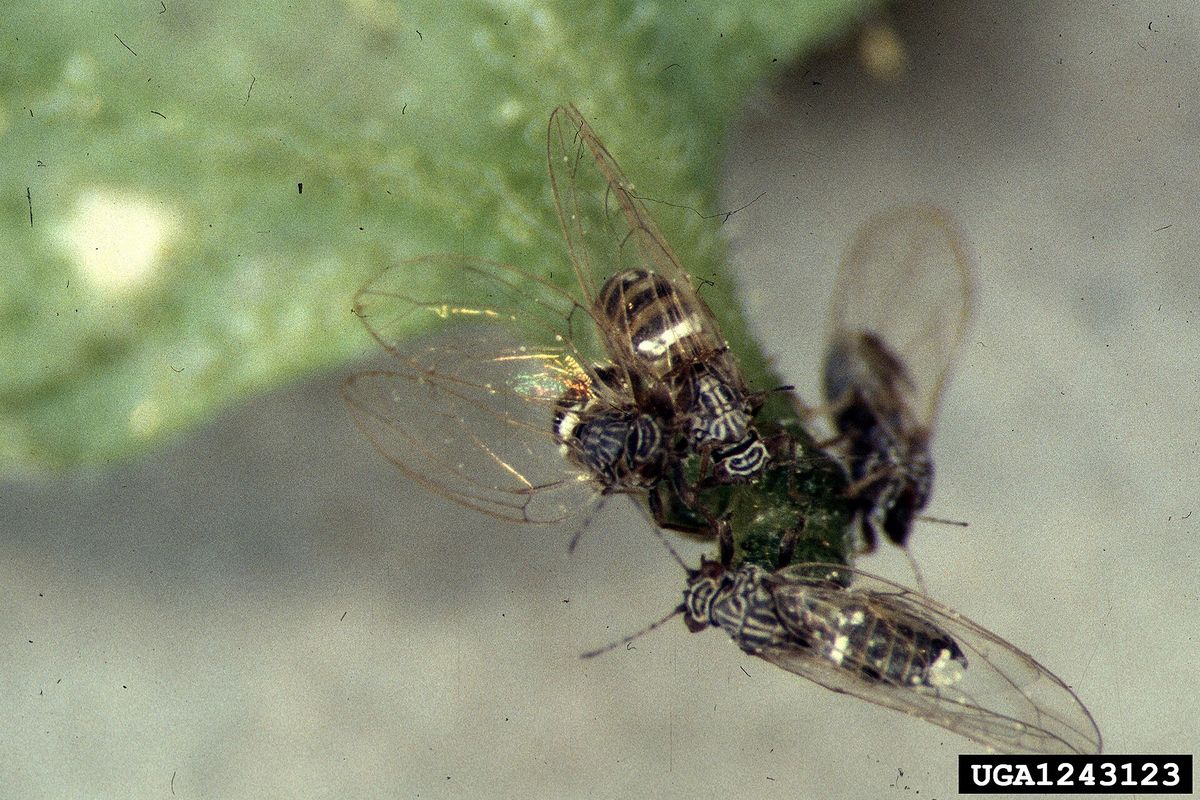
How to identify tomato/potato psyllid
A tiny, jumping insect resembling a miniature cicada that feeds on nightshades and can transmit the bacterium behind 'zebra chip' in potatoes and psyllid yellows in tomatoes. Nymphs are flat, scale-like, and often overlooked.
Crops attacked by tomato/potato psyllid
Tomato, Potato, Pepper, Eggplant.
Feeding injects a toxin that causes yellowing, upward leaf curling, and stunted, misshapen fruit or tubers even before disease transmission is confirmed.
Life cycle
- Egg (Warm season) — Laid on leaf edges on tiny stalks.
- Nymph (5 instars) (2-3 weeks) — Scale-like, feeds and injects toxin on leaf undersides.
- Adult (Ongoing) — Migrates from southern overwintering areas or greenhouses each year.
Natural, organic tomato/potato psyllid control
- 1. Yellow sticky traps · low effort
Monitor for adults so treatment starts before populations build.
When: Early season
- 2. Row cover on transplants · medium effort
Protects young plants during the most vulnerable stage.
When: At transplant
- 3. Insecticidal soap on nymphs · medium effort
Target the undersides of leaves where scale-like nymphs cluster.
When: When nymphs are found
Fastest-fix products
- Yellow sticky traps — Best tool for early detection of this small, easy-to-miss pest. · Amazon, garden centers
Prevention
- Remove and destroy volunteer nightshades (ground cherry, nightshade weeds) that host the psyllid between seasons.
- Inspect transplants closely for nymphs on leaf undersides before planting.