
Cutworm identification & organic control
Agrotis spp. / Noctuidae
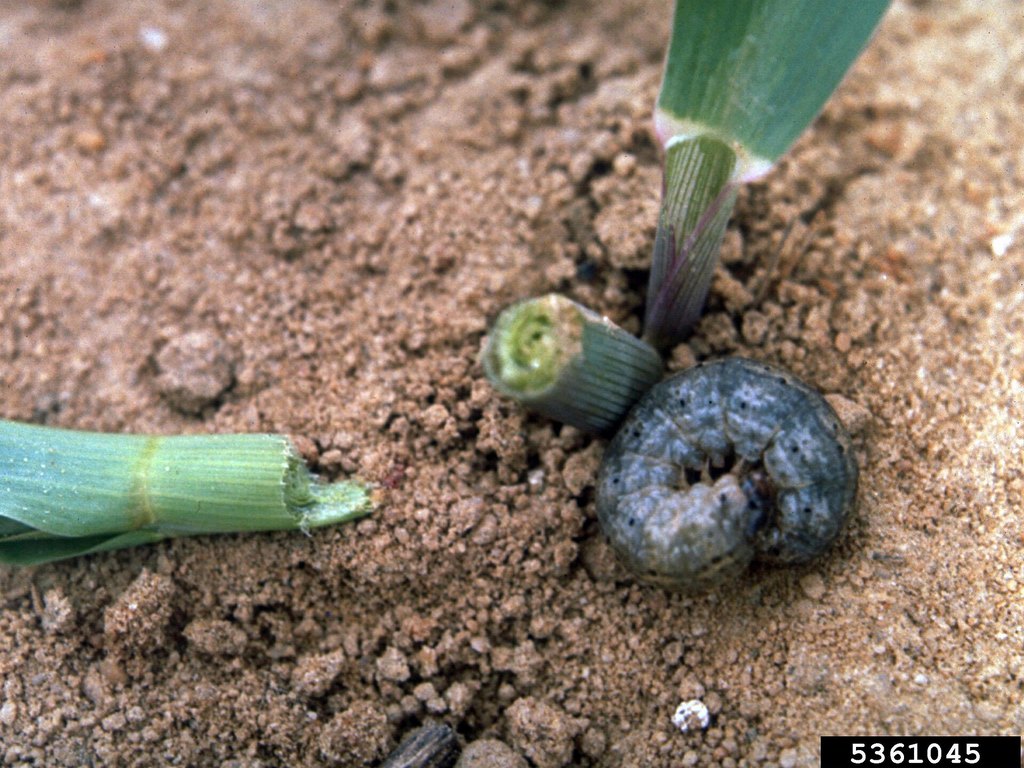
How to identify cutworm
Cutworms are fat, greasy-looking gray-to-brown caterpillars that curl into a tight C when disturbed. They hide just under the soil surface by day and mow down seedlings at the stem line after dark. The classic 'my transplants were fine yesterday' pest.
Crops attacked by cutworm
Tomato, Pepper, Cabbage, Broccoli, Corn, Bean, Lettuce.
Chews straight through tender stems at or just below the soil line, felling whole seedlings without eating much of them. Older worms climb and notch leaves and fruit.
Life cycle
- Overwintering larvae & pupae (Winter) — Dormant in soil and weedy field edges; no visible damage.
- Adult moths (Early spring) — Dull brown night-flying moths lay eggs on weeds, grass, and bare soil.
- Young larvae (Mid-spring) — Surface feeding on weeds and cotyledons: small notches.
- Late-instar larvae (Late spring → summer) — Peak stem-cutting on transplants; second generation possible by late summer.
Natural, organic cutworm control
- 1. Collars around every transplant · low effort
Push a 3 in cardboard tube, cut can, or folded foil collar 1 in into the soil around each stem. Physically stops the worm from reaching the stem.
When: At transplant day
- 2. Night patrol with a flashlight · low effort
Walk beds 1-2 hours after dark and pick worms off the soil surface; by day, dig 1-2 in around a freshly cut seedling and you'll find the culprit curled up.
When: During an active outbreak
- 3. Clear grass and weeds two weeks early · medium effort
Cutworm moths lay in weedy sod. Strip and cultivate the bed 2-3 weeks before planting so the larvae starve before your crop arrives.
When: Pre-planting
- 4. Bt kurstaki or spinosad bait at dusk · medium effort
Sprinkle a bran/Bt bait on the soil surface at sundown when worms come up to feed.
When: Heavy pressure
Fastest-fix products
- Cardboard/plastic seedling collars — Pennies each and near-100% effective. The single best cutworm fix. · DIY, garden centers
- Beneficial nematodes (Steinernema carpocapsae) — Drench soil; hunts cutworms where they hide during the day. · Arbico Organics, Amazon
- Diatomaceous earth (food grade) — A dry ring around stems abrades soft-bodied worms crossing it. Reapply after rain. · Garden centers
Prevention
- Keep a weed-free, tilled margin around beds: moths lay in grass.
- Delay transplanting a week after clearing sod-heavy ground.
- Fall cultivation exposes overwintering larvae to birds and frost.