
Spotted wing drosophila identification & organic control
Drosophila suzukii
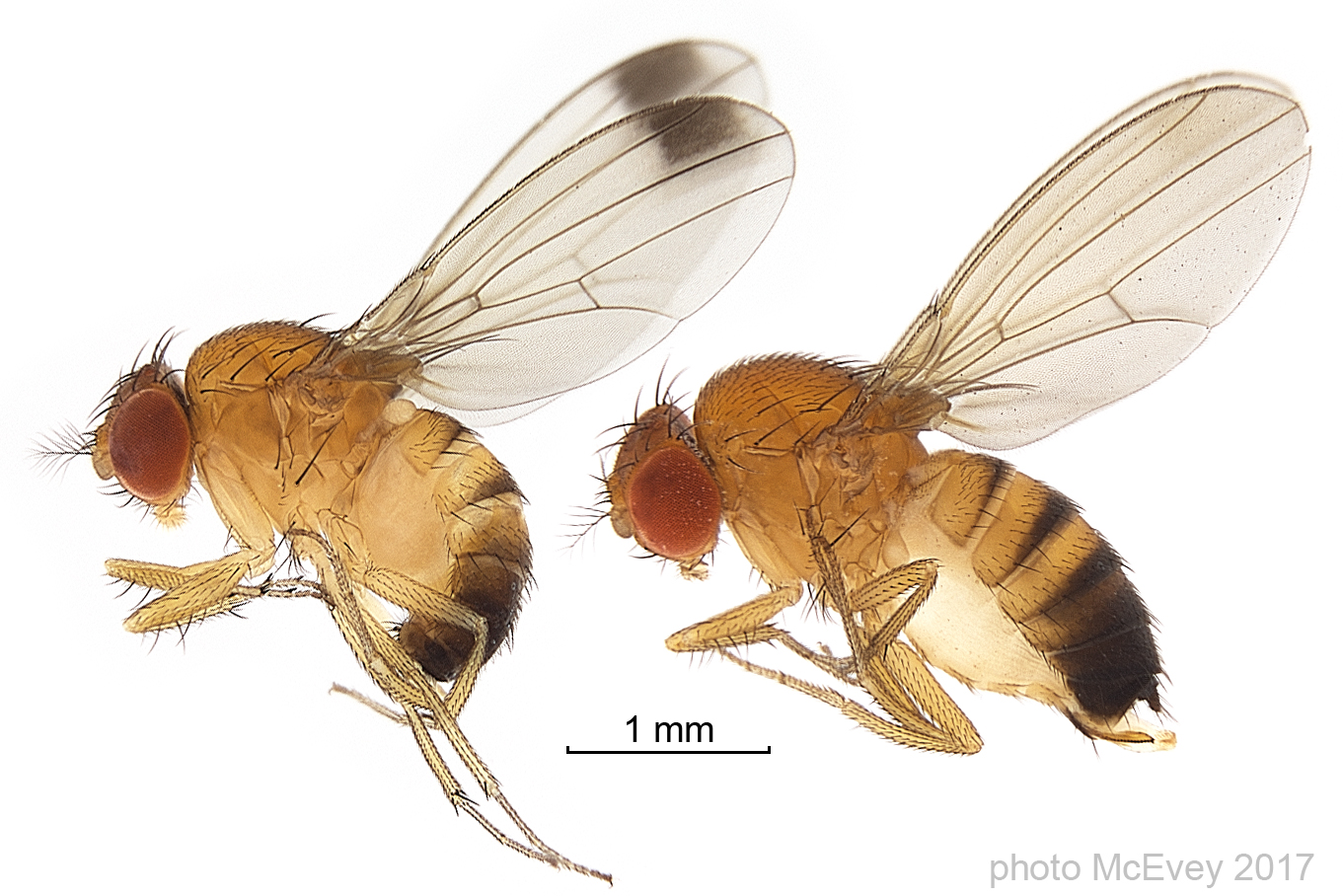
How to identify spotted wing drosophila
Unlike common fruit flies that only attack overripe fruit, this small fly's serrated egg-laying organ lets females cut into firm, ripening fruit. Larvae hatch inside, so damage often isn't visible until the fruit collapses.
Crops attacked by spotted wing drosophila
Raspberry, Blackberry, Blueberry, Strawberry, Grape.
Females lay eggs inside ripening (not overripe) fruit; larvae feed inside, causing the fruit to collapse and weep within a day or two of picking.
Life cycle
- Overwintering adult (Winter (in shelter)) — None.
- Adults emerge and mate (Spring) — Seek ripening fruit as soon as it colors.
- Egg & larva (Days, in warm weather) — Feeds inside fruit; extremely fast generation time.
- Multiple overlapping generations (All summer) — Can produce a new generation every 1-2 weeks in warm weather.
Natural, organic spotted wing drosophila control
- 1. Harvest ripe fruit daily · low effort
Picking fruit as soon as it ripens, rather than letting it sit, denies the fly its preferred egg-laying window.
When: Daily during fruiting
- 2. Vinegar/wine trap monitoring · low effort
Apple cider vinegar with a drop of dish soap in a cup traps adults and helps time control efforts.
When: From fruit coloring onward
- 3. Fine mesh exclusion netting · high effort
Netting with holes smaller than 1mm over berry rows can fully exclude this small fly.
When: From fruit coloring
Fastest-fix products
- Fine mesh exclusion netting (<1mm) — The most reliable non-chemical control for a fly this small and fast-breeding. · Berry-specific suppliers, Amazon
- Apple cider vinegar traps — Cheap, effective monitoring tool. · DIY with household items
Prevention
- Remove overripe and fallen fruit promptly; it's the fly's preferred breeding site.
- Prune berry canes for airflow, since SWD favors cool, shaded fruit.