
European starling identification & organic control
Sturnus vulgaris
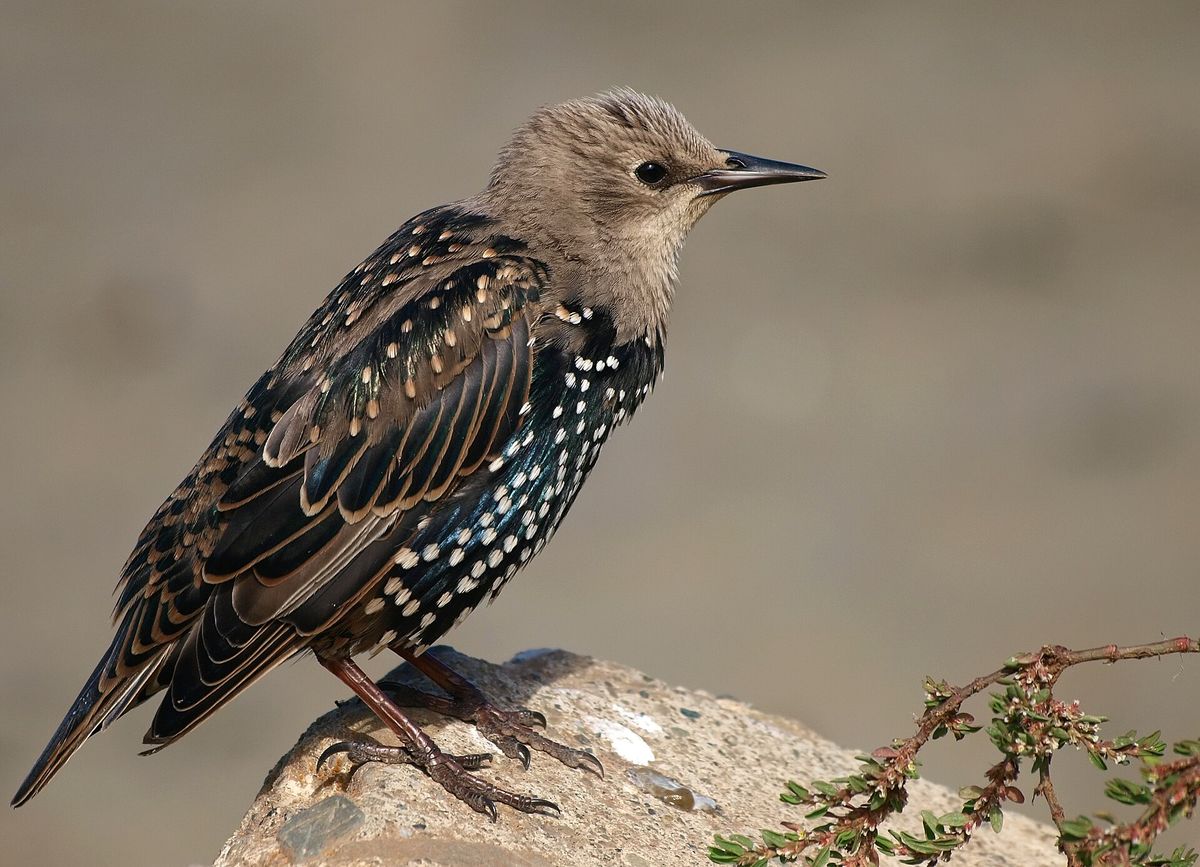
How to identify european starling
An introduced, iridescent black bird that travels in large, noisy flocks and out-competes native cavity-nesting birds for nest sites. Unlike almost every native songbird, starlings are NOT protected under the Migratory Bird Treaty Act because they are non-native, which is why exclusion and legal deterrents are fair game here.
Crops attacked by european starling
Cherry, Grape, Blueberry, Strawberry, Sweet corn.
Flocks descend on ripening soft fruit and berries, stripping a planting in a day, and peck open sweet corn husks to get at kernels.
Life cycle
- Winter flocking (Winter) — Huge mixed roosts; little garden feeding.
- Nesting (Early spring) — Takes over cavities and bird boxes from native species.
- Fledging & flocking (Early summer) — Young join flocks; fruit raiding ramps up.
- Fruit/harvest raiding (Summer) — Peak damage on ripening berries, cherries, and corn.
Natural, organic european starling control
- 1. Netting over fruit · medium effort
Drape bird netting over berry bushes, cherry trees, and grapevines as fruit starts to color; the single most reliable fix.
When: As fruit ripens
- 2. Reflective scare tape / balloons · low effort
Hang holographic tape or predator-eye balloons over the planting; move them every few days so the flock doesn't habituate.
When: Fruit set through harvest
- 3. Use starling-resistant nest box openings · low effort
A 1.5 in round entry hole excludes starlings from bluebird and swallow boxes while still admitting native species.
When: Before nesting season
- 4. Because starlings are unprotected, licensed lethal control is legal where local laws allow · high effort
Check state and municipal rules; a wildlife control operator can advise if netting and scare tactics aren't enough. Never poison birds indiscriminately, since it also harms native species.
When: Persistent heavy damage only
Fastest-fix products
- Bird netting (3/4 in mesh) — Physically excludes starlings from fruit without harming them. · Garden centers, Amazon
- Reflective scare tape — Cheap, fast deterrent for open plantings like sweet corn. · Amazon, farm stores
Prevention
- Harvest ripe fruit promptly; don't leave overripe fruit hanging.
- Use small-hole nest boxes to keep starlings from displacing native cavity nesters.
- Net high-value fruit every year before it colors, not after damage starts.