Elk identification & organic control
Cervus canadensis
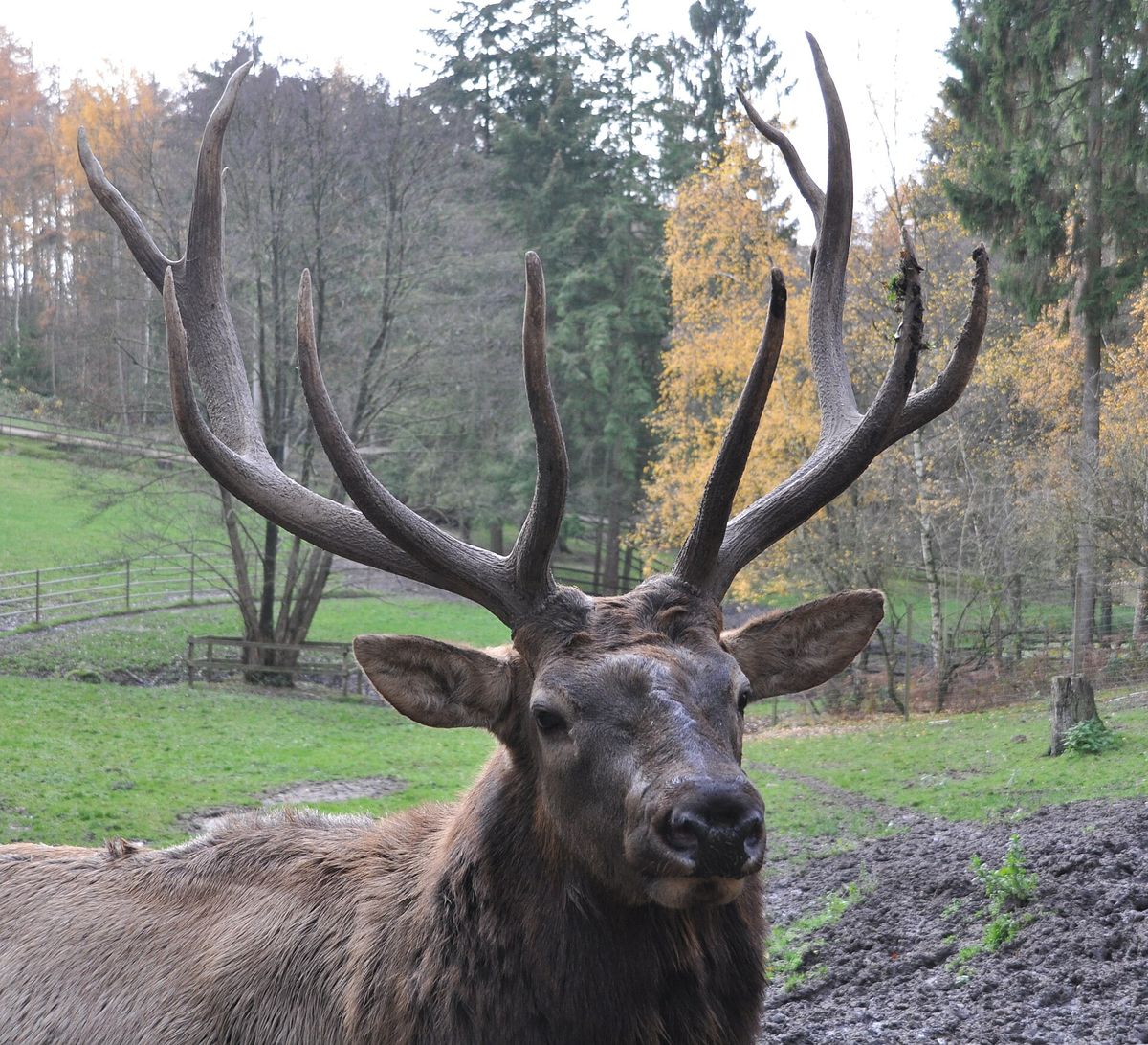
How to identify elk
A large native grazer that moves in herds and can devastate a garden or orchard in a single overnight visit where its range overlaps rural and mountain-edge properties. Elk are a managed game species; lethal control outside a licensed hunt is generally illegal.
Crops attacked by elk
Fruit trees (bark & branches), Vegetable garden (broadly), Hay/alfalfa, Young trees/shrubs.
Grazes vegetable beds down to the soil, strips bark from young fruit trees (especially in winter), and browses shrubs and hay fields, causing damage far larger in scale than deer.
Life cycle
- Winter range use (Winter) — Herds move to lower elevations; bark stripping on trees peaks as forage is scarce.
- Spring green-up (Spring) — Grazing pressure on new garden growth and pasture.
- Calving & summer range (Summer) — Herds often move to higher ground; lower damage near homes.
- Rut & fall migration (Fall) — Bulls can be aggressive; herds pass through gardens en route to winter range.
Natural, organic elk control
- 1. Tall, sturdy fencing (7-8 ft) · high effort
Elk jump higher than deer; a 7-8 ft woven wire or electric fence around the garden or orchard is the only truly reliable barrier.
When: Before elk pressure starts
- 2. Tree wrap or wire cages on trunks · medium effort
Hardware cloth or commercial tree wrap around young trunks prevents winter bark stripping.
When: Fall, before winter range shift
- 3. Coordinate with neighbors and wildlife agencies · medium effort
Elk move across large areas; a single property's fencing works best paired with community-level deterrence and, where herds are overpopulated, agency-managed hunts.
When: Ongoing, especially in chronic areas
Fastest-fix products
- 7-8 ft woven wire or electric fencing — The only fence height that reliably excludes elk. · Farm/ranch suppliers
- Trunk wrap or hardware cloth cages — Prevents winter bark-stripping on young orchard trees. · Hardware/farm stores
Prevention
- Fence orchards and gardens tall before elk establish a habit of visiting.
- Wrap young tree trunks every fall in areas with winter elk range overlap.
- Work with your state wildlife agency on herd management: elk are a regulated game species and population control isn't a homeowner decision.