
Garter snake identification & organic control
Thamnophis sirtalis
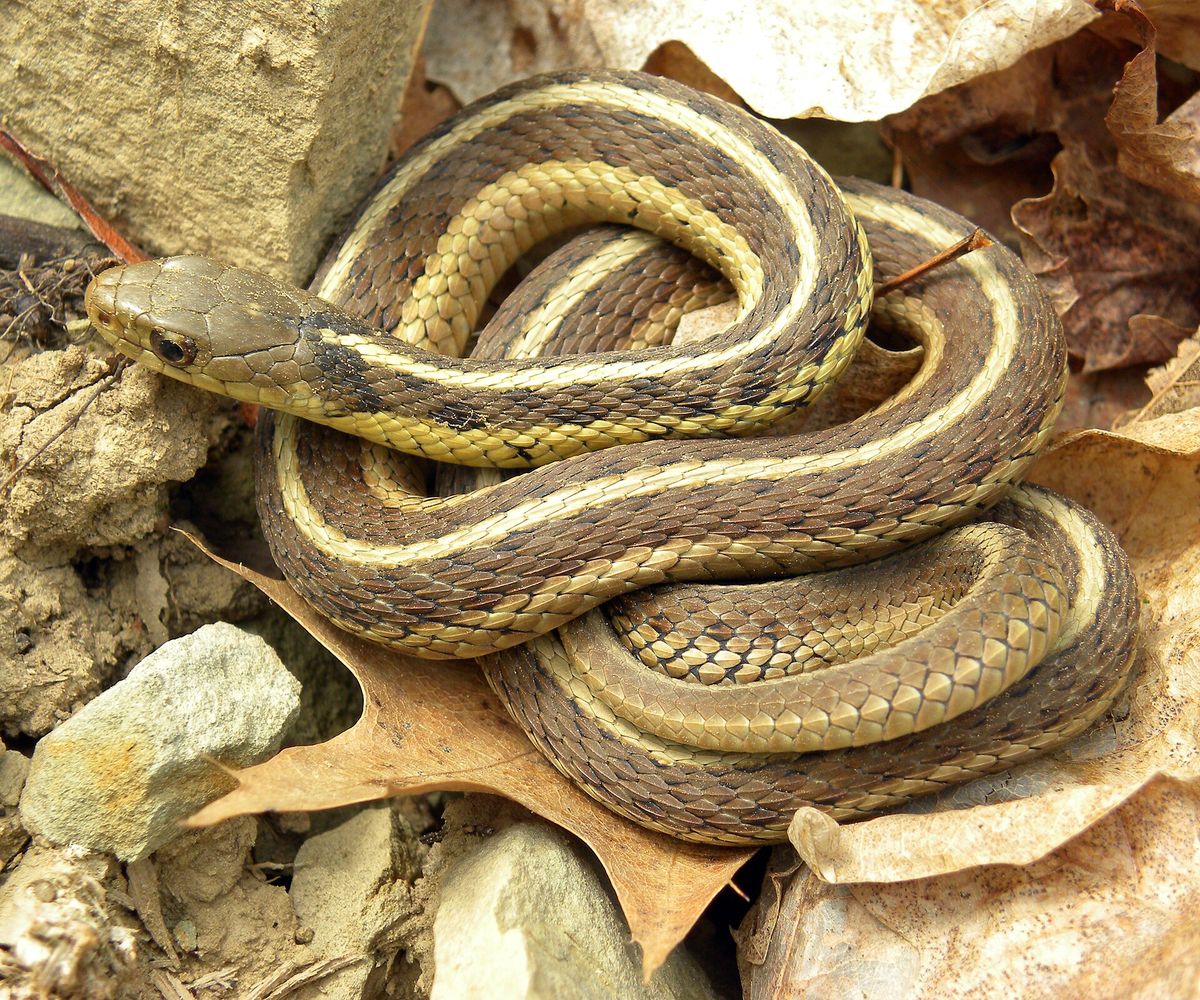
How to identify garter snake
A small, harmless, non-venomous native snake that hunts slugs, grubs, and rodents in the garden. Garter snakes are one of the best allies a garden can have and pose no threat to people or pets; the right response to finding one is almost always to leave it alone.
Crops attacked by garter snake
.
Eats slugs, grubs, earthworms, small rodents, and occasionally small amphibians; does not eat any plant material and provides real pest control for slugs and voles.
Life cycle
- Spring emergence (Early spring) — Emerges from winter brumation to hunt; no damage, pure benefit.
- Mating (Spring) — None.
- Live birth (ovoviviparous) (Summer–early fall) — Litters of 10-40 young; more slug and grub predators in the garden.
- Fall brumation prep (Fall) — Seeks sheltered spots (mulch, rock piles, sheds) to overwinter.
Natural, organic garter snake control
- 1. Leave it alone · low effort
Garter snakes are non-venomous, non-aggressive, and actively reduce slug and rodent pressure. There is no legitimate reason to kill or remove one.
When: Always
- 2. Provide brush or rock piles if you want more of them · low effort
A small brush pile or rock pile at the garden edge gives garter snakes shelter and encourages them to stick around.
When: Anytime
- 3. If one is in an unwanted spot indoors · low effort
Gently guide it outside with a broom or a container; never handle roughly, and never kill it out of fear, since it is harmless.
When: If encountered indoors
Prevention
- No control needed. If you want fewer sightings near a doorway, simply seal gaps and remove nearby brush piles rather than harming the snake.
- Educate household members that garter snakes are harmless allies, not a threat.