
Asparagus beetle identification & organic control
Crioceris asparagi
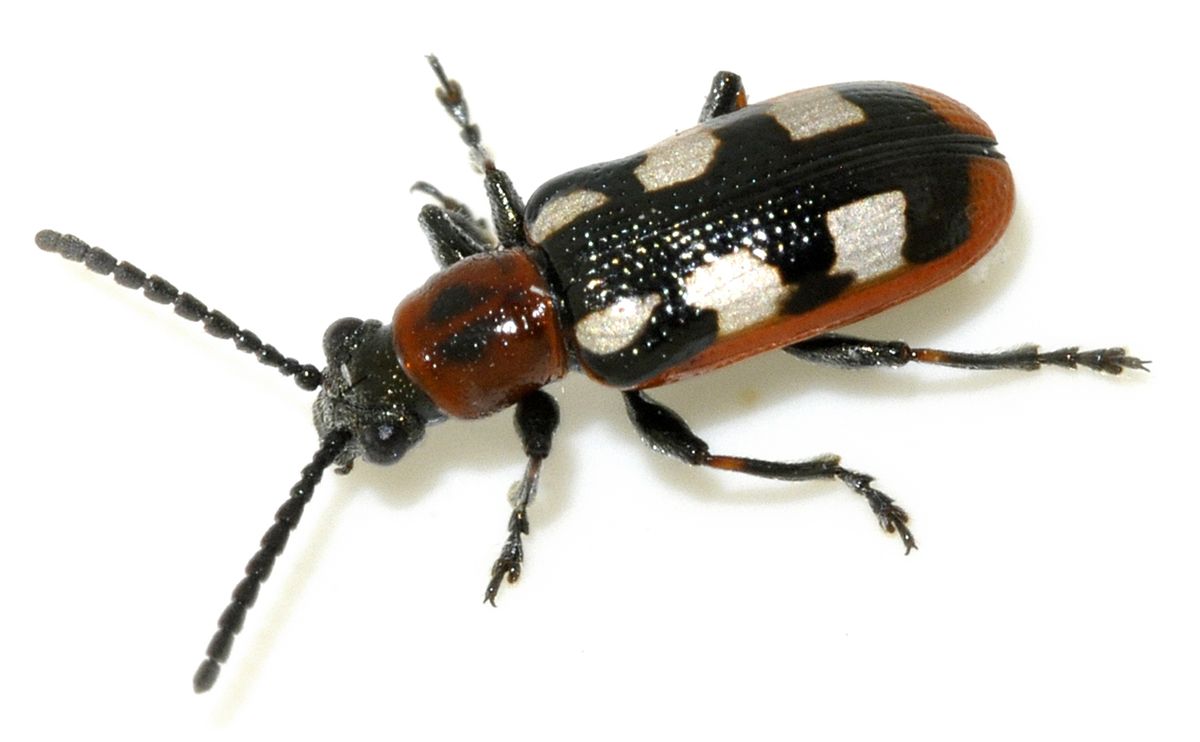
How to identify asparagus beetle
A small blue-black beetle with cream-colored spots that feeds on asparagus spears and ferns in spring and summer, leaving scarring and blackened tips. Larvae are plump, gray-green, and feed alongside the adults.
Crops attacked by asparagus beetle
Asparagus.
Adults and larvae chew spears and ferns, scarring spear tips and defoliating fern growth needed to recharge the crown for next year.
Life cycle
- Overwintering adult (Winter (in debris)) — None.
- Adults emerge (Spring, as spears appear) — Feed on and scar emerging spears.
- Egg & larva (Late spring–summer) — Larvae feed on ferns, reducing energy stored for next year.
- New generation adults (Summer) — Continue feeding into fall.
Natural, organic asparagus beetle control
- 1. Handpick at harvest · low effort
Beetles are slow and easy to knock into soapy water while cutting spears each morning.
When: Daily during harvest
- 2. Clean up fern debris in fall · low effort
Cut and remove old fern growth after frost to eliminate overwintering sites.
When: Fall
- 3. Spinosad on ferns if heavy · medium effort
OMRI-listed spray for larvae feeding on fern growth after harvest ends.
When: Post-harvest, if needed
Fastest-fix products
- Spinosad spray (OMRI-listed) — Effective on larvae without harming most beneficials when applied per label. · Garden centers, Amazon
Prevention
- Cut and dispose of old ferns each fall; do not leave standing over winter.
- Keep the bed weeded to remove additional overwintering shelter.