
Broad mite identification & organic control
Polyphagotarsonemus latus
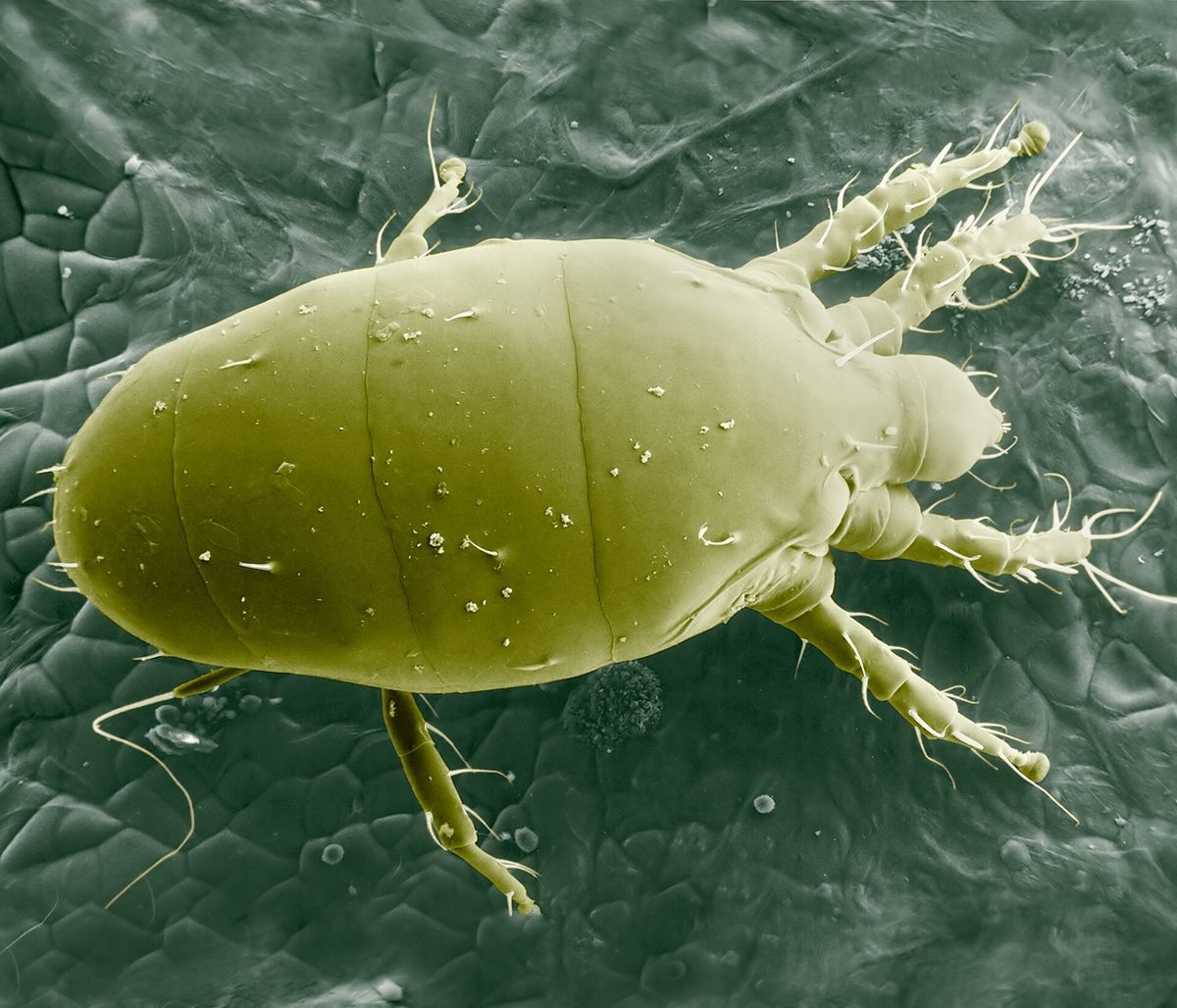
How to identify broad mite
A mite so small it cannot be seen without magnification, causing distorted, twisted new growth and bronzed, brittle leaves that gardeners often mistake for herbicide damage or a virus.
Crops attacked by broad mite
Pepper, Eggplant, Tomato, Basil.
Feeds on the youngest leaves and buds, injecting a toxin that causes severe curling, twisting, and hardening of new growth; fruit can develop a corky, russeted skin.
Life cycle
- Egg (Warm season) — Laid on new leaf undersides; invisible to the naked eye.
- Larva (2-3 days) — Feeds on tender tissue.
- Nymph (2-3 days) — Continues feeding; very short generation time.
- Adult (Ongoing in warm weather) — New generations every 4-7 days in summer heat.
Natural, organic broad mite control
- 1. Remove and destroy affected growing tips · low effort
Prune out distorted new growth as soon as it's noticed, since mites concentrate there.
When: At first distortion
- 2. Sulfur or horticultural oil · medium effort
OMRI-listed miticidal options that smother mites on contact; cover new growth thoroughly.
When: If pruning isn't enough
Fastest-fix products
- Horticultural oil — Effective, low-toxicity smothering control for microscopic mites. · Garden centers, Amazon
- Hand lens (10x) — Needed to actually confirm mites versus other causes of leaf curl. · Amazon, garden centers
Prevention
- Inspect new transplants closely; broad mites are commonly introduced on infested nursery stock.
- Avoid working in infested plants and then healthy ones without washing hands and tools.