
Pear psylla identification & organic control
Cacopsylla pyricola
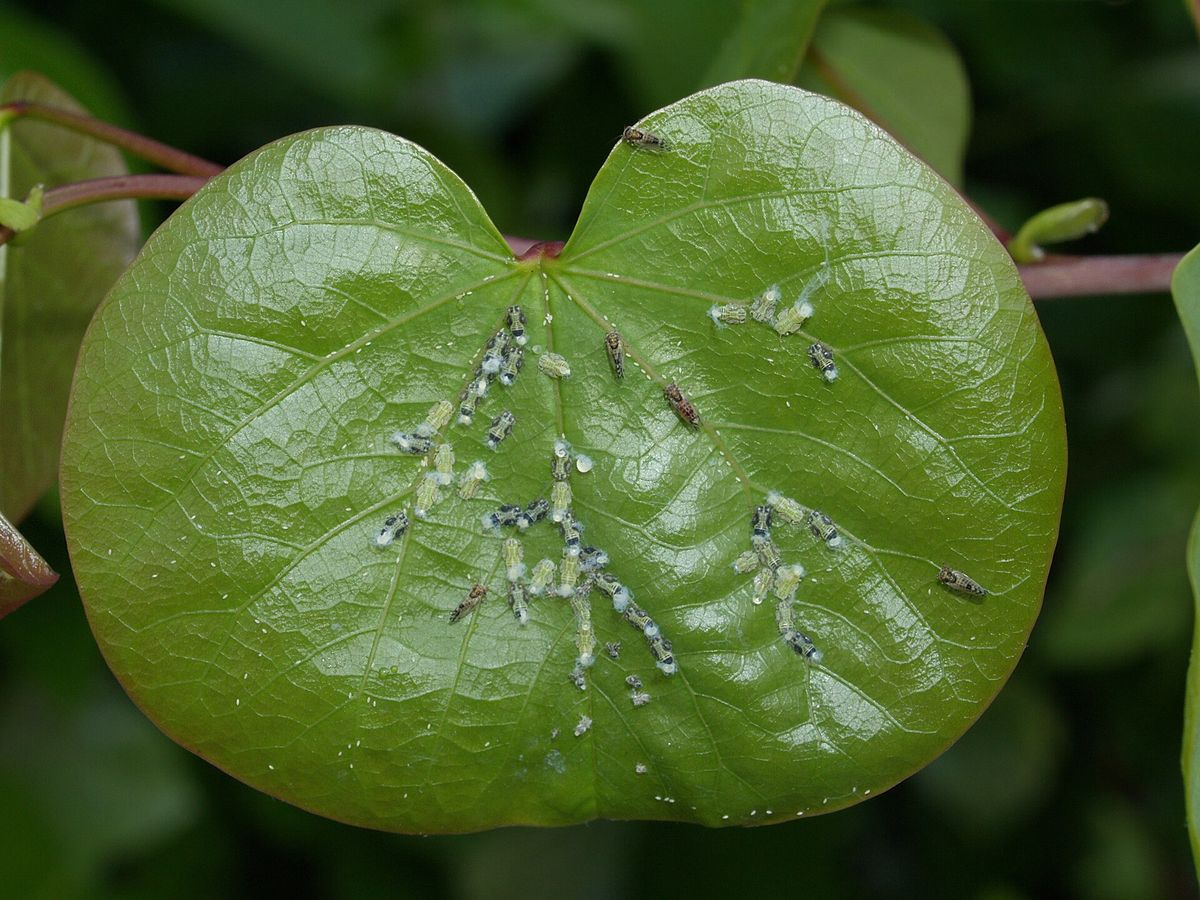
How to identify pear psylla
A small jumping insect specific to pear trees that produces heavy honeydew, leading to sooty mold and a condition called 'pear decline' when populations are chronic.
Crops attacked by pear psylla
Pear.
Nymphs and adults suck sap from leaves and shoots, excreting large amounts of honeydew that coats fruit and leaves in sticky residue and sooty mold, reducing fruit quality and tree vigor over time.
Life cycle
- Overwintering adult (Winter (on tree bark)) — None.
- Adults emerge and lay eggs (Early spring, before bloom) — First-generation nymphs cause early honeydew buildup.
- Nymph (Spring–summer) — Main honeydew and sooty mold producer.
- Multiple generations (Through summer) — 3-5 generations per year build pressure.
Natural, organic pear psylla control
- 1. Dormant oil spray · medium effort
Applied before bud break, smothers overwintering adults and eggs.
When: Late winter
- 2. Encourage predatory bugs · low effort
Minute pirate bugs and lacewings feed heavily on psylla nymphs; avoid broad-spectrum sprays that wipe them out.
When: All season
- 3. Reflective or kaolin clay sprays · medium effort
Kaolin clay can deter egg-laying adults on susceptible trees.
When: Early season
Fastest-fix products
- Dormant horticultural oil — Reduces overwintering populations before the season starts. · Garden centers, Amazon
- Kaolin clay (Surround WP) — Deters egg-laying without harming beneficials. · Arbico Organics, Amazon
Prevention
- Avoid excess nitrogen fertilizer, which favors psylla reproduction on lush growth.
- Prune for an open canopy to improve spray coverage and airflow.