
Japanese beetle identification & organic control
Popillia japonica
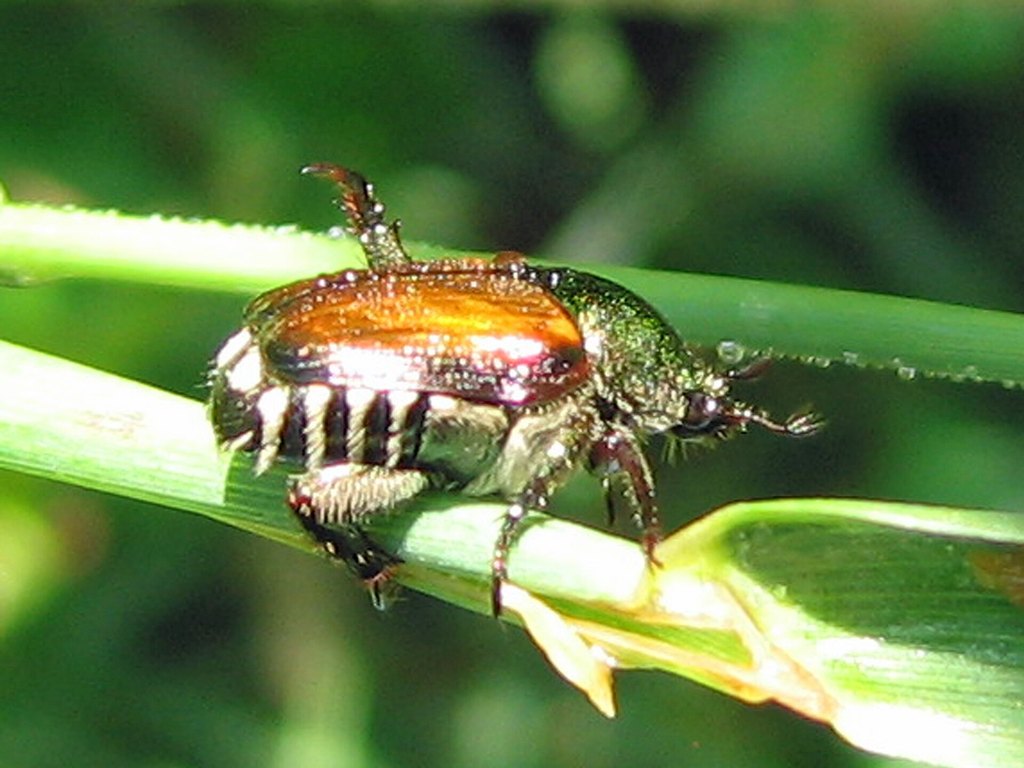
How to identify japanese beetle
A metallic-green half-inch beetle with copper wing covers and small white tufts along the sides. Feeds in loud groups. Hundreds can appear on a single plant on a hot summer morning.
Crops attacked by japanese beetle
Bean, Basil, Strawberry, Grape, Raspberry, Rose.
Skeletonizes leaves. Chews the tissue between veins, leaving lace-like foliage. Also devours flowers and soft fruit. Adults release a pheromone that attracts more beetles.
Life cycle
- Grub in lawn (Fall → spring) — White C-shaped grubs feed on grass roots, browning lawns.
- Pupation (Late spring) — None: inside a soil cell.
- Adult beetles (Late June → August) — The destructive above-ground stage: 4-6 weeks of feeding.
- Eggs in lawn (Mid-summer) — Females lay in short-mowed, well-watered turf.
Natural, organic japanese beetle control
- 1. Handpick into soapy water at dawn · medium effort
Beetles are sluggish before 8 AM. Hold a jar of soapy water under a cluster and tap: they drop straight in. Do NOT crush on the plant (pheromone attracts more).
When: Daily during outbreak
- 2. Milky spore for the grubs · low effort
Apply Paenibacillus popilliae to your lawn. Slow (2-3 years to establish) but permanent; wipes out the grub reservoir.
When: Late summer application
- 3. Row cover for high-value crops · medium effort
Cover basil and beans during peak flight (July). Beans self-pollinate so cover works well.
When: July
- 4. Skip pheromone traps near the garden · low effort
Traps attract more beetles than they catch. If used, hang 30+ ft away: never near the crop.
When: Anytime
Fastest-fix products
- St. Gabriel Milky Spore powder — The one purchase that works for years. Kills grubs in your lawn so fewer adults emerge next season. · Garden centers, Amazon
- Neem oil concentrate — Deters feeding and disrupts reproduction. Spray at dusk. · Garden centers, Amazon
Prevention
- Let your lawn go dormant in mid-summer: dry soil is bad egg-laying habitat.
- Mow lawn at 3+ inches: long grass is less attractive.
- Plant garlic, chives, and catnip near targets: mild deterrents.