
Root-knot nematode identification & organic control
Meloidogyne spp.
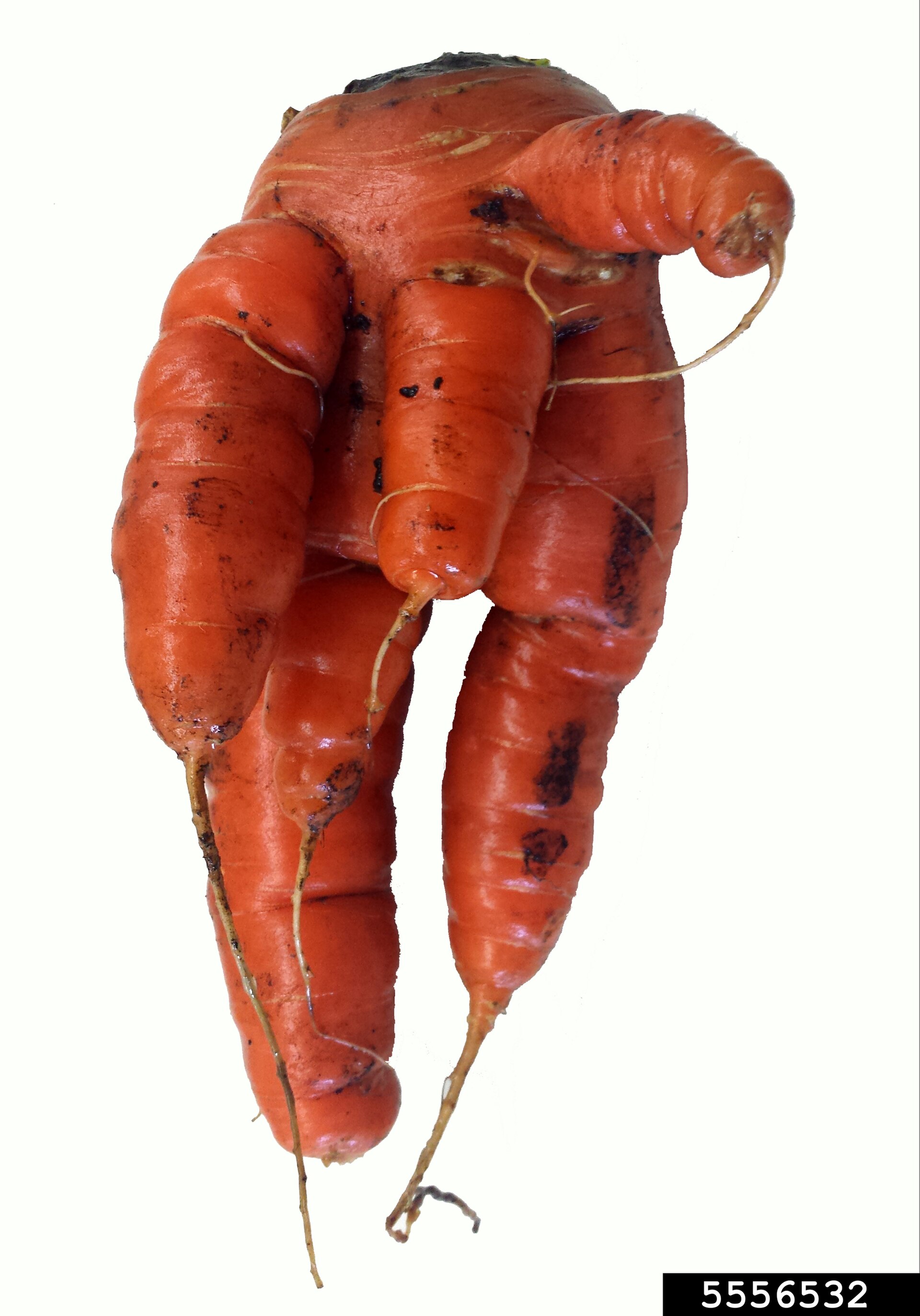
How to identify root-knot nematode
Microscopic roundworms that invade roots and trigger galls (knots) that block water and nutrient uptake. Damage is invisible above ground until plants wilt in the heat of the day despite moist soil, or when roots are dug up and show beaded swellings.
Crops attacked by root-knot nematode
Tomato, Carrot, Okra, Cucumber, Lettuce.
Juveniles enter roots and feed from inside, causing the root to form galls; galled roots can't take up water and nutrients efficiently, stunting the whole plant.
Life cycle
- Egg mass (Warm season, in soil/root galls) — Hundreds of eggs per gall.
- Juvenile (1-2 weeks) — Invades new root tips.
- Feeding female (in root) (3-4 weeks) — Forms the characteristic gall; the damaging stage.
- Egg-laying (Ongoing while soil is warm) — Multiple overlapping generations per season.
Natural, organic root-knot nematode control
- 1. Solarize the bed · high effort
Cover moist soil with clear plastic for 4-6 summer weeks; heat buildup kills nematodes in the top foot of soil.
When: Hottest weeks of summer, bed fallow
- 2. Plant resistant varieties · low effort
Look for tomato varieties marked 'N' on the tag for nematode resistance.
When: At variety selection
- 3. Add compost and rotate with marigolds · medium effort
French marigolds (Tagetes patula) release compounds that suppress root-knot nematode populations when tilled in after a full season.
When: Rotation planning
Fastest-fix products
- Clear plastic sheeting — The main tool for soil solarization. · Hardware stores
- Resistant tomato varieties (marked 'N') — Avoids the problem entirely in susceptible beds. · Seed catalogs, garden centers
Prevention
- Rotate susceptible crops (tomato, carrot, okra) with resistant grains or marigolds.
- Avoid moving soil or tools between an infested bed and clean beds without cleaning them first.