
Wireworm identification & organic control
Elateridae (Melanotus, Limonius spp.)
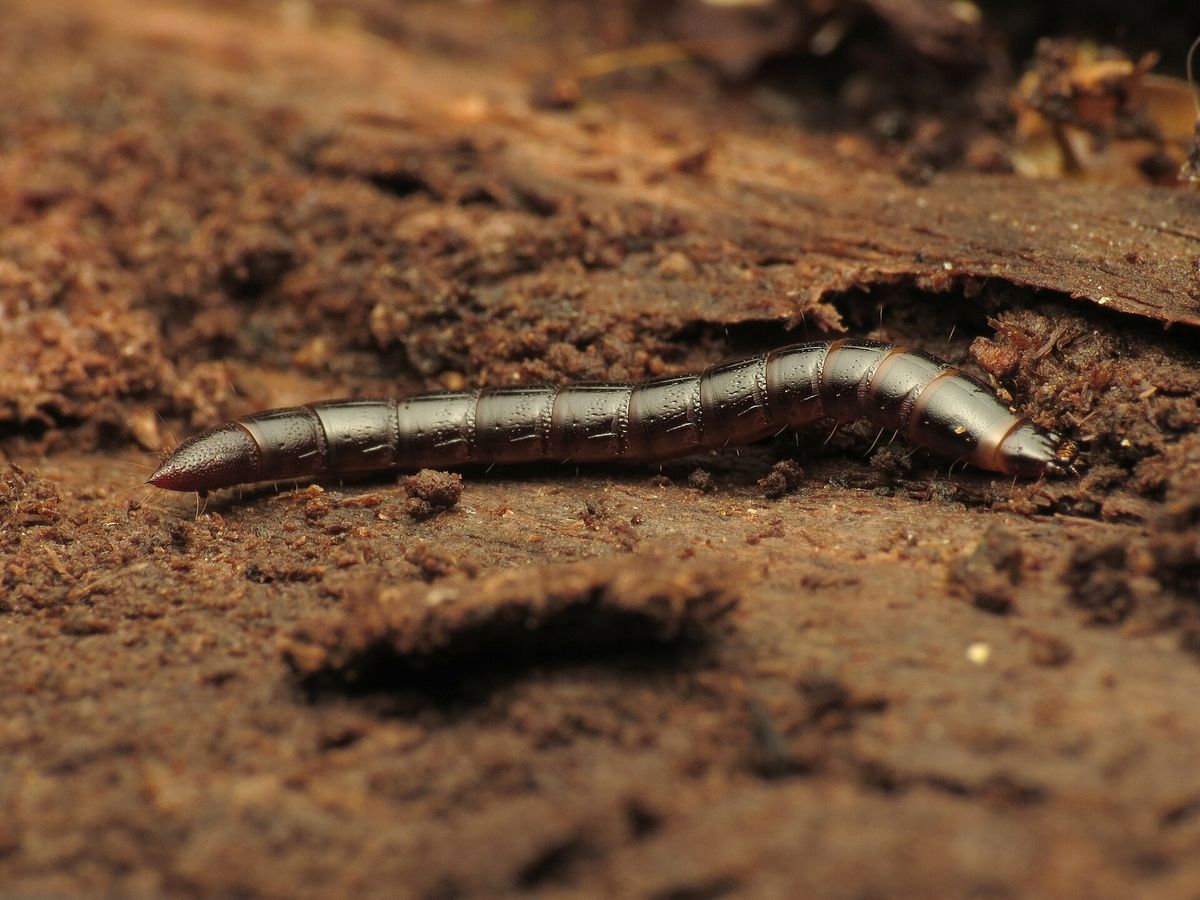
How to identify wireworm
The slender, hard, shiny yellow-brown larva of the click beetle, living in soil for up to five years before pupating. It bores into planted seed and root crops, doing its worst damage in beds recently converted from lawn.
Crops attacked by wireworm
Potato, Carrot, Sweet Potato, Sweet corn, Onion.
Tunnels into seed pieces, roots, and tubers, leaving narrow round holes; damage often opens the door to rot organisms.
Life cycle
- Egg (Spring) — Laid in soil near grass roots.
- Larva (1-5 years) — Long-lived; feeds on roots and tubers the whole time.
- Pupa (Late summer) — None; in soil.
- Adult click beetle (Fall–following spring) — Does not damage plants; lays next generation's eggs.
Natural, organic wireworm control
- 1. Potato-trap monitoring · low effort
Bury cut potato chunks on a stick a few inches deep; pull after 2-3 days and destroy any wireworms found.
When: Before planting root crops
- 2. Till repeatedly before planting · medium effort
Repeated tillage exposes larvae to birds and desiccation, especially in beds converted from turf.
When: 2-3 weeks pre-planting
- 3. Beneficial nematodes · medium effort
Soil-applied nematodes reduce larval populations over a season.
When: At bed prep
Fastest-fix products
- Beneficial nematodes (Steinernema spp.) — Attacks wireworm larvae in soil. · Arbico Organics, Amazon
Prevention
- Wait a full season after breaking new sod before planting root crops.
- Rotate potatoes and carrots away from beds with a wireworm history.