
Sweetpotato weevil identification & organic control
Cylas formicarius
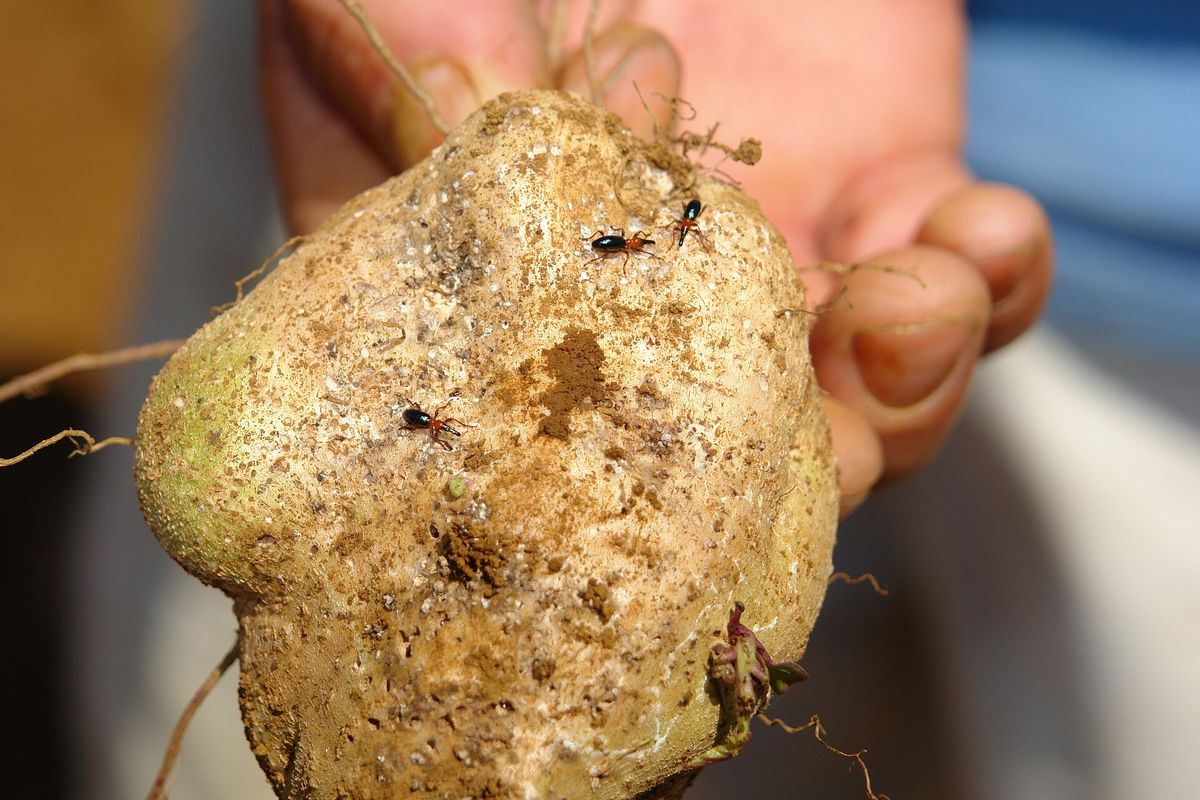
How to identify sweetpotato weevil
A slender, ant-like weevil with an orange body and blue-black wing covers, a serious pest of sweet potato in the South. Larvae tunnel inside roots and produce a bitter, musty compound that makes infested roots inedible.
Crops attacked by sweetpotato weevil
Sweet Potato.
Larvae tunnel through vines and storage roots; even light feeding triggers the plant to produce bitter terpenes that ruin the whole root's flavor, not just the damaged section.
Life cycle
- Egg (Warm season) — Laid in vine or exposed root.
- Larva (2-3 weeks) — Tunnels through vines and roots.
- Pupa (About a week) — Inside the tunnel.
- Adult weevil (Emerges to restart cycle) — Multiple generations in warm climates; can persist in stored roots.
Natural, organic sweetpotato weevil control
- 1. Hill soil high over developing roots · medium effort
Keeps roots covered so adults can't reach them to lay eggs; cracks in the soil expose roots to attack.
When: Through the growing season
- 2. Use certified slips, rotate beds · low effort
Start with weevil-free slips and avoid replanting sweet potatoes in the same bed for at least two years.
When: At planting
- 3. Destroy vines and volunteer roots after harvest · low effort
Leftover vines and small roots left in the ground carry the weevil into next season.
When: After harvest
Fastest-fix products
- Pheromone traps — Monitors adult activity so you know when pressure is building. · Extension supply catalogs, Amazon
Prevention
- Never save roots from an infested planting for next year's slips.
- Keep soil mounded and free of cracks over developing roots.