
Corn rootworm identification & organic control
Diabrotica virgifera / D. barberi
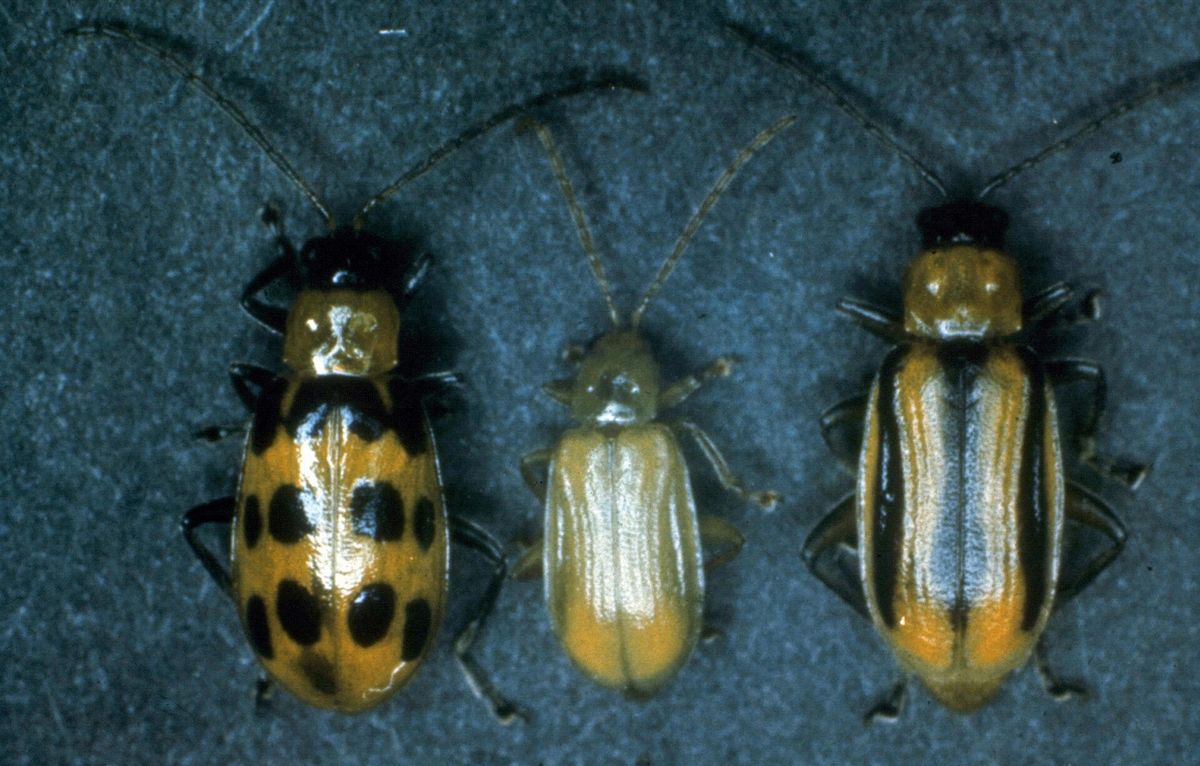
How to identify corn rootworm
Small yellow-green beetles whose larvae feed underground on corn roots, causing plants to lodge (fall over) in a distinctive 'goosenecking' pattern. Adults later feed on silks and can interfere with pollination.
Crops attacked by corn rootworm
Sweet corn.
Larvae chew corn roots below ground, weakening the plant's anchorage; adult beetles clip silks, which can reduce kernel fill if numbers are high during pollination.
Life cycle
- Overwintering egg (Winter (in soil)) — Laid the previous fall near corn roots.
- Larva (Late spring–early summer) — Root feeding; the damaging stage.
- Adult beetle (Mid-late summer) — Silk clipping during tasseling.
- Egg-laying (Late summer) — Females lay eggs in soil near corn roots for next year.
Natural, organic corn rootworm control
- 1. Rotate corn out of the bed · low effort
Larvae can only survive on corn roots; a one-year break to a non-grass crop starves them out.
When: Yearly planning
- 2. Delay planting slightly · low effort
Later planting can let eggs hatch before roots are available, reducing survival.
When: Spring planning
- 3. Beneficial nematodes at planting · medium effort
Soil-applied nematodes attack rootworm larvae without harming the corn.
When: At planting
Fastest-fix products
- Beneficial nematodes (Heterorhabditis bacteriophora) — Biological control of soil-dwelling larvae. · Arbico Organics, Amazon
Prevention
- Never plant corn in the same bed two years running.
- Watch for silk-clipping beetles at tasseling and hand-pick if light.