
Squash lady beetle identification & organic control
Epilachna borealis
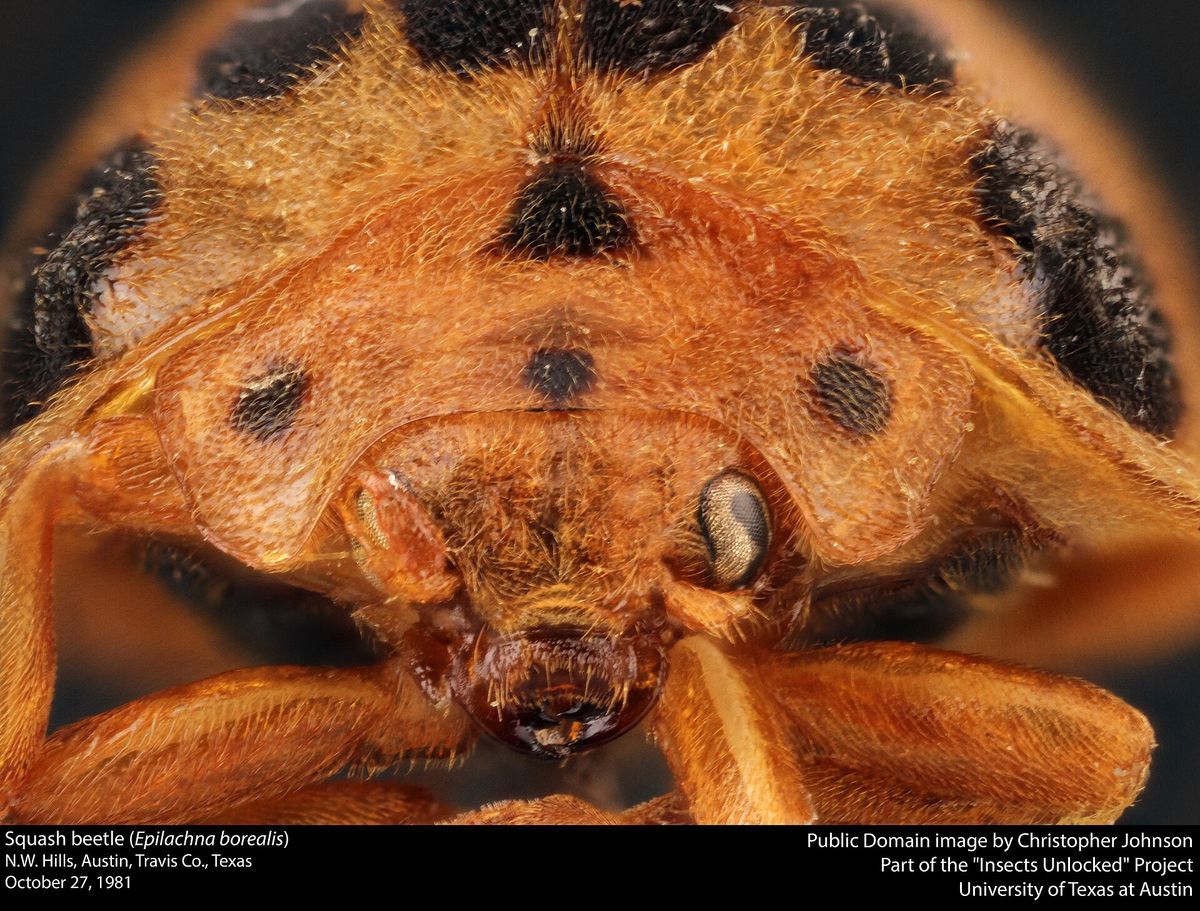
How to identify squash lady beetle
A yellow-orange beetle with black spots that looks like an oversized, fuzzy lady beetle, but unlike its beneficial relatives, it eats leaves rather than aphids. Larvae are spiny and yellow.
Crops attacked by squash lady beetle
Zucchini, Winter squash, Pumpkin, Cucumber.
Both adults and larvae chew characteristic circular patterns in leaves, often girdling a leaf with a ring cut before feeding inside it; heavy feeding skeletonizes leaves.
Life cycle
- Overwintering adult (Winter (in debris)) — None.
- Adults emerge (Late spring) — Feed and lay yellow egg clusters on leaf undersides.
- Larva (2-3 weeks) — Spiny larvae feed alongside adults.
- New generation adults (Summer) — One to two generations per year.
Natural, organic squash lady beetle control
- 1. Handpick adults and larvae · low effort
Slow-moving and easy to spot on leaf undersides; drop in soapy water.
When: Weekly
- 2. Crush egg clusters · low effort
Yellow egg clusters resemble Colorado potato beetle eggs; crush on sight.
When: Every few days
Fastest-fix products
- Insecticidal soap (OMRI) — Effective contact control if handpicking isn't keeping pace. · Garden centers, Amazon
Prevention
- Clear squash vines at season's end rather than leaving them to overwinter.
- Rotate cucurbits to a new bed each year.