
Whitefly identification & organic control
Bemisia tabaci / Trialeurodes vaporariorum
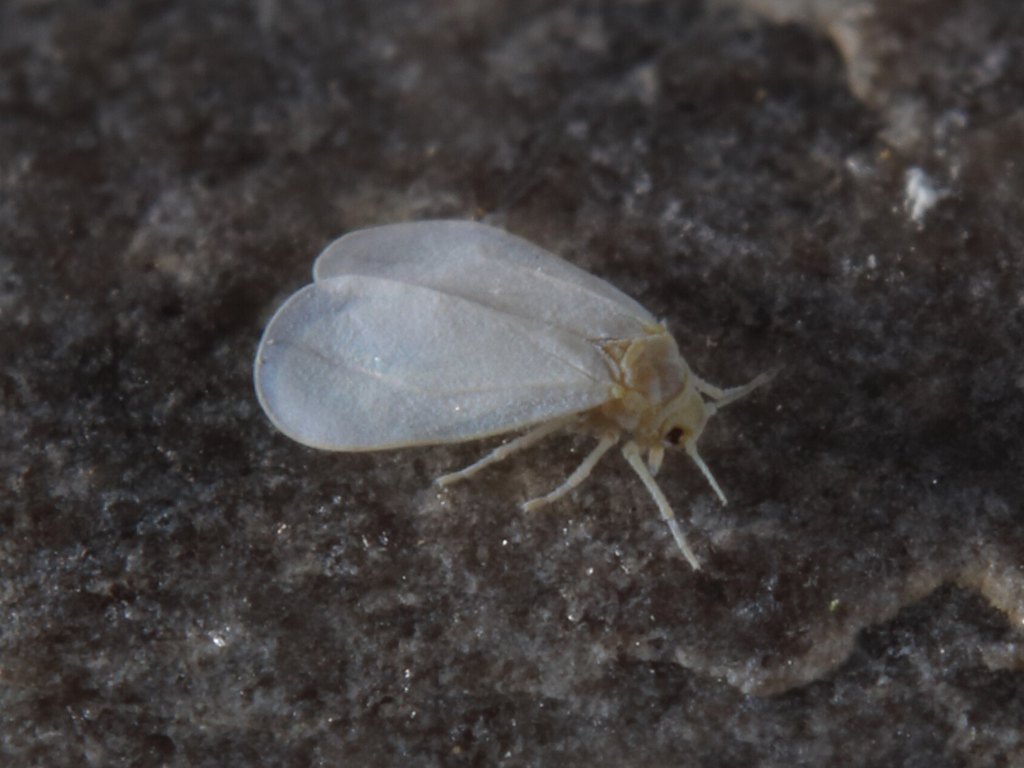
How to identify whitefly
Whiteflies are tiny, moth-like sap suckers: about 1/16 inch long, pale yellow or white, and triangular when at rest. Disturb a leaf and they flutter up in a cloud like living ash. The nymphs are the real problem: flat, scale-like, and glued to the underside of leaves, quietly draining plant juices while excreting sticky honeydew.
Crops attacked by whitefly
Tomato, Pepper, Eggplant, Bean, Cucumber, Squash, Kale, Sweet potato.
Adults and nymphs pierce leaf veins and suck sap. Leaves turn yellow, curl, and drop; vigor collapses. Honeydew coats lower leaves and grows sooty mold. Some species transmit viruses such as tomato yellow leaf curl virus (TYLCV), which can wipe out an entire tomato planting.
Life cycle
- Egg (3-7 days) — Tiny pale-yellow cones glued to the underside of leaves, often in partial circles.
- Crawler (first nymph) (1-2 days) — The only mobile nymph stage; crawls a short distance before settling to feed.
- Sessile nymph (3 instars) (2-3 weeks) — The main destructive stage. Flattened, scale-like, and fixed to the leaf underside while sucking sap.
- Adult (1-3 weeks) — Flies to new leaves, lays fresh eggs, and spreads viruses plant to plant.
- Overwintering adults / eggs (Cool season in warm climates; greenhouses year-round) — Hides on brassicas, weeds, and greenhouse plants, then re-infests new crops in spring.
Natural, organic whitefly control
- 1. Yellow sticky traps at canopy height · low effort
Adults are drawn to yellow. Hang traps just above the leaf canopy and move them up as plants grow. Replace when covered. This knocks the flying population down fast.
When: First sighting
- 2. Handheld vacuum in cool morning · medium effort
Adults are sluggish below 60°F. Run a small vacuum along leaf undersides; empty the canister into soapy water so they cannot escape.
When: Daily during an outbreak
- 3. Insecticidal soap or horticultural oil on undersides · medium effort
Mix to label strength and spray the leaf undersides thoroughly at dusk. Soap suffocates nymphs on contact; oil smothers eggs. Repeat every 5-7 days for 3 cycles to catch each hatch.
When: Established infestation
- 4. Release Encarsia formosa parasitic wasps · medium effort
These tiny wasps lay eggs inside whitefly nymphs, turning them black. Best for warm, humid greenhouses or high-tunnel crops; outdoors, release in the evening when humidity is highest.
When: Heavy or recurring infestation
- 5. Reflective silver mulch · low effort
Lay silver reflective mulch under the crop. The reflected UV confuses incoming whiteflies and sharply reduces landings.
When: At planting
Fastest-fix products
- Yellow sticky traps (10-pack) — Cheapest, fastest way to reduce adult numbers and confirm when populations are rising. · Amazon, garden centers
- Handheld cordless vacuum — Non-toxic removal of sluggish adults; especially useful in greenhouses, tunnels, and small gardens. · Any hardware store
- Safer Brand Insecticidal Soap or horticultural oil — Kills exposed nymphs and adults on contact without leaving residual toxins. · Garden centers, Amazon
- Encarsia formosa parasitic wasp cards — Live biological control that hunts nymphs. The safest option for food crops and pollinator gardens. · Arbico Organics, Nature's Good Guys
Prevention
- Inspect every transplant and seedling before it enters your garden. Whiteflies ride home from nurseries more often than they fly in from the wild.
- Avoid overfeeding with nitrogen; soft, lush growth is whitefly candy.
- Keep brassica and weed volunteers cleared in fall and winter. They are favorite overwintering hosts.
- Grow flowers that attract minute pirate bugs and lady beetles: sweet alyssum, dill, yarrow, and fennel.