
Nutria identification & organic control
Myocastor coypus
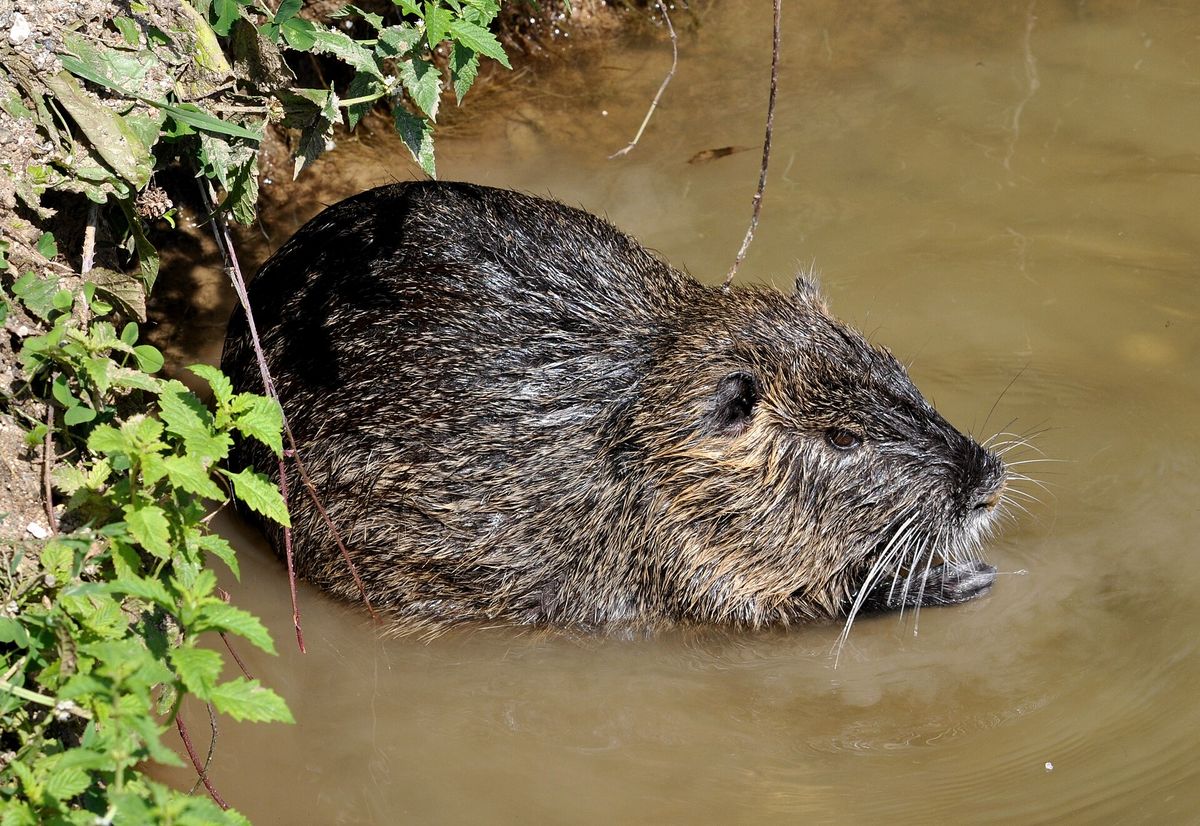
How to identify nutria
A large, non-native semi-aquatic rodent that burrows into pond and ditch banks and devastates wetland and garden vegetation near water. Nutria are an invasive species in most of the US and are actively targeted for eradication in many states, unlike most animals on this list.
Crops attacked by nutria
Pond-edge vegetation, Root vegetables near water, Rice/grain (regional), Levee/bank plantings.
Feeds heavily on roots, tubers, and stem bases of aquatic and garden plants near water, often eating far more than it needs and destroying the root mat that holds banks together.
Life cycle
- Year-round breeding (All year, up to 3 litters/year) — Extremely rapid population growth in mild climates.
- Burrowing (Ongoing) — Extensive burrow systems destabilize pond banks, levees, and irrigation ditches.
- Family group foraging (Year-round) — Groups strip bank and near-water vegetation down to bare mud.
Natural, organic nutria control
- 1. Report to state wildlife/agriculture agency · low effort
Because nutria are invasive and cause serious wetland and infrastructure damage, most affected states run active removal or bounty programs; report sightings rather than attempting DIY control.
When: First sighting
- 2. Exclude with wire fencing along vulnerable banks · high effort
Buried wire mesh along pond edges and irrigation banks can protect specific plantings from burrowing and grazing.
When: Before damage starts
- 3. Licensed trapping · high effort
In states where nutria are classified as invasive, trapping is often encouraged or required to be reported; hire a licensed wildlife control operator or work with your state program.
When: Persistent activity
Fastest-fix products
- Buried wire mesh bank fencing — Protects specific plantings and bank sections from burrowing. · Farm/hardware stores
Prevention
- Report nutria sightings to your state's invasive species hotline; many states (notably Louisiana, Maryland, and the Pacific Northwest) run coordinated removal programs.
- Never relocate a nutria: moving an invasive species to a new water body is illegal in most states and spreads the problem.
- Fence or armor vulnerable pond and ditch banks before a colony establishes.