
Groundhog (woodchuck) identification & organic control
Marmota monax
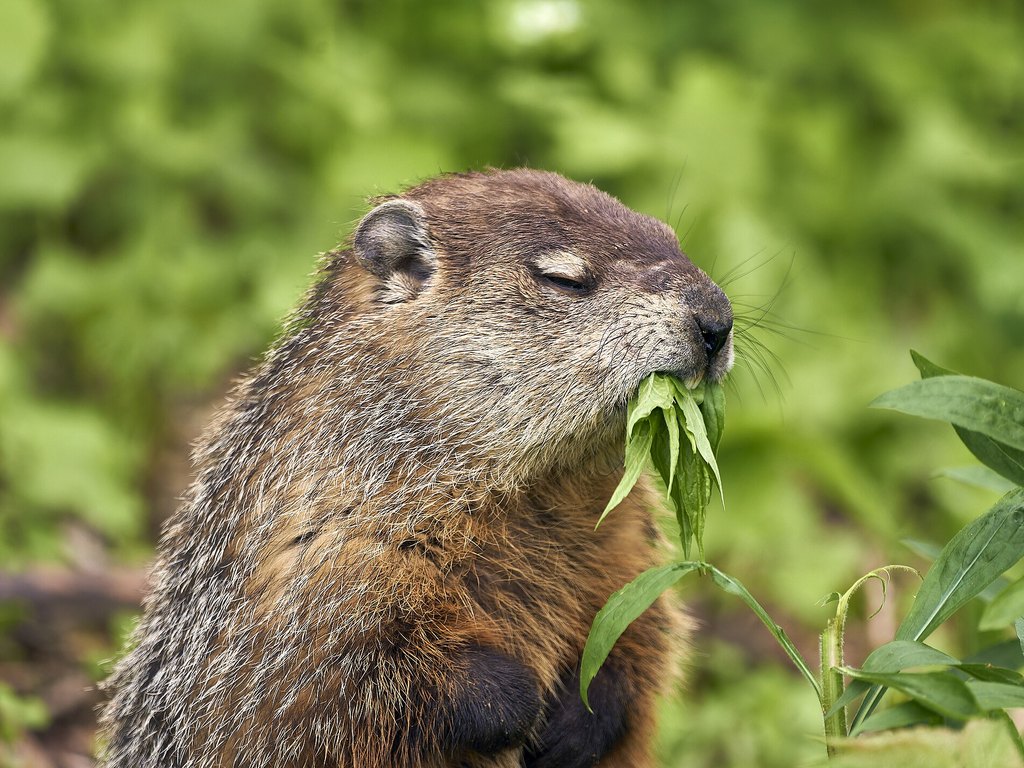
How to identify groundhog (woodchuck)
The groundhog, or woodchuck, is a stocky, 5-15 lb burrowing herbivore with short legs and a blunt, watchful face. It can clear a full row of beans in one morning, then retreat to a burrow with multiple entrances along a fence line or garden edge. Groundhogs are creatures of habit: they emerge at the same time each day, follow the same paths, and will quickly stake a territory around a reliable food source.
Crops attacked by groundhog (woodchuck)
Bean, Pea, Broccoli, Cabbage, Squash, Lettuce, Melon.
Bites off stems near soil level; strips entire plants systematically down a row. Look for burrow entrances (10-12 in diameter) with a fresh soil mound.
Life cycle
- Hibernation (Nov-Feb (North)) — None.
- Emerges & mates (Feb-March) — Immediate garden pressure on early greens.
- Young (May-June) — Juveniles disperse. You may see new burrows midsummer.
Natural, organic groundhog (woodchuck) control
- 1. Fence with buried apron + electric top wire · high effort
3 ft hardware-cloth fence with a 12 in outward-flared apron buried 6 in, plus one hot-wire 4 in above the top. Only reliable exclusion.
When: Before planting
- 2. Live trap at burrow entrance · medium effort
Havahart trap baited with fresh broccoli or cantaloupe rind, placed 3 ft from the burrow. Check twice daily. Relocate per state law.
When: As soon as damage appears
- 3. Burrow harassment · low effort
Fill entrances with fresh clumps of used cat litter or predator urine; groundhogs will not tolerate the scent and often abandon the burrow.
When: Early spring
Fastest-fix products
- Havahart 1-door 42-in trap — Sized for groundhogs; sturdy enough to hold them without escape. · Amazon, Tractor Supply
- Coyote urine granules (Shake-Away) — Predator-scent deterrent; refresh weekly around burrows. · Amazon
- Solar electric fence kit (Premier1) — One-strand top-line hot wire stops climbers. · Premier1 Supplies
Prevention
- Fill abandoned burrows immediately or the next groundhog moves in.
- Remove brush piles and old lumber near the garden: favorite burrow sites.
- Fence at planting; groundhogs learn the garden fast.