
Colorado potato beetle identification & organic control
Leptinotarsa decemlineata
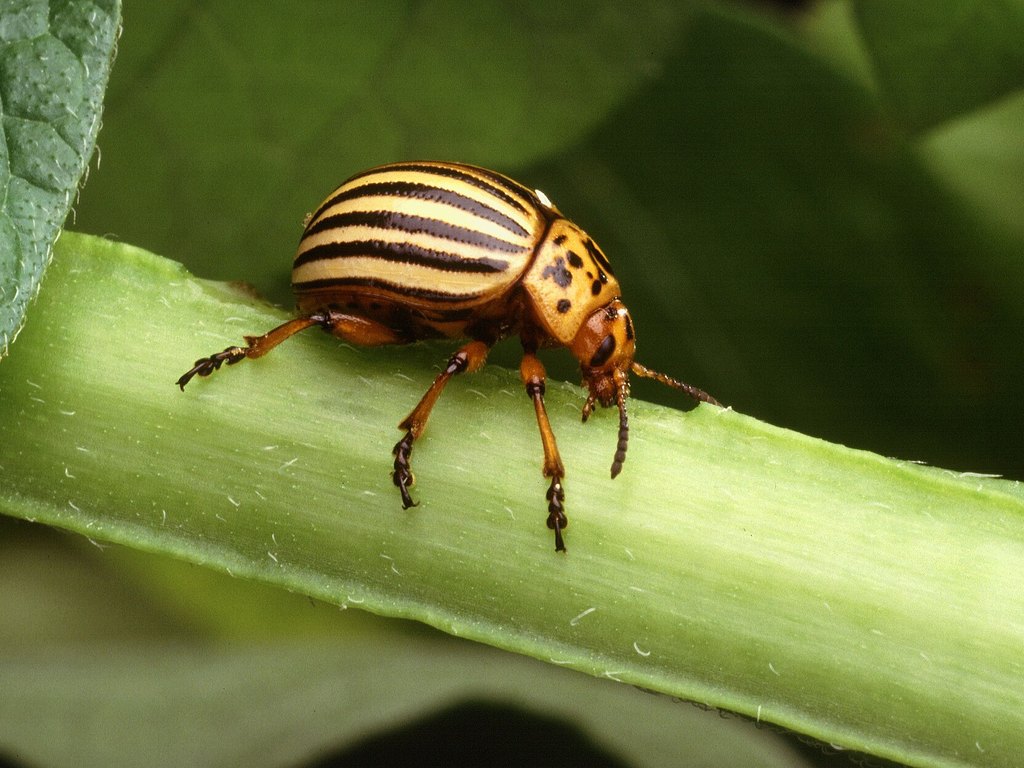
How to identify colorado potato beetle
A round, hard-shelled 3/8-inch beetle with 10 black stripes on yellow wing covers. Larvae are humpbacked, red-orange, and softly grotesque, and even more voracious than the adults.
Crops attacked by colorado potato beetle
Potato, Eggplant, Tomato (occasionally), Pepper.
Adults and larvae chew leaves down to the veins. A heavy infestation can defoliate a potato patch in under a week, cutting tuber yields in half.
Life cycle
- Overwintering adult (Winter (in soil)) — Buried 4-10 in deep in old potato beds.
- Adults emerge (Spring) — Feed on early foliage; lay bright orange egg clusters on leaf undersides.
- Larvae (4 instars) (Late spring → summer) — The most destructive stage: voracious feeders for 2-3 weeks.
- Second generation (Mid-late summer) — New adults + a second wave of larvae.
Natural, organic colorado potato beetle control
- 1. Handpick daily during emergence · high effort
Every morning for 2 weeks after adults appear: drop into soapy water. Crush orange egg clusters on the same round.
When: Spring emergence + peak larval hatch
- 2. Straw mulch 6 in deep · medium effort
Deep straw mulch confuses emerging adults and provides habitat for ground beetles (their predator).
When: At planting
- 3. Spinosad (OMRI) · medium effort
Foliar spray at dusk (bee-safe when dry). Works on all larval stages within 24 hours.
When: When handpicking cannot keep up
- 4. Beauveria bassiana · medium effort
Naturally-occurring fungus that infects the beetles. Spray as directed; effective in humid conditions.
When: Heavy pressure, humid climate
Fastest-fix products
- Monterey Spinosad — OMRI-listed. Fastest organic knockdown for larvae; the go-to when hand-picking loses. · Garden centers, Amazon
- Straw bale (organic) — Deep mulching cuts adult emergence and boosts ground beetle predators. · Local farm supply
Prevention
- Rotate potatoes at least 200 ft from last year's bed: adults walk short distances.
- Grow resistant varieties: 'King Harry', 'Nipigon', 'Prince Hairy'.
- Plant early: early varieties escape the peak second generation.