
Plum curculio identification & organic control
Conotrachelus nenuphar
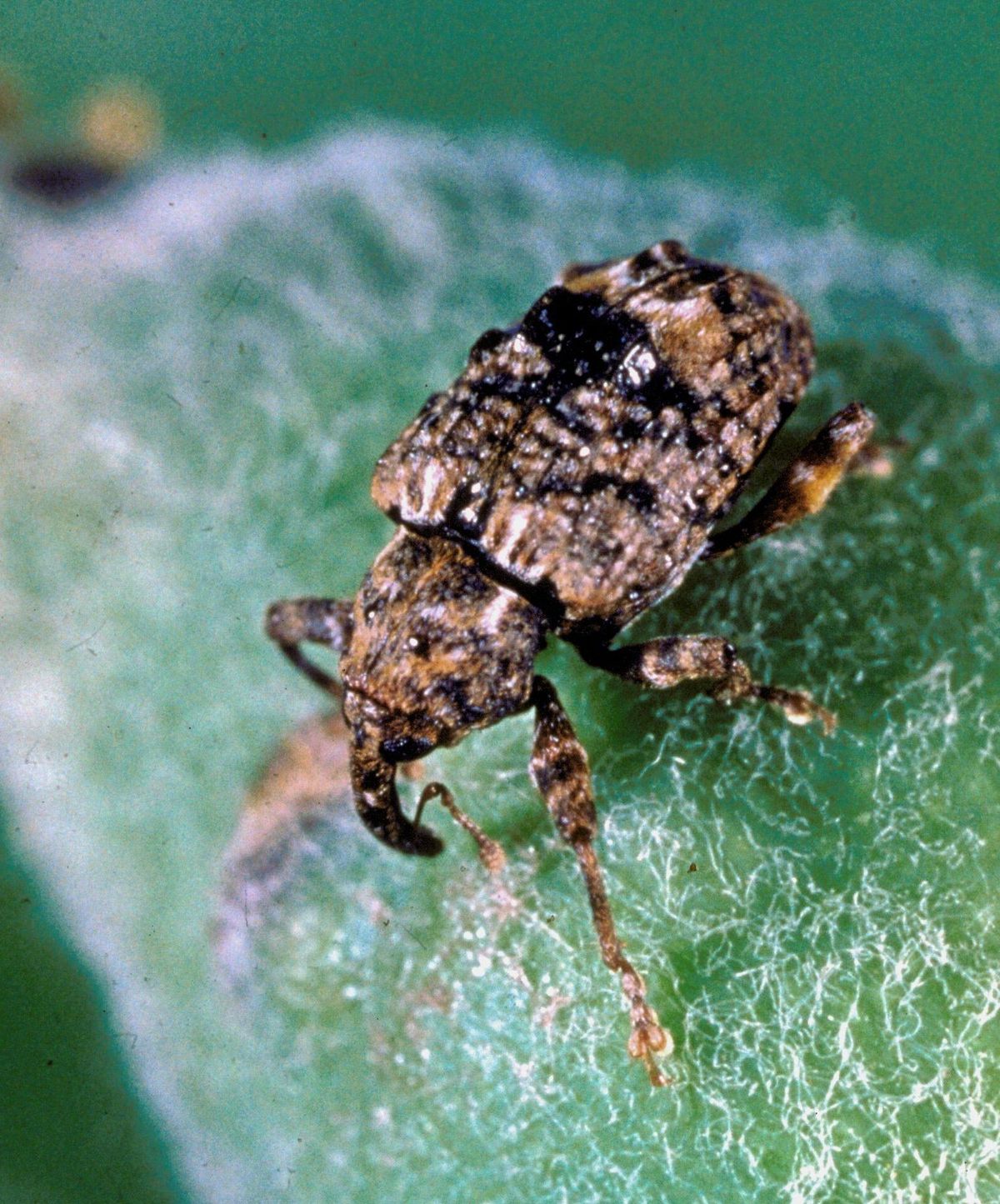
How to identify plum curculio
A small, dark snout beetle that leaves a distinctive crescent-shaped scar when it lays eggs in young fruit. A major pest of stone fruit and apples east of the Rockies.
Crops attacked by plum curculio
Plum, Peach, Cherry, Apple, Pear.
Adults feed on buds, blossoms, and young fruit, and females cut a crescent-shaped slit to lay eggs; larvae feeding inside causes fruit to drop early and rot.
Life cycle
- Overwintering adult (Winter (in leaf litter)) — None.
- Adults emerge (At bloom / petal fall) — Feed on blossoms and young fruit; make crescent egg scars.
- Larva (2-3 weeks) — Feeds inside the fruit, which usually drops early.
- New generation adults (Summer) — Feed on foliage and fruit before overwintering.
Natural, organic plum curculio control
- 1. Shake and catch beetles · medium effort
Curculios play dead and drop when the tree is jarred; spread a sheet beneath and shake branches in early morning when it's cool.
When: At petal fall, daily for 2 weeks
- 2. Clean up dropped fruit immediately · low effort
Infested drops contain larvae about to enter the soil; collecting and destroying them daily breaks the cycle.
When: During fruit drop
- 3. Kaolin clay spray (Surround) · medium effort
A fine clay film confuses and deters egg-laying females without harming beneficials.
When: From petal fall through early summer
Fastest-fix products
- Kaolin clay (Surround WP) — OMRI-listed physical deterrent, widely used by organic orchardists. · Arbico Organics, Amazon
- Ground sheet for beetle jarring — Simple, effective mechanical control during peak emergence. · Any tarp or drop cloth
Prevention
- Clean up all fruit drops through the whole season.
- Keep grass mowed short under trees to reduce overwintering shelter.