
Stink bug identification & organic control
Halyomorpha halys (and native Pentatomidae)
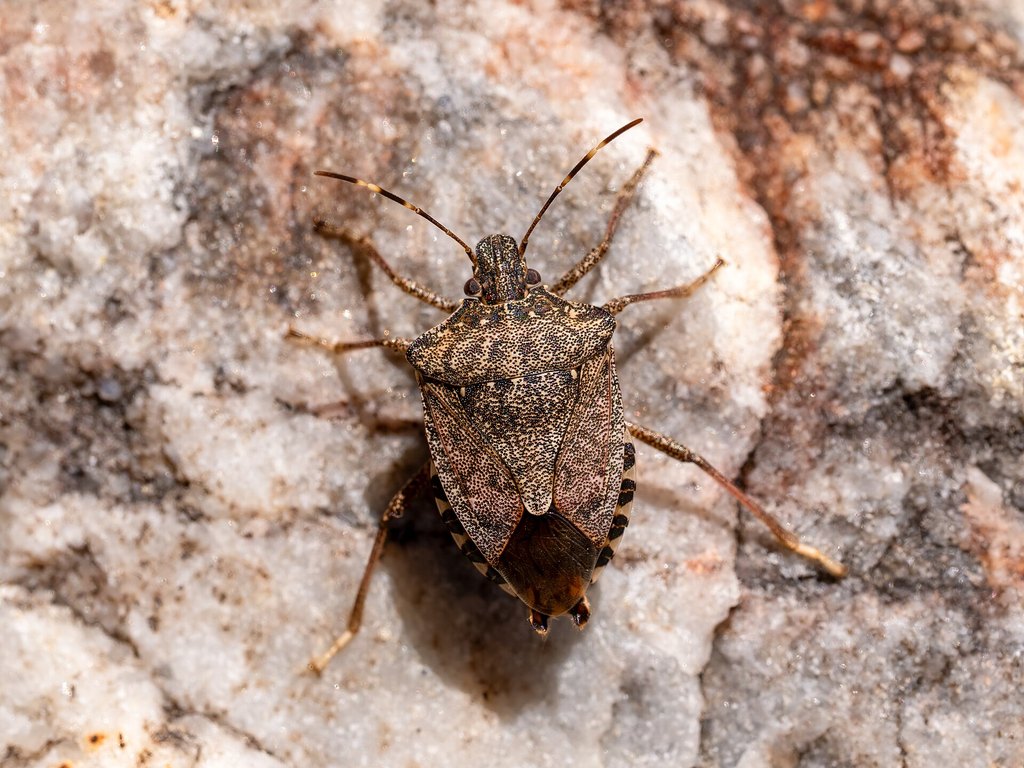
How to identify stink bug
Shield-shaped bugs, mottled brown (the invasive brown marmorated) or bright green, that pierce fruit and pods to feed. They release a pungent cilantro-skunk odor when handled or crushed, and pile into houses to overwinter.
Crops attacked by stink bug
Tomato, Pepper, Bean, Okra, Peach, Apple, Corn.
Needle-like mouthparts stab fruit and inject saliva, leaving pale corky 'cat-facing' dimples under the skin and mealy white spots in tomato flesh. Pods become deformed and beans shrivel.
Life cycle
- Overwintering adults (Winter) — Sheltering in siding, sheds, and attics; none in garden.
- Spring emergence & egg masses (Spring) — Barrel-shaped pale eggs laid in clusters of ~28 on leaf undersides.
- Nymphs (5 instars) (Early → late summer) — Black-and-orange then mottled nymphs feed in groups; heavy fruit damage.
- New adults (Late summer → fall) — Peak fruit injury, then mass movement to buildings.
Natural, organic stink bug control
- 1. Morning hand-collection into soapy water · low effort
Cool mornings make them sluggish; tip them off fruit into a jar of soapy water. Do not squash on the plant.
When: Daily during peak
- 2. Kaolin clay film · medium effort
Coat fruit and foliage with kaolin clay: the gritty film deters feeding and egg-laying without killing pollinators.
When: From fruit set
- 3. Trap crop of sunflowers or sorghum · medium effort
Plant a border row 10-15 ft from the garden; bugs congregate there and can be vacuumed or destroyed en masse.
When: Planted with the main crop
- 4. Row cover until flowering · medium effort
Floating row cover keeps adults off young fruiting plants; remove for pollination on squash and cukes.
When: Early season
Fastest-fix products
- Surround WP (kaolin clay) — OMRI-listed protective film; the best organic option for fruit dimpling. · Arbico Organics, Amazon
- BMSB pheromone trap — Monitors arrival and pulls adults off fruit; place at the garden edge, not inside beds. · Rescue!, Amazon
- Handheld cordless vacuum — Fastest way to clear trap crops and clustered adults. · Hardware stores
Prevention
- Seal house gaps in early fall so the overwintering population near your garden drops.
- Cut brushy, weedy borders that host spring populations.
- Scout leaf undersides for egg clusters and rub them off weekly.