
Garden symphylan identification & organic control
Scutigerella immaculata
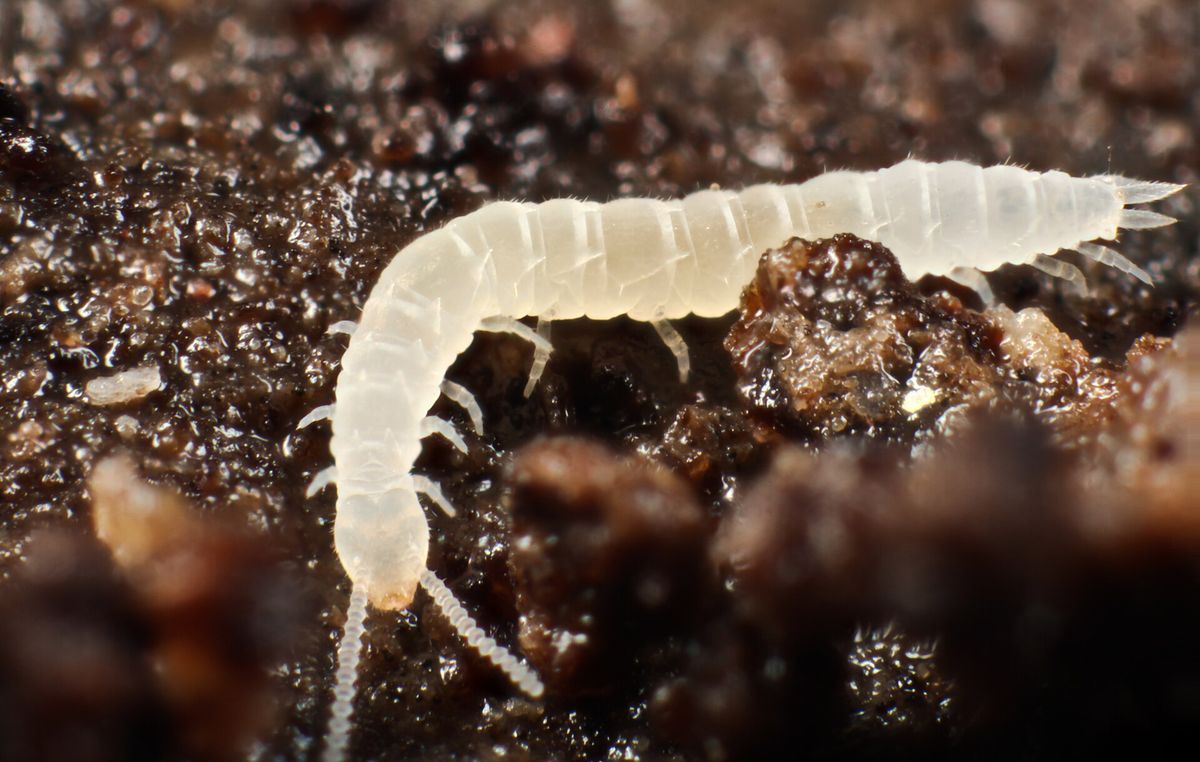
How to identify garden symphylan
A small, fast-moving, white, many-legged soil dweller resembling a tiny centipede. It lives deep in the soil and feeds on fine root hairs, causing patchy stunting that's easy to mistake for a nutrient problem.
Crops attacked by garden symphylan
Lettuce, Spinach, Carrot, Bush bean.
Feeds on root hairs and tender roots underground, stunting plants in patches without any visible aboveground pest; roots often look pruned or 'stubbed off.'
Life cycle
- Egg (Year-round in mild soil) — Laid in soil clusters.
- Juvenile (Weeks to months) — Feeds on root hairs; population builds in undisturbed soil.
- Adult (Can live several years) — Continues feeding; migrates deeper in dry/cold conditions.
Natural, organic garden symphylan control
- 1. Dig and inspect roots of stunted patches · low effort
Pull a struggling plant and look for pruned root hairs and small white many-legged creatures fleeing light.
When: When patchy stunting appears
- 2. Increase organic matter and tillage · medium effort
Regular cultivation and compost addition disrupt symphylan habitat and reduce populations over seasons.
When: Bed prep each season
- 3. Rotate to less-susceptible crops · low effort
Corn and grains tolerate symphylans better than leafy greens and beans; rotate sensitive crops away from bad patches.
When: Yearly planning
Fastest-fix products
- Soil thermometer/moisture meter — Symphylans move deeper in dry, warm soil; timing cultivation helps disrupt them. · Garden centers, Amazon
Prevention
- Avoid leaving beds undisturbed for years at a time; regular tillage and crop rotation keep numbers down.
- Improve drainage; symphylans favor consistently moist, compacted soil.