
Sod webworm identification & organic control
Crambus spp. and related species
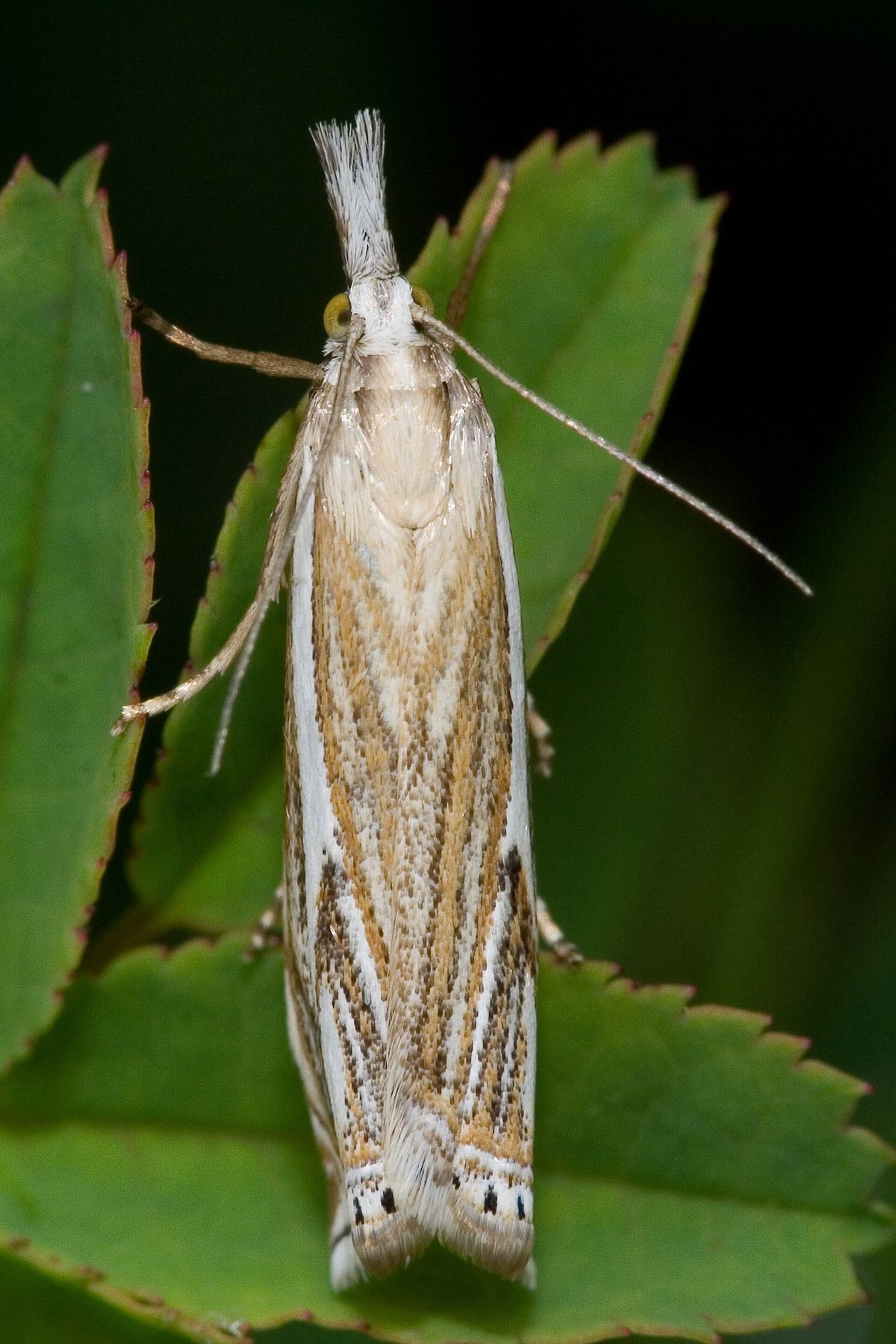
How to identify sod webworm
The larva of a small tan moth that hides in a silk-lined tunnel by day and chews grass blades at the crown at night, leaving ragged, thin patches that birds often peck at looking for a meal.
Crops attacked by sod webworm
Lawn/turf.
Larvae feed nocturnally on grass blades near the soil surface, leaving closely clipped, ragged patches that thin over several weeks.
Life cycle
- Overwintering larva (Winter (in thatch)) — Dormant.
- Larva resumes feeding (Spring) — Nighttime grass-blade feeding.
- Pupa (Early summer) — None.
- Adult moth flight (Summer evenings) — Lays eggs for the next damaging generation.
Natural, organic sod webworm control
- 1. Soap flush test · low effort
Mix a tablespoon of dish soap in a gallon of water, pour over a suspect patch; larvae surface within minutes for identification.
When: When ragged patches appear
- 2. Reduce thatch, water deeply · medium effort
Thick thatch shelters larvae; dethatching plus deep infrequent watering makes lawns less hospitable.
When: Ongoing lawn care
- 3. Beneficial nematodes · medium effort
Soil-applied nematodes target webworm larvae in the thatch layer.
When: Evening application, moist soil
Fastest-fix products
- Beneficial nematodes (Steinernema carpocapsae) — Effective biological control for turf-dwelling caterpillars. · Arbico Organics, Amazon
Prevention
- Keep thatch under half an inch and mow at the recommended height for your grass type.
- Encourage birds; they actively hunt sod webworms in damaged patches.