
Springtails identification & organic control
Collembola
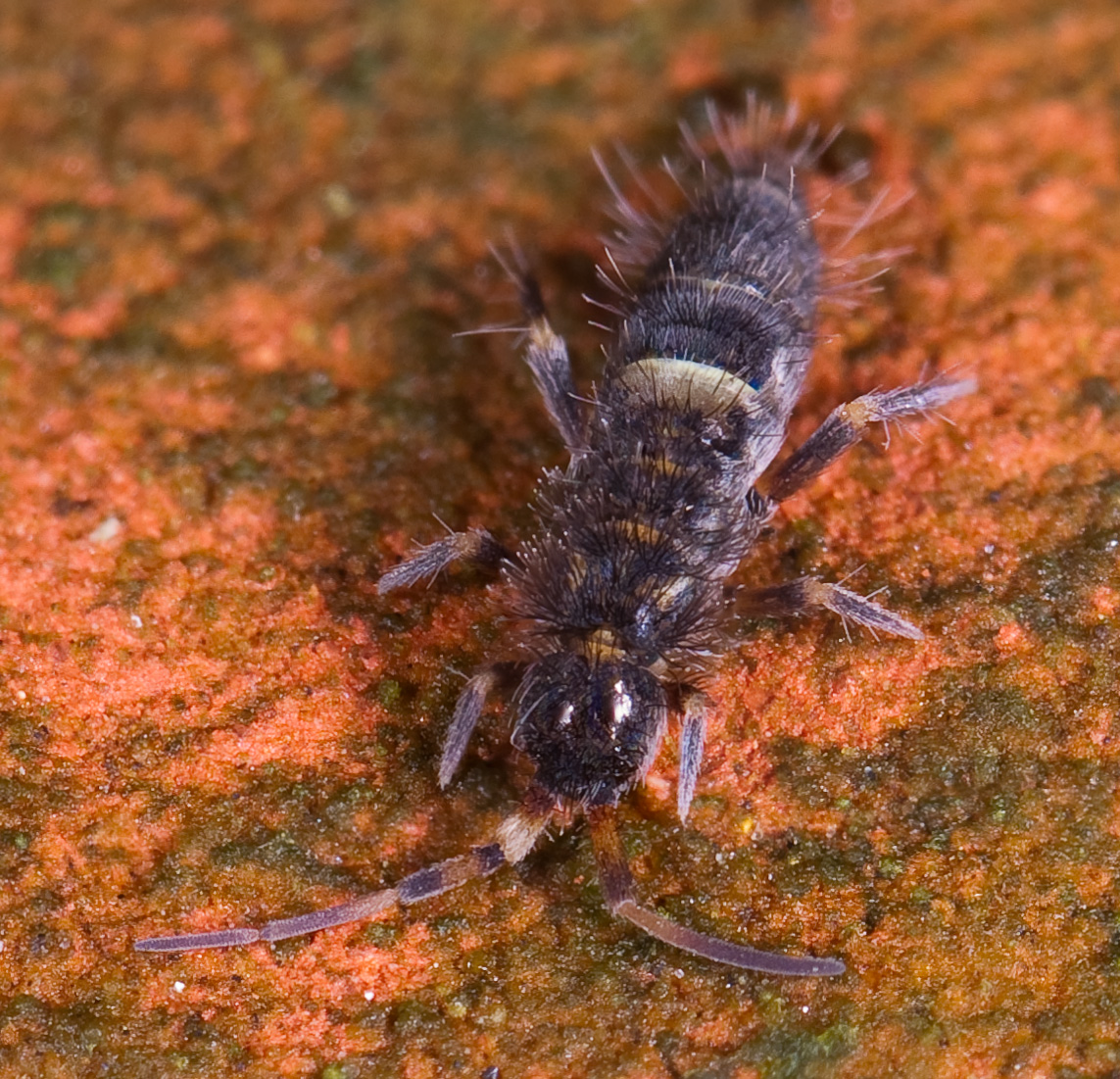
How to identify springtails
Tiny (often under 1/16 inch), wingless soil dwellers that spring away when disturbed. The overwhelming majority are harmless or beneficial decomposers; they only draw concern when found in huge numbers around overwatered seedlings.
Crops attacked by springtails
.
Feeds mainly on fungi, algae, and decaying organic matter in the soil; large populations near seedlings are usually a symptom of overly wet soil rather than a cause of plant damage.
Life cycle
- Egg (Year-round in moist soil) — None.
- Nymph (Days to weeks) — Resembles the adult; feeds on organic matter.
- Adult (Ongoing) — Continues feeding and reproducing in moist conditions.
Natural, organic springtails control
- 1. Let the soil surface dry between waterings · low effort
Springtail booms almost always trace back to soggy soil or overwatered seed trays; easing up on water solves it.
When: When large numbers appear
- 2. Improve drainage · medium effort
Add coarse compost or perlite to consistently soggy beds or containers.
When: At bed prep
Prevention
- Treat springtails mainly as an indicator of overly wet soil, not a pest needing direct control.
- Avoid letting seed-starting trays sit in standing water.