
Carrot rust fly identification & organic control
Psila rosae
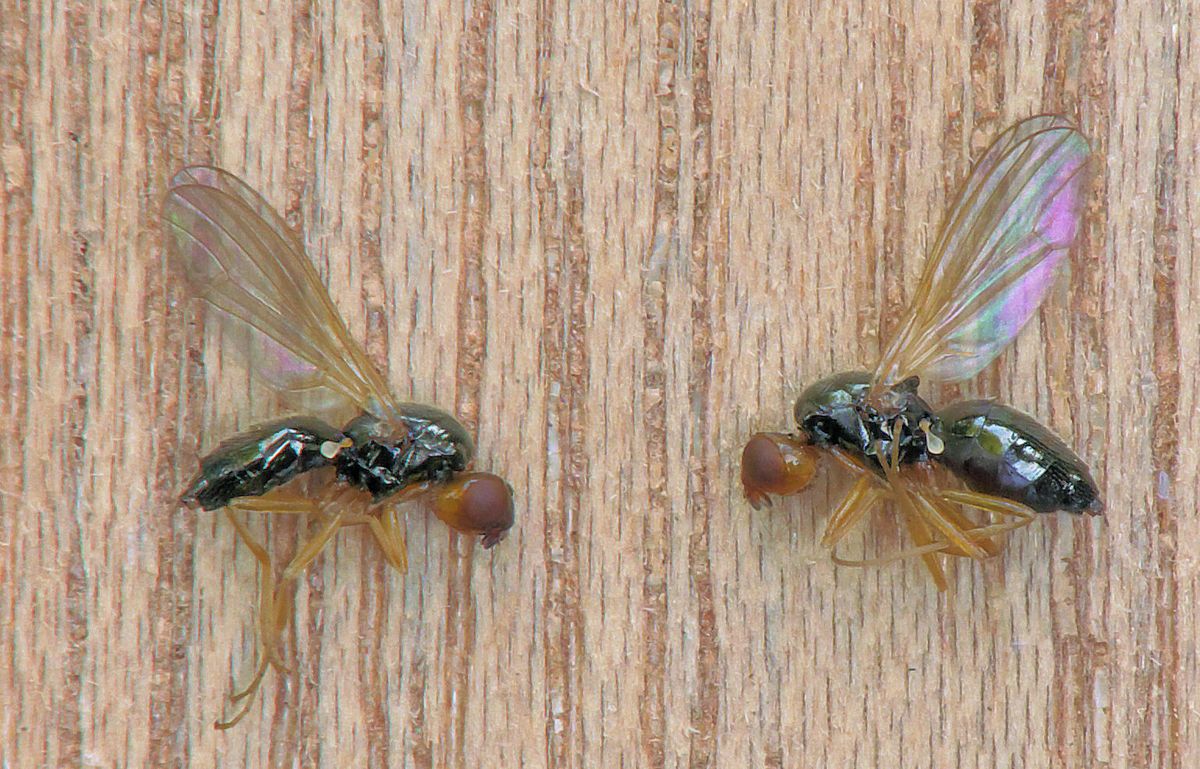
How to identify carrot rust fly
A small shiny black fly whose larvae tunnel into carrot roots, leaving rusty-brown scars and tunnels that ruin the harvest even when the tops look fine. Most common in cool, humid regions of the Pacific Northwest and Northeast.
Crops attacked by carrot rust fly
Carrot, Celery, Parsley.
Larvae tunnel just under the skin of the root, leaving rust-colored trails; heavy tunneling invites rot in storage.
Life cycle
- Overwintering pupa (Winter (in soil)) — None.
- Adult fly (Spring) — Lays eggs at the base of carrot foliage.
- Larva (maggot) (3-4 weeks) — Root tunneling; the destructive stage.
- Second generation (Late summer) — Attacks roots headed for fall harvest and storage.
Natural, organic carrot rust fly control
- 1. Row cover the whole season · medium effort
The fly is a weak flier; a fine mesh cover kept sealed at the edges is very effective.
When: From seeding
- 2. Time plantings around peak flights · low effort
Sowing after the first major spring flight, or harvesting before the fall flight, avoids the worst damage.
When: Spring/fall planning
- 3. Interplant with onions · low effort
Onion scent can mask carrot foliage from egg-laying flies.
When: At planting
Fastest-fix products
- Fine insect mesh row cover — Physically excludes this weak-flying fly. · Johnny's Selected Seeds, Amazon
Prevention
- Rotate carrots and celery to new beds yearly.
- Thin carrots on a still day and remove thinnings immediately; the scent of crushed foliage attracts flies.