
Leek moth identification & organic control
Acrolepiopsis assectella
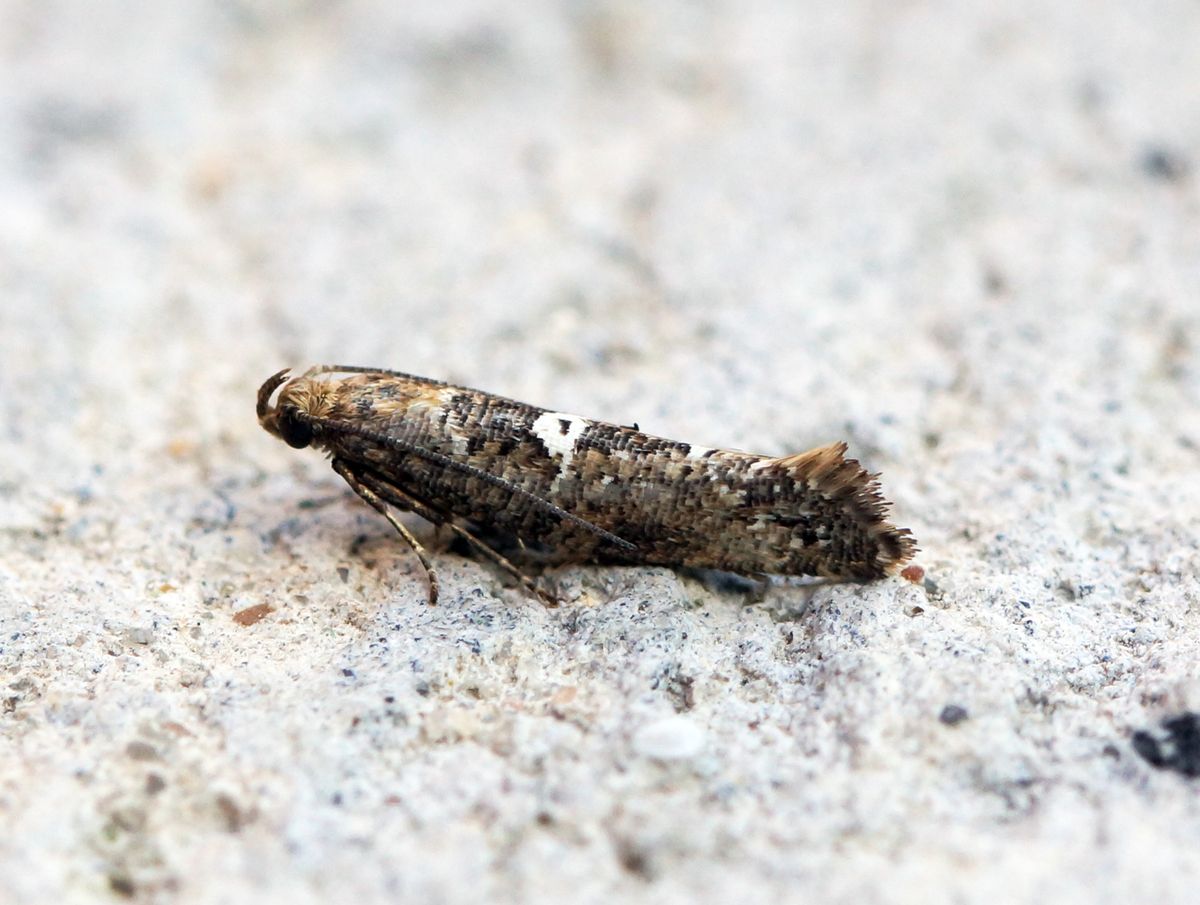
How to identify leek moth
An invasive moth spreading through the Northeast and parts of Canada whose larvae mine and tunnel into leek, onion, and garlic leaves and bulbs, leaving windowed leaves and frass-filled tunnels.
Crops attacked by leek moth
Leek, Onion, Garlic, Chives.
Young larvae mine inside leaves; older larvae tunnel into the bulb or leaf sheath, leaving ragged holes, papery windows, and frass that invites rot.
Life cycle
- Overwintering adult (Winter (in debris)) — None.
- Adults emerge (Spring) — Lay eggs on allium leaves.
- Larva (2-3 weeks) — Mines and tunnels leaves and bulbs; the destructive stage.
- Multiple generations (Through summer/fall) — Up to three generations per year in affected regions.
Natural, organic leek moth control
- 1. Row cover from planting · medium effort
In regions where leek moth is established, covering allium beds prevents egg-laying.
When: From transplant/seeding
- 2. Remove and destroy damaged leaves · low effort
Cutting out mined or tunneled leaves as soon as spotted removes larvae before they mature.
When: Weekly scouting
Fastest-fix products
- Fine mesh row cover — The most effective control where leek moth is present. · Garden centers, Amazon
Prevention
- Check with your local extension office to see whether leek moth is established in your area before assuming another allium pest.
- Destroy allium crop debris promptly after harvest.