
White grub identification & organic control
Phyllophaga spp. (May/June beetle)
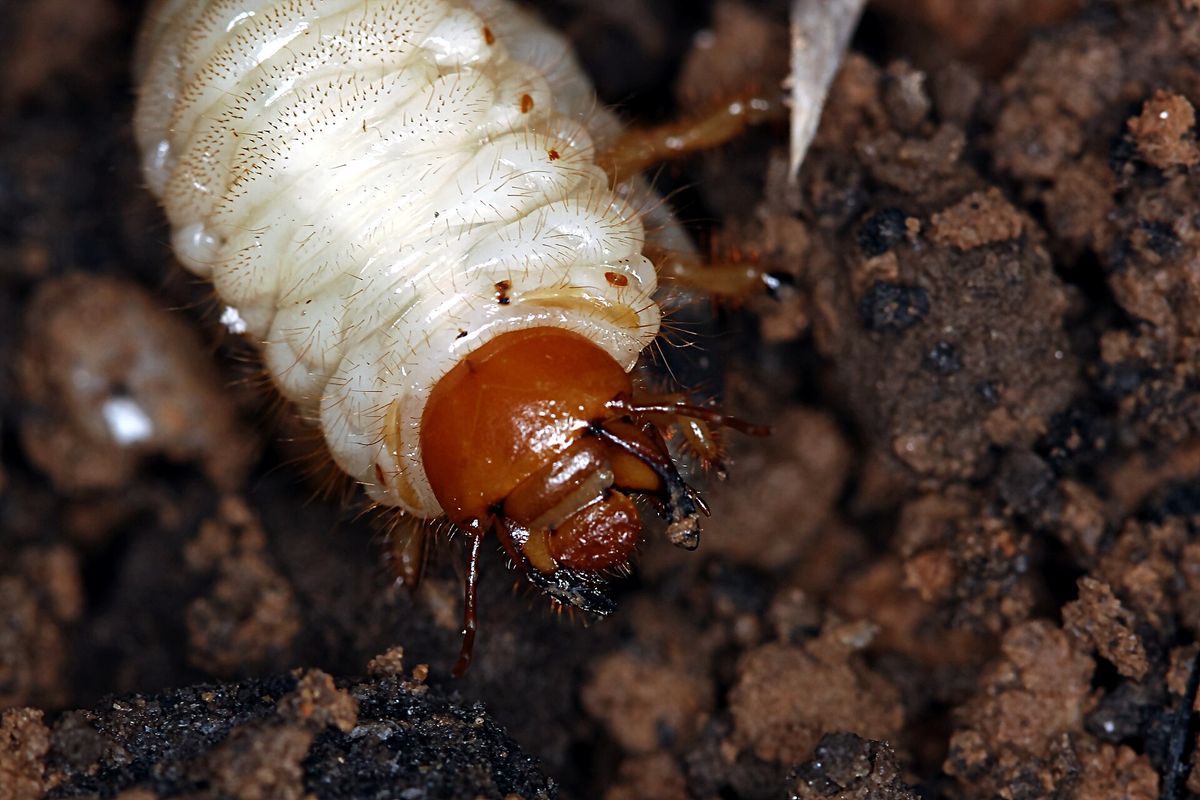
How to identify white grub
A plump, C-shaped white larva with a brown head, living in soil and feeding on grass and vegetable roots. It is the larval stage of May and June beetles and is a favorite food of skunks, moles, and birds, whose digging is often the first sign of a grub problem.
Crops attacked by white grub
Lawn/turf, Potato, Sweet corn, Strawberry.
Chews plant roots below the surface, causing wilting, stunted growth, and patches of turf that lift like carpet; damage is often blamed on drought until roots are inspected.
Life cycle
- Egg (Early summer) — Laid in soil; none.
- Larva (grub) (Late summer–next spring) — The root-feeding stage; can span more than a year.
- Pupa (Spring) — None.
- Adult beetle (Early summer) — Feeds on leaves at night; lays next season's eggs.
Natural, organic white grub control
- 1. Beneficial nematodes or milky spore · medium effort
Apply to moist turf and beds in late summer when young grubs are near the surface.
When: Late summer
- 2. Water less in dry spells · low effort
Grubs favor moist soil for egg-laying; letting turf dry out some in midsummer reduces survival.
When: Midsummer
- 3. Let predators work · low effort
Skunks, moles, and birds happily clear grubs; tolerate some digging as free pest control.
When: Ongoing
Fastest-fix products
- Beneficial nematodes (Heterorhabditis bacteriophora) — The standard organic grub control; effective against young larvae. · Arbico Organics, Amazon
Prevention
- Keep turf and beds from staying constantly damp in midsummer egg-laying season.
- Check root balls of struggling plants for C-shaped grubs before assuming drought stress.