Raspberry crown borer identification & organic control
Pennisetia marginata
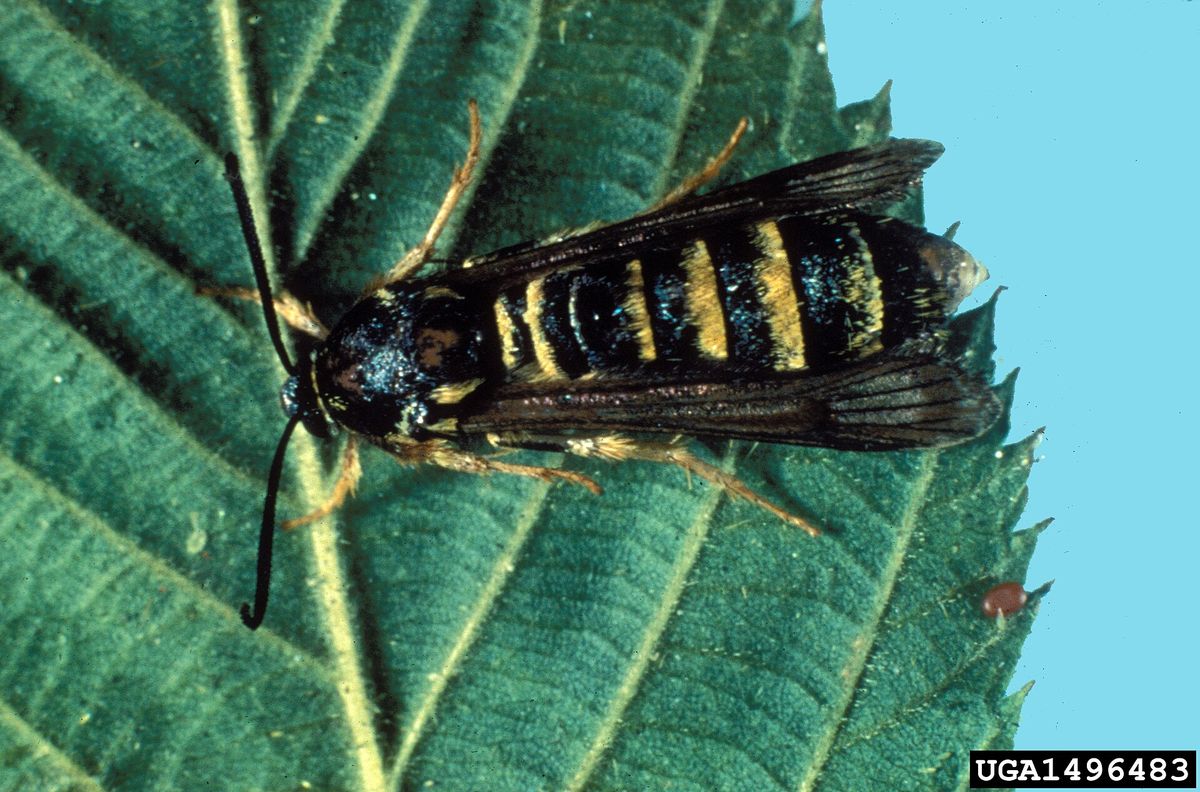
How to identify raspberry crown borer
A clearwing moth larva that spends up to two years tunneling in raspberry and blackberry canes and crowns, causing canes to wilt and snap at the base.
Crops attacked by raspberry crown borer
Raspberry, Blackberry.
Larvae tunnel into the crown and lower cane, girdling tissue so canes wilt in late summer and snap easily at the soil line.
Life cycle
- Egg (Late summer–fall) — Laid on leaf undersides.
- Larva (year 1) (Fall–following summer) — Feeds in the bark and crown area.
- Larva (year 2) (Second fall–spring) — Tunnels deeper into the crown; most damaging period.
- Adult moth (Late summer) — Mimics a yellowjacket; lays next generation's eggs.
Natural, organic raspberry crown borer control
- 1. Remove and destroy wilted canes at the base · medium effort
Cut and burn or trash (not compost) any cane that wilts suddenly in late summer, since a larva is usually inside near the crown.
When: As soon as wilting appears
- 2. Keep the planting weeded and thinned · low effort
Reduces egg-laying sites and improves airflow, making the planting less attractive.
When: Ongoing
Prevention
- Inspect new canes from nurseries closely; borers can be introduced on infested stock.
- Renovate old, declining bramble patches rather than letting them persist for many years.