Wild turkey identification & organic control
Meleagris gallopavo
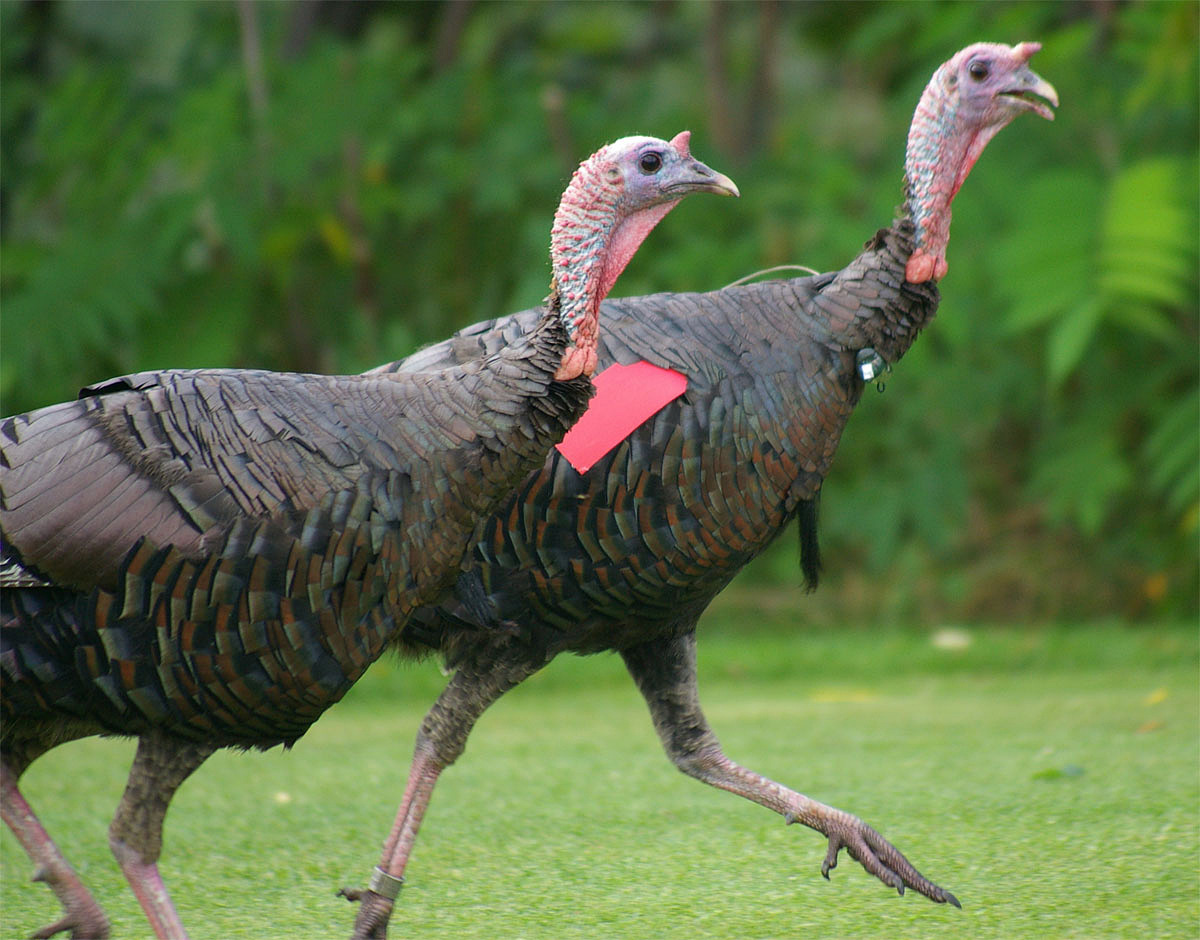
How to identify wild turkey
A large native ground-forager that travels in flocks and scratches through mulch and beds hunting insects, seeds, and greens. Wild turkeys are a game species managed by state wildlife agencies, so lethal control outside a licensed hunting season is generally illegal.
Crops attacked by wild turkey
Sweet corn, Lettuce, Berry, Tomato seedling.
Scratches through mulch and soil for grubs and seeds, which uproots seedlings, and will peck at ripening tomatoes, berries, and corn low on the stalk.
Life cycle
- Winter flocking (Winter) — Large mixed flocks forage widely; can scratch through mulched beds.
- Spring breeding/nesting (Spring) — Flocks break up; hens nest on the ground nearby.
- Poults foraging with hen (Summer) — Family groups forage through gardens for insects and seedlings.
- Fall flocking (Fall) — Flocks re-form and hit ripening corn and fallen fruit.
Natural, organic wild turkey control
- 1. Fence the vegetable garden · medium effort
A 4-5 ft fence (turkeys can fly but usually won't bother if the ground approach is blocked) keeps flocks out of beds.
When: Before planting season
- 2. Don't feed them, intentionally or not · low effort
Clean up spilled birdseed and pet food; turkeys that find easy food return daily and lose their wariness.
When: Ongoing
- 3. Haze early and often · low effort
Loud noise, a dog, or an open umbrella breaks up a flock's habit of visiting before they settle in; consistency matters more than intensity.
When: First sightings
Fastest-fix products
- 4-5 ft garden fencing — Physical barrier turkeys generally won't bother flying over for a ground-level food source. · Farm/hardware stores
Prevention
- Never feed turkeys deliberately; it habituates them and can make them bold or aggressive.
- Fence beds rather than relying on scare tactics alone.
- Contact your state wildlife agency before any lethal control: turkeys are a regulated game species.