
Squash vine borer identification & organic control
Melittia cucurbitae
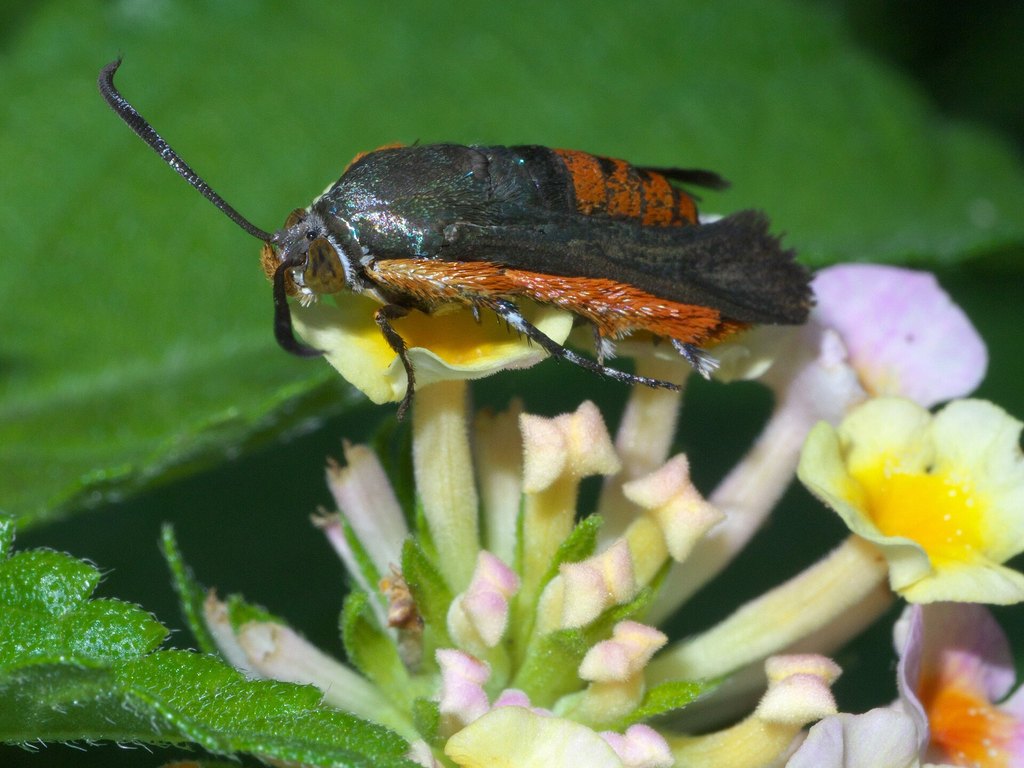
How to identify squash vine borer
The adult is a stunning orange-and-black day-flying moth that looks like a wasp. Its larva tunnels inside squash stems. You rarely see the borer, only the sudden wilt of a healthy plant in mid-summer.
Crops attacked by squash vine borer
Zucchini, Yellow squash, Pumpkin, Winter squash (especially C. pepo & C. maxima).
The 1-inch cream-colored larva bores into the base of the stem and eats the vascular tissue, cutting off water and killing the whole vine above the entry hole. Look for 'sawdust' (frass) at the stem base.
Life cycle
- Overwintering pupa (Winter (in soil)) — Cocoon 1-2 in deep in the soil where last year's plants stood.
- Adult moth flight (Late June → July (South earlier)) — Lays single orange-brown eggs on stems, near base.
- Larva inside stem (July → August) — 3-4 weeks of tunneling. Plant wilts suddenly. The diagnostic sign.
- Pupation in soil (Late summer → fall) — One generation in the North; two in the South.
Natural, organic squash vine borer control
- 1. Wrap stem base in foil at transplant · low effort
Wrap the bottom 4-6 in of stem with aluminum foil right at planting. The moth cannot lay eggs on foil.
When: At transplant
- 2. Yellow sticky traps to time your defense · low effort
The moth is attracted to yellow. When you catch one, you have 5-7 days before eggs hatch: time to spray Bt or wrap stems.
When: Late June onward
- 3. Inject Bt into wilting stems · high effort
If a vine wilts, look for a hole and sawdust. Split the stem lengthwise with a razor, kill the larva, bury the split under moist soil: the vine often re-roots.
When: First sign of wilt
- 4. Plant a second crop July 4 · low effort
A second squash sowing after peak moth flight can miss the borer entirely.
When: Early July
Fastest-fix products
- Yellow sticky traps (10-pack) — Catches adult moths so you know exactly when eggs will hatch. Also monitors cucumber beetles. · Amazon, garden centers
- Monterey Bt — Injected into stem or sprayed on leaves; kills any larva that eats plant tissue. · Garden centers, Amazon
Prevention
- Grow resistant Cucurbita moschata varieties (butternut, tromboncino). Their solid stems shrug off borers.
- Till or hand-turn soil in fall to expose overwintering pupae.
- Rotate squash to a new bed every year.