
Carpenter bee identification & organic control
Xylocopa spp.
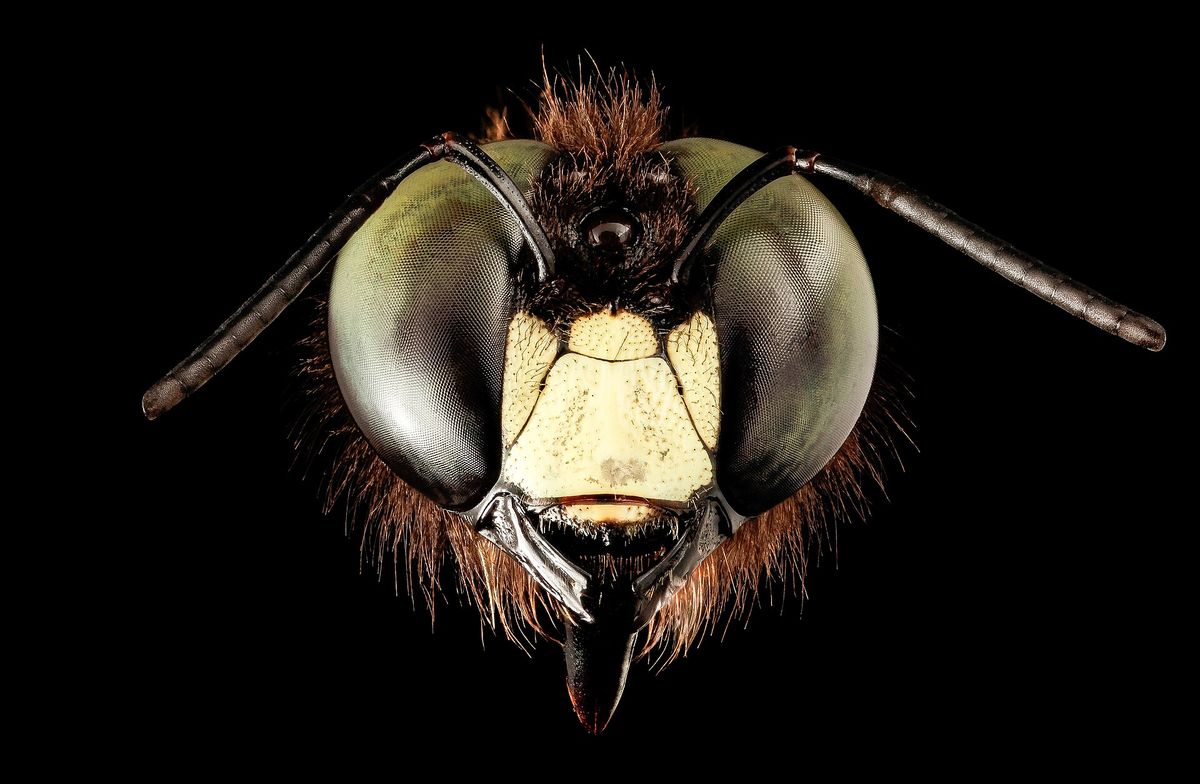
How to identify carpenter bee
A large, mostly black bee resembling a bumblebee that bores perfectly round half-inch holes into untreated wood (fences, arbors, raised bed frames) to nest, rather than eating garden plants. Males hover aggressively but cannot sting; females can but rarely do unless handled.
Crops attacked by carpenter bee
.
Does not feed on garden crops; adults visit flowers for nectar and pollen (making them useful pollinators) but the females tunnel into exposed, untreated softwood structures to lay eggs.
Life cycle
- Overwintering adult (Winter (in old tunnels)) — None.
- Adults emerge and mate (Spring) — Females bore new tunnels or reuse old ones in wood structures.
- Egg & larva (in wood) (Spring–summer) — Feeds on stored pollen inside the tunnel, not on plants.
- New adults (Late summer) — Emerge, feed on flowers, then overwinter in tunnels.
Natural, organic carpenter bee control
- 1. Paint or seal exposed wood · medium effort
Carpenter bees strongly prefer bare, weathered wood; painted or stained surfaces are far less attractive.
When: At construction or yearly touch-up
- 2. Fill old tunnels after bees leave · low effort
Plug abandoned holes with wood filler in late fall to discourage reuse next year.
When: Fall, after activity stops
- 3. Tolerate light activity · low effort
As pollinators with minimal structural impact in small numbers, many gardeners simply leave a few nesting bees alone.
When: Ongoing
Fastest-fix products
- Exterior wood sealant or paint — The most effective long-term deterrent. · Hardware stores
Prevention
- Use painted, stained, or composite wood for arbors, fences, and raised beds where practical.
- Fill old nest holes each fall before bees return to reuse them.