
Corn earworm identification & organic control
Helicoverpa zea
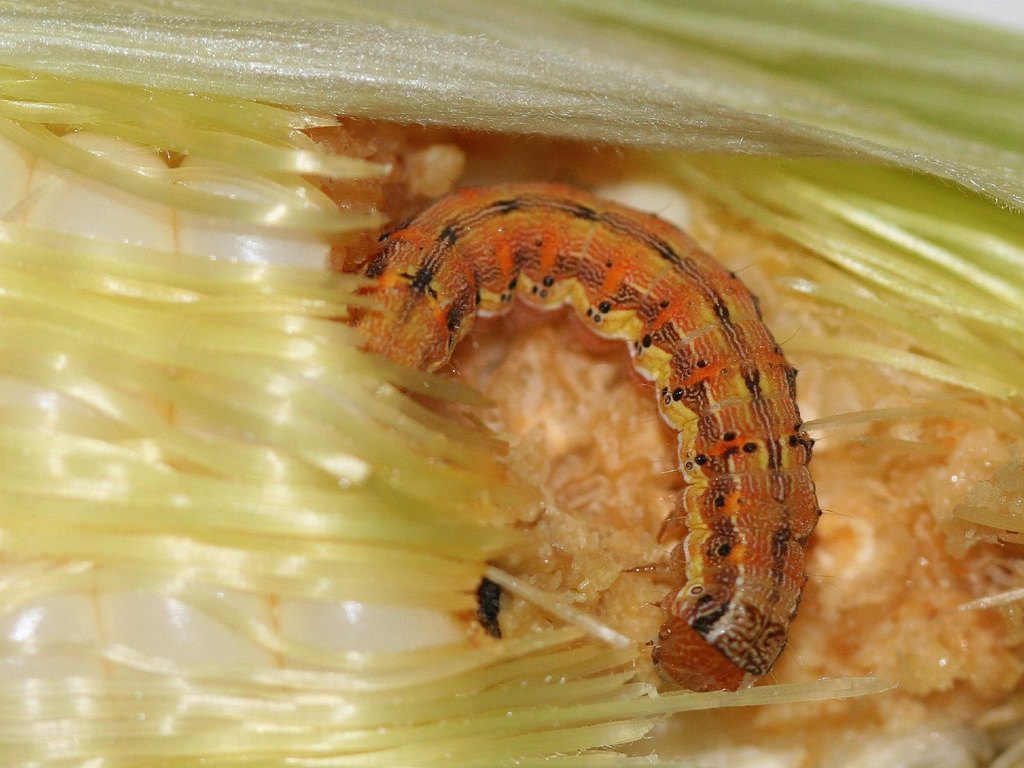
How to identify corn earworm
One caterpillar, three names: it's the corn earworm in corn, the tomato fruitworm in tomatoes, and the bollworm in cotton. Tan, green, or pink with fine bristles and light stripes, it burrows into the tip of a corn ear or the shoulder of a tomato and eats from the inside.
Crops attacked by corn earworm
Corn, Tomato, Pepper, Bean, Okra.
Hatchlings crawl down corn silks and eat kernels at the ear tip, leaving frass and opening the ear to mold. In tomatoes and peppers they bore a clean hole near the stem and hollow out the fruit.
Life cycle
- Overwintering pupa (Winter (zone 7+ soil)) — None; northern gardens are re-invaded by migrating moths.
- Adult moth (Late spring → summer) — Tan moth lays single eggs on fresh corn silks and tomato foliage.
- Larva (Summer) — 2-3 weeks of tunneling in ears and fruit. The damaging stage.
- Pupation in soil (Late summer → fall) — Drops to soil; 2-4 overlapping generations per season in the South.
Natural, organic corn earworm control
- 1. Mineral oil on the silks · low effort
5 drops of food-grade mineral oil (a little Bt mixed in helps) into the silk channel 3-5 days after silks appear. Suffocates the hatchling before it reaches kernels.
When: Once silks brown at the tip
- 2. Plant tight-husk varieties · low effort
Varieties with long, tight husk cover (e.g. Silver Queen types) physically block entry.
When: At seed selection
- 3. Bt kurstaki on silks and tomato clusters · medium effort
Spray every 4-5 days during silking / fruit set; the hatchling eats it before it tunnels in.
When: Silking and fruit set
- 4. Trap and time with pheromone lures · medium effort
A pheromone trap tells you the exact week moths arrive so sprays land when they matter.
When: Mid-season
Fastest-fix products
- Food-grade mineral oil + dropper — The classic organic sweet-corn fix; one bottle treats hundreds of ears. · Pharmacy, grocery
- Bt kurstaki (Dipel/Thuricide) — Kills only caterpillars. Safe around bees and beneficials. · Garden centers
- Helicoverpa zea pheromone trap — Times your sprays instead of guessing. · Great Lakes IPM, Arbico
Prevention
- Plant sweet corn early so silking beats peak moth flight.
- Cultivate soil after harvest to destroy pupae.
- Scout tomato shoulders weekly: one hole means more eggs nearby.