
Mole identification & organic control
Scalopus aquaticus / Talpidae
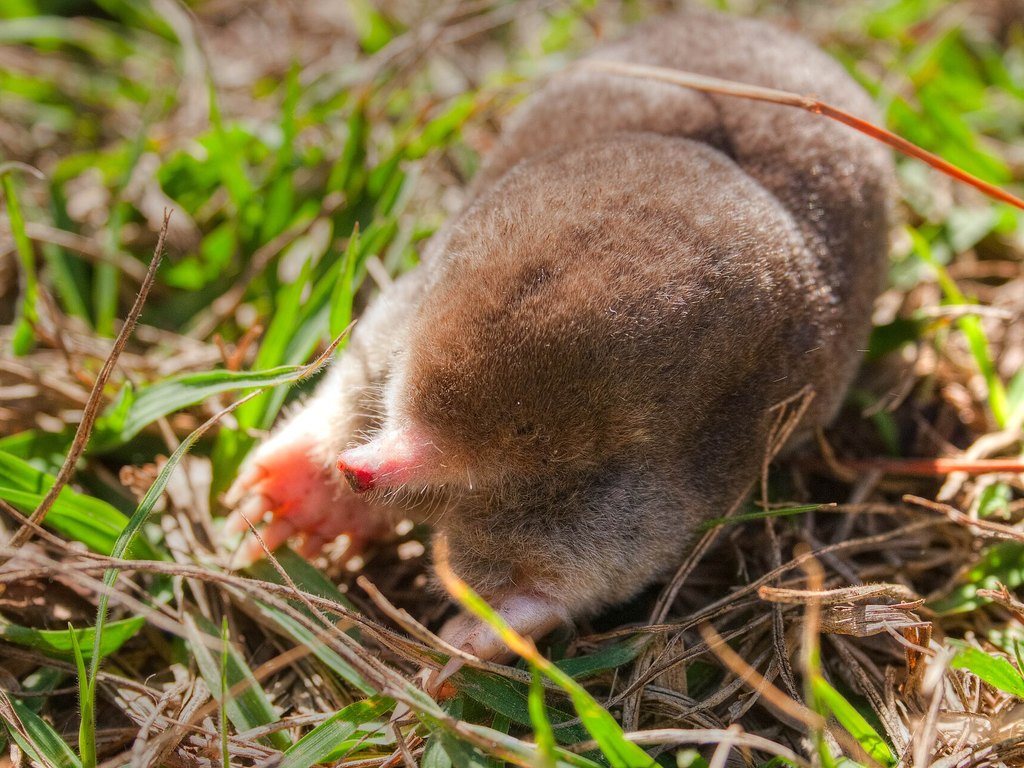
How to identify mole
The eastern mole is a velvet-furred, insect-eating digger with broad, spade-like front paws and a pointed snout. It is not a garden pest in the usual sense: it does not eat plants, and it consumes large numbers of beetle grubs and cutworms. Its offense is cosmetic. Raised, squishy feeding tunnels and volcano-shaped soil mounds across lawns and beds. Many gardeners mistake vole damage for mole damage, so a proper ID can save you from the wrong battle.
Crops attacked by mole
Lawn (surface tunnels), Seedlings disturbed by tunneling.
Does NOT eat plants. Damage is loose soil above shallow feeding tunnels and cone-shaped soil mounds. Vole damage is often blamed on moles.
Life cycle
- Breeding (Feb-March) — Long straight 'travel' tunnels appear as males range for mates.
- Young disperse (May-June) — Burst of new surface tunnels and molehills as juveniles claim ground.
- Summer (deep) (July-Sept) — Tunnels drop deeper in dry heat; surface damage mostly stops.
- Winter (active below frost) (Oct-Jan) — No hibernation. They follow earthworms below the frost line, heaving beds at thaw.
Natural, organic mole control
- 1. Tolerate them: they eat pest grubs · low effort
Moles are a sign of healthy soil biology. Their tunnels aerate soil and their diet includes Japanese-beetle grubs and cutworms. Firm surface tunnels back down with a roller.
When: Anytime
- 2. Reduce grub populations with milky spore · low effort
Fewer grubs = less food = moles leave. Apply Paenibacillus popilliae once to establish for years.
When: Late summer application
- 3. Talpirid or Victor mole traps · medium effort
Locate an active main tunnel (flatten a section; recheck 24 hrs later: if raised again, it is active). Set scissor-jaw or harpoon trap over the tunnel per instructions.
When: Damaging main tunnels only
Fastest-fix products
- Victor Out O'Sight scissor mole trap — The professional standard; consistent kills on active tunnels. · Amazon, hardware stores
- MoleMax castor-oil repellent (granular) — Castor oil is the only repellent with reliable field data. Drives moles from treated areas within a week. · Amazon
- Milky spore powder — Long-term soil treatment that removes the grub food source. · Amazon
Prevention
- Diagnose before treating: if plants die from below, blame voles or gophers, not moles.
- Reduce overwatering: moist soil produces more grubs.
- Roll surface tunnels every few days; moles abandon collapsed runs.