American robin identification & organic control
Turdus migratorius
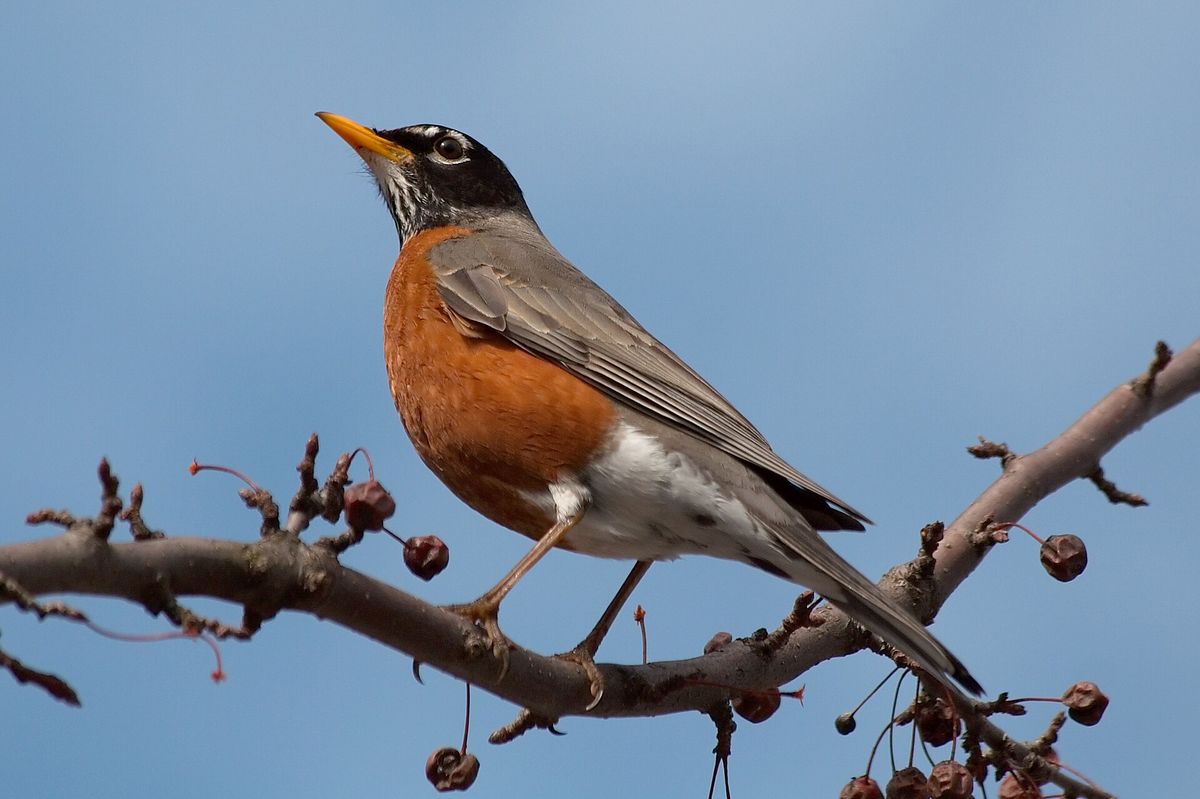
How to identify american robin
A familiar, native thrush best known for hunting earthworms and grubs on open lawn. Robins are federally protected and are overwhelmingly a garden ally: their diet is dominated by insects, grubs, and worms, with fruit becoming a bigger share only in late summer and fall.
Crops attacked by american robin
Blueberry, Cherry, Strawberry, Grape.
Eats large numbers of cutworms, grubs, and other lawn and garden insects most of the year; in mid-to-late summer, flocks will also strip ripening soft fruit.
Life cycle
- Spring arrival & nesting (Early-mid spring) — None; heavy insect and worm foraging on lawns and beds.
- Nestlings (Spring–early summer) — Parents feed young almost entirely insects and worms: a net benefit to the garden.
- Post-fledging flocking (Mid-late summer) — Flocks begin visiting ripening berries and fruit trees.
- Fall flocking & migration (Fall) — Larger flocks feed heavily on fruit before moving south or to winter roosts.
Natural, organic american robin control
- 1. Let them work the lawn and beds most of the season · low effort
Robins remove huge numbers of grubs and cutworms for free; only step in once fruit starts ripening.
When: Spring–early summer
- 2. Netting only on the fruit you can't share · medium effort
Cover high-value berries and cherries as they ripen rather than netting the whole yard.
When: As fruit colors
- 3. Leave some fruit for them · low effort
A native serviceberry, mulberry, or elderberry planted away from the main harvest often pulls robins off your crop fruit entirely.
When: Long-term planning
Fastest-fix products
- Lightweight bird netting — Protects specific fruit plantings without excluding robins from the rest of the garden. · Garden centers, Amazon
Prevention
- Because robins are federally protected and largely beneficial, focus fixes on fruit-ripening season only.
- Plant a sacrificial native fruiting shrub away from the vegetable garden.
- Harvest ripening berries promptly.