
Billbug identification & organic control
Sphenophorus spp.
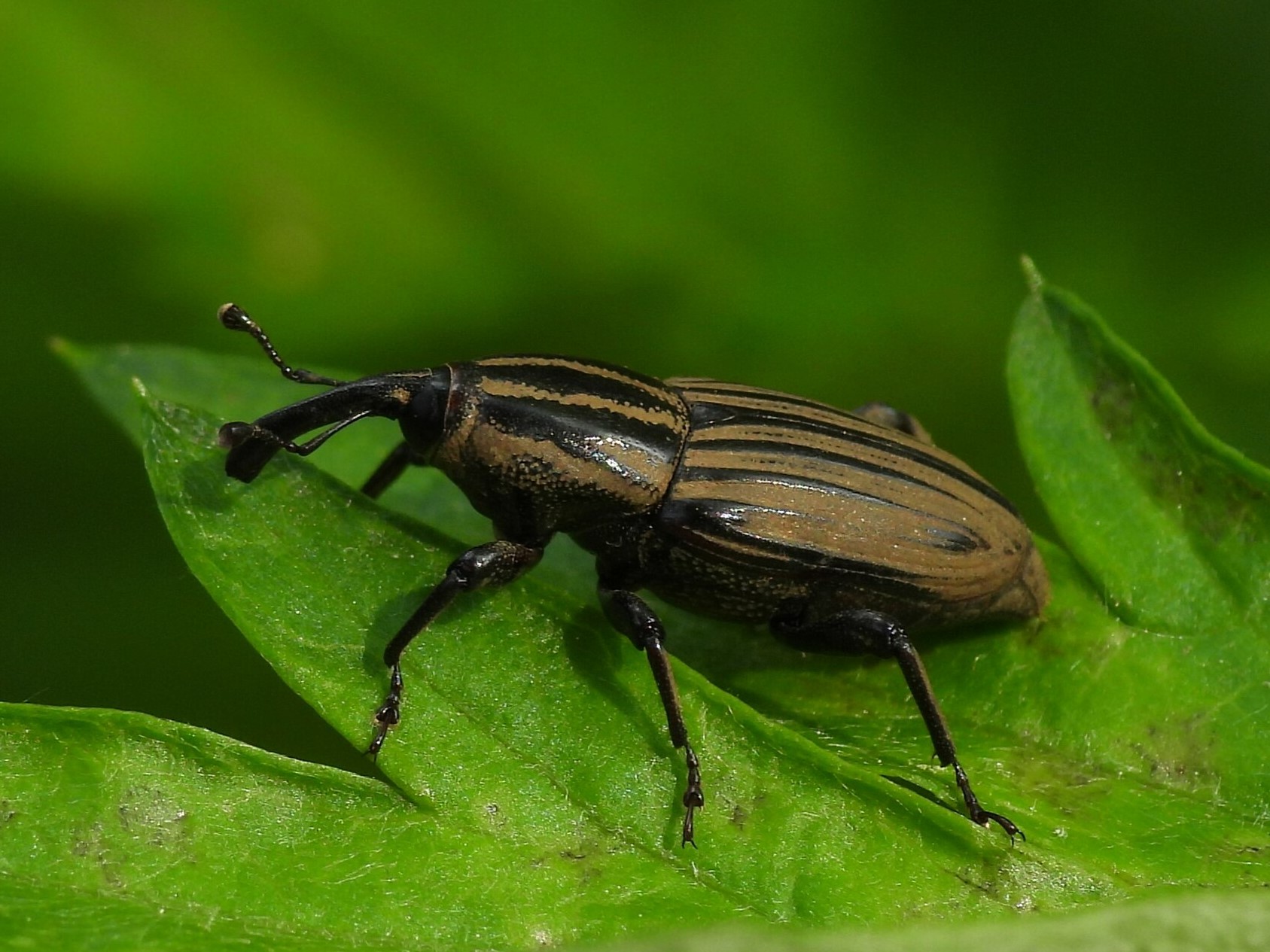
How to identify billbug
A snout-nosed weevil whose legless larvae tunnel inside grass stems and then feed on roots, causing patches of turf that pull up easily and crumble into sawdust-like frass, often mistaken for drought damage.
Crops attacked by billbug
Lawn/turf.
Larvae tunnel inside grass stems near the crown, then move to roots, leaving a sawdust-like frass; damaged turf pulls up like a loose carpet with little root resistance.
Life cycle
- Overwintering adult (Winter (in thatch/debris)) — None.
- Adults emerge (Spring) — Feed lightly on grass stems; lay eggs inside stems.
- Larva (Early-mid summer) — Stem then root feeding; the main damaging stage.
- New generation adults (Late summer) — Feed before seeking winter shelter.
Natural, organic billbug control
- 1. Tug test on damaged patches · low effort
Grass killed by billbugs pulls up easily with little root mass and shows sawdust-like frass at the crown; confirms diagnosis versus drought.
When: When patches appear
- 2. Beneficial nematodes · medium effort
Applied to moist soil, they attack billbug larvae in the root zone.
When: Early-mid summer
- 3. Overseed with endophytic grasses · medium effort
Endophyte-enhanced turf varieties resist billbug feeding better than standard varieties.
When: At overseeding
Fastest-fix products
- Beneficial nematodes (Heterorhabditis bacteriophora) — Targets root-feeding billbug larvae. · Arbico Organics, Amazon
Prevention
- Avoid drought-stressing turf, which makes billbug damage far more visible and severe.
- Overseed thin lawns with endophyte-enhanced grass varieties.