
Black vine weevil identification & organic control
Otiorhynchus sulcatus
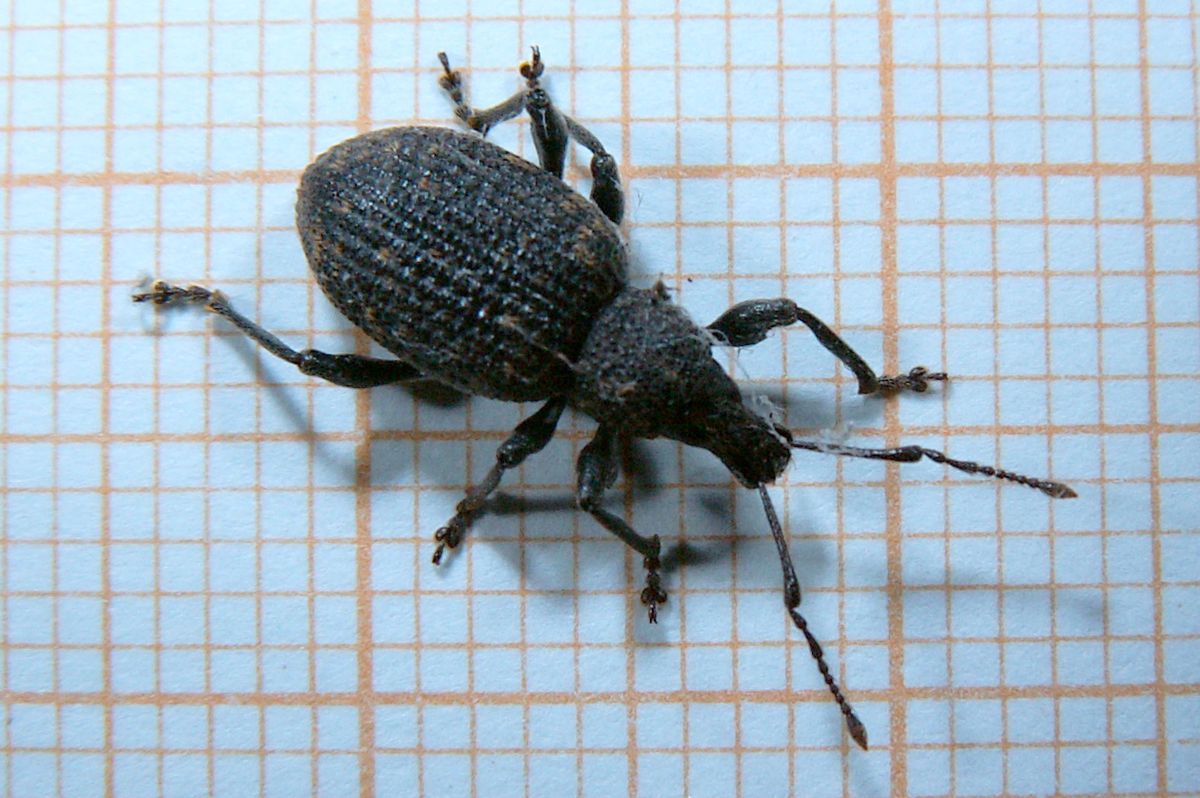
How to identify black vine weevil
A dull black, flightless weevil active at night, notching leaf edges in a distinctive scalloped pattern. Its cream-colored larvae are the more serious threat, feeding on roots and crowns underground.
Crops attacked by black vine weevil
Strawberry.
Adults notch leaf margins at night (mostly cosmetic); larvae feed on roots and crowns below ground, which can kill plants outright, especially in containers and raised beds.
Life cycle
- Overwintering larva (Winter (in soil)) — Feeding continues slowly in mild weather.
- Pupa (Spring) — None.
- Adult weevil (Late spring–summer) — Notches leaf edges at night; hides in soil/mulch by day.
- Egg & larva (Summer–fall) — Larvae hatch and begin root feeding, the main damaging stage.
Natural, organic black vine weevil control
- 1. Nighttime handpicking with a flashlight · medium effort
Adults are flightless and slow; check plants after dark and drop them in soapy water.
When: Late spring–summer evenings
- 2. Beneficial nematodes for larvae · medium effort
Applied to moist soil in late summer, nematodes are highly effective against root-feeding larvae.
When: Late summer
- 3. Sticky barrier bands on containers · low effort
Blocks flightless adults from climbing back onto plants after falling or being knocked off.
When: Active season
Fastest-fix products
- Beneficial nematodes (Heterorhabditis bacteriophora) — The standard organic control for vine weevil larvae in soil and containers. · Arbico Organics, Amazon
Prevention
- Inspect new container plants and nursery stock for notched leaves before buying.
- Avoid reusing potting soil from an infested container without treating it first.