
Fall armyworm identification & organic control
Spodoptera frugiperda
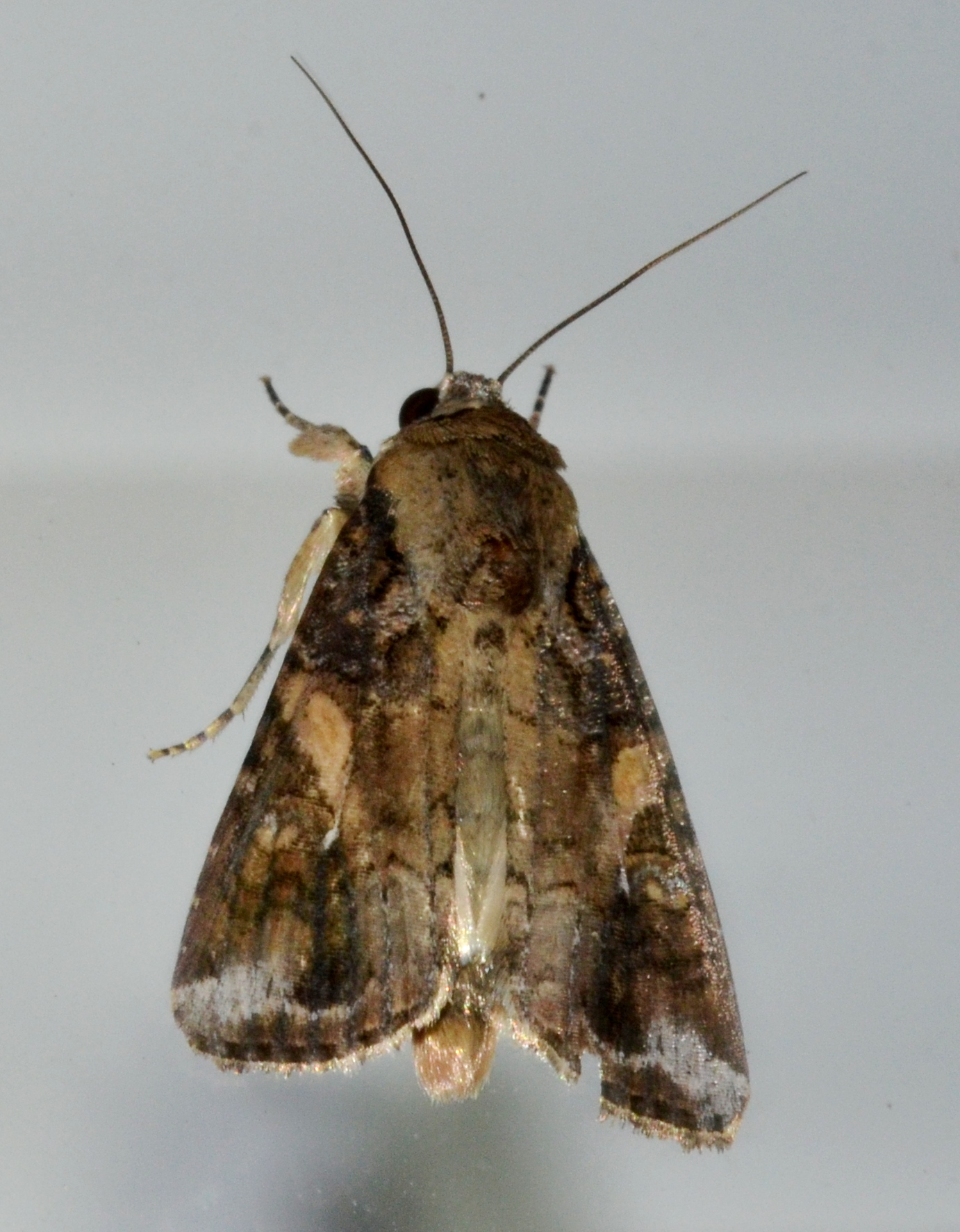
How to identify fall armyworm
A striped caterpillar with a distinctive inverted 'Y' on its head that moves through fields in large numbers, stripping foliage as it goes. It cannot survive northern winters but migrates north each year on storm fronts.
Crops attacked by fall armyworm
Sweet corn, Bush bean, Lettuce, Spinach.
Chews leaves and burrows into corn whorls and ear tips, leaving ragged holes and sawdust-like frass; large larvae can defoliate a bed within days when numbers spike.
Life cycle
- Egg mass (Summer–fall) — Fuzzy egg clusters on leaves; none yet.
- Larva (6 instars) (2-3 weeks) — Rapid, heavy feeding; late instars do most damage.
- Pupa in soil (1-2 weeks) — None.
- Adult moth (Migrates north each summer) — Lays the next generation; several per season in the South.
Natural, organic fall armyworm control
- 1. Scout corn whorls · low effort
Check for ragged holes and frass in whorls before larvae move deep inside where sprays can't reach.
When: Weekly in whorl stage
- 2. Bt kurstaki or spinosad · medium effort
Apply while larvae are small and exposed; reapply after rain.
When: At first sign of feeding
- 3. Encourage birds and parasitic wasps · low effort
Leave a few flowering natives nearby; birds strip armyworms out of whorls readily.
When: All season
Fastest-fix products
- Monterey Bt — Effective on young larvae; safe for pollinators. · Garden centers, Amazon
- Spinosad spray — Works on larger larvae Bt may not fully control. · Garden centers, Amazon
Prevention
- Plant early to get corn past the whorl stage before peak fall armyworm flights.
- Till residue after harvest to destroy overwintering pupae in warm regions.
- Watch pheromone trap counts published by your state extension in late summer.