
Termites (near raised beds) identification & organic control
Reticulitermes spp.
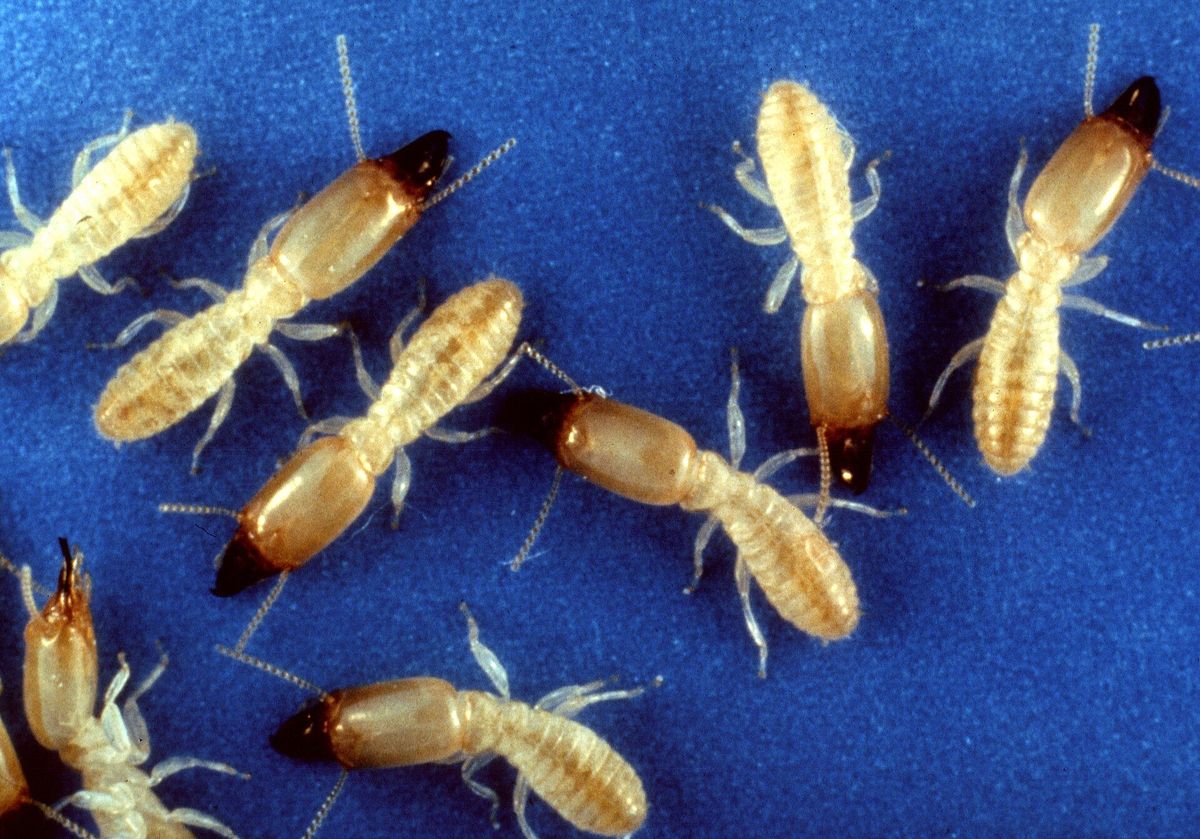
How to identify termites (near raised beds)
Subterranean termites do not eat living garden plants, but they will hollow out untreated wood raised-bed frames, fence posts, and mulch piled against a home's foundation. The real risk is structural, not to crops.
Crops attacked by termites (near raised beds)
.
Workers tunnel through cellulose (wood, cardboard, some mulches) in contact with soil, hollowing raised bed frames and any wood touching the ground near the garden.
Life cycle
- Underground colony (Year-round) — Colony feeds continuously below ground and inside wood.
- Winged swarmers (alates) (Spring (varies by region)) — Swarm to start new colonies; a strong sign of a nearby nest.
- Workers rebuild galleries (Ongoing) — Continued wood damage after a swarm.
Natural, organic termites (near raised beds) control
- 1. Keep wood off the soil · medium effort
Use metal, composite, or a plastic liner between raised-bed soil and wood frames to break the contact termites need.
When: At bed construction
- 2. Pull mulch back from the foundation and bed frames · low effort
Keep a gap between wood/mulch and structures to remove easy pathways.
When: Ongoing
- 3. Call a licensed pest control operator for structural colonies · high effort
If termites are found in or near a home foundation, this is a job for a professional, not a garden-scale fix.
When: If found near the house
Fastest-fix products
- Raised bed liner (heavy plastic or metal frame) — Prevents direct wood-to-soil contact that invites termites. · Hardware stores, garden centers
Prevention
- Build raised beds from cedar, metal, or composite rather than untreated softwood where termites are common.
- Don't pile mulch or firewood against the house or bed frames.