
Sawfly (roseslug) identification & organic control
Endelomyia aethiops and related species
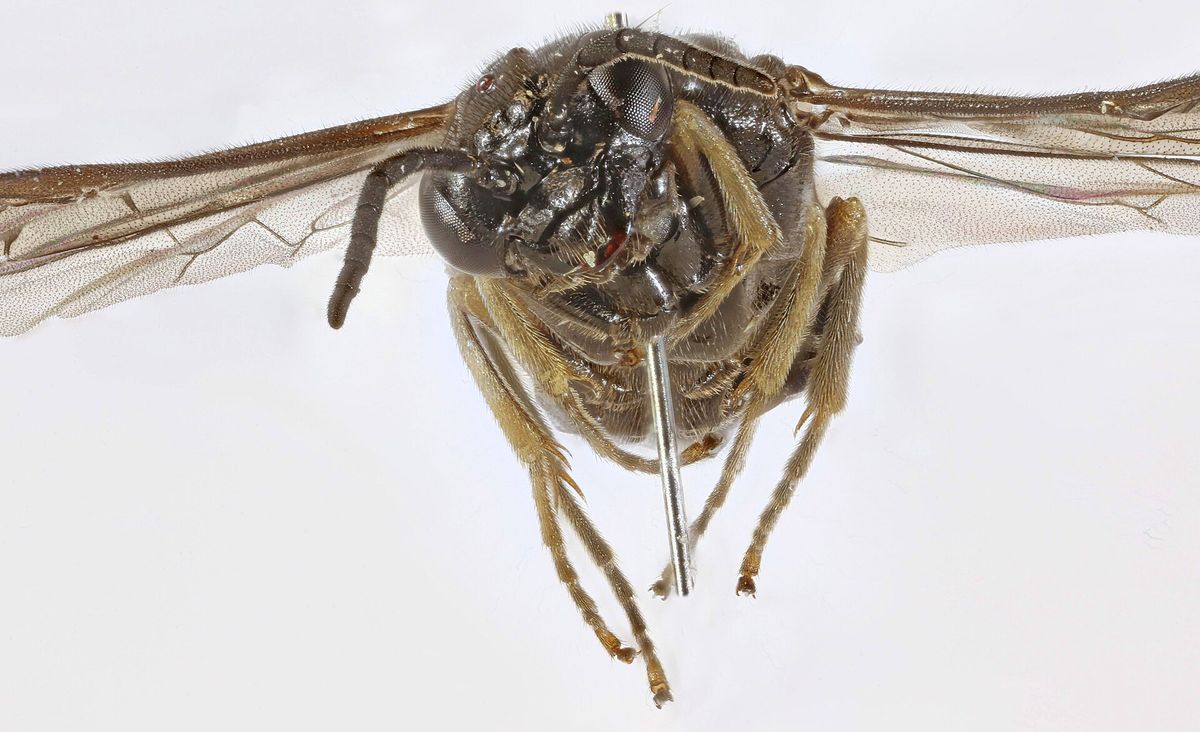
How to identify sawfly (roseslug)
The larva looks like a small green caterpillar or slug but is actually a wasp relative; it skeletonizes leaves from the underside, leaving a lacy, translucent 'window' pattern. Not a true caterpillar, so Bt does not control it.
Crops attacked by sawfly (roseslug)
Rosemary, Pear, Cherry.
Larvae rasp away the lower leaf surface, leaving papery, translucent patches that later turn brown and skeletonized; heavy feeding can defoliate small plants.
Life cycle
- Overwintering cocoon (Winter (in soil)) — None.
- Adult sawfly (Spring) — Lays eggs in leaf tissue with a saw-like ovipositor.
- Larva (3-4 weeks) — Skeletonizing feeding; the destructive stage.
- Second generation (Mid-late summer) — A second round in many regions.
Natural, organic sawfly (roseslug) control
- 1. Hose off larvae · low effort
A strong water spray knocks larvae off leaves; they rarely climb back up.
When: At first sighting
- 2. Handpick · low effort
Slug-like larvae are slow and easy to remove by hand.
When: Weekly
- 3. Insecticidal soap or spinosad · medium effort
Use if hosing and handpicking aren't keeping pace; Bt will not work since this is a wasp larva, not a caterpillar.
When: Heavier infestations
Fastest-fix products
- Insecticidal soap (OMRI) — Effective on soft-bodied sawfly larvae; note Bt does not work on this pest. · Garden centers, Amazon
Prevention
- Rake and dispose of fallen leaves in fall to remove overwintering cocoons.
- Watch new leaf growth closely each spring for early lacy damage.