
Yellowjacket identification & organic control
Vespula spp.
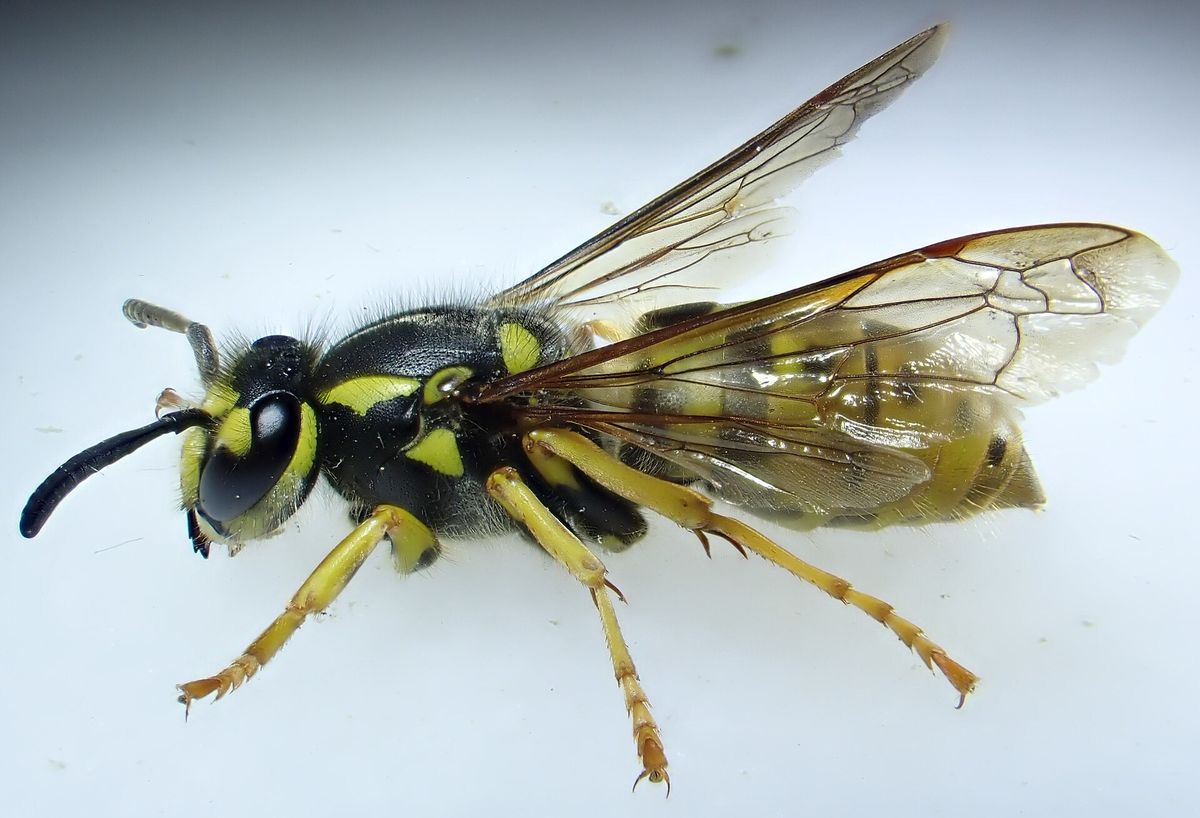
How to identify yellowjacket
A black-and-yellow ground- or cavity-nesting wasp that preys on other insects for most of the season but becomes an aggressive nuisance around ripe fruit and sugary food in late summer and fall. Stings can cause a serious allergic reaction in sensitive people and pets; nests near paths should be treated with caution.
Crops attacked by yellowjacket
Grape, Apple, Peach, Fig.
Does not chew plant tissue; instead scavenges and feeds on ripe, split, or fallen fruit, sometimes enlarging existing bird or insect damage on the fruit surface.
Life cycle
- Overwintering queen (Winter (sheltered)) — None.
- Colony founding (Spring) — Queen builds a small starter nest, hunting insects to feed larvae.
- Colony growth (Summer) — Workers hunt insects, a benefit; little fruit interest yet.
- Peak scavenging (Late summer–fall) — Colony shifts to sugar-seeking; swarms ripe and fallen fruit.
Natural, organic yellowjacket control
- 1. Pick up fallen and overripe fruit daily · low effort
Removing the food source is the most effective way to reduce yellowjacket activity around fruit trees and vines.
When: Late summer through fall
- 2. Protein-bait traps away from harvest areas · low effort
Commercial yellowjacket traps placed well away from where people are working draw workers off the crop.
When: Late summer
- 3. Locate and avoid ground nests · high effort
Nests are often in old rodent burrows; mark and avoid them, and treat only via a professional if near a walkway used by kids or pets.
When: If a nest is found
Fastest-fix products
- Protein/sugar bait traps — Reduces foraging pressure on ripening fruit without broad pesticide use. · Hardware stores, Amazon
Prevention
- Harvest and clean up fruit promptly; do not let fallen fruit accumulate.
- Watch children and pets around unmarked ground nests; anyone with a known sting allergy should carry an epinephrine auto-injector and avoid working near an active nest.