
Flea beetle identification & organic control
Chrysomelidae (Alticini)
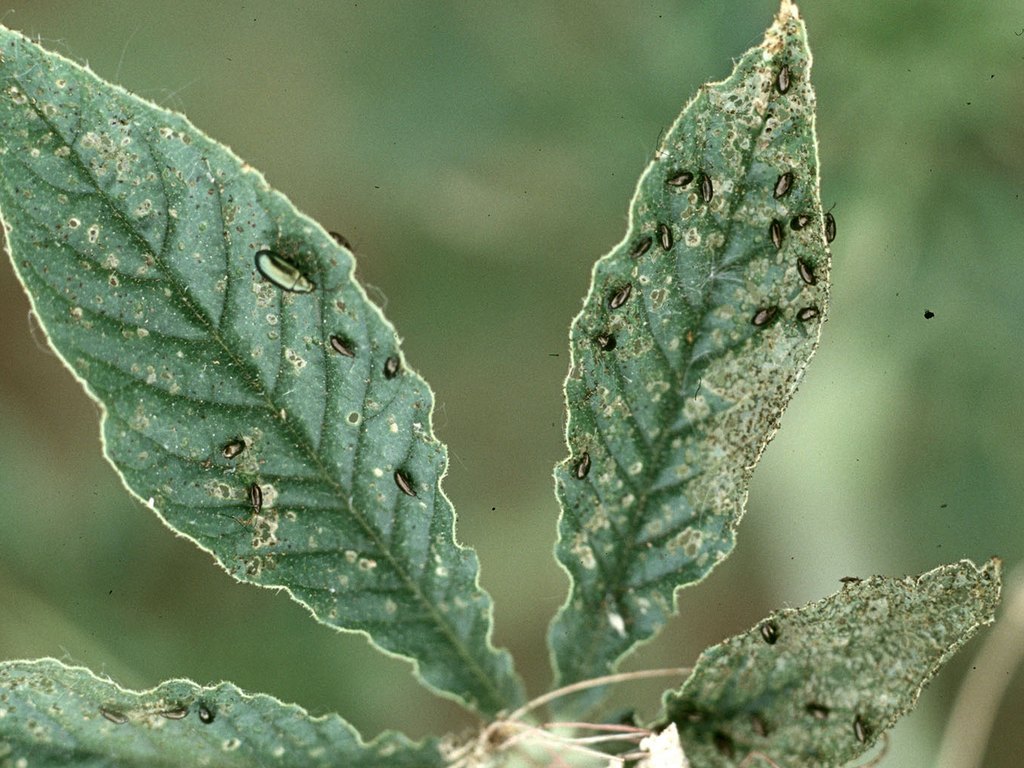
How to identify flea beetle
Tiny (1/16 inch) shiny black or bronze beetles that jump like fleas when disturbed. Individually harmless-looking, but they arrive in swarms and can shred a seedling in days.
Crops attacked by flea beetle
Eggplant, Radish, Arugula, Bok choy, Turnip, Potato.
Chew hundreds of tiny round holes in leaves, giving them a shot-hole appearance. Seedlings can die outright; older plants tolerate the damage but produce less.
Life cycle
- Overwintering adult (Winter) — Hides in leaf litter and soil.
- Adults emerge (Warm spring days) — Hit seedlings and transplants hard: critical stage to protect.
- Larvae in soil (Early summer) — Root-feeding, usually minor above-ground.
- Second-generation adults (Late summer) — Another wave of foliar feeding.
Natural, organic flea beetle control
- 1. Row cover from seeding · medium effort
The only reliable way to protect seedlings. Cover on the day of sowing; seal edges with soil.
When: Sowing → true leaves established
- 2. Delay planting by 2 weeks · low effort
Overwintering adults die if they cannot feed for 2 weeks. Wait past their first emergence.
When: Warm spring
- 3. Trap crop of radish · low effort
Plant radishes as a border 3 ft from eggplant/arugula. Beetles prefer radish leaves: trap and remove.
When: At planting
- 4. Kaolin clay (Surround) · medium effort
White clay coating stops feeding. Reapply after rain.
When: When beetles arrive
Fastest-fix products
- Agribon AG-19 row cover — Only fully-effective barrier for the seedling stage. · Johnny's, Amazon
- Surround WP kaolin clay — Non-toxic, disguises the plant, no residue on your food. · Amazon
Prevention
- Rotate brassicas and nightshades to opposite ends of the garden.
- Clean up all leaf debris in fall. The beetles overwinter there.
- Wood ash sprinkled around seedlings deters early emergence.