
Leafminer identification & organic control
Liriomyza spp.
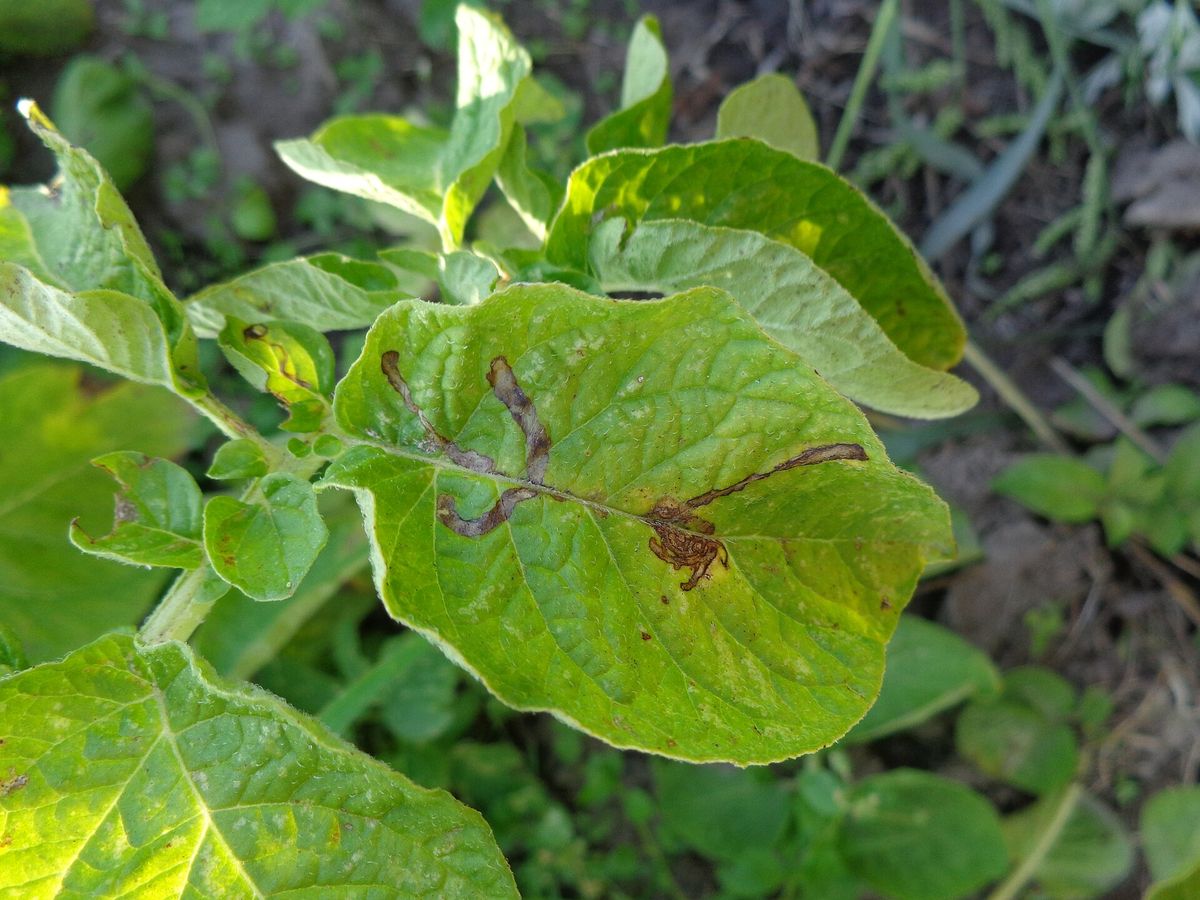
How to identify leafminer
Tiny fly larvae that tunnel between the top and bottom surfaces of a leaf, leaving pale winding trails. Adults are small black-and-yellow flies that puncture leaves to feed and lay eggs.
Crops attacked by leafminer
Spinach, Swiss Chard, Beet, Lettuce, Tomato.
Larvae feed inside the leaf tissue, carving squiggly white-to-brown tunnels. Heavy mining reduces photosynthesis and can ruin the marketable look of leafy greens.
Life cycle
- Egg (Spring–fall) — Laid inside leaf tissue; invisible from outside.
- Larva (mining) (1-3 weeks) — Tunnels expand as the larva grows; the destructive stage.
- Pupa (In soil or on leaf) — No feeding.
- Adult fly (Emerges to restart cycle) — Punctures leaves to feed and lay eggs; several generations per season.
Natural, organic leafminer control
- 1. Squeeze mined leaves · low effort
Pinch the tunnel between thumb and finger to crush the larva inside; remove badly mined leaves.
When: Weekly scouting
- 2. Row cover from seeding · low effort
Lightweight cover keeps adult flies from laying eggs on greens.
When: At seeding
- 3. Yellow sticky cards · low effort
Trap adult flies before they lay eggs; hang just above the canopy.
When: Early season
Fastest-fix products
- Floating row cover — Physical barrier stops the adult fly from ever reaching the leaf. · Garden centers, Amazon
- Yellow sticky traps — Monitors and knocks back adult populations. · Amazon, garden centers
Prevention
- Remove and compost (hot pile) infested leaves promptly.
- Rotate leafy greens to a new bed each season.
- Keep beds weeded; wild mustards and lambsquarters host leafminers.