
Pickleworm identification & organic control
Diaphania nitidalis
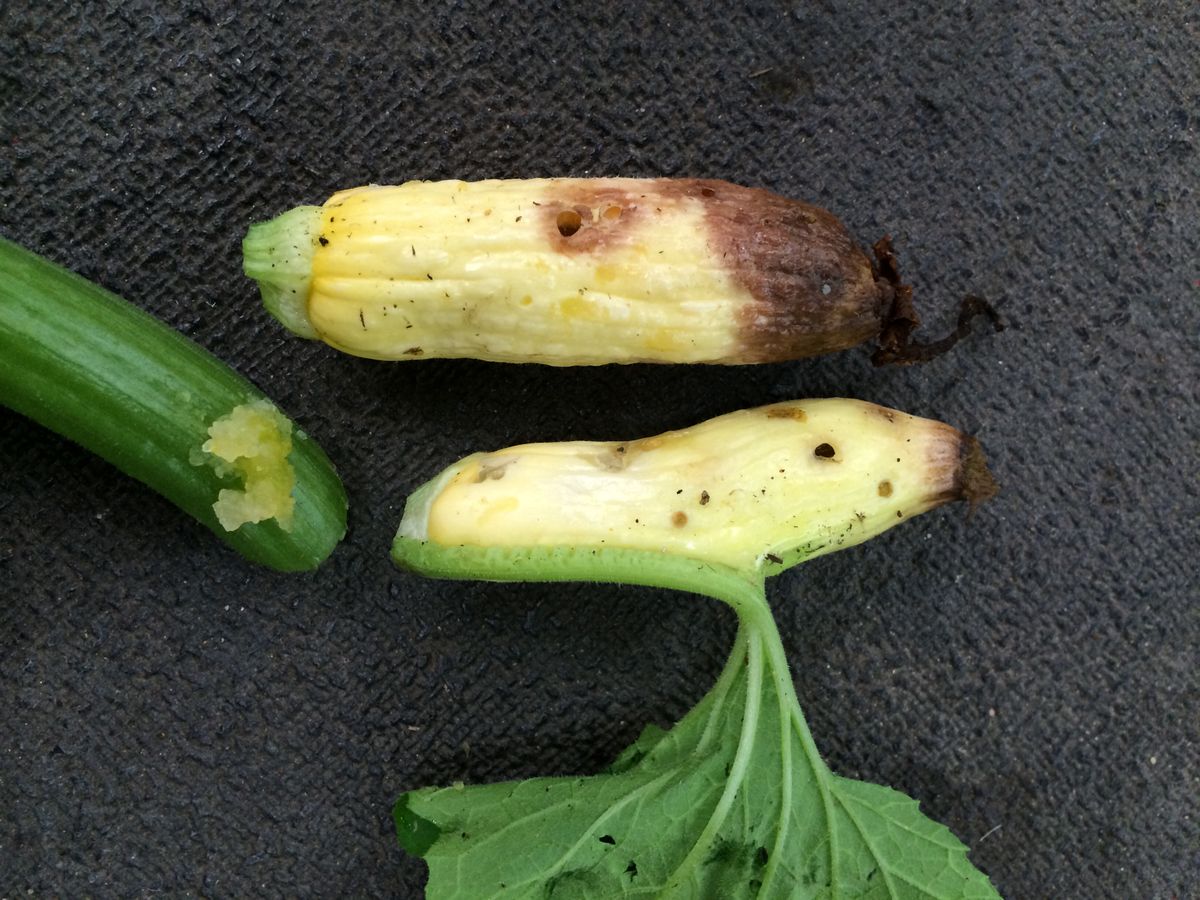
How to identify pickleworm
A yellow-green caterpillar with dark spots that bores into cucurbit flowers, then fruit, most damaging in the warm-season South where it doesn't overwinter but migrates north each year.
Crops attacked by pickleworm
Cucumber, Zucchini, Winter squash, Pumpkin, Cantaloupe / Melon.
Larvae feed first in blossoms, then tunnel into fruit, plugging the entry hole with frass; infested fruit rots quickly from the inside.
Life cycle
- Egg (Warm season) — Laid on buds, flowers, and young fruit.
- Larva (2 weeks) — Feeds in blossoms, then bores into fruit.
- Pupa (About a week) — In a folded leaf.
- Adult moth (Warm months, multiple generations) — Continues cycle through the growing season in the South.
Natural, organic pickleworm control
- 1. Scout blossoms daily during fruiting · low effort
Larvae are easiest to catch and remove while still in flowers, before they tunnel into fruit.
When: Daily in warm season
- 2. Remove and destroy infested fruit promptly · low effort
Once a larva is inside the fruit, sprays won't reach it; removing damaged fruit prevents the larva from completing its cycle.
When: As soon as found
- 3. Bt spray on flowers/young fruit · medium effort
Applied before larvae bore in, Bt can reduce damage in heavy-pressure areas.
When: At first bloom in high-pressure regions
Fastest-fix products
- Monterey Bt — Most effective before larvae tunnel into fruit. · Garden centers, Amazon
Prevention
- In the South, plant early to finish fruiting before pickleworm populations peak in late summer.
- Destroy vines promptly after harvest to prevent late-season buildup.