
Cabbage maggot identification & organic control
Delia radicum
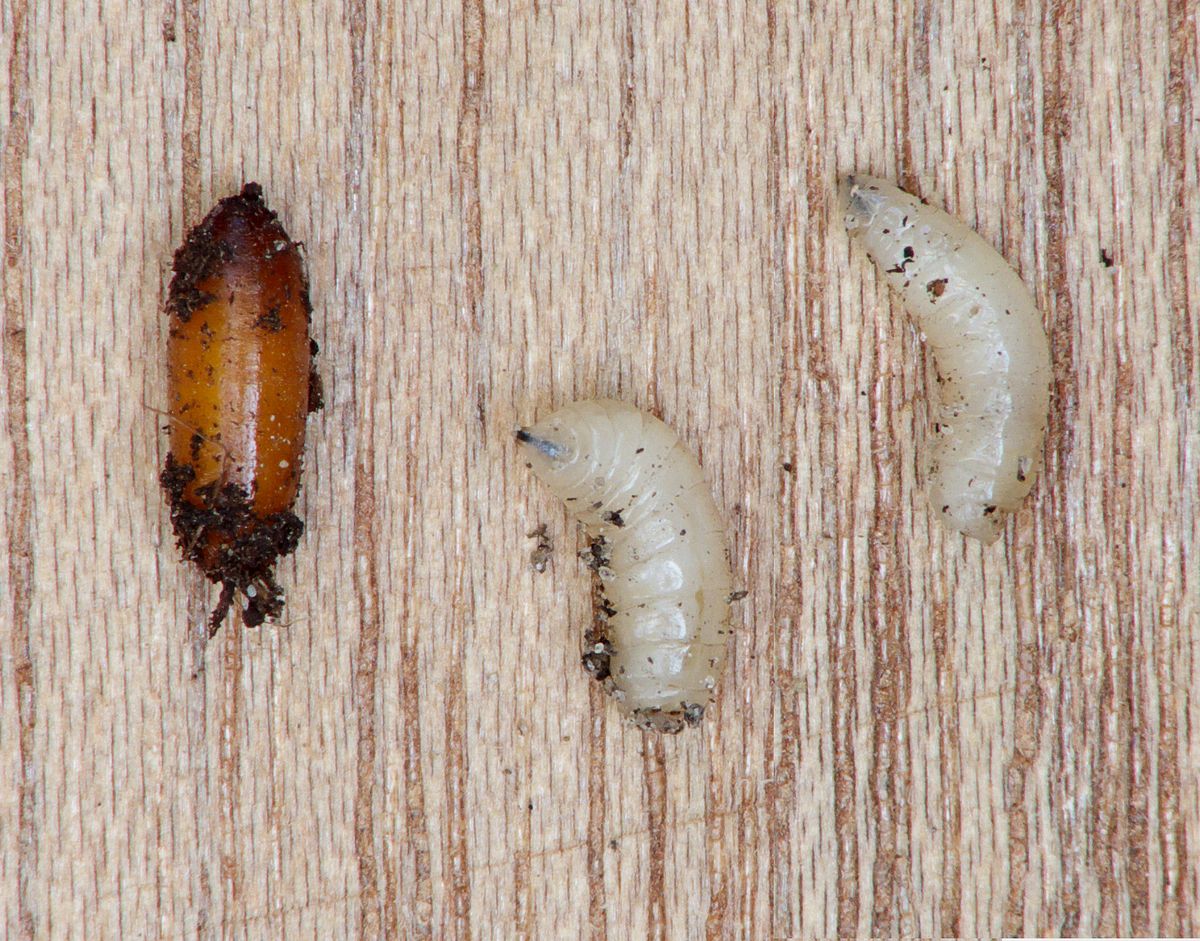
How to identify cabbage maggot
The larva of a small gray fly that resembles a housefly, laying eggs at the base of brassica stems in cool spring soil. Maggots tunnel into roots, and seedlings often wilt and die before any aboveground damage is obvious.
Crops attacked by cabbage maggot
Cabbage, Broccoli, Radish, Turnip, Cauliflower, Brussels sprout.
Small white maggots tunnel through roots and the base of the stem, causing wilting, stunting, and death of young transplants; older plants may survive but yield poorly.
Life cycle
- Overwintering pupa (Winter (in soil)) — None.
- Adult fly (Early spring) — Lays eggs at stem base in cool, moist soil.
- Larva (maggot) (3-4 weeks) — Root and stem tunneling; the destructive stage.
- Second generation (Early summer/fall (regional)) — Additional root damage in cool-season plantings.
Natural, organic cabbage maggot control
- 1. Row cover or collars at transplant · low effort
Place a cardboard or fabric collar around each stem, or cover the whole bed, to block egg-laying flies.
When: At transplant
- 2. Delay spring planting slightly · low effort
Waiting until soil warms past the fly's preferred egg-laying window reduces pressure.
When: Spring planning
- 3. Beneficial nematodes at the root zone · medium effort
Water nematodes into the soil around stems to attack maggots directly.
When: At first wilt
Fastest-fix products
- Row cover + stem collars — Cheap, fully organic exclusion that stops the fly from ever laying eggs. · Garden centers, Amazon
- Beneficial nematodes (Steinernema feltiae) — Targets soil-dwelling maggots. · Arbico Organics
Prevention
- Rotate brassicas away from beds with a maggot history.
- Clean up brassica roots and debris right after harvest.