
Common grackle identification & organic control
Quiscalus quiscula
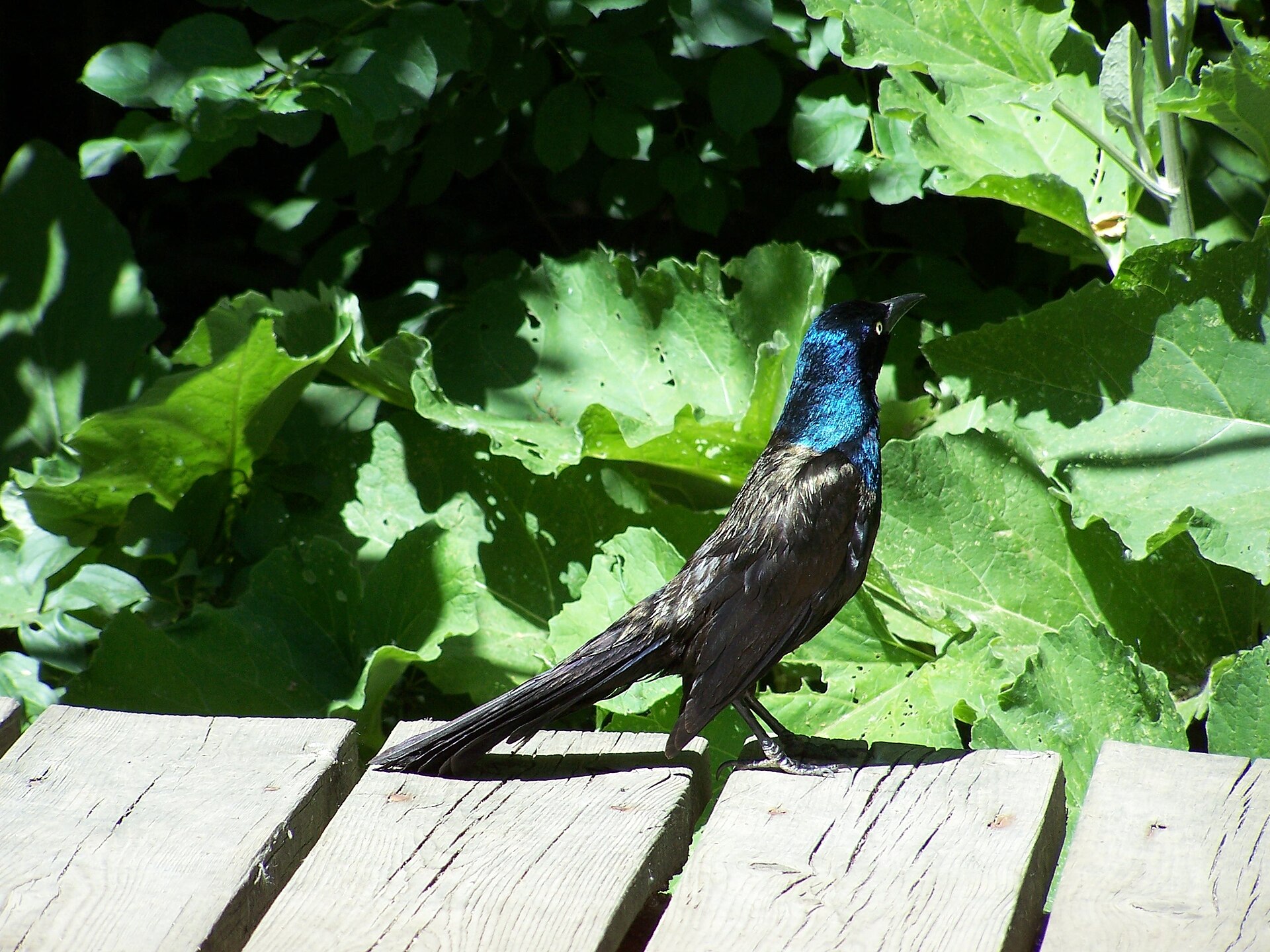
How to identify common grackle
A large, iridescent blackbird with a long keel-shaped tail that forages in bold, noisy flocks. Grackles are native and protected under the Migratory Bird Treaty Act, so control here means exclusion and deterrents, not harm.
Crops attacked by common grackle
Sweet corn, Sunflower, Tomato, Strawberry.
Pries open corn husks to eat milk-stage kernels, pecks holes in ripe tomatoes and strawberries, and strips sunflower heads of seed.
Life cycle
- Winter roosting flocks (Winter) — Massive mixed roosts away from gardens.
- Nesting (Spring) — Pairs disperse to nest; little crop damage yet.
- Post-fledging flocking (Early-mid summer) — Family flocks begin raiding gardens together.
- Fall flocking (Late summer–fall) — Large flocks hit ripening corn, sunflowers, and fruit hard.
Natural, organic common grackle control
- 1. Bag or net ears as corn silks brown · medium effort
Slip a paper bag or mesh sleeve over each ear once silks brown; removes the visual and scent cue.
When: Silk brown-down through harvest
- 2. Netting over berries and tomatoes · medium effort
Lightweight bird netting keeps flocks off ripening fruit entirely.
When: As fruit colors
- 3. Scare devices, rotated often · low effort
Reflective tape, predator decoys, or a motion sprinkler; move or swap them every few days since grackles habituate fast.
When: Ripening season
Fastest-fix products
- Corn ear bags/sleeves — Cheap, targeted protection for the highest-value part of a corn planting. · Garden centers, DIY paper bags
- Bird netting — Reusable physical barrier for berries and tomatoes. · Garden centers, Amazon
Prevention
- Harvest corn and soft fruit as soon as it's ripe; don't let it hang.
- Rotate scare tactics so flocks don't habituate to any one deterrent.
- Since grackles are federally protected, never trap, shoot, or poison them without a permit.