
Harlequin bug identification & organic control
Murgantia histrionica
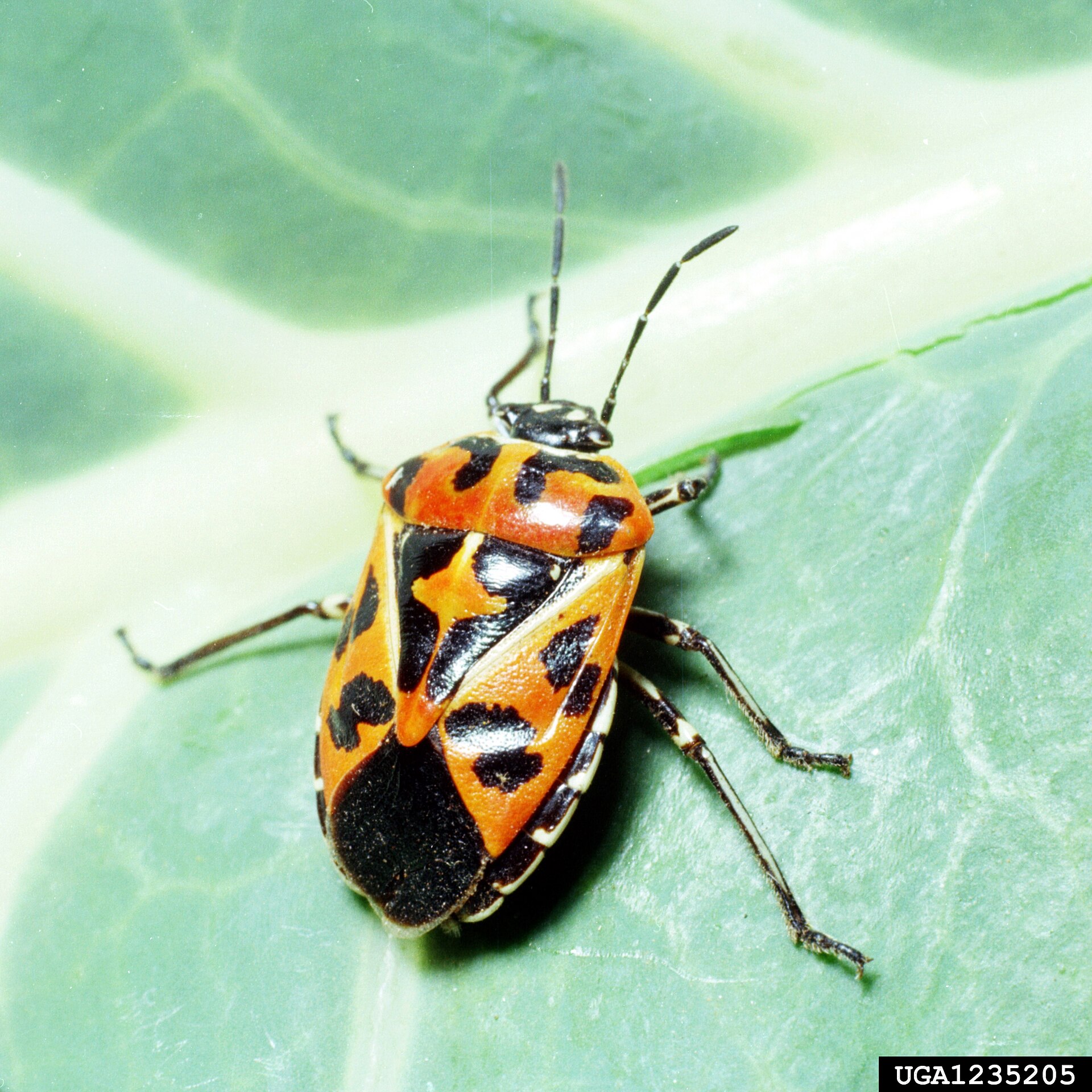
How to identify harlequin bug
A shield-shaped stink bug relative with a striking black-and-orange pattern, common on brassicas in warm regions. Both nymphs and adults feed in clusters and can quickly wilt and kill young plants.
Crops attacked by harlequin bug
Cabbage, Kale, Broccoli, Collards, Radish, Turnip.
Piercing-sucking feeding causes white-to-yellow blotches, wilting, and browning; heavy infestations can kill seedlings outright.
Life cycle
- Overwintering adult (Winter (in debris)) — None.
- Adults emerge and mate (Spring) — Feed on early brassicas; lay barrel-shaped striped eggs.
- Nymphs (Summer) — Cluster-feed, causing wilting and stunting.
- Multiple generations (Through fall (South)) — Populations build through the season in warm climates.
Natural, organic harlequin bug control
- 1. Handpick adults and nymphs · low effort
Both stages are slow-moving and easy to knock into soapy water.
When: Weekly scouting
- 2. Crush egg masses · low effort
Look for barrel-shaped black-and-white striped eggs on leaf undersides and destroy them.
When: Every few days
- 3. Trap crop of mustard · low effort
Plant mustard greens as a sacrificial border; harlequin bugs prefer it over the main crop.
When: At planting
Fastest-fix products
- Insecticidal soap (OMRI) — Contact kill on nymphs when hand-picking can't keep up. · Garden centers, Amazon
Prevention
- Remove and destroy crop residue promptly at season's end.
- Keep a mustard trap crop scouted and destroyed once infested.